Tuesday, January 28, 2020

2020 survey: no lift in wage growth, no lift in economic growth and no progress on unemployment in year of low expectations

2020 is shaping up as a dismal year for the economy, with no progress on many of the key measures that matter for Australians.

Unemployment will stay above 5% and probably rise rather than fall.

Economic growth will continue to have a “1” in front of it, instead of the “2” or “3” that used to be common, and living standards will grow more slowly.

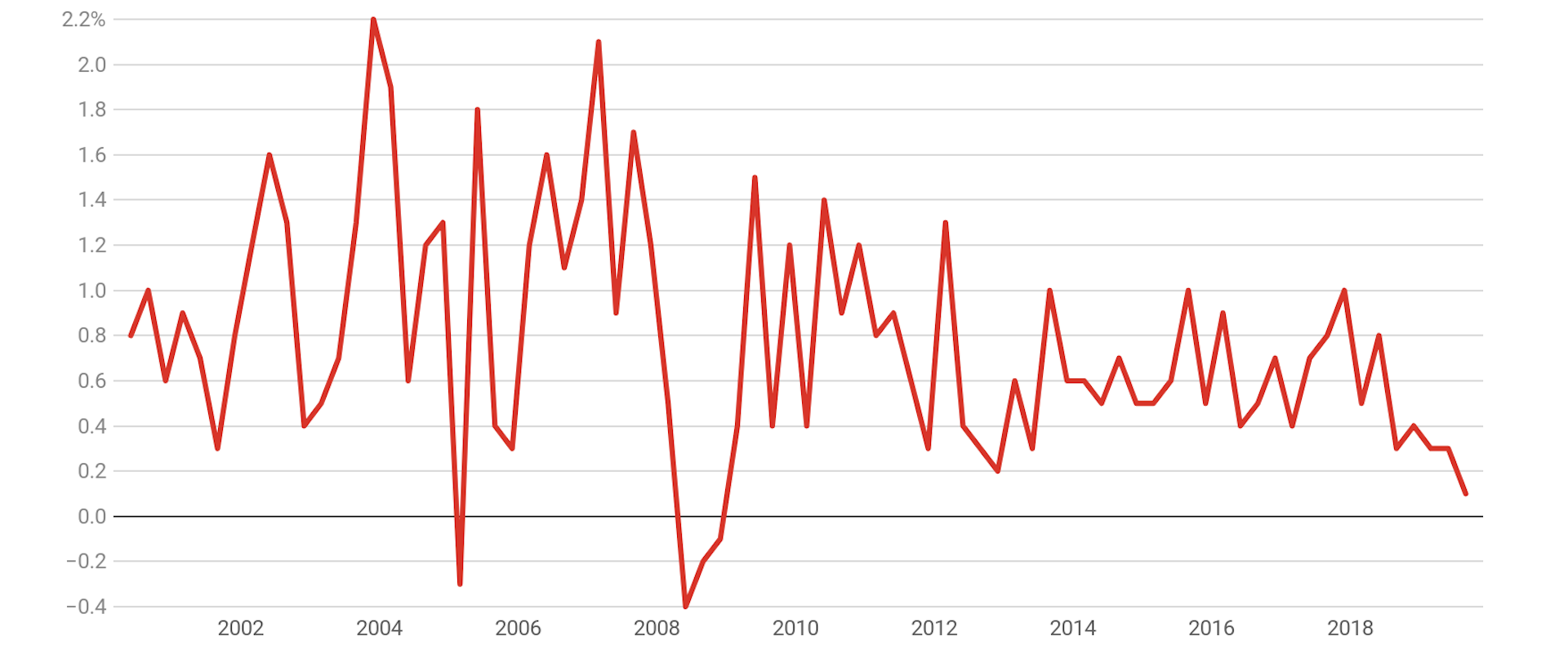
Wage growth, forecast in the budget to climb to 3%, will instead remain stuck near 2.2%, where it has been for half a decade.


Read more: We asked 13 economists how to fix things. All back the RBA governor over the treasurer


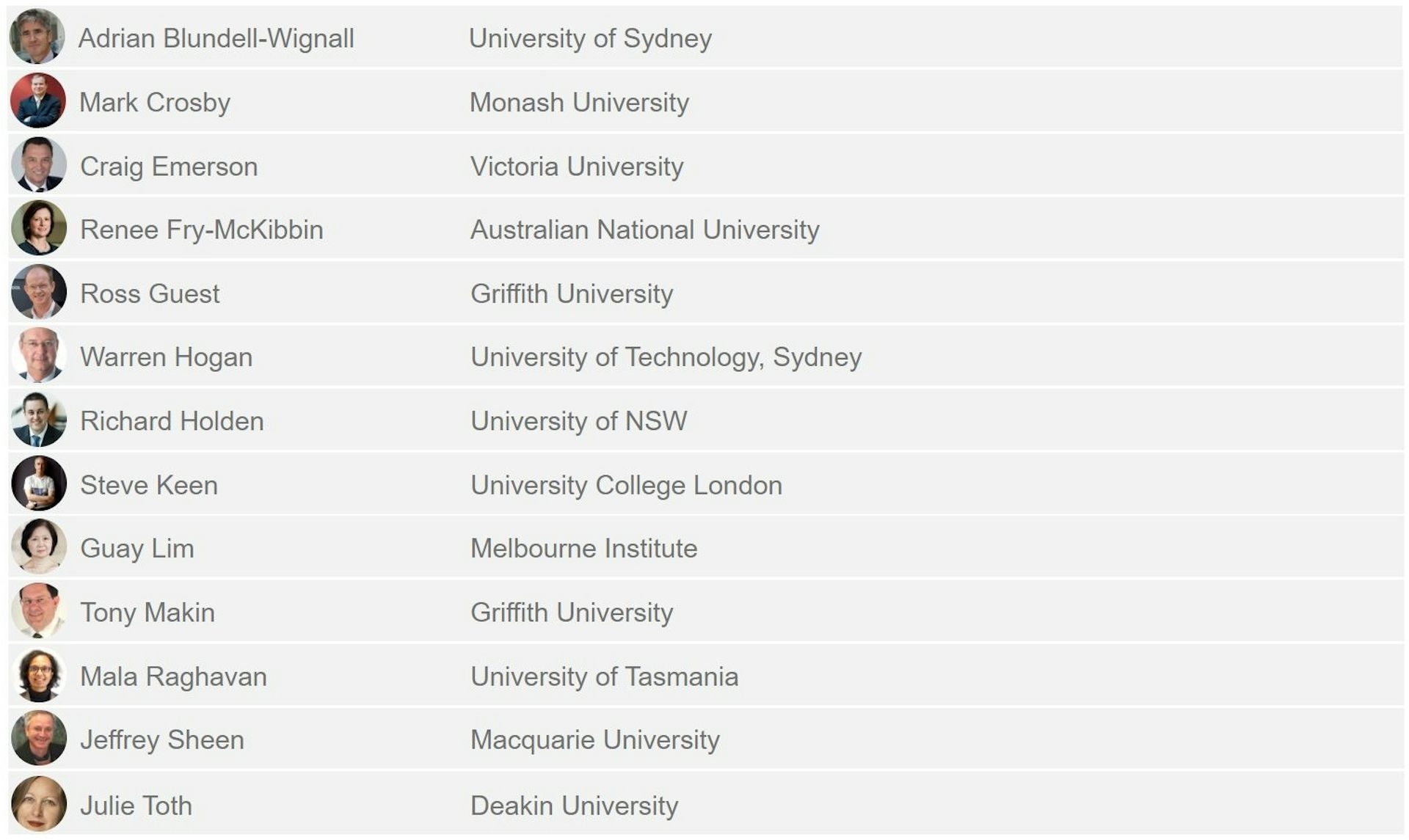
Those are the central forecasts of a panel of 24 leading economists from 15 universities in six states assembled by The Conversation to review the year ahead, a year they expect to be marked by one only more interest rate cut, more modest growth in house prices, and a return to slower growth in the share market.

The panel comprises macroeconomists, economic modellers, former Treasury, IMF, OECD, Reserve Bank and financial market economists, and a former member of the Reserve Bank board. Combined, their forecasts are more likely to be correct than those of any individual member. One-third are women.

They expect the long-promised budget surplus to all but disappear as a result of responses to the bushfires and weaker-than-predicted economic growth.

Economic growth

The Treasury believes the Australian economy is capable of growing at a sustained annual pace of 2.7%, but it hasn’t grown that fast since mid-2018. Growth slipped below 2% in March 2019 and hasn’t recovered. It now has been below 2% for three consecutive quarters, the longest period since the global financial crisis.

The panel’s central forecast is for economic growth to stay at or below 2% for at least another year, producing the longest period of low economic growth since the early 1990s recession. The average forecast for the year to December is 1.9%.

Panellist Saul Eslake says it will be the result of persistently slow growth in household disposable incomes, reflecting “very slow growth in real wages, the increasing proportion of gross income absorbed by tax, and weakness in property income (interest and rent) as well as (at the margin) the impact of the drought on farm incomes”.

It will be domestic rather than overseas conditions that hold back Australian growth. US economic growth is expected to remain little changed at 2.1% notwithstanding trade friction with China, and China’s officially reported growth is expected to ease back only slightly from 6% to 5.8%.


Living standards

One of the best measures of overall living standards (the one the Reserve Bank watches) is real net national disposable income per capita, which takes better account of buying power than gross domestic product does. In the year to September it climbed an unusual 3.3%, pushed up by a resurgence in iron ore export prices.

The iron ore price has since slid from US$120 a tonne to around US$90 a tonne, and the panel’s average forecast is for it to fall further.

As a result it expects growth in living standards to slow to 2.4% in 2020, a result that will still be better than between 2012 and 2016 when a dive in export prices sent it backwards.


Read more: Why we've the weakest economy since the global financial crisis, with few clear ways out


Growth in nominal GDP, the raw total unadjusted for inflation, is also expected to slow, slipping from 5.4% to 4.4% as export prices weaken, producing a decline in revenue growth the government has already factored in to the budget.

The unemployment rate is expected to end the year near the top of the 5%-to-5.5% band it has been stuck in for the past two years, rather than falling to the 5% forecast in the budget or towards the 4.5% the Reserve Bank believes is possible.

Only one of the panel, Warren Hogan, expects the unemployment rate to end the year below 5%.


Wages and prices

The panel’s central forecast is for inflation to remain below the bottom of the Reserve Bank’s 2-3% target band, where it has been for most of the past five years.

One panellist, Margaret McKenzie, breaks ranks. She expects the drought and bushfires and floods to sharply push up the cost of food and essential items including energy, quickly pushing inflation into the range the authorities have long wanted, but not for the reasons they wanted.

“I don’t think people have thought about it, because there hasn’t been inflation for so long,” she says. “The problem is that the fires are likely to contract an already weak economy, impelling the Reserve Bank to cut interest rates further, even though its inflation targeting regime would tell it not to.”

Wage growth is forecast to be well below the highest inflation forecast and only a little above the central forecast, resulting in continued low real wage growth and seeing the budget miss its wage growth target for the eighth year in a row.


Business

Household spending barely grew in the year to September, inching ahead by a shockingly low 1.2%, the least since the financial crisis, and not enough to account for population growth.

The panel’s central forecast is for a recovery in spending growth to a still-low 2.4%, with spending held back by low consumer confidence and what former Organisation for Economic Co-operation and Development director Adrian Blundell-Wignall calls a “sense that we are living on borrowed time”.


Read more: GDP update: spending dips and saving soars as we stash rather than spend our tax cuts


“China is slowing, bank-financed housing has been pushing the envelope and is very expensive, and the governments have never had a plan for the next phase of sustainable growth,” he says. “This perception of no confidence in the government has not been helped by the bushfire events.”

There are few signs of a recovery in business investment, notwithstanding record-low interest rates.

The panel’s average forecast is for investment by mining and non-mining companies to grow by only 1.7% and 1.9% in 2020, which will represent a turnaround for mining, in which investment fell 11.2% in the year to September.


Markets

Financial markets should provide less support to households in the year ahead, with the ASX 200 share price index expected to climb only 6.4% after soaring 20% in the year just ended.

None of the panellists expect last year’s growth to continue.

The Australian dollar is expected to end the year at 68 US cents, close to where it is at present. The iron ore price is expected to fall to US$75, a smaller slide than was assumed in the budget.


Home prices

Housing investment (homebuilding) is expected to stabilise in 2020, falling only slightly from here on, after sliding 9.6% in the year to September 2019.

Sydney and Melbourne home prices are expected to continue to recover, growing by 5% in 2020.

Panellist Nigel Stapledon says the higher home prices will in time boost perceptions of wealth, opening up the possibility that consumer spending will “surprise on the upside”.


Interest rates and budget

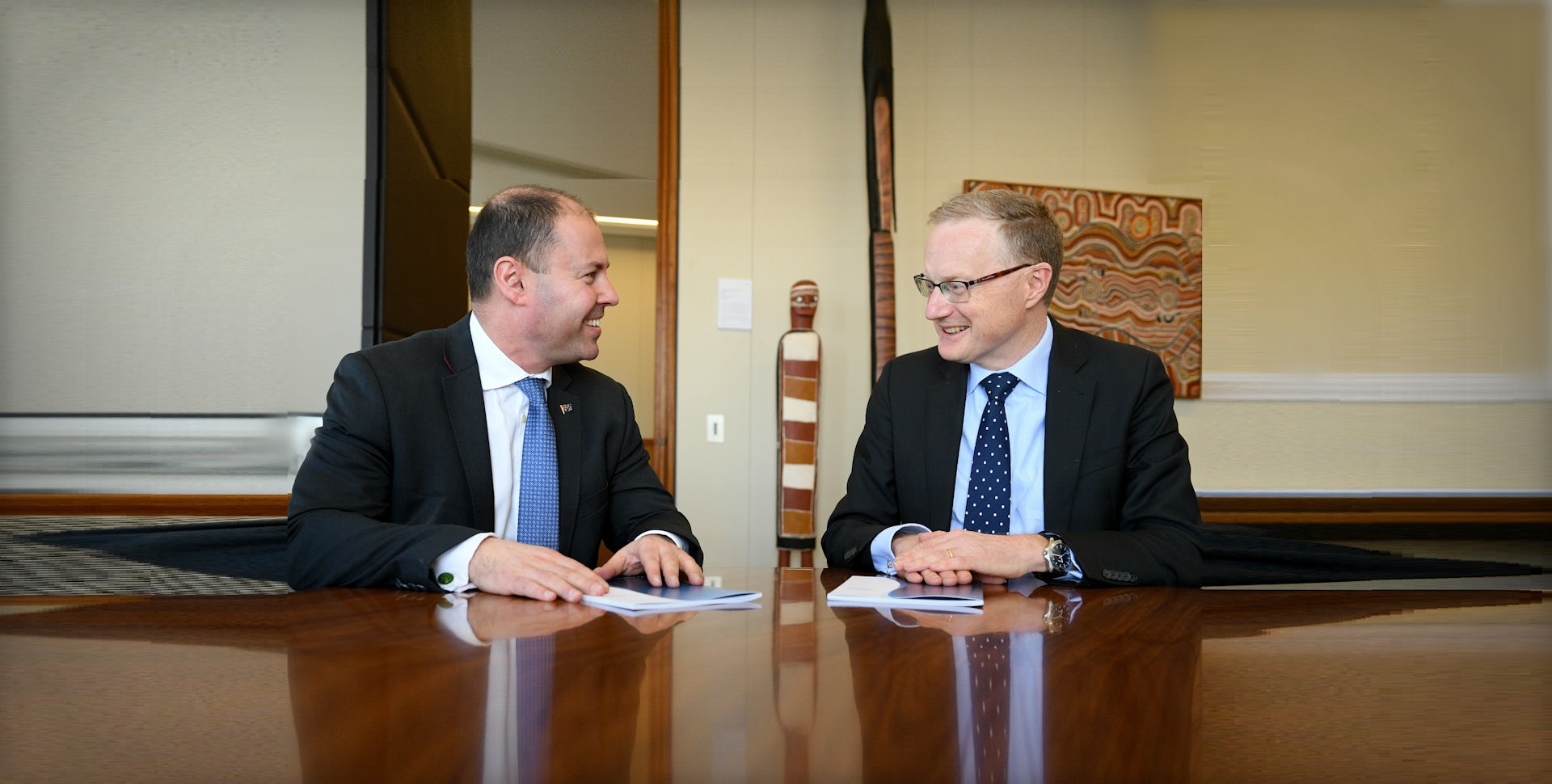
The panel’s central forecast is for only one more cut in the Reserve Bank’s cash rate this year, in the first half, followed by no further cuts in the second half. This would allow the bank to avoid so-called unconventional monetary policy or “quantitative easing” in which it forces down longer-term rates by buying government and private bonds, an option Governor Philip Lowe said it would only resort to after it had cut its cash rate to 0.25%.

The single cut would take the cash rate to an all-time low of 0.5%. In anticipation the ANZ cut its online saver account rate from 0.1% to 0.05% on Thursday.


Read more: Now we know. The Reserve Bank has spelled out what it will do when rates approach zero


The cut could come as soon as next week when the board holds its first meeting for the year on February 4. Governor Lowe has scheduled an address to the National Press Club for the following day.

Most of the panel think quantitative easing will not be needed and many question its effectiveness, saying the government could achieve much more by fully abandoning its commitment to surplus in order to stimulate the economy.

The panel expects the government’s 10-year bond rate to remain historically low at 1.3%. That makes it about as cheap as it has ever been for the government to borrow for worthwhile purposes.


Treasurer Josh Frydenberg has abandoned his absolute commitment to return the budget to surplus this financial year, saying his first priority is “meeting the human cost of the bushfires”.

The 2019-20 surplus was forecast at A$7.1 billion in the May budget and then downgraded to $5 billion in the December update.

The panel’s average forecast is for a bushfire-ravaged $2.2 billion.


Most of the panel believe that with good management the government can avoid a recession for another two years, propelling the Australia economy into what will be its 30th straight year of expansion.

On average they assign a 27% probability to a recession within the next two years, down from their average forecast of 29% in June.

Several point out that, whereas the main risks to continued growth come from overseas, China appears to be managing its slowing economy better than expected, although the emergency triggered by the new and deadly Wuhan coronavirus might change that.


Read more: Their biggest challenge? Avoiding a recession


Among those who do fear a home-bred recession is Julie Toth who has lifted her estimate of the likelihood of a recession from 25% to 50%, saying growth is already so weak that it won’t take much to send it backwards.

“The bushfire disaster presents the real and immediate possibility of two quarters of negative growth for the fourth quarter of 2019 and the first quarter of of 2020,” she says.

“Even if disaster relief and fiscal stimulus are delivered swiftly, resource constraints (a lack of skilled tradespeople, water, equipment and appropriate building materials) mean reconstruction will be very slow.”


The panel began compiling its responses when the bushfires weren’t as bad as they subsequently became and before the emergence of the Wuhan coronavirus.

It delivered its final forecasts on January 20 when the worst of the bushfires appeared to have passed but before the coronavirus had spread to Australia.

The effects of both won’t be known for some time.

2020 is turning out to be a year of uncertainty, as well as low expectations.


The Conversation 2020 Forecasting Panel

Click on economist to see full profile.


Read more: Buckle up. 2019-20 survey finds the economy weak and heading down, and that's ahead of surprises The Conversation


PDF OF RESULTS


Peter Martin, Visiting Fellow, Crawford School of Public Policy, Australian National University

This article is republished from The Conversation under a Creative Commons license. Read the original article.

Read more >>

Wednesday, January 08, 2020

In fact, there's plenty we can do to make future fires less likely

One of the dominant ideas buzzing around the internet is that there’s little we can do to escape the prospect of more frequent and worse bushfires - ever.

That’s because there’s little we can do to slow or reverse the change in the climate.

Australia accounts for just 1.3% of global emissions. That’s much more than you would expect on the basis of our share of world’s population, which is 0.33%. But even if we stopped greenhouse gas emissions as soon as we could and started sucking carbon back in (as would be possible with reafforestation) it’d make little difference to total global emissions, which is what matters – or so the argument goes.

But this argument ignores the huge out-of-proportion power we have to influence other countries.

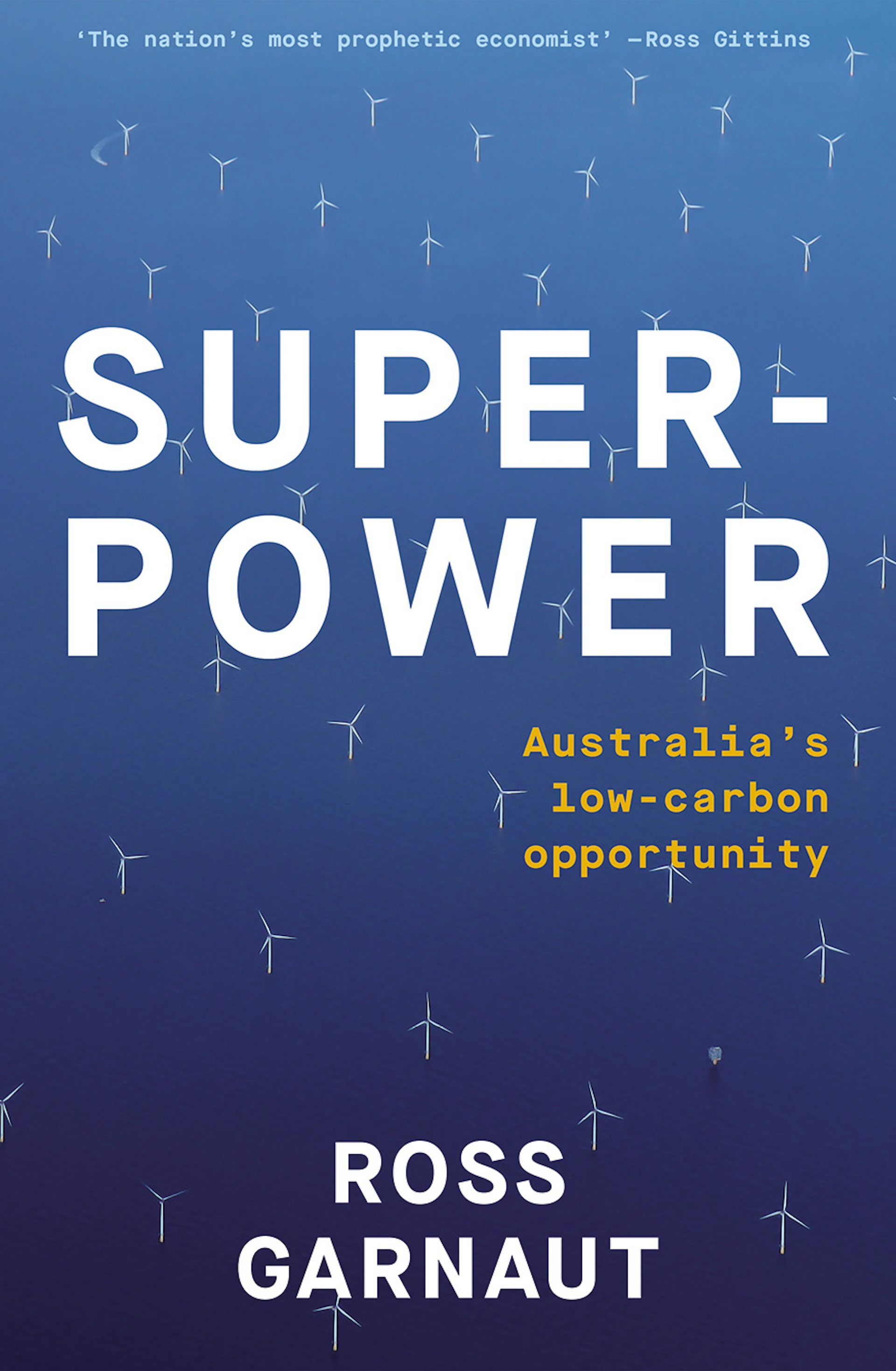
There’s no better indicator of that than in Ross Garnaut’s new book Super-power: Australia’s low-carbon opportunity.

We’re more important than we think

Garnaut conducted two climate change reviews for Australian governments, the first in 2008 for the state and Commonwealth governments, and the second in 2011 for the Gillard government.

In the second, he produced two projections of China’s emissions, based on what was known at the time.

One was “business as usual”, which showed continued very rapid increases. The other took into account China’s commitments at the just-completed 2010 United Nations Cancun climate change conference.

China’s annual emissions matter more than those of any other country – they account for 27% of the global total, which is a relatively new phenomenon.

The bulk of the industrial carbon dioxide already in the atmosphere was put there by the United States and the Soviet Union, who have been big emitters for much longer.

Egged on by the US Obama administration and by governments including Australia’s under Julia Gillard, China agreed at Cancun to slow its growth in emissions, and at the Paris talks in 2015 hardened this into a commitment to stabilise them by 2030.

The extraordinary graph

Garnaut’s 2011 projections showed growth moderating as a result of China’s commitment, which was at the time a cause for optimism.

When he returned to the numbers in 2019 to prepare his book, he was stunned. Egged on by the example of countries including the US and Australia, China had done far, far better than either “business as usual” or its Cancun commitments. Instead of continuing to grow rapidly, or less rapidly as China had said they would, they had almost stopped growing.

The graph, produced on page 29 of Garnaut’s book, is the most striking I have seen.


Since 2011, China’s emissions have been close to spirit-level flat. They climbed again only from 2017 when, under Trump in the US and various Coalition prime ministers in Australia, the moral pressure eased.

From the start of this century until 2011, China’s consumption of coal for electricity climbed at double-digit rates each year. From 2013 to 2016 (more than) every single bit of China’s extra electricity production came from non-emitting sources such as hydro, nuclear, wind and sun.

There are many potential explanations for the abrupt change. Pressure from nations including the US and Australia is only one.

What happened once could happen again

And there are many potential explanations for China’s return to form after Trump backslid on the Paris Agreement and Australia started quibbling about definitions. An easing of overseas pressure is only one.

But, however brief, the extraordinary pause gives us cause for hope.

Australia can matter, in part because it is hugely respected in international forums for its technical expertise in accounting for carbon emissions, and in part because of its special role as one of the world’s leading energy exporters.

Garnaut’s book is about something else – an enormous and lucrative opportunity for Australia to produce and export embedded energy sourced from wind and the sun at a cost and scale other nations won’t be able to match.


Read more: Australia could fall apart under climate change. But there's a way to avoid it


Some of it can be used to convert water into hydrogen. That can be used to turn what would otherwise be an intermittent power supply into a continuous one that enables around-the-clock production of the green steel, aluminium, and other zero-emission products Japan, Korea, the European Union and the United Kingdom are going to be demanding.

It’s a vision backed by Australia’s chief scientist.

It wouldn’t have been possible before. It has been made possible now by the extraordinary fall in the cost of solar and wind generation, and by something just as important – much lower global interest rates. Solar and wind generators cost money upfront but cost very little to operate. Interest rates are the cost of the money upfront.

At least three consortia are drawing up plans.

There’s not much to lose

There’s much that needs to be done, including establishing the right electricity transmission links. But Garnaut believes it can all be done within the government’s present emissions policy, helping it achieve its emission reduction targets along the way.

What’s relevant here is that moving to ultra-low emissions would do more. It could give us the kind of outsized international influence we are capable of. It could help us make a difference.The Conversation


Peter Martin, Visiting Fellow, Crawford School of Public Policy, Australian National University

This article is republished from The Conversation under a Creative Commons license. Read the original article.

Read more >>

Wednesday, December 04, 2019

GDP update: spending dips and saving soars as we stash rather than spend our tax cuts

Australians saved rather than spent most of the budget tax cuts, almost doubling the proportion of household income saved, leaving spending languishing.

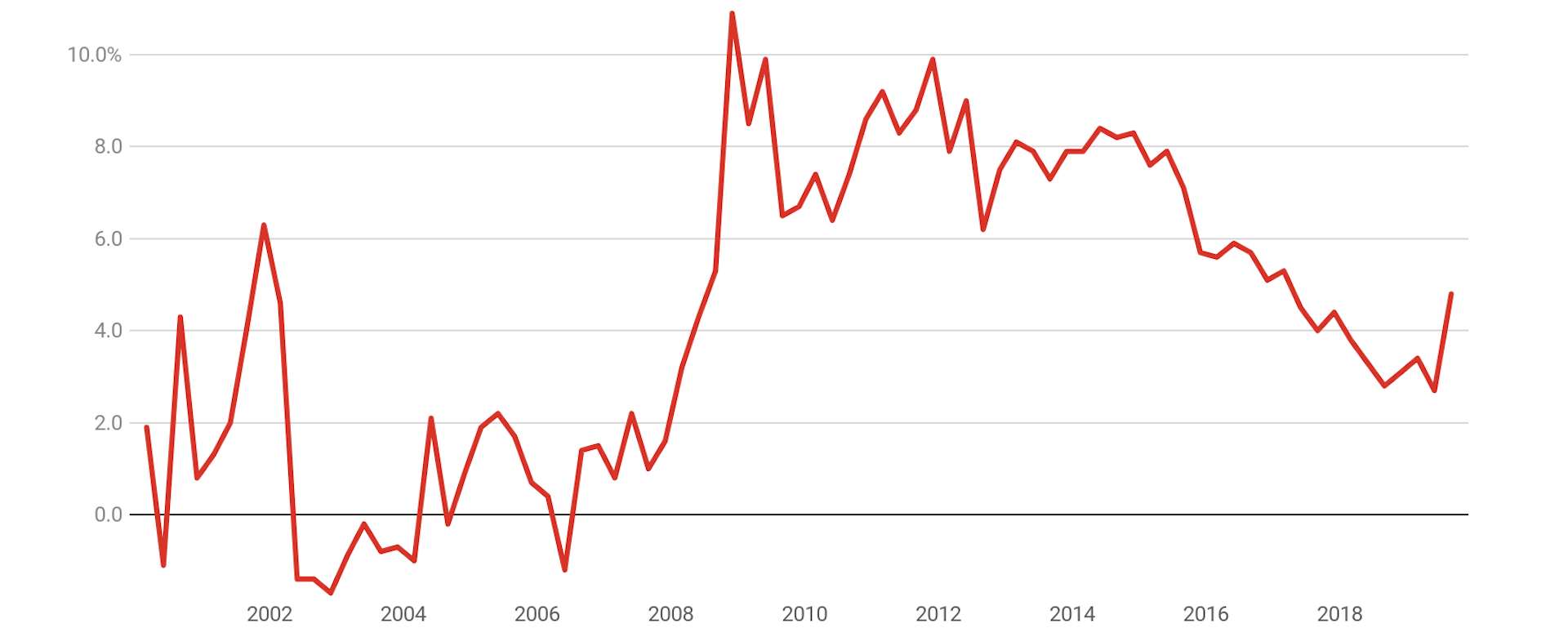
The September quarter national accounts show that in the first three months of the financial year real household spending grew by just 0.1%, the least since the global financial crisis.

Over the year to September, inflation-adjusted spending grew by a mere 1.2%, also the least since the financial crisis. Australia’s population grew by 1.6% in that time, meaning the volume of goods and services bought per person went backwards.


Quarterly growth in household spending


Separate figures released by the Federal Chamber of Automotive Industries on Wednesday show November new car sales were down 9.8% on November 2018.

By the end of November the Tax Office had issued more than 8.8. million tax refunds totalling A$25 billion, 30% more than a year before.

Instead of being largely spent, they were mostly saved, pushing up the household saving ratio from 2.7% to 4.8%, its highest point in more than two years.


Household saving ratio


Treasurer Josh Frydenberg put the best face on the result, saying whether they had been spent or saved, the cuts had put households in a stronger position.

The government’s goal has always been to put more money into the pockets of the Australian people, and it’s their choice as to whether they spend or save that money

Separately calculated retail figures show that in the three months to September the volume of goods and services bought fell 0.1%.

The disposable income households had available to spend grew an outsized 2.5%, driven by what the Bureau of Statistics said were the budget tax cuts.

Growth at GFC lows

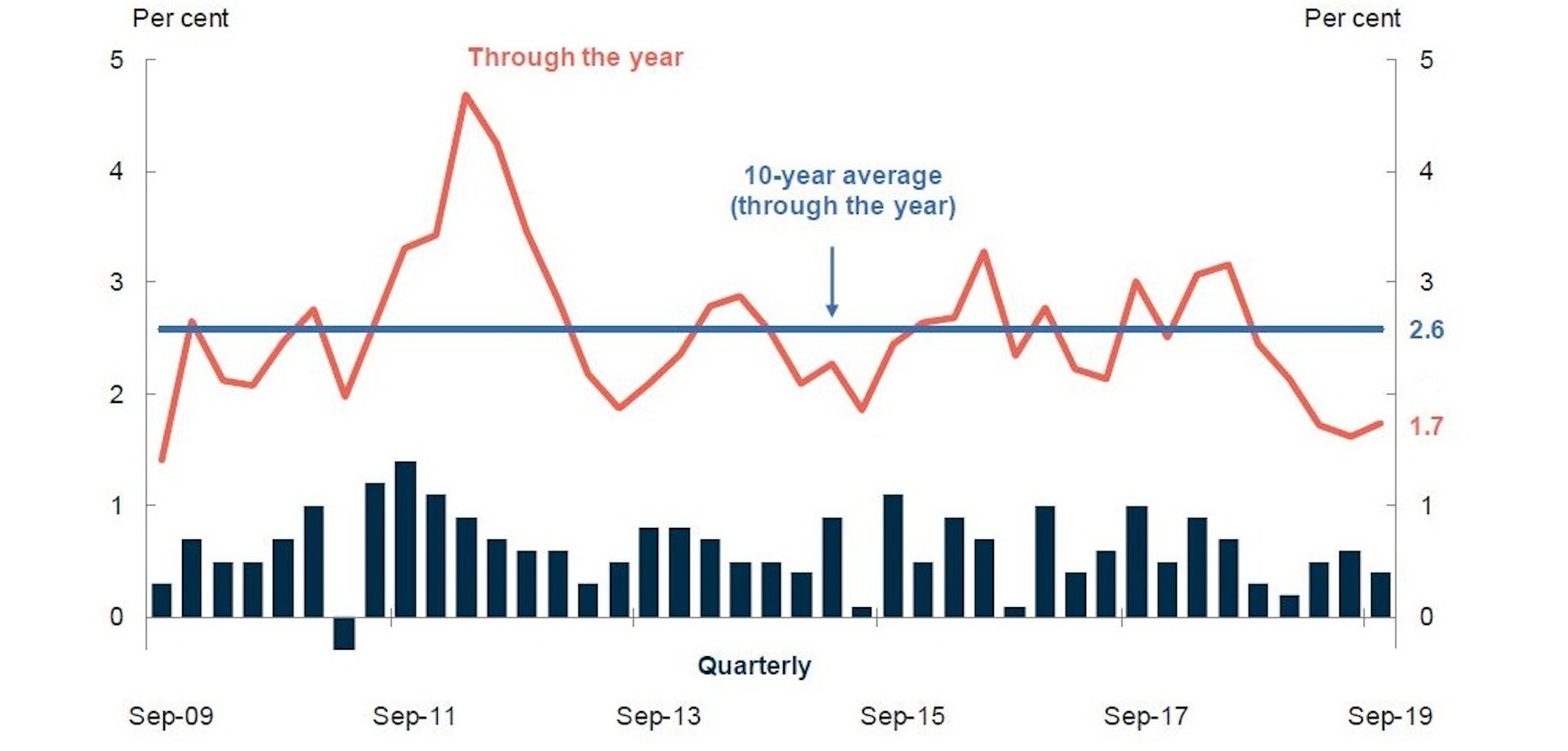
The Australian economy grew just 0.4% in the three months to September, down from 0.6% in the June quarter, and 0.5% in the March quarter.

Over the year to September it grew 1.7%, well short of the budget forecasts, which in year average terms were 2.25% for 2018-19 and 2.75% for 2019-20.


Real GDP growth


After taking account of population growth, GDP per person grew not at all in the September quarter. Over the year to September living standards grew a bare 0.2%.

Gross domestic product per hour worked, which is a measure of productivity, fell 0.2% during the quarter and fell 0.2% over the year.

Company profits were up 2.2% in the quarter and 12.7% over the year. Wage and superannuation payments grew at about half those rates: 1.2% and 5.1%.

Housing investment was down 1.7% over the quarter and 9.6% over the year.

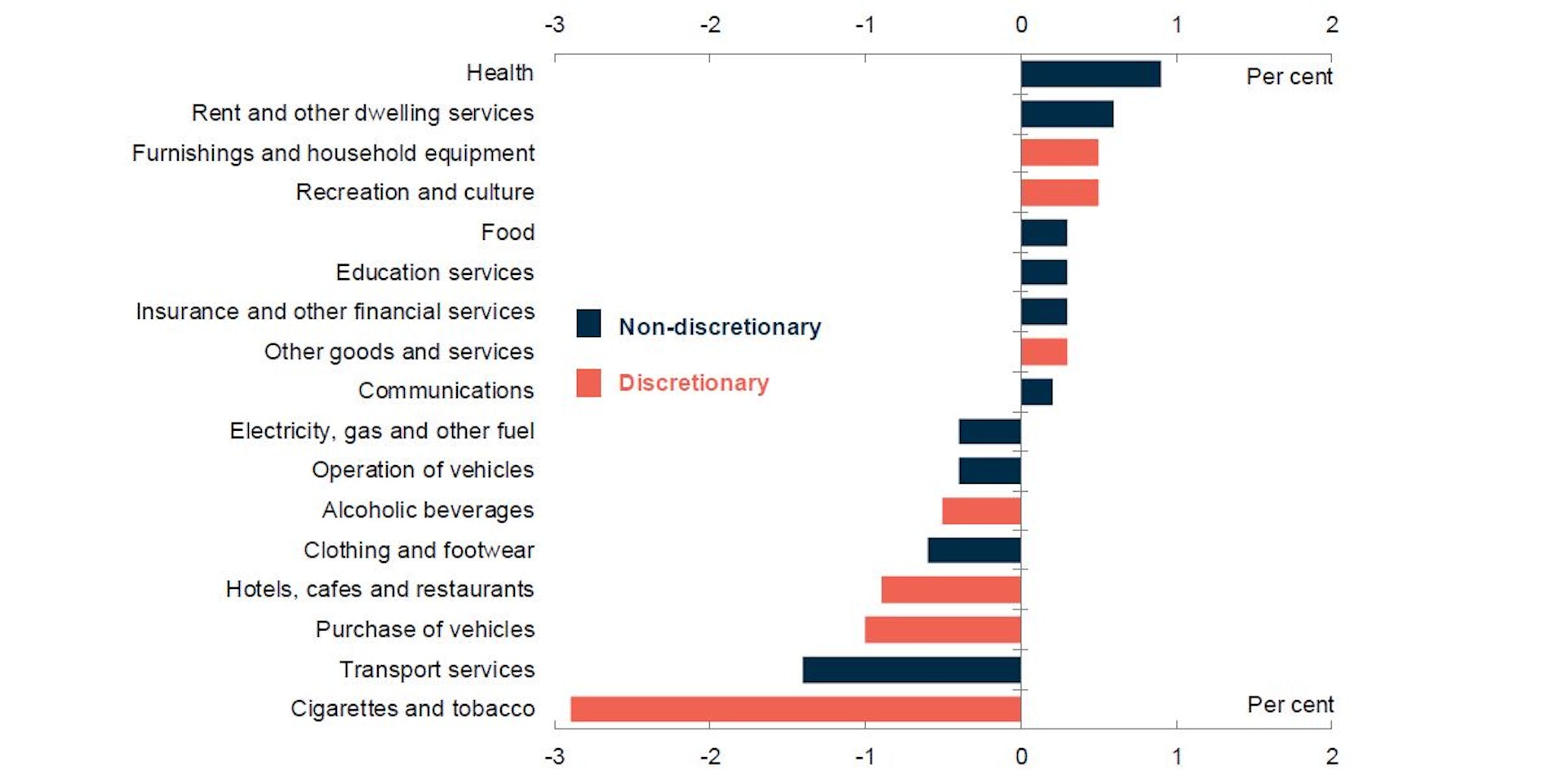
What household spending growth there was was concentrated on essentials, led by health and rent. So-called discretionary or non-essential expenditures fell, led down by spending on cars, dining out and tobacco.


Consumption growth by category, quarterly


The economy was kept afloat by a surge in government spending. It grew 0.9% in the quarter and 6% over the year. Growth in government spending and investment together accounted for 0.3 of the quarter’s 0.4 points of economic growth.

Government and mining to the rescue

Mining production grew 0.7% over the quarter and 7.4% over the year. A mining-fuelled surge in exports contributed almost as much to economic growth as government spending.

Drought-affected farm production fell 2.1% over the quarter and 6.1% over the year.

Business investment fell 4% in the quarter and 1.7% over the year, led down by a 7.8% fall in mining investment in the quarter and a 11.2% fall over the year, as liquefied natural gas projects came to completion. Non-mining investment fell 0.4%.


Read more: We asked 13 economists how to fix things. All back the RBA governor over the treasurer


Asked whether the December budget update would contain tax measures designed to boost business investment, the treasurer said he was in discussions with business. The update is expected in the week before Christmas.

There’s little evidence in today’s figures of the “gentle turning point” spoken about hopefully by the Reserve Bank governor as recently as Tuesday.

If things don’t pick by the bank’s first board meeting for the year in February, it is a fair bet it will cut its cash rate again. By then it will know what the treasurer did (or didn’t) do in the budget update and whether we decided to spend over Christmas.The Conversation


Peter Martin, Visiting Fellow, Crawford School of Public Policy, Australian National University

This article is republished from The Conversation under a Creative Commons license. Read the original article.

Read more >>

Wednesday, November 06, 2019

Super power - Australia's low carbon opportunity

Ross Garnaut, University of Melbourne.

Four years ago in December 2015, every member of the United Nations met in Paris and agreed to hold global temperature increases to 2°C, and as close as possible to 1.5°C.

The bad news is that four years on the best that we can hope for is holding global increases to around 1.75°C. We can only do that if the world moves decisively towards zero net emissions by the middle of the century.

A failure to act here, accompanied by similar paralysis in other countries, would see our grandchildren living with temperature increases of around 4°C this century, and more beyond.

I have spent my life on the positive end of discussion of Australian domestic and international policy questions. But if effective global action on climate change fails, I fear the challenge would be beyond contemporary Australia. I fear that things would fall apart.

There is reason to hope

It’s not all bad news.

What we know today about the effect of increased concentrations of greenhouse gases broadly confirms the conclusions I drew from available research in previous climate change reviews in 2008 and 2011. I conducted these for, respectively, state and Commonwealth governments, and a federal cross-parliamentary committee.

But these reviews greatly overestimated the cost of meeting ambitious reduction targets.

There has been an extraordinary fall in the cost of equipment for solar and wind energy, and of technologies to store renewable energy to even out supply. Per person, Australia has natural resources for renewable energy superior to any other developed country and far superior to our customers in northeast Asia.


Read more: Australia's hidden opportunity to cut carbon emissions, and make money in the process


Australia is by far the world’s largest exporter of iron ore and aluminium ores. In the main they are processed overseas, but in the post-carbon world we will be best positioned to turn them into zero-emission iron and aluminium.

In such a world, there will be no economic sense in any aluminium or iron smelting in Japan or Korea, not much in Indonesia, and enough to cover only a modest part of domestic demand in China and India. The European commitment to early achievement of net-zero emissions opens a large opportunity there as well.

Converting one quarter of Australian iron oxide and half of aluminium oxide exports to metal would add more value and jobs than current coal and gas combined.

A natural supplier to the world’s industry

With abundant low-cost electricity, Australia could grow into a major global producer of minerals needed in the post-carbon world such as lithium, titanium, vanadium, nickel, cobalt and copper. It could also become the natural supplier of pure silicon, produced from sand or quartz, for which there is fast-increasing global demand.

Other new zero-emissions industrial products will require little more than globally competitive electricity to create. These include ammonia, exportable hydrogen and electricity transmitted by high-voltage cables to and through Indonesia and Singapore to the Asian mainland.

Australia’s exceptional endowment of forests and woodlands gives it an advantage in biological raw materials for industrial processes. And there’s an immense opportunity for capturing and sequestering, at relatively low cost, atmospheric carbon in soils, pastures, woodlands, forests and plantations.

Modelling conducted for my first report suggested that Australia would import emissions reduction credits, however today I expect Australia to cut domestic emissions to the point that it sells excess credits to other nations.

The transition is an economic winner

Technologies to produce and store zero-emissions energy and sequester carbon in the landscape are highly capital-intensive. They have therefore benefited exceptionally from the historic fall in global interest rates over the past decade. This has reduced the cost of transition to zero emissions, accentuating Australia’s advantage.

In 2008 the comprehensive modelling undertaken for the Garnaut Review suggested the transition would entail a noticeable (but manageable) sacrifice of Australian income in the first half of this century, followed by gains that would grow late into the second half of this century and beyond.

Today, calculations using similar techniques would give different results. Australia playing its full part in effective global efforts to hold warming to 2°C or lower would show economic gains instead of losses in early decades, followed by much bigger gains later on.

If Australia is to realise its immense opportunity in a zero-carbon world, it will need a different policy framework. But we can make a strong start even with the incomplete and weak policies and commitments we have. Policies to help complete the transition can be built in a political environment that has been changed by early success.

Three crucial steps

Three early policy developments are needed. None contradicts established federal government policy.

First, the regulatory system has to focus strongly on the security and reliability of electricity supplies, as it comes to be drawn almost exclusively from intermittent renewable sources.

Second, the government must support transformation of the power transmission system to allow a huge expansion of supply from regions with high-quality renewable energy resources not near existing transmission cables. This is likely to require new mechanisms to support private initiatives.

Third, the Commonwealth could secure a globally competitive cost of capital by underwriting new investment in reliable (or “firmed”) renewable electricity. This was a recommendation by the Australian Competition and Consumer Commission’s retail electricity price inquiry, and has been adopted by the Morrison government.

We must get with the Paris program

For other countries to import large volumes of low-emission products from us, we will have to accept and be seen as delivering on emissions reduction targets consistent with the Paris objectives.

Paris requires net-zero emissions by mid-century. Developed countries have to reach zero emissions before then, so their interim targets have to represent credible steps towards that conclusion.

Japan, Korea, the European Union and the United Kingdom are the natural early markets for zero-emissions steel, aluminum and other products. China will be critically important. Indonesia and India and their neighbours in southeast and south Asia will sustain Australian exports of low-emissions products deep into the future.

For the European Union, reliance on Australian exports of zero-emissions products would only follow assessments that we were making acceptable contributions to the global mitigation effort.

We will not get to that place in one step, or soon. But likely European restrictions on imports of high-carbon products, which will exempt those made with low emissions, will allow us a good shot.


Read more: Labor's reset on climate and jobs is a political mirage


Movement will come gradually, initially with public support for innovation; then suddenly, as business and government leaders realise the magnitude of the Australian opportunity, and as humanity enters the last rush to avoid being overwhelmed by the rising costs of climate change.

The pace will be governed by progress in decarbonisation globally. That will suit us, as our new strengths in the zero-carbon world grow with the retreat of the old. We have an unparalleled opportunity. We are more than capable of grabbing it.

The Conversation


Ross Garnaut conducted the 2008 and 2011 climate reviews for the Rudd and Gillard governments. His book Superpower – Australia’s Low-Carbon Opportunity, is published today by BlackInc with La Trobe University Press.

This article is republished from The Conversation under a Creative Commons license. Read the original article.
Read more >>

Monday, November 04, 2019

We asked 13 economists how to fix things. All back the RBA governor over the treasurer

Thirteen leading economists have declared their hands in the stand off between the government and the Governor of the Reserve Bank over the best way to boost the economy.

All 13 back Reserve Bank Governor Philip Lowe.

They say that, by itself, the Reserve Bank cannot be expected to do everything extra that will be needed to boost the economy.

All think that extra stimulus will be needed, and all think it’ll have to come from Treasurer Josh Frydenberg, as well as the bank.

All but two say the treasurer should be prepared to sacrifice his goal of an immediate budget surplus in order to provide it.

The 13 are members of the 20-person economic forecasting panel assembled by The Conversation at the start of this year.

All but one have been surprised by the extent of the economic slowdown.


Read more: No surplus, no share market growth, no lift in wage growth. Economic survey points to bleaker times post-election


The 13 represent ten universities in five states.

Among them are macroeconomists, economic modellers, former Treasury, IMF, OECD and Reserve Bank officials and a former government minister.

The Bank needs help

At issue is the government’s contention, spelled out by Frydenberg’s treasury secretary Steven Kennedy in evidence to the Senate last month, that there is usually little role for government spending and tax (“fiscal”) measures in stimulating the economy in the event of a downturn.

Absent a crisis, economic weakness was “best responded to by monetary policy”.

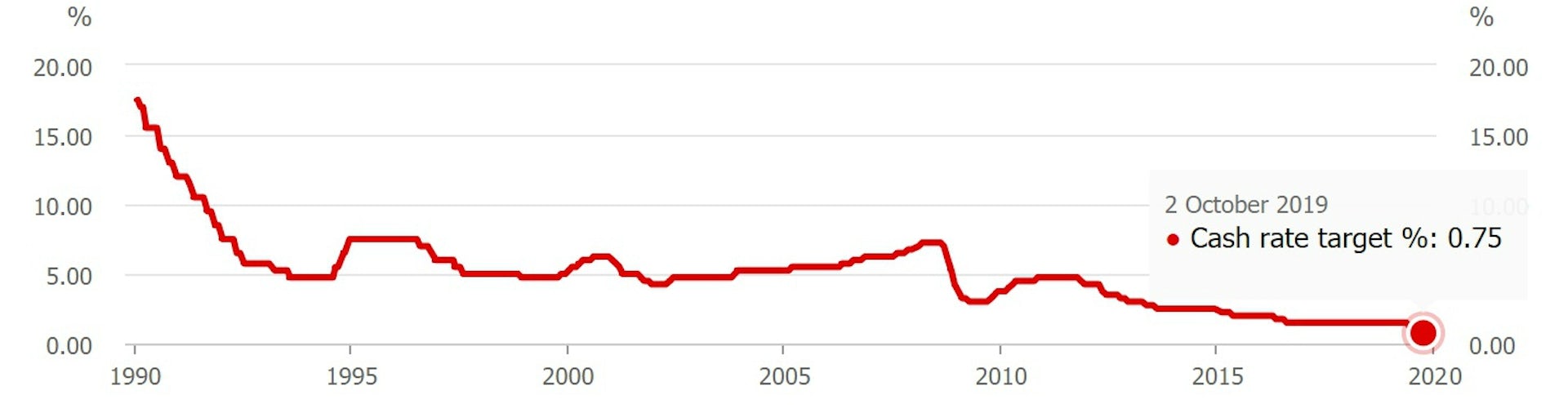
Monetary policy – the adjustment of interest rates by the Reserve Bank – is nearing the end of its effectiveness in its present form. The bank has already cut its cash rate to close to zero (0.75%) and will consider another cut on Tuesday.

It is preparing to consider so-called “unconventional” measures, including buying bonds in order to force longer-term interest rates down toward zero.


Read more: If you want to boost the economy, big infrastructure projects won't cut it: new Treasury boss


Governor Lowe has made the case for “fiscal support, including through spending on infrastructure” saying there are limits to what monetary policy can achieve.

The 13 economists unanimously back the Governor.

Seven of the 13 say what is needed most is fiscal stimulus (including extra government spending on infrastructure), three say both fiscal and monetary measures are needed, and three want government “structural reform”, including measures to help the economy deal with climate change and remove red tape.

None say the Reserve Bank should be left to fight the downturn by itself without further help from the government.

There is plenty of room for fiscal stimulus, particularly infrastructure spending – Mark Crosby, Monash University

I agree with the emerging consensus that monetary policy is no longer effective when interest rates are so low – Ross Guest, Griffith University

It is time for coordinated monetary and fiscal policies to boost domestic demand – Guay Lim, Melbourne Institute

The surplus can wait

Eleven of the 13 believe the government should abandon its determination to deliver a budget surplus in 2019-20.

Economic modeller Renee Fry-McKibbin says the government should “ease its position of a surplus at all costs”.

Former Commonwealth Treasury and ANZ economist Warren Hogan says achieving a surplus in the current environment would have “zero value”.

Former OECD director Adrian Blundell-Wignall says that rather than aiming for an overall budget surplus, the government should aim instead for an “net operating balance”, a proposal that was put forward by Scott Morrison as treasurer in 2017.

The approach would move worthwhile infrastructure spending and borrowing onto a separate balance sheet that would not need to balance.

Political debate would focus instead on whether the annual operating budget was balanced or in deficit.

Former treasury and IMF economist Tony Makin is one of only two economists surveyed who backs the government’s continued pursuit of a surplus, saying annual interest payments on government debt have reached A$14 billion, “four times the foreign aid budget and almost twice as much as federal spending on higher education”.

Further deterioration of the balance via “facile fiscal stimulus” would risk Australia’s creditworthiness.

However Makin doesn’t think the government should leave everything to the Reserve Bank.

He has put forward a program of extra spending on infrastructure projects that meet rigorous criteria, along with company tax cuts or investment allowances paid for by government spending cuts.

Former trade minister Craig Emerson also wants an investment allowance, suggesting businesses should be able to immediately deduct 20% of eligible spending.

It’s an idea put forward by Labor during the 2019 election campaign. Treasurer Josh Frydenberg has indicated something like it is being considered for the 2020 budget.

Emerson says it should be possible to deliver both the investment allowance and a budget surplus.

Quantitative easing would be a worry

Five of the 13 economists are concerned about the Reserve Bank adopting so-called “unconvential” measures such as buying government and private sector bonds in order to push long-term interest rates down toward zero, a practice known as quantitative easing.

Jeffrey Sheen and Renee Fry-McKibbin say it should be kept in reserve for emergencies.

Adrian Blundell-Wignall and Mark Crosby say it hasn’t worked in the countries that have tried it.

A quantitative easing avalanche policy by the European central bank larger than the entire UK economy has left inflation below target and growth fading. Quantitative easing destroys the interbank market, under-prices risk, and encourages leverage and asset speculation – Adrian Blundell-Wignall

Steve Keen says in both Europe and the United States quantitative easing enriched banks and drove up asset prices but did little to boost consumer spending, “because the rich don’t consume much of the wealth”.

The treasurer should step up

Taken together, the responses of the 13 economists suggest it is ultimately the government’s responsibility to ensure the economy doesn’t weaken any further, and that it would be especially unwise to palm it off on to the Reserve Bank at a time when the bank’s cash rate is close to zero and the effectiveness of the unconventional measures it might adopt is in doubt.

Measures the government could adopt include increasing the rate of the Newstart unemployment benefit, boosting funding for schools and skills training, borrowing for well-chosen infrastructure projects with a social rate of return greater than the cost of borrowing, further tax cuts that double as tax reform (including further tax breaks for business investment) and spending more on programs aimed at avoiding the worst of climate change and adapting to it.

The economists are backing the governor in his plea for help. They think he needs it.


The 13 economists surveyed


Read more: Buckle up. 2019-20 survey finds the economy weak and heading down, and that's ahead of surprises The Conversation


Peter Martin, Visiting Fellow, Crawford School of Public Policy, Australian National University

This article is republished from The Conversation under a Creative Commons license. Read the original article.
Read more >>

Wednesday, October 23, 2019

If you want to boost the economy, big infrastructure projects won't cut it: new Treasury boss

Treasury secretary Steven Kennedy – in the job for for just weeks after moving across from the department of infrastructure last month – has dismissed talk of spending big on infrastructure in order to escape an economic downturn.

Such calls “sound straightforward, but in practice are difficult to achieve”, he told a Senate hearing on Wednesday.

The timing requirements of fiscal stimulus are hard to give effect to while ensuring large projects are well planned and executed, and cost and capacity pressures are managed. There are some opportunities though, usually related to smaller projects and maintenance expenditure. The Commonwealth and state Governments are currently actively exploring these opportunities.

More broadly he made it plain that it was the role of the Reserve Bank rather than the Treasury to provide economic stimulus.

The bank has already cut its cash rate to a record low of 0.75% and has indicated it is prepared to consider unconventional monetary policy measures that would have the effect of cutting a wider range of rates.


Read more: 0.75% is a record low, but don't think for a second the Reserve Bank has finished cutting the cash rate


However, bank Governor Philip Lowe said last week such tools would be most effective “when used together with a broader set of policies”, including government spending and tax policies.

Without crisis, no need to spend more

Kennedy rejected the idea of extra spending except in an emergency, saying Treasury could best serve Australia’s interests by a “stable and predictable” policy framework that kept the budget near balance over time.

There would be times when a downturn cut revenue and increased spending on support payments, pushing the budget into deficit, but beyond allowing those so-called automatic stabilisers to operate there wasn’t normally a case for doing more.

The exceptions were “periods of crisis”.

“It is important to consider separately broader policy objectives and temporary responses to crisis,” Kennedy said.

“The circumstances or crisis that would warrant temporary fiscal responses are uncommon.”

Although Australia’s economy is not in crisis, Brexit, the US-China trade war and turmoil in Hong Kong have slowed economic and trade growth worldwide, as businesses opt to stay on the sidelines.

No crisis, but weak growth worldwide

In Australia, economic growth had been unusually weak, weighed down by weak household spending which was itself the result of weak income growth, weak house prices, weak housing investment, and weaker than expected non-mining investment.

Mining investment was down sharply, as was to be expected after the completion of several large liquefied natural gas projects.

Given low interest rates, it was “somewhat of a puzzle” that business investment was not growing faster. Partly that might be because the “hurdle rates” businesses use to assess projects have not been adjusted down as they should have been. Partly it might be because of uncertainties surrounding the global economy and technological change.

Structural factors may also be at play — it is not clear what business investment looks like in a world where more than two thirds of our economy is now services based.

The budget tax cuts that flowed into returns from July have not yet led to a “particularly large improvement” in household spending.

Wages, investment “somewhat of a puzzle”

“We will continue to assess the data on consumption as it becomes available, but it is worth noting that even if households initially use the tax cuts to pay down debt faster, this will still bring forward the point at which households could increase their spending,” Dr Kennedy said.

It is possible that spending might have been even weaker without the tax cuts.

Holding back the economy during the year to June has been drought and dry weather which knocked 0.2 percentage points of the economic growth. Holding it up has been larger than normal growth in government spending that contributed 0.2 percentage points more to economic growth than was normal.


Read more: Why we've the weakest economy since the global financial crisis, with few clear ways out


No one had been able come up with a complete explanation for Australia’s unexpectedly low rate of wage growth. One explanation might be that even though the unemployment rate of 5.2% was unusually low, increases in employment were drawing in older workers and women rather than pushing up wages.

Ultimately what was needed to sustain higher wage growth was productivity growth, and that would be difficult to achieve while business investment was weak. The Productivity Commission had come up with a set of recommendations state and federal ministers were working their way through.

Although economic growth has been very low - just 1.4% in the year to June – it grew more strongly in the last half of that year than the first. It might be “strengthening from here”.The Conversation


Peter Martin, Visiting Fellow, Crawford School of Public Policy, Australian National University

This article is republished from The Conversation under a Creative Commons license. Read the original article.
Read more >>

Tuesday, October 01, 2019

0.75% is a record low, but don't think for a second the Reserve Bank has finished cutting the cash rate

Anyone who thought that with the Reserve Bank’s cash rate now close to zero, its run of interest rate cuts was over, needs only to read the last sentence of Governor Philip Lowe’s announcement after Tuesday’s cut:

The Board will continue to monitor developments, including in the labour market, and is prepared to ease monetary policy further if needed to support sustainable growth in the economy, full employment and the achievement of the inflation target over time.

For the longest time, the run of cuts was over.

Lowe’s immediate predecessor, Glenn Stevens, cut the cash rate to a record low of 1.5% in August 2016 as something of a “parting gift”, allowing Lowe to take over and keep it steady, unchanged for a record 34 months.

For most of those three years he made it clear the rate was unlikely to fall further. Six times he said the next move in rates was likely to be up, “rather than down”, pointing to rate increases overseas and progress on jobs and returning Australia’s unusually low inflation rate to his target band.

By February this year he was backtracking. Although it wasn’t apparent in the published figures, the unemployment rate was about to begin climbing. Wage growth had been far weaker than forecast, inflation showed no sign of returning to the centre of his target band, and forecasts for global growth were falling.


Reserve Bank cash rate


More importantly, consumer spending, which accounts for six in every ten dollars spent in Australia, was extraordinarily weak, growing at less than half the usual rate, as households “responded to this extended period of weaker income growth by progressively downgrading their spending plans”.

The probabilities of next move being up and down had become “more evenly balanced”.


Read more: RBA update: Governor Lowe points to even lower rates


Two weeks after the May election he cut the cash rate, then cut it again, taking it to a new record low of 1%, anticipated by only two of the 19 economists surveyed by The Conversation just six months earlier.

The extra cut announced on Tuesday is because the last two didn’t do enough.

House prices have begun to move up (as would be expected with lower rates) but borrowing is growing only slowly, and home building is weak. The Australian dollar is low (in part because of the lower rates), which should help make Australian businesses competitive, but they are not keen to borrow.

Since the last Reserve Bank board meeting we have learned that economic growth is shockingly low, just 1.4% over the past year, the weakest since the global financial crisis. Household spending is barely keeping pace with population growth.

Lowe would like to believe the economy has reached “a gentle turning point”. He told a community dinner in Melbourne on Tuesday night the board thinks it might have.

There are a number of factors that are supporting this outlook. These include the low level of interest rates, the recent tax cuts, ongoing spending on infrastructure, signs of stabilisation in some established housing markets, and a brighter outlook for the resources sector.

But they will need help. The bank believes the economy is capable of producing an unemployment rate of 4.5%. Instead it has been climbing, to 5.3%.

How the cuts will help

The cash rate is determined by the rate the Reserve Bank pays banks who deposit with it overnight. It drives almost every other rate, including the rates banks pay retail depositors, which help determine their cost of lending.

They don’t have to cut their mortgage and business rates in line with cuts in the Reserve Bank cash rate, but they usually do.

The big banks played a game of chicken yesterday, each waiting for the other to move. The Commonwealth Bank moved first, offering just 0.13 of the 0.25 points, followed by the National Australia Bank, which offered 0.15 points.

The real action is in the discounted rates that target borrowers for whom they matter. Before Tuesday they averaged 3.46%. Some were much lower. HSBC Australia wanted just 3.17%. If it passes on Tuesday’s cut in full it will charge only 2.92%, offering the first Australian mortgage rate in history beginning with the number “2”.

There’s every reason to believe the cuts will help. Even if Australians don’t borrow more to buy houses, they will be able to use the historically cheap credit embodied in their house loans to buy other things, such as solar panels whose payoff period will have shortened dramatically.

Since June many mortgage-holders will have saved A$150 on monthly payments.

Sure, confidence and decent wage growth would help, but given how indebted many Australians are, low mortgage rates will do quite a bit on their own.

Why they’ll continue

Governor Lowe made it clear on Tuesday that they will have to stay low for “an extended period”. A signed agreement with the treasurer requires him to keep them low until unemployment falls and inflation and economic growth return to return to normal levels.

He would like the government to help by boosting spending. He often mentions spending on infrastructure. But his employment contract requires him to use the cards he has been dealt. If the economy is weak, he is required to boost it using the instruments he has.


Read more: Below zero is ‘reverse’. How the Reserve Bank would make quantitative easing work


That’s why he says he is prepared “to ease monetary policy further”.

If needed, he’ll do it as soon as next month, cutting the cash rate to 0.5%. If more is needed beyond that, he will get ready to use so-called unconventional measures of the kind being used overseas, buying government and corporate bonds in order to force even more money into Australian’s hands.

There’s no reason to believe that the tools he has won’t work, and every reason to believe he’ll keep using them.The Conversation


Peter Martin, Visiting Fellow, Crawford School of Public Policy, Australian National University

This article is republished from The Conversation under a Creative Commons license. Read the original article.
Read more >>

Monday, September 30, 2019

5 questions about superannuation the government's new inquiry will need to ask

The government’s new retirement incomes review will need to work quickly.

On Friday Treasurer Josh Frydenberg said he expected a final report by June, just seven months after the issues paper he wants it to deliver by November.

The deadline is tight for a reason. In recommending the inquiry in its report on the (in)effeciency of Australia’s superannuation system this year, the Productivity Commission said it should be completed “in advance of any increase in the superannuation guarantee rate”.

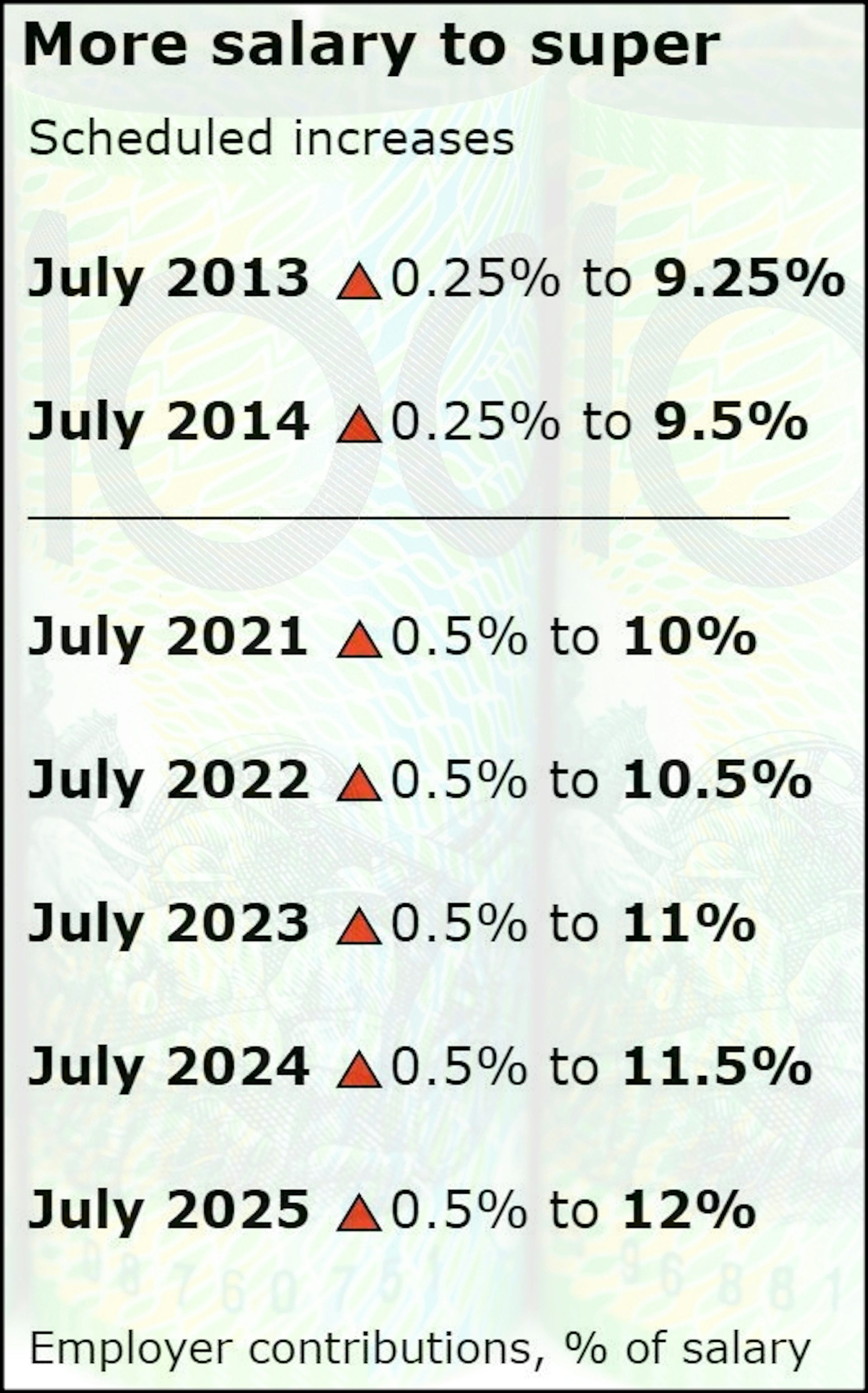
In other words, in advance of the next leglislated increase in compulsory superannuation contributions, which is on July 1, 2021.


Read more: Government retirement incomes inquiry puts superannuation in the frame


The next increase (actually, the next five increases) will hurt.

The last two, on July 1 2013 and July 1 2014, took place when wage growth was stronger. In 2013 wages growth was 3% per year.

And they were small – an extra 0.25 per cent of salary each.

The next five, to be imposed annually from July 1 2021, are twice the size: 0.5% of salary each.

If taken out of wage growth, they’ve the potential to cut it from its present usually low 2.3% per annum to something with a “1” in front of it, pushing it below the rate of inflation, for five consecutive years.

If we were going to do that (even if we thought the economy and wage growth could afford it) it would be a good idea to have a good reason why. After all, compulsory superannuation is the compulsory locking away of income that could otherwise be spent or used to pay down debt or saved through another vehicle, regardless of the wishes of the person whose income it is.

Question 1. What’s it for?

Fortunately, the new inquiry doesn’t need to do much work on this one.

For most of its life compulsory super hasn’t had an agreed purpose. At times it has been justified as a means of restraining wage growth, at times as means of restraining government spending on the pension, at times as means of boosting national savings.

In 2014, more than 20 years after compulsory super began, the Murray Financial System Review asked the government to set a clear objective for it, and two years later the government came up with one, enshrined in a bill entitled the Superannuation (Objective) Bill 2016.

The bill lapsed, but the objective at its centre lives on as the best description we’ve come up with yet of what compulsory super is for:

to provide income in retirement to substitute or supplement the age pension

Which raises the question of how much we need. For compulsory super, the answer is probably none. People who want more than the pension and their other savings can save more through voluntary super. People who don’t want more (or can’t afford to save more) shouldn’t.

Question 2. How much do people need?

Assuming for the moment that how much people need in retirement is relevant for determining how much compulsory super they need, the inquiry will need to examine what people need to live on in retirement.

The “standards” prepared by the Association of Superannuation Funds of Australia are loose. The more generous of the two allows for overseas travel every two or so years, A$163 per couple per fortnight on dining out, $81 on alcohol “or equivalent spent with charity or church”.


Read more: Why we should worry less about retirement - and leave super at 9.5%


It isn’t a reasonable guide to how much people need to live on, and certainly isn’t a reasonable guide for how much the government should intervene to make sure they have to live on. They are standards it doesn’t intervene to support while people are working.

And there’s something else. Super isn’t what will fund it. Most retirement living is funded outside of super, either through the age pension, private savings, or the family home (which saves on rent). Most 65 year olds have more saved outside of super than in it, and a lot more than that saved in the family home.

It’s a slight of hand to say that retirees need a certain proportion of their final wage to live on and then to say that that’s how much super should provide.

Question 3: Does it come out of wages?

The best guess is that, although paid by employers in addition to wages, compulsory super comes out of what would otherwise have been their wage bill.

Treasury puts it this way:

Though compulsory superannuation guarantee contributions are paid by employers, wage setting generally takes into account all labour costs. As such, it is widely accepted that employees bear the cost of higher superannuation guarantees in the form of lower take home pay.

The inquiry will probably make its own determination. If it finds that extra contributions do indeed come out of what would have been pay rises, it will have to consider the tradeoff between lower pay rises (and they are already very low) and the compulsory provision of more superannuation in retirement.

Question 4: Does it boost private saving?

It’d be tempting to think that the compulsory nature of compulsory superannuation meant that each extra dollar funnelled into it increased retirement savings by an extra dollar. But it doesn’t, in part because wealthy Australians who are already saving a lot have the option of offsetting it by saving less in other ways.

For them, the increase in saving isn’t compulsory.

For financially stretched Australians unable to afford to save (or for Australians at times in times life when they can’t afford to save) the compulsion is real, and unwelcome.

The inquiry will have to make its own assessment, updating Reserve Bank research which found in 2007 that each extra dollar in compulsory accounts added between 70 and 90 cents to household wealth.

Question 5: Does it boost national saving?

Boosting private saving (at the expense of people who are unable to escape) is one thing. Boosting national savings (private and government) is another. The tax concessions the government hands out to support superannuation are expensive. The concession on contributions alone is set to cost $19 billion this year and $23 billion in 2022-23, notwithstanding some tightening up. It predominately benefits high earners, the kind of people who don’t need assistance to save.


Read more: Myth busted. Boosting super would cost the budget more than it saved on age pensions


On balance it is likely that the system does little for national savings, cutting government savings by as much as it boosts private savings. But because the question hasn’t been asked, not since the Fitzgerald report on national saving in 1993 shortly after compulsory super was introduced, we don’t know.

It’ll be up to the inquiry to bring us up to date.The Conversation


Peter Martin, Visiting Fellow, Crawford School of Public Policy, Australian National University

This article is republished from The Conversation under a Creative Commons license. Read the original article.
Read more >>

Friday, September 27, 2019

The dirty secret at the heart of the projected budget surplus: much higher tax bills

The budget is bouncing out of deficit and is set to stay in surplus for the decade to come.

That’s what the April budget and the final budget outcome for 2018-19 tell us, and Thursday’s report from the Parliamentary Budget Office doesn’t say any different.

It doesn’t have much choice. The Parliamentary Budget Office is required to take the government’s surplus and deficit projections for the next four years as given, and to take its economic forecasts and tax and spending announcments for the next ten years as given, whether realistic or not.

What it is allowed to do, and does once a year in a publication entitled medium-term fiscal projections, is to set out the implications of those projections.

Those implications, spelled out on Thursday, show the projected budget surplus to be so fragile as to be unrealistic, except the parts that rely on much higher personal income tax collections.

That’s right: much higher income tax collections per person, even after taking into account the coming decade of legislated tax cuts.

Middle earners hit hardest

But it won’t be higher for all of us.

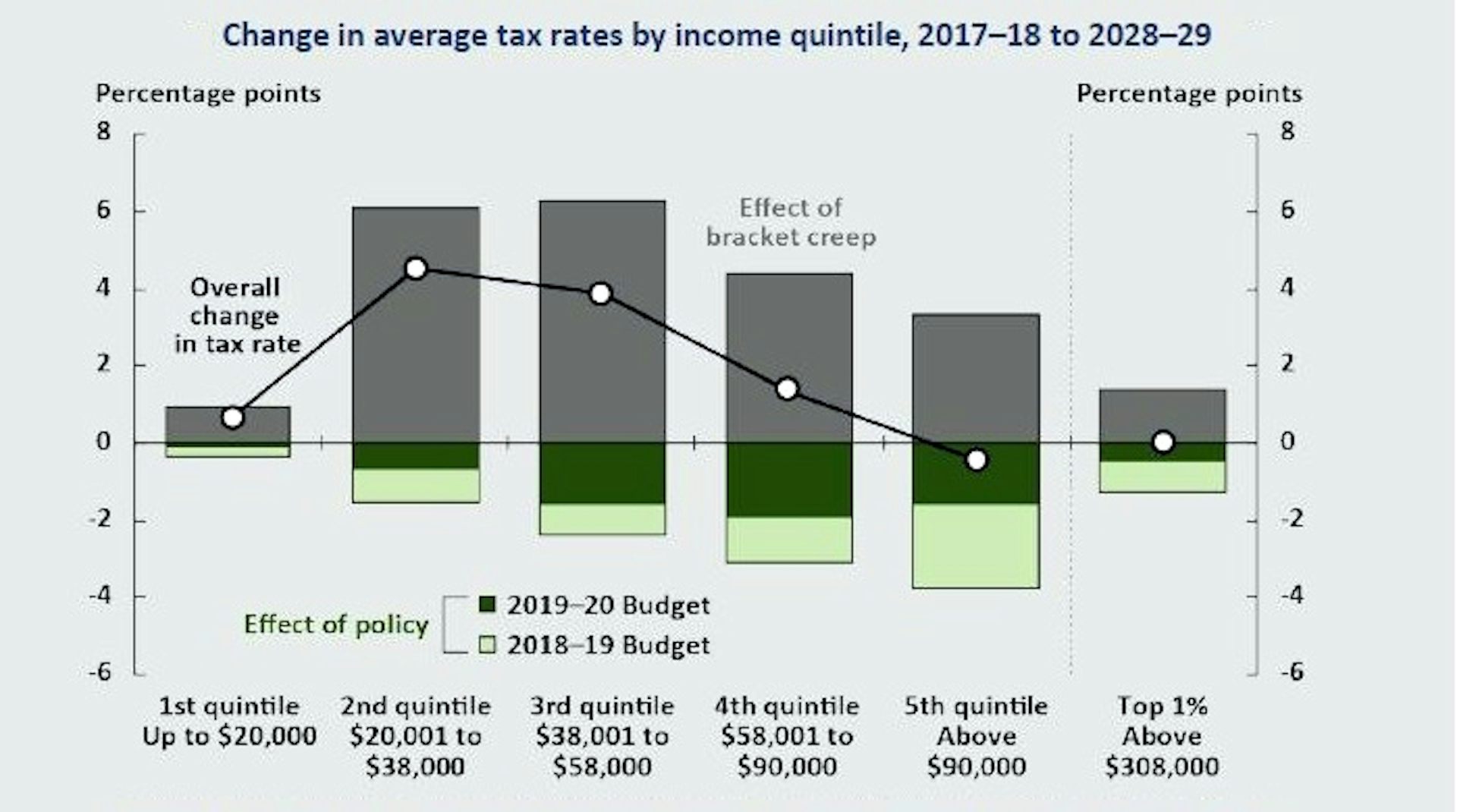
The middle fifth of earners will pay far more of their income in tax in ten years’ time under the government’s projections, according to the PBO’s calculations. Instead of paying 14.9% of their income in tax, by 2028-29 they will pay 18.8%.

That’s after taking into account the long-term tax cuts the government pushed through parliament in May and went to the election on.

Without those legislated tax cuts, they would have been paying an extra 6.3% of their income in tax. With the legislated cuts (and others pencilled in by the PBO to keep the government’s tax take within its promised ceiling) they will be paying an extra 3.9%.

Put another way, the government’s tax cuts will undo some of the damage caused by bracket creep as more of each pay packet climbs into higher brackets, but not most of it.

It’s the same for pattern for the second-lowest fifth of earners. They will move from paying 5.3% of their income in tax to 9.9%, a near doubling, which is taken is taken into account in the surplus projections.


Read more: Those future tax cut promises... they're nowhere near as big as you'd think


The second-highest fifth will move from paying 22% of their income in tax to 23.4%, even after the tax cuts. The bottom fifth, who don’t pay much tax, will move from paying 0.6% to 1.2%.

Highest earners escape

But workers in the top fifth, which at the moment is workers earning above A$90,000, won’t pay a cent more, at least not on average.

The government’s projections, as spelled out by the PBO, have them paying less of their income ten years from today than they do today.

Put another way, they are the only fifth of the population that won’t be expected to wear pain to keep the budget surplus.

There are other contributors to the budget surplus. One is a pretty hefty assumed decline in growth in government spending over the next decade, amounting to 1% of GDP, taking government spending from around 24.9% of GDP to around 23.9%.

Much of it is projected to come from tighter eligibility criteria for payments, and measures to constrain their growth, something the PBO believes might be difficult to maintain:

The spending restraint seen over the past few years may be increasingly difficult to maintain over coming years given the length of time over which restraint has been applied, the pressures emerging in some spending areas, and the potential need for fiscal stimulus, noting that the projected improvement in the budget balance is mildly contractionary.

What it is saying, gently, is that it the longer the government attempts to restrain spending (for instance by imposing tough conditions on access to benefits and using debt collectors to recover alleged overpayments), the harder it will get.

And it is saying the government might need to spend in ways it hasn’t accounted for, including on measures to support the economy in the event of a downturn.

Budget conventions to the rescue

The projections assume the opposite of a downturn.

No blame should attach to this government for them, but our rather odd budget conventions dictate that the worse the economy is, the better the budget’s projections for economic growth. That’s right: the weaker our current economic growth, the stronger the budget’s projections for future economic growth.

The thinking is that over the long term, the economy should grow at roughly its long-term average growth rate. To get there when the economy is weak, as it is now, the budget assumes several years of stronger than normal economic growth to catch up.


Read more: Their biggest challenge? Avoiding a recession


In this case it’s five years of stronger than normal economic growth.

The PBO contents itself with the observation that economic growth that was merely normal (or worse, remained weaker than normal) for some of those years would have a “significant and compounding effect on the budget position over time.”

The surplus is far from assured, and it shouldn’t be. The government might well find that it can’t and shouldn’t restrain spending on payments as much as is projected in the decade ahead, and it might find it needs to spend to support the economy.

It will almost certainly find that lifting the tax take on middle Australians from 14.9% of income to 18.8% is intolerable.The Conversation


Peter Martin, Visiting Fellow, Crawford School of Public Policy, Australian National University

This article is republished from The Conversation under a Creative Commons license. Read the original article.

Read more >>

Friday, September 20, 2019

It's Newstart pay rise day. You're in line for 24 cents, which is peanuts

Newstart recipients and other Australians on benefits get their half-yearly pay rise today (and also on March 20). This one is vanishingly small.

Announced very quietly by Social Services Minister Anne Ruston earlier this week, it amounts to just A$3.30 per fortnight for someone on the Newstart unemployment benefit.

That’s $1.65 per week, less than 24 cents per day.

It’s enough to buy about 36 peanuts – or more if you buy them in bulk.

More galling still for Australians on Newstart, age and disability pensions will increase by twice as much - $6.80 per fortnight, an increase the government was keener to highlight in its press release than the increase in Newstart.

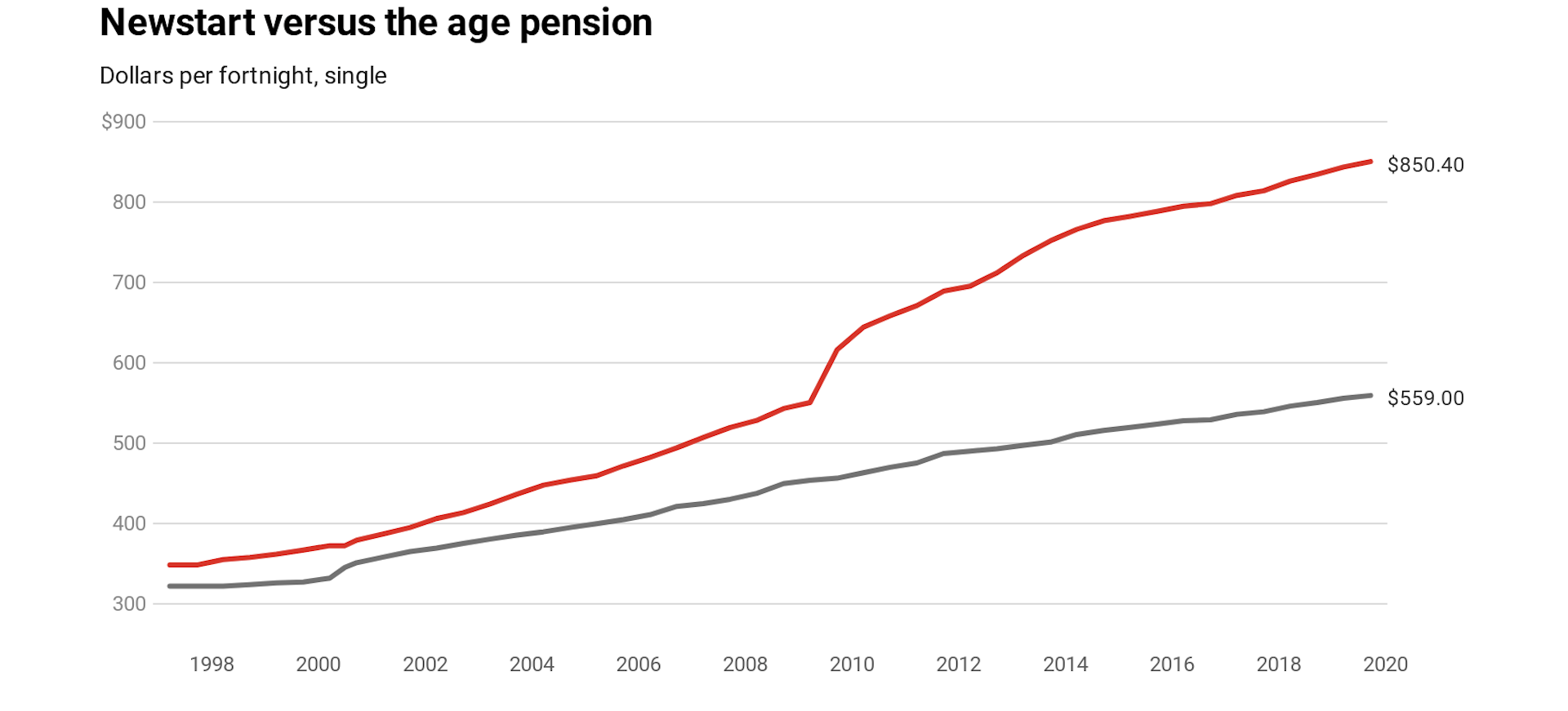
It is hard to comprehend how it could have come to this. Back in 1997 Newstart and the pension were about the same in dollar terms. Each was probably somewhat less than a single person needed to live on.

How did it come to this?

Then the Howard government effectively froze Newstart, forevermore increasing it only in line with inflation (which back then was typically 2.5% per year) while using a formula that lifted pensions in line with wage growth or inflation, whichever was the bigger (back then wages were growing by more than 3% per year).

The difference wasn’t big, but over the past two decades it has compounded. Prime Minister Kevin Rudd helped it along in 2009 by a one-off $64 per fortnight increase in the single pension, unmatched by an increase in Newstart.


It means that from today the single pension will be $850.40 per fortnight, while the single Newstart payment will be $559 – a mere two-thirds of the pension.

And it’ll get worse.

Because inflation is low, and each low increase is off what is now a much lower base than the pension, Newstart increases are small while pension increases are twice as big.


Read more: FactCheck: do 99% of Newstart recipients also receive other benefits?


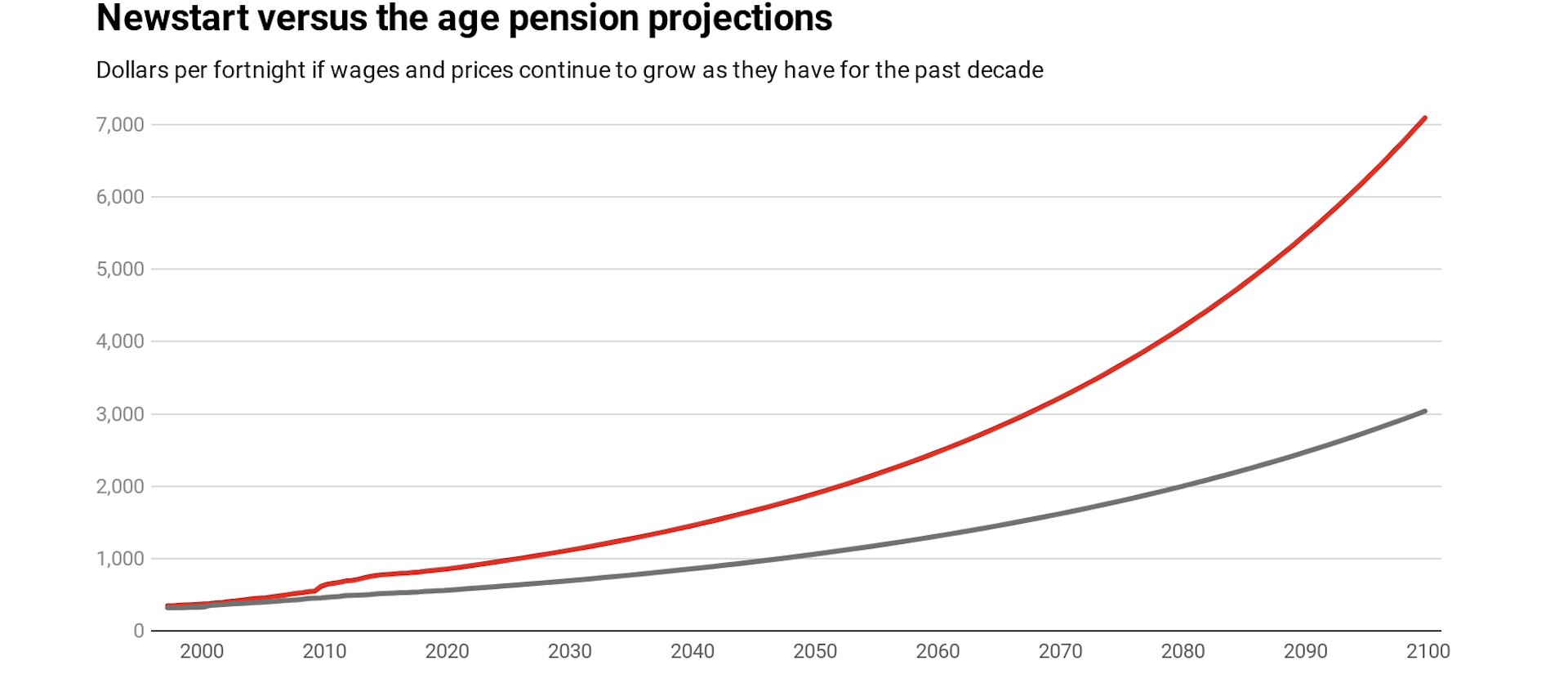
If prices and wages continue to grow at the rates they have over the past decade (2.1% per year for prices, 2.7% for wages) by 2070 Newstart will be just half of the pension. By the end of the century it’ll be just two fifths of the pension.


If it can’t continue, it won’t

Herbert Stein was an economic advisor to US presidents Nixon and Ford. These days he is best remembered among economists for Stein’s Law, which says pithily:

If something cannot go on forever, it will stop.

It’s a warning against the dangers of extrapolations of the kind I have just done, and also a guide to the future. A Newstart rate of just two fifths of the pension, way below everyone else’s standard of living, would be intolerable.

The formula will change well before it gets that bad. It’ll have to.

John Howard himself said so last year:

I was in favour of freezing when it happened, but I think it has probably gone on too long.

The question is how it will change. Labor promised a review and an increase during the last election.

The Coalition is holding firm, although it can’t if it continues to remain in office.

A decade ago the Organisation for Economic Co-operation and Development warned that Newstart was low enough to raise “issues about its effectiveness in providing sufficient support for those experiencing a job loss, or enabling someone to look for a suitable job”.

The budget surplus will help

The Australian Council of Social Service wants the government to lift Newstart by $150 per fortnight to $709, still well short of the pension, and afterwards to lift it in line with the pension and wages, so that it never falls further behind.

It wants the same for Youth Allowance, Austudy, Abstudy, Sickness Allowance, Special Benefit, Widow Allowance and Crisis Payment, which all move in line with Newstart.

The hit to the budget would be $3.3 billion per year, small enough to be funded by projected surpluses.


Read more: Are most people on the Newstart unemployment benefit for a short or long time?


And it would get smaller. Deloitte Access Economics says that after some years about $1.5 billion per year would return to the budget in extra tax as Newstart recipients and the other beneficiaries spent what they were given and boosted economic growth.

They’d have to.The Conversation


Peter Martin, Visiting Fellow, Crawford School of Public Policy, Australian National University

This article is republished from The Conversation under a Creative Commons license. Read the original article.
Read more >>