Showing posts with label renewable energy. Show all posts

Monday, June 21, 2021

Top economists call to speed the switch to electric cars

Australia’s top economists overwhelmingly back government measures to speed the transition to electric cars in order to meet emission reduction targets.

An exclusive poll of 62 of Australia’s preeminent economists — selected by their peers — finds 51 back measures to boost the take-up of electric cars including subsidising public charging stations, subsidising the purchase of all-electric vehicles, and setting a date to ban the import of traditionally-powered cars.

Only 11 oppose such measures, three of them because they prefer a carbon tax.

Six of the 51 who supported special measures said they did so reluctantly, as their preferred alternative would be a carbon price or a carbon tax, rather than subsidising “one alternative out of many to reduce emissions”.

Cars account for roughly half of Australia’s transport emissions, making them about 8% of Australia’s total emissions.

Yet Australia’s take-up of electric vehicles is dwarfed by the rest of the world.

On one measure, all-electric cars accounted for just 0.7% of new car sales in Australia in 2020 compared to 5% in China and 3.5% in the European Union.

Australia has no domestic car industry to protect, meaning industry policy concerns needn’t hold back the transition.


Read more: Going electric could be Australia’s next big light bulb moment


Norway plans to outlaw new petrol car sales from 2025; Denmark, the Netherlands, Ireland and Israel from 2030; and California and Britain from 2035.

Asked whether Australia should take action to speed the transition, eight in ten of the 62 economists selected by the Economic Society said it should.
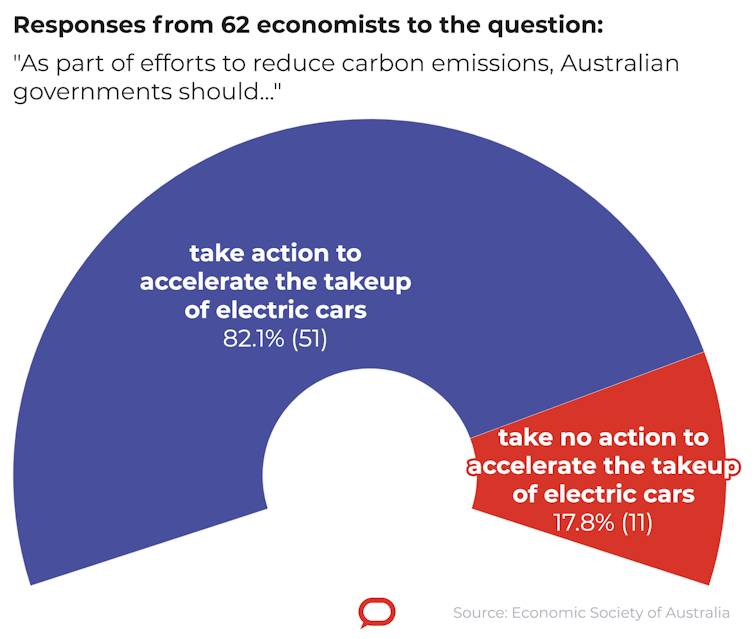

Economic Society of Australia/The Conversation, CC BY-ND

The results represent a departure for a profession whose usual advice is to avoid interfering with markets.

One participant, University of NSW professor Gigi Foster said an important question needed to be answered in order to justify government intervention: “what is the market failure here?”

The market failure was pollution, imposing costs on the community beyond the drivers of conventionally-powered cars and on the planet by pushing up global temperatures.

Broad support: subsidies for charging points

If it wasn’t to be dealt with by a carbon price, measures that sped up the switchover to electric vehicles could achieve some of the same effect.

By far the most popular measure of six presented to the panellists who supported government action was subsidising public charging points, backed by 84%.

The next most popular was removing the luxury car tax from electric-only vehicles. At present the 35% tax applies to cars valued at more than $69,152, and $79,659 for fuel-efficient vehicles.

43% supported making charging points compulsory in new homes and new car parks. 39% supported setting a date to ban the import of petrol and diesel cars.


Matthew Butlin, who chairs South Australia’s Productivity Commission, noted that much of Australia was not urban and unlikely to be served by charging points for some time.

Without government measures to speed the installation of remote charging stations, many buyers would be reluctant to go electric, even if most of their driving was in cities.

When they were in place, there would be a good case for banning the import of petrol and diesel vehicles, but not until then.


Read more: Could electric car batteries feed power back into the grid?


Others wanted to hold off on banning the import of conventionally-powered cars until Australia had a lower-emissions mix of electricity.

Macquarie University’s Lisa Magnani said that with three quarters of Australia’s electricity generated from coal, electric vehicles created considerable emissions.

The Grattan Institute’s Danielle Wood disagreed, saying “network effects” built a case for switching over early.

Network effects build on themselves

The more people switched, the more charging stations would be built and the lower electric vehicle prices would drop, driving more people to switch, and increasing the benefits of decarbonising the electricity supply.

The sooner Australia swapped over, the easier it would be to get to net zero emissions by 2050 without the need for a “cash for clunkers” style scheme to buy back polluting vehicles.

Setting 2035 as the date for banning imports of petrol-powered cars as recommended this year by the International Energy Agency would give buyers time to adjust while the charging infrastructure developed.


Read more: Want an electric car? Here's how to buy second-hand


Tax specialist John Freebairn said electric cars were already heavily subsidised by escaping the fuel excise used to fund roads, despite the efforts of some states to plug the gap.

Sydney University economist Stefanie Schurer argued on the other hand bulky and polluting sport utility vehicles were effectively subsidised because of the tax benefits they attracted when used for work.

Former Liberal Party leader John Hewson of the Crawford School of Public Policy said smoothing the transition had become urgent.

Smooth transition now “urgent”

It took only ten years from 1903-13 for the United States to switch from horse-drawn to petrol-driven vehicles, and technology take-up was quicker today, particularly in Australia.

Other economists surveyed noted that there was much that could be done to reduce harmful emissions in addition to going electric.

Sue Richardson said Australia should impose serious limits on the tailpipe emissions of new cars. Australia is unusual among developed nations in not having such a limit, making it a favoured market for high-emission cars.


Read more: The trucking industry has begun to turn electric; cars will take longer


Rana Roy said a better approach would be to limit transport itself through remote working and efforts to encourage walking and cycling. Subsidies for electric cars could send such moves backwards.

When responses to the survey were weighted by the confidence respondents had in them on a scale of 1 to 10, support of special measures to drive the transition remained about as strong, backed by eight in ten of the economists surveyed.
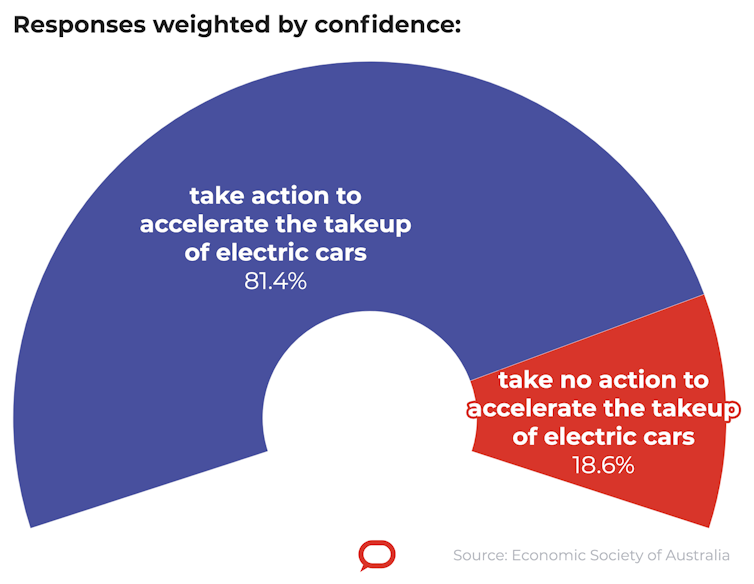

Economic Society of Australia/The Conversation, CC BY-ND

Detailed responses:

Peter Martin, Visiting Fellow, Crawford School of Public Policy, Australian National University

This article is republished from The Conversation under a Creative Commons license. Read the original article.

Read more >>

Wednesday, November 06, 2019

Super power - Australia's low carbon opportunity

Ross Garnaut, University of Melbourne.

Four years ago in December 2015, every member of the United Nations met in Paris and agreed to hold global temperature increases to 2°C, and as close as possible to 1.5°C.

The bad news is that four years on the best that we can hope for is holding global increases to around 1.75°C. We can only do that if the world moves decisively towards zero net emissions by the middle of the century.

A failure to act here, accompanied by similar paralysis in other countries, would see our grandchildren living with temperature increases of around 4°C this century, and more beyond.

I have spent my life on the positive end of discussion of Australian domestic and international policy questions. But if effective global action on climate change fails, I fear the challenge would be beyond contemporary Australia. I fear that things would fall apart.

There is reason to hope

It’s not all bad news.

What we know today about the effect of increased concentrations of greenhouse gases broadly confirms the conclusions I drew from available research in previous climate change reviews in 2008 and 2011. I conducted these for, respectively, state and Commonwealth governments, and a federal cross-parliamentary committee.

But these reviews greatly overestimated the cost of meeting ambitious reduction targets.

There has been an extraordinary fall in the cost of equipment for solar and wind energy, and of technologies to store renewable energy to even out supply. Per person, Australia has natural resources for renewable energy superior to any other developed country and far superior to our customers in northeast Asia.


Read more: Australia's hidden opportunity to cut carbon emissions, and make money in the process


Australia is by far the world’s largest exporter of iron ore and aluminium ores. In the main they are processed overseas, but in the post-carbon world we will be best positioned to turn them into zero-emission iron and aluminium.

In such a world, there will be no economic sense in any aluminium or iron smelting in Japan or Korea, not much in Indonesia, and enough to cover only a modest part of domestic demand in China and India. The European commitment to early achievement of net-zero emissions opens a large opportunity there as well.

Converting one quarter of Australian iron oxide and half of aluminium oxide exports to metal would add more value and jobs than current coal and gas combined.

A natural supplier to the world’s industry

With abundant low-cost electricity, Australia could grow into a major global producer of minerals needed in the post-carbon world such as lithium, titanium, vanadium, nickel, cobalt and copper. It could also become the natural supplier of pure silicon, produced from sand or quartz, for which there is fast-increasing global demand.

Other new zero-emissions industrial products will require little more than globally competitive electricity to create. These include ammonia, exportable hydrogen and electricity transmitted by high-voltage cables to and through Indonesia and Singapore to the Asian mainland.

Australia’s exceptional endowment of forests and woodlands gives it an advantage in biological raw materials for industrial processes. And there’s an immense opportunity for capturing and sequestering, at relatively low cost, atmospheric carbon in soils, pastures, woodlands, forests and plantations.

Modelling conducted for my first report suggested that Australia would import emissions reduction credits, however today I expect Australia to cut domestic emissions to the point that it sells excess credits to other nations.

The transition is an economic winner

Technologies to produce and store zero-emissions energy and sequester carbon in the landscape are highly capital-intensive. They have therefore benefited exceptionally from the historic fall in global interest rates over the past decade. This has reduced the cost of transition to zero emissions, accentuating Australia’s advantage.

In 2008 the comprehensive modelling undertaken for the Garnaut Review suggested the transition would entail a noticeable (but manageable) sacrifice of Australian income in the first half of this century, followed by gains that would grow late into the second half of this century and beyond.

Today, calculations using similar techniques would give different results. Australia playing its full part in effective global efforts to hold warming to 2°C or lower would show economic gains instead of losses in early decades, followed by much bigger gains later on.

If Australia is to realise its immense opportunity in a zero-carbon world, it will need a different policy framework. But we can make a strong start even with the incomplete and weak policies and commitments we have. Policies to help complete the transition can be built in a political environment that has been changed by early success.

Three crucial steps

Three early policy developments are needed. None contradicts established federal government policy.

First, the regulatory system has to focus strongly on the security and reliability of electricity supplies, as it comes to be drawn almost exclusively from intermittent renewable sources.

Second, the government must support transformation of the power transmission system to allow a huge expansion of supply from regions with high-quality renewable energy resources not near existing transmission cables. This is likely to require new mechanisms to support private initiatives.

Third, the Commonwealth could secure a globally competitive cost of capital by underwriting new investment in reliable (or “firmed”) renewable electricity. This was a recommendation by the Australian Competition and Consumer Commission’s retail electricity price inquiry, and has been adopted by the Morrison government.

We must get with the Paris program

For other countries to import large volumes of low-emission products from us, we will have to accept and be seen as delivering on emissions reduction targets consistent with the Paris objectives.

Paris requires net-zero emissions by mid-century. Developed countries have to reach zero emissions before then, so their interim targets have to represent credible steps towards that conclusion.

Japan, Korea, the European Union and the United Kingdom are the natural early markets for zero-emissions steel, aluminum and other products. China will be critically important. Indonesia and India and their neighbours in southeast and south Asia will sustain Australian exports of low-emissions products deep into the future.

For the European Union, reliance on Australian exports of zero-emissions products would only follow assessments that we were making acceptable contributions to the global mitigation effort.

We will not get to that place in one step, or soon. But likely European restrictions on imports of high-carbon products, which will exempt those made with low emissions, will allow us a good shot.


Read more: Labor's reset on climate and jobs is a political mirage


Movement will come gradually, initially with public support for innovation; then suddenly, as business and government leaders realise the magnitude of the Australian opportunity, and as humanity enters the last rush to avoid being overwhelmed by the rising costs of climate change.

The pace will be governed by progress in decarbonisation globally. That will suit us, as our new strengths in the zero-carbon world grow with the retreat of the old. We have an unparalleled opportunity. We are more than capable of grabbing it.

The Conversation


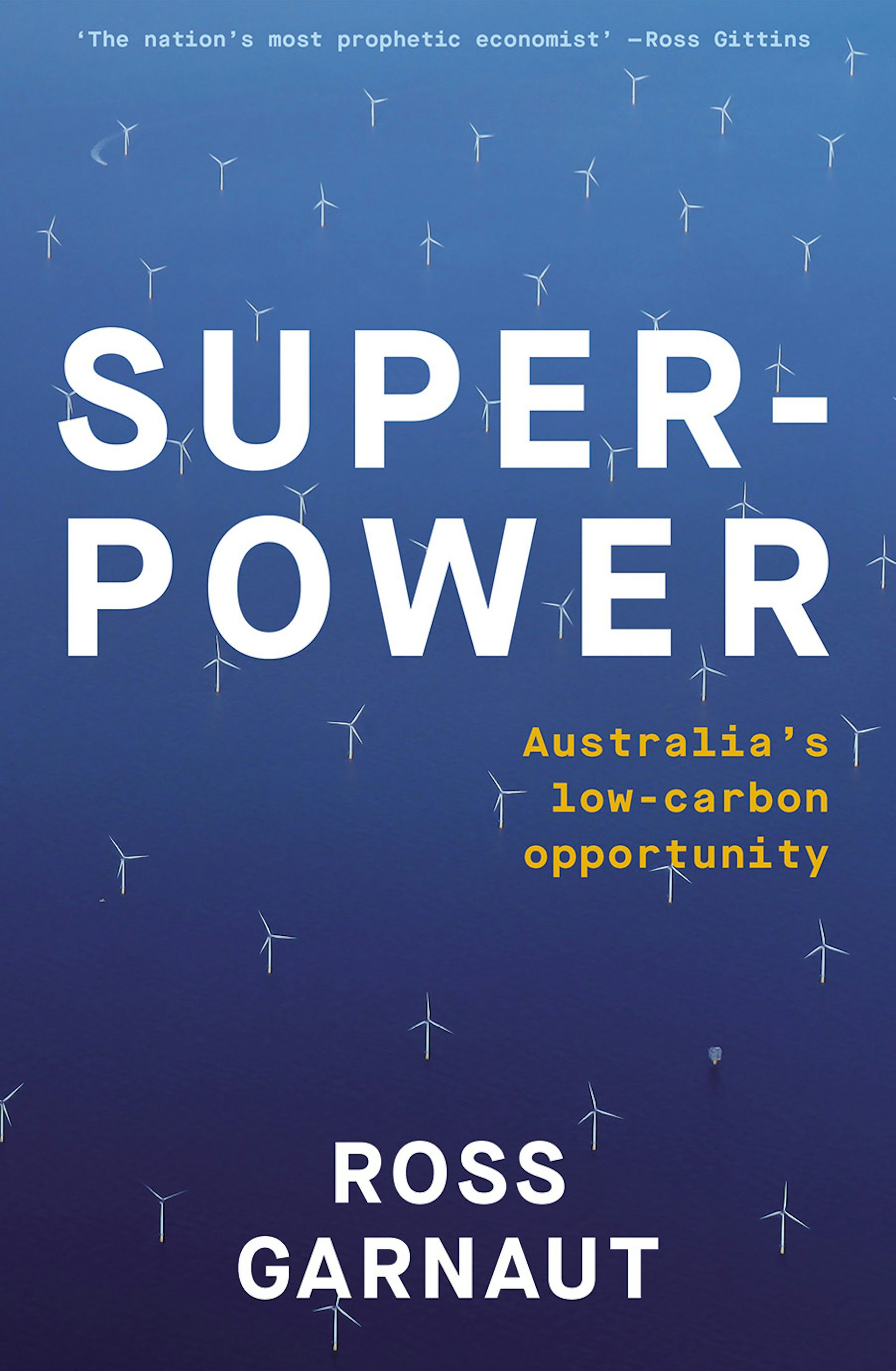
Ross Garnaut conducted the 2008 and 2011 climate reviews for the Rudd and Gillard governments. His book Superpower – Australia’s Low-Carbon Opportunity, is published today by BlackInc with La Trobe University Press.

This article is republished from The Conversation under a Creative Commons license. Read the original article.
Read more >>