Showing posts with label electric cars. Show all posts

Tuesday, February 13, 2024

What would a vehicle efficiency standard for new cars cost – or save – Australian drivers?

Opposition leader Peter Dutton says Labor’s proposed fuel efficiency standard for new cars would push up the price of a Mazda CX30 “by about $19,000”.

Given that right now the Mazda CX30 costs A$33,140, that’d be one hell of an increase.

So what should we really expect if Australia finally introduces fuel efficiency standards here – decades after the US and Europe? What could it cost us upfront for buying new cars? And how much could we save later in lower fuel bills?

Here’s what we do know, based on decades of international experience, new federal government analysis – and even cost estimates from a previous Coalition government.

Car efficiency standards are common overseas

Labor is proposing a so-called new vehicle efficiency standard of the kind proposed by the Coalition in 2016, championed by the Coalition in 2022, and common in the rest of the world.

Here’s how it works in Europe, the United States and Japan, and just about every advanced economy other than Russia and Australia.

Every car manufacturer has to meet an average efficiency standard for the new vehicles it sells each year, whether expressed in miles per gallon (the US) or carbon dioxide emitted per kilometre (Europe).

Europe has been doing it since 2009. When it tightened its standards in 2020, average CO₂ emissions of new passenger cars sold fell 12% and a further 12.5% the following year.

In the US, fuel efficiency has doubled

The United States has been doing it since 1975.

In that time, the average efficiency of its new cars has doubled, and it is about to tighten standards further.

After decades of being the odd one out, Australian passenger cars on average use 20% more fuel than passenger cars in the US.

And that isn’t only because Australians like SUVs and utes. In both Australia and the US, SUVs and utes account for four out of every five new light vehicles sold.

But the new SUVs and utes sold in Australia produce on average 24% more emissions than those sold in the United States. The new smaller cars sold in Australia produce 31% more.

Standards change the mix of what’s sold

Efficiency standards don’t prevent carmakers from selling inefficient vehicles. What they do is ensure they make those vehicles more efficient, or balance their sales with sales of more efficient ones.

At the moment, it means the vehicles sold in the US and elsewhere get advanced emissions technologies not generally offered in Australia.

It’s easy to understand why. With efficient vehicles prized in the US, Europe, and other places, because they are needed to balance up the sales of less efficient vehicles, they get diverted to those places – rather than Australia.

In the words of Volkswagen Group Australia chief Michael Bartsch, it makes Australia a “dumping ground” for older and less efficient vehicles.

Labor has put forward three options for targets: a slow start, a fast start, and its preferred option: “fast but flexible”.

Its preferred option would require carmakers selling in Australia to catch up with the standards of countries including the United States by 2028.

For motorists, the biggest benefit is fuel savings – calculated at A$107 billion between now and 2050. Against that sit vehicle technology, electricity and battery replacement costs of half as much, leaving motorists a long way ahead.

But would it push up the price of cars, as Dutton suggests?

‘No systemic, statistically significant increase’

The government’s consultation paper says the evidence consistently shows no price impact or a negligible price impact.

But common sense suggests it’ll make the price of gas guzzlers somewhat more expensive, and lean, fuel-efficient machines less expensive, as carmakers adjust the mix of what they trying to sell.

When the Coalition looked at this back in 2016, it found the standard it proposed would increase the price of an average-performing petrol passenger vehicle by between $800 and $2,000, and the price of an average-performing diesel light commercial vehicle by between $750 and $2,000.

At the petrol price at the time, $1.30 per litre – far less than we’re paying now – motorists would have been ahead after four years.

Maybe Labor’s plan will push up car prices more than the Coalition’s 2016 plan, because it is more ambitious, as Dutton suggests. Or maybe it will push up prices by less because vehicle technology has improved.

In the US, a statistical analysis of prices from 2003 to 2021 found “no systemic, statistically significant increase in inflation-adjusted vehicle prices” during two decades in which standards were tightened and fuel economy improved 30%.

And standards will need to tighten. Cars and other light vehicles account for 13% of Australia’s carbon emissions. Both this government – and its Coalition predecessor – committed to cutting Australia’s net emissions to zero by 2050.

Without vehicles pulling their weight, along with heavy industry and electricity, we won’t get there.The Conversation

This article is republished from The Conversation under a Creative Commons license. Read the original article.

Read more >>

Wednesday, November 17, 2021

The embarrassingly easy way to cut the cost of electric cars

Prime Minister Scott Morrison says he wants to keep prices down.

Without his party in power, “you’re going to see petrol prices go up, you’re going to see electricity prices go up”.

There’s something practical he can do straight away to stop prices from rising.

Apart from a home, a car is the most important purchase most Australians make.

We typically hold on to our cars for six years, and most last many years longer.

This means that when we buy a car we have to have an eye on the future, on what it will make sense to drive half a decade down the track.

Electric cars are cheaper overseas

In almost every way, certainly when it comes to running and maintenance costs, electric vehicles are the best option.

And yet their price is set to come down far faster overseas than in Australia.

Here’s why.

Europe has imposed what it calls CO₂ emission performance standards.

They don’t relate to particular cars, as the term “performance standards” suggests, but to an average of what’s sold over each company’s entire range.

From 2020 each manufacturer’s cars are limited to an average emissions of 95 grams of carbon dioxide emitted per kilometre, and vans to an average of 147 grams emitted per kilometre.

It’s up to the companies how they achieve this. They could do it by selling more low-emission and fewer higher emission conventionally-powered cars, or they could do it by selling more electric cars.

If they haven’t sold enough electric cars to get under their brand’s emissions ceiling, they have to discount them to sell more in order to get average emissions down.

In Europe, electric sales are valuable

In the first year of the new European standard, average emissions from new passenger cars registered in Europe fell 12%. The share of electric cars tripled.

In 2025 the standard will become tougher again, requiring a further 15% cut in average emissions, and then from 2030 (for cars) a further 35%.

The big car manufacturers are finding it hard. It’ll make every electric car they sell valuable for them, valuable enough to sell cheaply, but only in Europe (and Canada, China, India, Japan, Korea, Mexico and the United States, which have similar standards, sometimes called fuel economy standards).

The International Energy Agency says four in five of the cars sold worldwide are subject to such standards.

In places where they are not (such as Australia) there is no particular reason for an international manufacturer to go all out to sell an electric car. It won’t help them meet a standard.

Australia has standards, sort-of

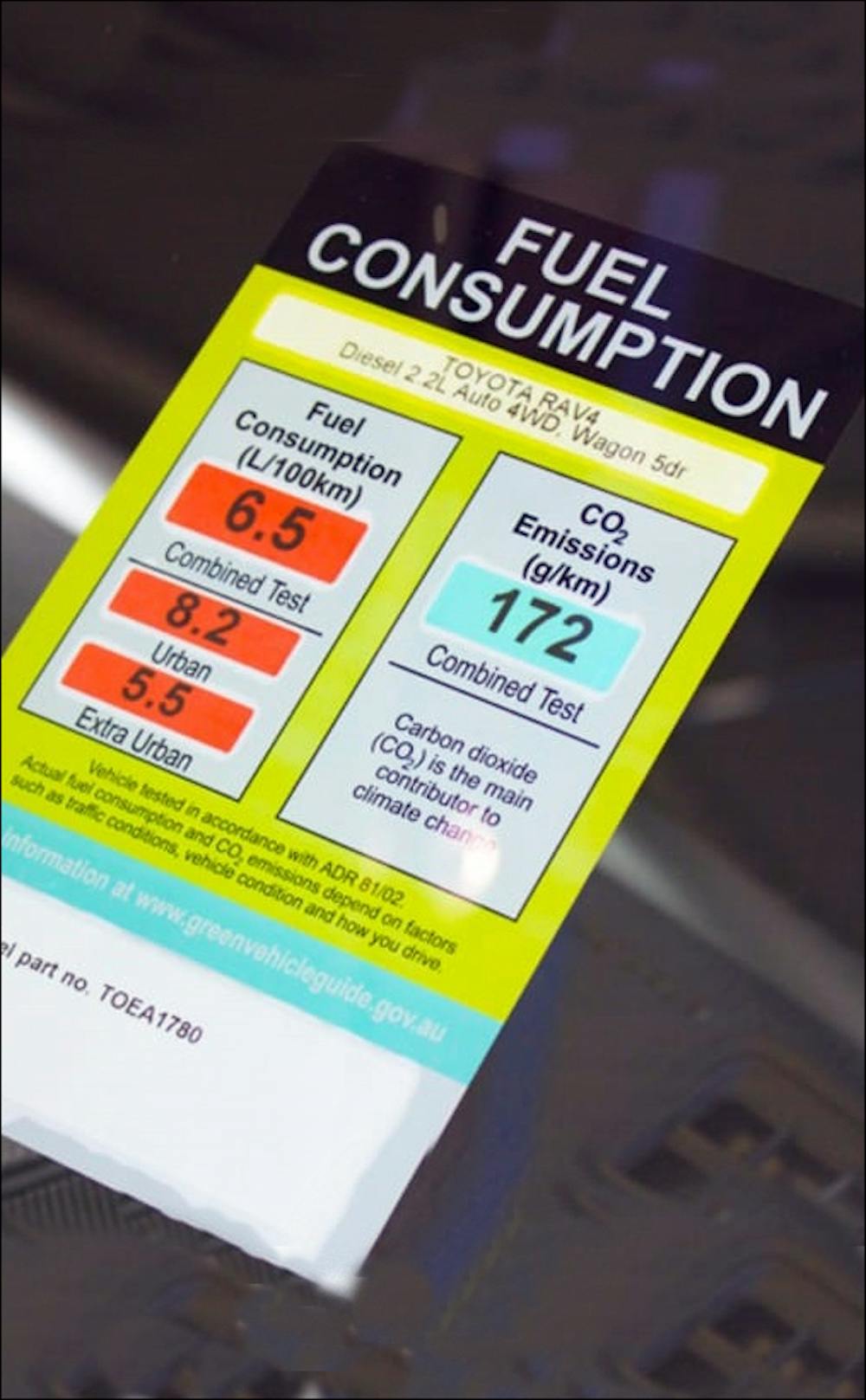
Not that Australia doesn’t have standards, of a sort. Since 2008 all new cars sold in Australia have had to display a sticker quoting fuel economy and emissions per kilometre.

The standards for actual CO₂ emissions are voluntary. The Grattan Institute kindly says they are “lacking in ambition and have often not been met”.

Faced with one of the few big markets in the world in which there is no particular imperative to sell electric cars, international manufacturers direct them elsewhere and sell higher emission cars here.

Their local arms want to sell better cars here, but are overruled.

The local head of Nissan puts it this way:

clear and consistent direction from governments is a critical signal to car makers to prioritise the importation of the latest low and zero-emissions vehicles

The local head of Volkswagen is more blunt.

Every six months we do an update with a board meeting on the electric vehicle environment in Australia. They are sitting in waiting for something to change, you know, but nothing ever changes. I guess the way I would put it is that it is embarrassing

It isn’t just that there is no particular incentive to discount an electric car sold in Australia. It is that there’s an incentive to charge more.

Without standards, we are an unattractive market

It harms a manufacturer’s profits to sell an electric car here that could be used to lower its average emissions profile in (say) Europe. It makes sense to do as much as is needed to keep it out of Australia.

Fixing the anomaly would be easy and would actually bring prices down, as well as increasing the limited range on offer. And it would help buyers of conventional vehicles worried about the price of petrol. New cars would use less.

Australians able to buy electric cars because of the change would find they used no petrol at all.

Introducing international-grade standards would not require a tax and would not require a tax concession. It would merely require regulations of the kind in place elsewhere.

Business won’t object. The Business Council asked for the change four years ago. Australian car makers won’t object. We no longer have any.

Petrol refiners won’t object. They are finding it hard to reduce the sulphur and other pollutants that kill hundreds of Australians each year. The government has advanced them up to A$250 million to help.

But carbon dioxide is different. We don’t need good quality fuel to reduce it, merely good quality cars. We are able to put them in the hands of more Australians near-costlessly.

Peter Martin, Visiting Fellow, Crawford School of Public Policy, Australian National University

This article is republished from The Conversation under a Creative Commons license. Read the original article.

Read more >>

Monday, June 21, 2021

Top economists call to speed the switch to electric cars

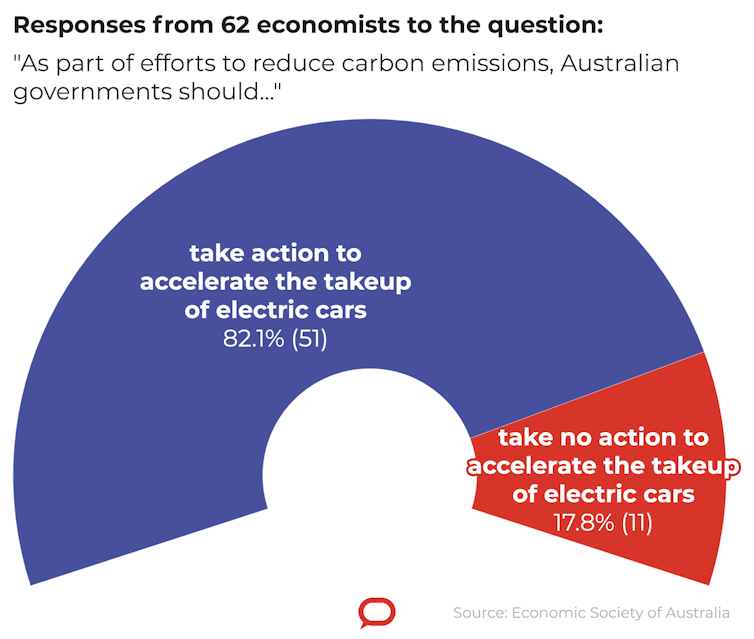
Australia’s top economists overwhelmingly back government measures to speed the transition to electric cars in order to meet emission reduction targets.

An exclusive poll of 62 of Australia’s preeminent economists — selected by their peers — finds 51 back measures to boost the take-up of electric cars including subsidising public charging stations, subsidising the purchase of all-electric vehicles, and setting a date to ban the import of traditionally-powered cars.

Only 11 oppose such measures, three of them because they prefer a carbon tax.

Six of the 51 who supported special measures said they did so reluctantly, as their preferred alternative would be a carbon price or a carbon tax, rather than subsidising “one alternative out of many to reduce emissions”.

Cars account for roughly half of Australia’s transport emissions, making them about 8% of Australia’s total emissions.

Yet Australia’s take-up of electric vehicles is dwarfed by the rest of the world.

On one measure, all-electric cars accounted for just 0.7% of new car sales in Australia in 2020 compared to 5% in China and 3.5% in the European Union.

Australia has no domestic car industry to protect, meaning industry policy concerns needn’t hold back the transition.


Read more: Going electric could be Australia’s next big light bulb moment


Norway plans to outlaw new petrol car sales from 2025; Denmark, the Netherlands, Ireland and Israel from 2030; and California and Britain from 2035.

Asked whether Australia should take action to speed the transition, eight in ten of the 62 economists selected by the Economic Society said it should.


Economic Society of Australia/The Conversation, CC BY-ND

The results represent a departure for a profession whose usual advice is to avoid interfering with markets.

One participant, University of NSW professor Gigi Foster said an important question needed to be answered in order to justify government intervention: “what is the market failure here?”

The market failure was pollution, imposing costs on the community beyond the drivers of conventionally-powered cars and on the planet by pushing up global temperatures.

Broad support: subsidies for charging points

If it wasn’t to be dealt with by a carbon price, measures that sped up the switchover to electric vehicles could achieve some of the same effect.

By far the most popular measure of six presented to the panellists who supported government action was subsidising public charging points, backed by 84%.

The next most popular was removing the luxury car tax from electric-only vehicles. At present the 35% tax applies to cars valued at more than $69,152, and $79,659 for fuel-efficient vehicles.

43% supported making charging points compulsory in new homes and new car parks. 39% supported setting a date to ban the import of petrol and diesel cars.


Matthew Butlin, who chairs South Australia’s Productivity Commission, noted that much of Australia was not urban and unlikely to be served by charging points for some time.

Without government measures to speed the installation of remote charging stations, many buyers would be reluctant to go electric, even if most of their driving was in cities.

When they were in place, there would be a good case for banning the import of petrol and diesel vehicles, but not until then.


Read more: Could electric car batteries feed power back into the grid?


Others wanted to hold off on banning the import of conventionally-powered cars until Australia had a lower-emissions mix of electricity.

Macquarie University’s Lisa Magnani said that with three quarters of Australia’s electricity generated from coal, electric vehicles created considerable emissions.

The Grattan Institute’s Danielle Wood disagreed, saying “network effects” built a case for switching over early.

Network effects build on themselves

The more people switched, the more charging stations would be built and the lower electric vehicle prices would drop, driving more people to switch, and increasing the benefits of decarbonising the electricity supply.

The sooner Australia swapped over, the easier it would be to get to net zero emissions by 2050 without the need for a “cash for clunkers” style scheme to buy back polluting vehicles.

Setting 2035 as the date for banning imports of petrol-powered cars as recommended this year by the International Energy Agency would give buyers time to adjust while the charging infrastructure developed.


Read more: Want an electric car? Here's how to buy second-hand


Tax specialist John Freebairn said electric cars were already heavily subsidised by escaping the fuel excise used to fund roads, despite the efforts of some states to plug the gap.

Sydney University economist Stefanie Schurer argued on the other hand bulky and polluting sport utility vehicles were effectively subsidised because of the tax benefits they attracted when used for work.

Former Liberal Party leader John Hewson of the Crawford School of Public Policy said smoothing the transition had become urgent.

Smooth transition now “urgent”

It took only ten years from 1903-13 for the United States to switch from horse-drawn to petrol-driven vehicles, and technology take-up was quicker today, particularly in Australia.

Other economists surveyed noted that there was much that could be done to reduce harmful emissions in addition to going electric.

Sue Richardson said Australia should impose serious limits on the tailpipe emissions of new cars. Australia is unusual among developed nations in not having such a limit, making it a favoured market for high-emission cars.


Read more: The trucking industry has begun to turn electric; cars will take longer


Rana Roy said a better approach would be to limit transport itself through remote working and efforts to encourage walking and cycling. Subsidies for electric cars could send such moves backwards.

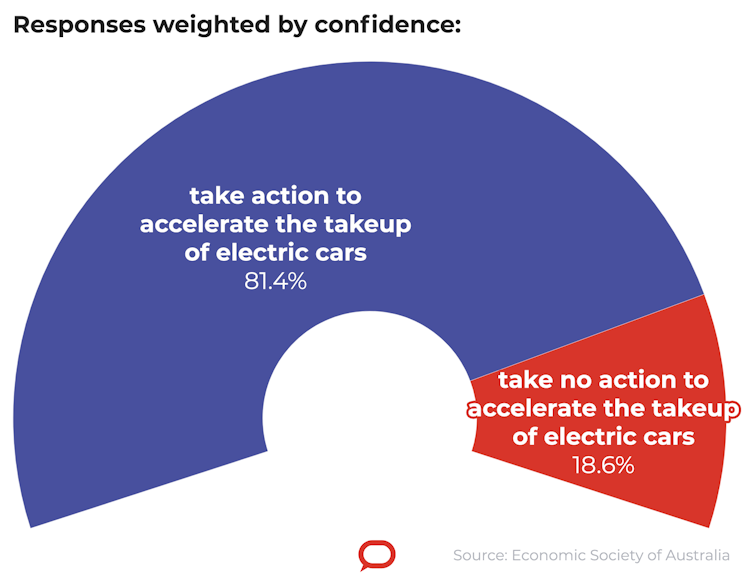
When responses to the survey were weighted by the confidence respondents had in them on a scale of 1 to 10, support of special measures to drive the transition remained about as strong, backed by eight in ten of the economists surveyed.


Economic Society of Australia/The Conversation, CC BY-ND

Detailed responses:

Peter Martin, Visiting Fellow, Crawford School of Public Policy, Australian National University

This article is republished from The Conversation under a Creative Commons license. Read the original article.
Read more >>

Wednesday, May 26, 2021

Going electric and banning new petrol-powered cars could be Australia’s next big light bulb moment

In 2007 Malcolm Turnbull turned off an industry’s life support without blinking.

The industry made light bulbs, of the traditional kind; so energy-inefficient they lost most of it as heat.

“A normal light bulb is too hot to hold — that heat is wasted, and globally represents millions of tonnes of carbon dioxide that needn’t have been emitted,” he explained.

From February 2009 it became illegal to import the traditional pear-shaped globes, while from November that year it became illegal to sell them.

It was a world-first, announced by Turnbull as environment minister and sanctioned by his prime minister John Howard.

The European Union followed, and then, some years later, China.

Globally, electric lighting generated emissions equal to 70% of those from cars. Australia’s switch cut emissions by an estimated 4 million tonnes per year.

Turnbull was able to do it because Australia no longer made light globes.

There was no domestic industry — and no jobs — to protect.

Australia stopped making cars in 2017. The thousands of workers who used to assemble cars in Australia no longer have those jobs.

Which means there’s no car industry to protect.

We have the opportunity to do to traditionally-powered cars what we did to incandescent light bulbs.

And the need. We’ve all but committed ourselves to net-zero emissions by 2050.

In a landmark report released last Tuesday, the International Energy Agency said the path to net-zero by 2050 was narrow and extremely challenging, requiring governments to “take action this year and every year after so that the goal does not slip out of reach”.

Many of the 400 or so milestones it set out are challenging for Australia, among them no new coal mines or mine expansions from this year, and the closure of almost all of Australia’s coal-fired power stations by the end of this decade.

But one of the milestones ought to be easy.

It’s no new sales of internal combustion cars by 2035.

The rest of the world is racing ahead

As a step along the way, the agency wants two-thirds of all new cars sold to be petrol-free by 2030. Australia, with no vehicle production industry to care about, ought to get there sooner.

Norway has promised no new petrol car sales by 2025; Denmark, the Netherlands, Ireland and Israel by 2030; and California and the United Kingdom by 2035, a target the UK has brought forward from 2040.

In addition, the European Union is imposing manufacturer-specific emissions targets, which will force each one to either sell a greater proportion of non-petrol vehicles or make the ones they do sell much more efficient.


Read more: Costly, toxic and slow to charge? Busting electric car myths


Manufacturers are getting in early. Honda says it will sell only electric and hybrid vehicles in Europe starting in 2022, three years earlier than previously planned. Volvo says 50% of its worldwide sales will be fully electric by 2025 and the rest hybrids.

Like the transitions to colour TV, automatic car windows, automatic transmissions and transistor radios, the shift will be one way. When production lines are retooled, there will be no turning back.

Moving quickly would do more than help Prime Minister Scott Morrison produce a credible roadmap to take to Glasgow climate talks in November.

It would enable us to avoid becoming a dumping ground for the dirtier, more polluting vehicles that can’t be sold elsewhere while the changeover is underway.

Switching soon would save us money

And it would save the government money. It has just committed to pay up to A$2 billion to keep Australia’s two remaining oil refineries open until 2027.

Without the payments, Ampol might have closed Lytton in Queensland (it was weighing up doing so) and Viva Energy refinery might have closed its loss-making refinery at Geelong.

While both have accepted the money, Ampol has unveiled plans to test the production of solar-powered hydrogen on its site at Lytton and Viva Energy is planning a solar farm on its site at Geelong.

Most of Australia’s petrol is imported, much of it from Singapore, meaning little would be lost if Australia’s refineries closed.

The Australian-produced fuel is dirtier than the imported fuel, something the Australian government promised to fix this month by paying Australia’s plants to make the ultra-low sulphur petrol the rest of the world switched to years ago.

If a ban on imports of petrol-powered cars wouldn’t much hurt Australia’s reluctant refiners, it might hurt petrol stations, but not much.

Australia’s service stations are in large measure retail convenience stores. They try to maximise “basket size”. Ampol plans to turn the petrol side of the business into a recharge and refuelling network for electric and hydrogen vehicles.

Mechanics would lose jobs

The much-larger industry at risk from a switch to electric vehicles is car maintenance. The Bureau of Statistics counts 352,200 automotive and engineering trades workers, almost all of them male and full time.

That a switch to low-maintenance electric vehicles would shrink their industry is unfortunate for them, but inevitable. Propping up their industry by delaying the transition would only encourage more young people into jobs with limited futures.

When Australia switched from valve to transistor-operated TV sets in the 1970s, an army of “television repair men” was thrown out of business, along with their vans and two-way radios.

Most of them stayed in the workforce doing things we needed.

To have kept using sets requiring maintenance just to have kept them in work would have been an insult to them and us.

And while Australia’s switch away from incandescent globes was problematic (many of us liked the yellowish glow we’d become used to) the switch to electric cars is looking positively joyous.

Crikey/Coal Miners Driving Teslas

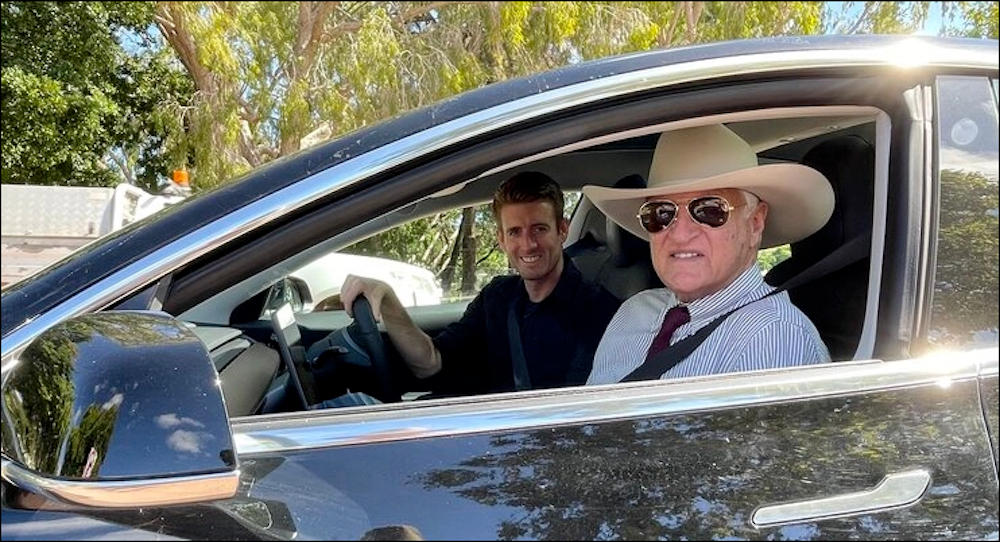
This week Crikey pointed to a video in which the Queensland MP Bob Katter gets his first taste of a Tesla as it accelerates from zero to 100 kilometres per hour in just over three seconds.

Yeehaw!” he yells. “This is so exciting.”

Australians usually embrace the future. At times we’ve been ahead of it.


Read more: International Energy Agency warns against new fossil fuel projects. Guess what Australia did next?


Peter Martin, Visiting Fellow, Crawford School of Public Policy, Australian National University

This article is republished from The Conversation under a Creative Commons license. Read the original article.

Read more >>