Showing posts with label Treasury. Show all posts

Wednesday, October 23, 2019

If you want to boost the economy, big infrastructure projects won't cut it: new Treasury boss

Treasury secretary Steven Kennedy – in the job for for just weeks after moving across from the department of infrastructure last month – has dismissed talk of spending big on infrastructure in order to escape an economic downturn.

Such calls “sound straightforward, but in practice are difficult to achieve”, he told a Senate hearing on Wednesday.

The timing requirements of fiscal stimulus are hard to give effect to while ensuring large projects are well planned and executed, and cost and capacity pressures are managed. There are some opportunities though, usually related to smaller projects and maintenance expenditure. The Commonwealth and state Governments are currently actively exploring these opportunities.

More broadly he made it plain that it was the role of the Reserve Bank rather than the Treasury to provide economic stimulus.

The bank has already cut its cash rate to a record low of 0.75% and has indicated it is prepared to consider unconventional monetary policy measures that would have the effect of cutting a wider range of rates.


Read more: 0.75% is a record low, but don't think for a second the Reserve Bank has finished cutting the cash rate


However, bank Governor Philip Lowe said last week such tools would be most effective “when used together with a broader set of policies”, including government spending and tax policies.

Without crisis, no need to spend more
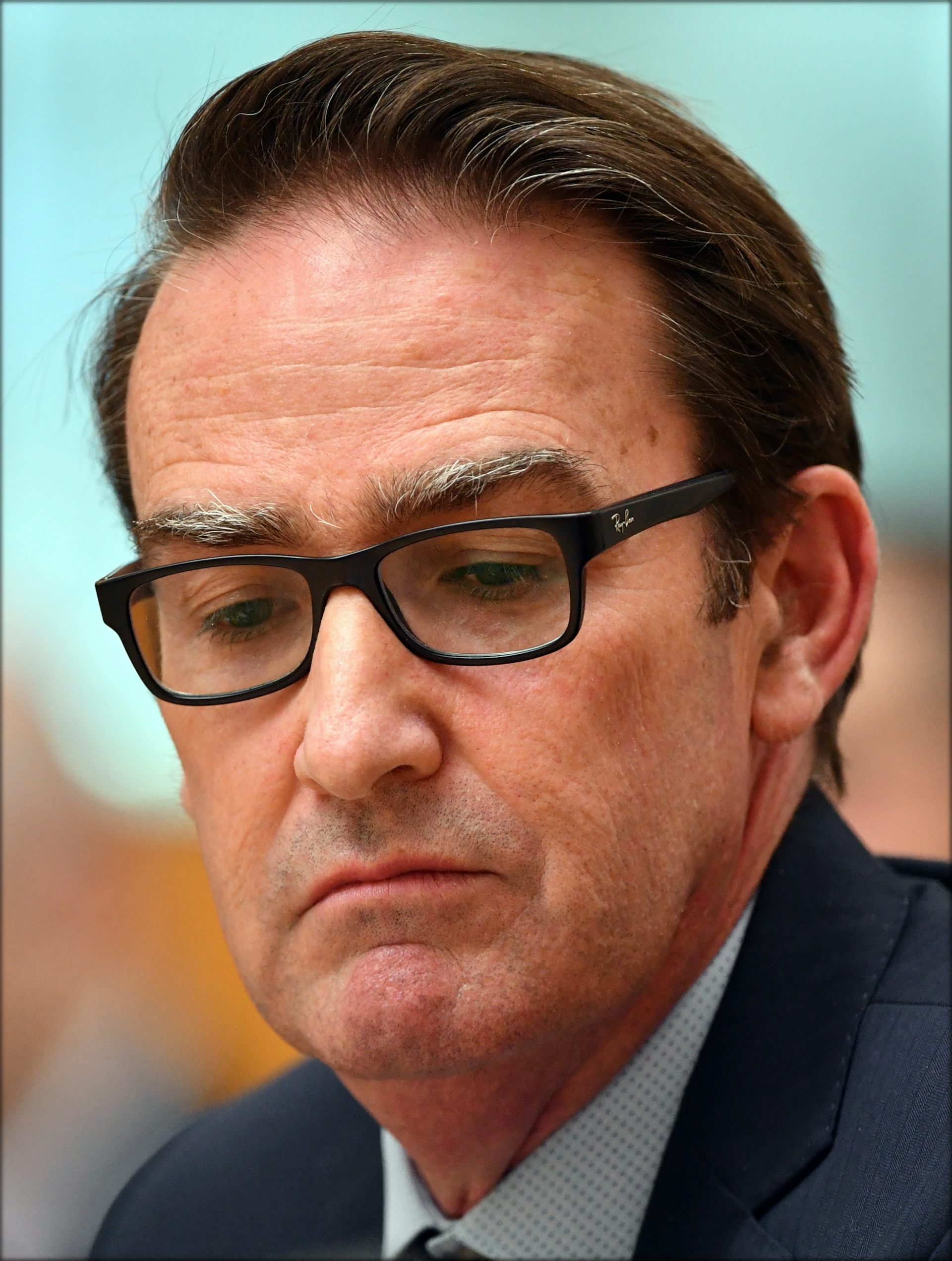
Kennedy rejected the idea of extra spending except in an emergency, saying Treasury could best serve Australia’s interests by a “stable and predictable” policy framework that kept the budget near balance over time.

There would be times when a downturn cut revenue and increased spending on support payments, pushing the budget into deficit, but beyond allowing those so-called automatic stabilisers to operate there wasn’t normally a case for doing more.

The exceptions were “periods of crisis”.

“It is important to consider separately broader policy objectives and temporary responses to crisis,” Kennedy said.

“The circumstances or crisis that would warrant temporary fiscal responses are uncommon.”

Although Australia’s economy is not in crisis, Brexit, the US-China trade war and turmoil in Hong Kong have slowed economic and trade growth worldwide, as businesses opt to stay on the sidelines.

No crisis, but weak growth worldwide

In Australia, economic growth had been unusually weak, weighed down by weak household spending which was itself the result of weak income growth, weak house prices, weak housing investment, and weaker than expected non-mining investment.

Mining investment was down sharply, as was to be expected after the completion of several large liquefied natural gas projects.

Given low interest rates, it was “somewhat of a puzzle” that business investment was not growing faster. Partly that might be because the “hurdle rates” businesses use to assess projects have not been adjusted down as they should have been. Partly it might be because of uncertainties surrounding the global economy and technological change.

Structural factors may also be at play — it is not clear what business investment looks like in a world where more than two thirds of our economy is now services based.

The budget tax cuts that flowed into returns from July have not yet led to a “particularly large improvement” in household spending.

Wages, investment “somewhat of a puzzle”

“We will continue to assess the data on consumption as it becomes available, but it is worth noting that even if households initially use the tax cuts to pay down debt faster, this will still bring forward the point at which households could increase their spending,” Dr Kennedy said.

It is possible that spending might have been even weaker without the tax cuts.

Holding back the economy during the year to June has been drought and dry weather which knocked 0.2 percentage points of the economic growth. Holding it up has been larger than normal growth in government spending that contributed 0.2 percentage points more to economic growth than was normal.


Read more: Why we've the weakest economy since the global financial crisis, with few clear ways out


No one had been able come up with a complete explanation for Australia’s unexpectedly low rate of wage growth. One explanation might be that even though the unemployment rate of 5.2% was unusually low, increases in employment were drawing in older workers and women rather than pushing up wages.

Ultimately what was needed to sustain higher wage growth was productivity growth, and that would be difficult to achieve while business investment was weak. The Productivity Commission had come up with a set of recommendations state and federal ministers were working their way through.

Although economic growth has been very low - just 1.4% in the year to June – it grew more strongly in the last half of that year than the first. It might be “strengthening from here”.The Conversation


Peter Martin, Visiting Fellow, Crawford School of Public Policy, Australian National University

This article is republished from The Conversation under a Creative Commons license. Read the original article.

Read more >>

Monday, January 08, 2018

Why Treasury told Turnbull about negative gearing

Malcolm Turnbull knew or ought to have known that the claims he made about Labor's housing policy during the election were likely to be wrong.

The Treasury pointed it out in the lead-up to the campaign.

Ramping up his rhetoric in order to win the election, Turnbull said Labor's plan would "devalue every home, every property, in Australia".

It would "smash up home values", "pull the rug out from under the property sector".

It was "a big sledgehammer" aimed at the property prices.

Except that the Treasury didn't think so, and had spelled out its reasoning in a memo delivered to treasurer Scott Morrison as Turnbull was sharpening his lines.

Far from disowning the memo, the Treasury has spent much of the past two years arguing that its contents reflected its genuinely-held opinion.

Fighting to prevent its release to the ABC under the Freedom of Information Act, it told the Office of the Australian Information Commissioner that publication would harm its "ability to provide candid and confidential advice to ministers in the future".

Here is that candid and confidential advice. Labor wanted to limit negative gearing to newly-built homes. Losses from investments in other homes and shares could still be deducted from income, but only from investment income. Existing investments would be unaffected. And the capital gains from those investments would be taxed more heavily, at three-quarters rather than half the income tax rate.

Treasury said the changes would have a "relatively modest" effect on prices.

Returns for investors would fall. But owner-occupiers, unaffected by the changes, would be "likely to limit the extent to which is an impact on prices".

"Overall, price changes are likely to be small, though the composition of ownership may shift away from domestic investors," the candid assessment concluded.

Labor's policy, or cut-down versions of it, has been supported by the Property Council, the Business Council, the head of the Abbott government's Commission of Audit, the head of its review of the financial system, the Reserve Bank governor Philip Lowe, the Institute of Company Directors, and the Committee for the Economic Development of Australia.

Treasury, but not Turnbull, thought they were on the right track.

In The Age and Sydney Morning Herald
Read more >>

Friday, December 09, 2016

Labor attacks 'treasury' report discrediting stimulus

Labor has questioned the bona fides of a report apparently commissioned by the Treasury that plays down the role of big government spending in helping Australia survive the global financial crisis.

Written by Griffith University professor Tony Makin, a long-term critic of the so-called cash-splash during the crisis, it finds "no evidence fiscal stimulus benefited the economy over the medium term".

"In sum, the nature of Australia's fiscal stimulus was misconceived because it emphasised transfers,unproductive expenditure such as school halls and Pink Batts, rather than tax relief and/or supply side reform, as occurred for instance in New Zealand," the paper says.

"Largely implemented after the worst of the crisis had passed, fiscal stimulus countered the effectiveness of monetary policy by keeping market interest rates higher than otherwise and therefore contributed to a strong exchange rate. This worsened Australia's international competitiveness and damaged industries in the internationally exposed sector, particularly manufacturing."

Australia is one of the few countries in the developed world to have escaped recession during the crisis that began in 2008. Others, including New Zealand, did not.

Professor Makin has previously been taken to task by the Treasury for his criticism of economic stimulus during the crisis, which it said was "based on a theoretical model that does not apply in Australia's case in general and assumptions that did not hold during the global financial crisis".

The status of his new paper is unclear. It is dated August 2016 but did not appear on a Treasury website until late Friday morning after requests for it and after two newspapers were apparently given early access to it. Even then, it wasn't placed on the Treasury website itself but on as lesser-known site entitled "Treasury Research Institute" which the treasury says was established earlier this year to report on "topics of interest to Treasury to encourage work or collaboration with Treasury".

Only on Friday afternoon did the treasury create a link to the Treasury Research Institute from its homepage. It said the institute would "regularly publish papers to the site on topical economic and policy issues, written by both external contributors and staff".

Labor treasury spokesman Chris Bowen said he would write to the secretary to the Treasury, John Fraser, to ask why he commissioned work by a "well-known ideological opponent of the stimulus package".

He said its release seemed to have been designed to distract attention from government's backflips over energy policy and to preempt calls for further stimulus in the wake of national accounts figures showing the economy going backwards.

On Wednesday, Treasurer Scott Morrison attacked Labor's spending during the crisis, saying: "They gave money to dead people and thought that was going to grow the economy; that was a nonsense".

Mr Bowen said the Treasurer ought to be concentrating on the present rather than the past.

At the time, the Organisation for Economic Cooperation and Development and other international bodies had praised Australia's response to the crisis as "one of the best designed and implemented in the world".

In The Age and Sydney Morning Herald
Read more >>

Monday, October 24, 2016

Treasury ditches wellbeing as the rest of the world catches on

The head of the Treasury moves quickly.

John Fraser told a Senate hearing this week he wrote the department's new corporate plan "between 6 and 8.30 one night as I was waiting to go out to dinner".

In it, he tossed aside the "wellbeing framework" that for a decade has been supposed to guide the treasury in its assessment of what government decisions are good and bad.

All that really mattered was jobs and growth. "We are talking about living standards," he said. "And if living standards are not about wellbeing, then I do not know what is."

But there is much, much more to a good life than jobs and growth, and the head of the treasury ought to know it.

Who gets that growth is the start. The framework used by his predecessors (which Fraser says he has never seen) had as the second of its five points "the distribution of those opportunities". Under that criteria a decision that further concentrated wealth (such as tax cuts for the already wealthy) would clearly have been recognised as worse than one that spread it more broadly and the government would have been told so.

The third point was sustainability. If economic growth was built on sinking sands – such as burning brown coal and using up Australia's allocation of carbon emissions quickly – it would arguably have been regarded as worse than one than one that cut back on emissions earlier and more gradually. In fairness to Fraser, there's no reason to think he doesn't get this. His idea of targeting "living standards" easily incorporates making sure living standards are sustainable.

But it incorporates points four and five not at all. These days, when for most of us material wealth isn't too bad, they might be the most important of all.

Increasingly, what really matters to us is stress. It weakens us, regardless of our wealth, and it is often brought on by government decisions that force us to go through needless hoops.

Points four and five were "the overall level and allocation of risk borne by individuals and the community" and "the complexity of the choices".

Simplifying life was this week recognised in Britain the United Kingdom as an explicit policy goal, particularly when designing programs for people who are already highly stressed.

While our government tried to get through the Senate rules that would further stigmatise and inconvenience Australians applying for unemployment benefits, the British Behavioural Insights Team Behavioural Economics Unit nominated reducing "cognitive load" as one of the most important things governments could do.

"We all have limited mental processing capacity to reason, to focus, to learn new ideas," it said. "The worries involved in making ends meet already deplete bandwidth, so government services aiming to tackle disadvantage – such as savings schemes, employment advice and parenting programmes – should be required to pass a cognitive load test to ensure these services do not make it harder for people on low incomes to make good decisions."

If only we'd cottoned on first.


The Treasury's now-ditched wellbeing framework

In undertaking its mission Treasury takes a broad view of wellbeing as primarily reflecting a person's substantive freedom to lead a life they have reason to value.

This view encompasses more than is directly captured by commonly used measures of economic activity. It gives prominence to respecting the informed preferences of individuals, while allowing scope for broader social actions and choices. It is open to both subjective and objective notions of wellbeing, and to concerns for outcomes and consequences as well as for rights and liberties.

Treasury brings a whole-of-economy approach to providing advice to government based on an objective and thorough analysis of options. To facilitate that analysis, we have identified five dimensions that directly or indirectly have important implications for wellbeing and are particularly relevant to Treasury. These dimensions are:

  • The set of opportunities available to people. This includes not only the level of goods and services that can be consumed, but good health and environmental amenity, leisure and intangibles such as personal and social activities, community participation and political rights and freedoms.
  • The distribution of those opportunities across the Australian people. In particular, that all Australians have the opportunity to lead a fulfilling life and participate meaningfully in society.
  • The sustainability of those opportunities available over time. In particular, consideration of whether the productive base needed to generate opportunities (the total stock of capital, including human, physical, social and natural assets) is maintained or enhanced for current and future generations.
  • The overall level and allocation of risk borne by individuals and the community. This includes a concern for the ability, and inability, of individuals to manage the level and nature of the risks they face.
  • The complexity of the choices facing individuals and the community. Our concerns include the costs of dealing with unwanted complexity, the transparency of government and the ability of individuals and the community to make choices and trade-offs that better match their preferences.

These dimensions reinforce our conviction that trade-offs matter deeply, both between and within dimensions. The dimensions do not provide a simple checklist: rather their consideration provides the broad context for the use of the best available economic and other analytical frameworks, evidence and measures.

In The Age and Sydney Morning Herald
Read more >>

Wednesday, October 19, 2016

House prices: Even the treasury chief is a 'Mum and Dad bank'

So concerned is the head of the Treasury about the cost of housing, he says he is having to help out his own son, and that parents like him are endangering their superannuation.

"It's a worry, the Bank of Mum and Dad," Treasury secretary John Fraser told a Senate estimates hearing.

"I talk with people my age, and the Bank of Mum and Dad is becoming more and more prevalent. It has impacts on superannuation, where superannuation is going to, it has impacts on why people are saving in their older years, to fund their children's housing needs. And not just purchase, but often rents.

"I am not talking not just about young people entering the housing market as young professionals, I am talking in particular about the lower income people. It's an area that I do worry about."

The latest CoreLogic index shows Sydney house prices have climbed 11 per cent over the past year, and Melbourne prices 9 per cent. Sydney apartment prices climbed 13 per cent and Melbourne apartment prices 9 per cent. In the past five years Sydney prices have climbed 60 per cent and Melbourne prices 27 per cent.

Asked why it was happening and what could be done, Mr Fraser said he had four Treasury officers working on it full time.

Part of the reason for high prices was planning regulations that constrained the supply of land. Another part was the role of increasingly wealthy buyers in bidding up prices for everyone else.

"A big factor is that the wealth is in houses," he said. "And this is the cycle that we've got: high house prices, high wealth, and people feel more comfortable about taking on more debt."

He said before taking on more debt, buyers should ask themselves how they would cope if their income was hit, or if they lost their jobs.

The former London merchant banker said housing was moving out of reach all around the world.

"I was in London recently, and at the pub the issue is the same: how much you've got to give the kids in order to get them a start," he said.

"In London, you've got no hope. I had a son who was there as a primary school teacher. There's no way he could have been a primary school teacher in London unless someone was picking up the tab for his rent, and that's happening more and more.

"'I don't take any joy that we have this housing situation."

In The Age and Sydney Morning Herald
Read more >>

Friday, February 12, 2016

Treasury considering cap on tax deductions

Treasury is considering a universal cap on income tax deductions that would apply to negative gearing as well as employment-related expenses such as self-education, transport, union fees and work-related clothing.

Arising out of the government's review into taxation, the proposal would abolish caps on specific expenses and replace them with an overall ceiling that would limit total deductions to a proportion of income or an indexed ceiling.

In Britain, which adopted the system in 2012, the ceiling is £50,000 pounds or 25 per cent of income, whichever is the higher.

"It means there's an upper limit. If you set the ceiling high enough, 90 per cent of the population could be unaffected while the big claims would be knocked back," said Neil Warren, professor of taxation at the University of NSW.

Australia is unusual in imposing no total ceiling to the amount of deductions that can be claimed, meaning some claims exceed 100 per cent of income.

Tax Office statistics for 2012-13 show 55 of Australia's highest earners paid no income tax at all during that year. All earned at least $1 million and managed to write their taxable incomes down to below the $18,200 tax-free threshold.

Although most Australians claim only small deductions, Australians with multiple negatively geared properties are able to claim large proportions of their income.

While pledging to continue to allow negative gearing, Treasurer Scott Morrison told Parliament last week that the government was prepared to look at "areas where the system is being abused or areas where they are excessive".

Professor Warren said harsher rules applied in many of the countries to which Australia compared itself. The United States imposes a minimum tax rate below which deductions could not reduce tax, Canada allows only specifically leglislated deductions and New Zealand allows negative gearing, but not work-related deductions.

In a submission to the Parliament's inquiry into tax deductibility the Treasury pointed out that Britain much more tightly limited the type of claims that could be made. Rental losses could only be offset against other rental income. Work-related deductions had to be incurred by every holder of that form of employment.

"It is not enough that one employee, or a subset of employees, happens to incur the expense," the submission said.

Work-related deductions amounted to $19.8 billion in 2012-13. Rental interest deductions amounted to $22.5 billion. The cost is believed to have climbed since with the spread of electronic lodgement.

In a paper being considered by the Treasury, Professor Warren suggests Australia adopt Britain's model of applying a global limit to all deductions including those related to work, health, negative gearing, the cost of managing tax affairs and gifts and donations.

Figures from 2010-11 showed a cap of $50,000 or 25 per cent of income, whichever was the greater, would affect only 0.9 per cent of landlords and only 1.3 per cent of those incurring a rental loss. A lower cap of $12,500 would affect 9 per cent of landlords and 14 per cent of those incurring a loss.

Professor Warren said the level of the cap would be a political decision. The important thing was to wind back excesses without affecting most taxpayers' ability to claim deductions.

In The Age and Sydney Morning Herald
Read more >>

Sunday, November 01, 2015

If Lehman Brothers had been 'Lehman Sisters'... Harnessing the power of women

If Malcolm Turnbull wants to really unleash Australia's potential, he should hire Martin Parkinson.

Parkinson is the treasury secretary Abbott unfairly sacked against the wishes of his treasurer. Jetting in from a stint at Princeton University last week, Parkinson attended Turnbull's 61st birthday party in Sydney before returning to Canberra.

When he took over as treasury secretary in 2011, after a year away running the climate change department, he noticed that something was wrong.

"I realised that the nature of the policy discussions was quite masculine, whereas the nature of the policy discussions on issues – just as deeply technical and complex – in climate change were of a different style," he said later. "That's what made me start to think, what is going on here?"

What he did next is detailed in a riveting new book titled New Women, New Men, New Economy by corporate advisers Narelle Hooper and Rodin Genoff.

After seeking advice, Parkinson not only set targets for the proportion of women in the treasury senior executive (35 per cent by 2016, 40 per cent soon after) he set about changing what treasury valued to bring them about. When picking candidates for promotion or special projects, more weight was to be given to co-ordination and people skills and less to conceptual and analytic skills.

Because every enterprise needs both.

In example after example, Hooper and Genoff demonstrate that organisations that make good use of women perform better than those that don't.

When Credit Suisse examined the performance of 3000 companies in 40 markets over nine years it found that companies where women occupied half the top slots did 50 per cent better than those in which they didn't.

"It was such a consistent pattern that the researchers initially questioned their analysis and checked it again," Hooper and Genoff write. They were seeing what doctors call a dose effect. "The more women, the higher the performance".

McKinsey and Co reported this year that the 25 per cent of companies most likely to employ female executives did far better financially than the other 75 per cent. Those that were also racially diverse did better still.

Diversity matters because the more mindsets you can bring to creating something or solving a problem, the less likely it is you'll miss something out.

Google is renowned for being innovative, yet when it launched its YouTube app for iPhones in 2012, 5 to 10 per cent of the videos loaded upside down. Without knowing it, Google's mostly right-handed staff had designed an app for right-handers.

In other spheres, the consequences of excluding insights can be worse.

Neelie Kroes, the European Union commissioner for competition during the financial crisis, put it this way: "If Lehman Brothers had been 'Lehman Sisters', would the crisis have happened like it did?"

She said the answer was No. "Women managers are naturally more risk-averse and they think about the long term. Generally women have a better ear to listen and they are less likely to pretend to know everything themselves. They are team players with less ego."

This isn't to say that women are always better at making decisions than men. In some spheres women might be, in others women might not. The differences are nowhere near as important as the enormous and demonstrable benefits of using the skills of both.

The treasury's target goes beyond ensuring that 40 per cent of its executives are women (already 52 per cent of its staff are women). Its deputy secretary Nigel Ray told a senate hearing last month that the target was better described as 40-40-20: 40 per cent women, 40 per cent men, and 20 per cent of either.

To get it, the treasury runs unconscious bias training sessions and uses its formidable analytical skills to monitor gender splits in performance ratings, promotion and pay. It's adopted an "if not, why not" approach to requests for flexible work. The onus is now on the treasury supervisor to explain why a request for reduced hours or working from home can't be accommodated rather than on the worker to explain why it should be.

Smart companies like Rio and Qantas get it. Rio finds women use less fuel when they drive trucks. And the Irish-born openly gay Qantas chief Alan Joyce says if someone like him can run an Australian airline, anyone should be able to do anything.

Australia is going to have to use every resource it has if it's to make the most of the decades ahead. Parkinson gets it, and he is a first class economist and administrator to boot. Turnbull could do far worse than put him and his insights to work.

In The Age and Sydney Morning Herald
Read more >>

Saturday, September 19, 2015

Our best and worst treasurers. Some might surprise you. The Money Men, By Chris Bowen

CHRIS BOWEN
Melbourne University Press, $34.99

In office for only two years, Joe Hockey might like to claim he never had the chance to become one of Australia's truly great treasurers. But shortness of tenure isn't by itself an impediment to greatness. 

When I joined the treasury in the early 1980s I was given a rundown of the best and worst of Australia's treasurers, as remembered by those in the department.

The best surprised me. It was Bill Hayden, a Labor treasurer in the Whitlam government in office for only four months. I had thought that the treasury hated Labor, and I knew that some in the department had helped bring it down.

Things were more complex than I had been led to believe. The treasury liked Hayden because he would take seriously what it had told him, zero in on any weaknesses, and send it back for more work. Then he would take the final agreed position to Cabinet and argue it forcefully.

His predecessor, Labor's Jim Cairns had either ignored the treasury, or treated it as his enemy.

Frank Crean, the Labor treasurer who preceded Cairns, was happy to put the department's position to Cabinet, but most of the time simply left it there. "This is the treasury submission," he is reputed to have said, and then no more, leaving Australia's most important economic manager voiceless.

As soon as I got hold of The Money Men, Chris Bowen's remarkably accessible account of Australia's 12 most notable treasurers, I went straight to the chapter on Hayden.

Bowen agrees with me, and agrees with the assessment of my colleagues at the time. I learned from Bowen that Hayden was the first to properly use the expenditure review committee, asking ministers to offer up cuts as well as spending proposals when pitching ideas for the budget.

And he drilled down into details, sensing whenever something didn't seem right...

The treasury had assured him a cut he planned to make to education minister Kim Beazley's portfolio would have little effect on the lives of teachers. Beazley told him there would be mass retrenchments. Hayden phoned the relevant officials and asked them to convene an urgent meeting with officials in Beazley's department, just to make sure they were right. Embarrassed treasury officers reported back that they had been wrong, and Hayden let Beazley off the hook.

Bowen says there's no greater tribute to Hayden's first and only budget than the fact that after the dismissal, the incoming Fraser government implemented it in full.

Howard, Hayden's successor but one, wasn't highly thought of within the department when I was there. It felt he lacked the strength to stand up to Fraser and argue for what he believed in. It's a judgement Bowen backs, saying if Howard's career had ended when he ceased to be treasurer, it would have been "extremely difficult to regard it as a triumph".

Bowen's book is something of triumph. No other treasurer or would-be treasurer has produced such a complete job application. Bowen is both. He had 12 weeks in the job under a reinstalled Kevin Rudd before Tony Abbott swept to power. Since then he has been the shadow treasurer under Bill Shorten.

Asked by Melbourne University Press to write a standard tell-all book about Labor's term in office he said he wanted to write instead about Australia's most notable treasurers. He was sent a contract the next day.

The book took two years, and it shows. So well told are the 12 stories that I wanted to hear more, about the other treasurers. 

But I also wondered whether it was the best use of Bowen's time as shadow treasurer. Might he have spent it more usefully developing policies?

His predecessor Wayne Swan didn't, or didn't do it enough. He took the job with economic policies far from fully formed, and with tax and superannuation policies I found embarrassing. It turned out to make little difference because within months he was grappling with the global economic crisis.

As Bowen says, Swan was one of the few treasurers able to show his mettle. His work in helping Australia avoid a recession that was widely seen as inevitable - even the budget forecast it - marks him as one of the greats. The resulting deficits are a fair price to pay. If he hadn't avoided a recession the deficits might have been greater.

Peter Costello gets extremely high marks from Bowen. He too avoided a recession - twice. The first was likely as a result of the Asian economic crisis, the second as a result of the worldwide recession that followed the early 2000s tech wreck.

Costello helped bail out Thailand, Korea and Indonesia, making Australia, along with Japan, the only country to have helped save all three. He ensured sound settings at home by formally declaring the Reserve Bank independent and by forcing through the Wallis reforms to the financial system.

And he did it while introducing the goods and services tax, a change so successful that it's impossible to imagine ever going back.

He was lucky to preside over the first mining boom, and Bowen criticises him both for not building up big enough surpluses (handing money back in repeated tax cuts and allowing the public service to balloon) and for convincing the public that continual surpluses are ends in themselves, a great political achievement, but a questionable economic one.

Keating gets the longest chapter and this list of his achievements is dizzying. He floated the dollar, deregulated the financial system, cut tariffs, modernised the tax system (introducing both the capital gains and fringe benefits tax), privatised Qantas and half of the Commonwealth Bank, forced competition on to Telstra, and through his misguided obsession with the current account deficit, pushed interest rates so high he brought on a recession.

And he dragged industrial relations into the modern era, introducing enterprise rather than economy-wide bargaining, and as a byproduct, gave us universal superannuation.

Bowen is more measured in his assessment of Keating than I expected him to be. He is happy to point out that Keating shares much of the credit for what happened with Hawke. He says no relationship is more important.

The early chapters on treasurers Turner, Page, Theodore and Chifley chart the evolution of the job and the rise of Keynesianism and the Commonwealth's power over tax as the dominant modes of economic management.

We know too little about our treasurers and we know too little about the job. Bowen's book fills a gap. It's fun to browse, and is set to become an essential reference work.

The assent of Turnbull means Bowen himself may never again become treasurer, or may have to wait for a very long time. But he has served the office well.

In The Age and Sydney Morning Herald
Read more >>

Wednesday, August 26, 2015

Parkinson: We're 'sleepwalking into a mess'

Australia is facing the equivalent of a recession in the next decade as incomes grow at only a fraction of the officially forecast pace, the National Reform Summit has been told.

The past head of the Treasury, Martin Parkinson, told the Sydney summit that unless Australia acted quickly, it would sacrifice as much as 5 per cent of the economy in the next ten years, the equivalent of a recession.

"Unless we actually grab this challenge by the horns and really get concrete about what are the priority issues, we are actually going to find ourselves sleepwalking into a real mess," he said.

aug 26, 2015

Economic modeller Janine Dixon from Victoria University had told the summit the Treasury's Intergenerational Report had painted a "rosy" picture of the future, projecting average growth in real income per person of 1.4 per cent, meaning that by 2055 Australians would enjoy real incomes 75 per cent higher.

Her own modelling had real incomes growing by less than 1 per cent per year, meaning that by 2055 incomes would be only 44 per cent higher.

"Put another way, it would take an extra 20 years to reach the income forecast in the Intergenerational Report for 2055," she said.

Her modelling has productivity growing at only half the pace assumed by the Treasury, whose assumption was based on the unusually high decade of productivity growth that followed the economic reforms of the early 1990s.

Melbourne University economist Ross Garnaut said if her estimates turned out to be correct, the budget would "never get back to surplus".

Reserve Bank governor Glenn Stevens said Australia's economic growth rate had mostly started with a "two" instead of a "three", "despite the lowest interest rates in our lifetimes".

Dr Parkinson said if economic growth remained nearer to 2.5 per cent than 3 per cent, as much as 5 percentage points of gross domestic product would be lost over the next decade.

"If this is not happening because our population growth is slow, it means willingly accepting the impact of a recession," he said.

"The loss of GDP from a recession is about 5 or 6 percentage points."

Without acting we would be "sleepwalking into a real mess".

The summit has brought together 100 business and community leaders to try and discuss issues the organisers believe the government is afraid to touch. It is sponsored by KPMG, and both the Australian Financial Review and The Australian newspapers.

Asked to be specific about tax or spending measures that could help boost growth, Dr Parkinson said the most obvious way in which the tax system held growth back was the way in which it skewed tax concessions to the top end of the income distribution.

"It's not a retirement incomes policy, it's a wealth accumulation policy," he said. "That doesn't make sense to me. It's an obvious area we should be looking at."

The draft communique to be refined at the summit notes "widespread concern" that super tax concessions are used for purposes "inconsistent with the purpose of the retirement income system".

Australian National University tax professor Miranda Stewart cautioned the summit against cutting income tax rates in order to emulate either New Zealand or Singapore. She said New Zealand was more heavily taxed than Australia and Singapore housed most of its citizens in public housing.

In The Age and Sydney Morning Herald
Read more >>

Monday, May 18, 2015

Company tax cuts won't spark investment explosion says treasury chief John Fraser

The push to cut Australia's 30 per cent company tax rate in order to attract more investment has reached a roadblock in the form of John Fraser, the former investment manager who now runs Australia's treasury.

Mr Fraser told a budget forum in Melbourne on Friday that while he understood the argument about attracting more investment, his own experience told him that tax rates were a second or third order issue for corporates considering investments.

Mr Fraser headed UBS Global Asset Management in London for twelve years before returning to Australia in December to rejoin the treasury.

He told the Grattan Institute forum other factors were more important in making investment decisions.

"Generally the internal rates of return that are required - the hurdle rates - are so high it would be false to say the taxation rate, unless they were ridiculous, really large, make a big difference. Whether the tax rate is 30 per cent or 35 per cent frankly is not as important as other issues such as governance and dispute resolution," he said.

Exchange rate risk was also important.

"The rule of thumb for most big firms looking at acquisitions, I'll put a number on this: it's well above 20 per cent, because things go wrong."

For Australian firms, especially small and medium sized ones, the tax rate did matter, and he supported cutting the corporate tax rate to help them. But dividend imputation made the tax rate less important for bigger firms.

Dividend imputation refunds to Australian shareholders tax that companies have already paid creating their dividends.

A plea in the treasury's tax discussion paper for the government to consider removing dividend imputation appears to have fallen on deaf ears.

Asked his own view, Mr Fraser said the government had "made its views clear" and he wasn't going to stroll into the issue. But he added: "in the longer term it's something you've got to look at, it is something I would hope one day will be looked at holistically"

He had already had several sessions with big accounting firms seeking their input into the tax white paper due in December.

"What we need are real life experiences," he said. "The industry associations are very professional and very good, but often the circumstances of particular companies differ greatly. That's why we've got this big engagement process over the next few weeks."

"The tax system is designed for another era, it's a FJ Holden. We've got to have a good look at it because when reform does come I suspect we will be stuck with it for 30 years.

"We've got to have a few warriors out there."

In The Age and Sydney Morning Herald
Read more >>

Monday, March 30, 2015

Tax white paper: More GST, less income tax

The Commonwealth Treasury has set out the case for an increase in Australia's rate of goods and services tax and a series of cuts in income and company tax, saying that at 10 per cent, Australia's GST is one of the lowest in the developed world.

In a discussion paper released to encourage contributions ahead of a white paper that will set out the government's priorities on tax, the Treasury says that of the 33 developed countries that have taxes similar to the GST, only 3 charge less than Australia.

The OECD average is just below 20 per cent, almost double what Australia is charging. Australia raises $56 billion from the GST. If it boosted the rate to 15 per cent it could raise $80 billion.

The department is also worried about the growing importance of spending on items not subject to the GST such as health and education and goods sold online. It says the proportion of sales covered by the GST has slipped from 56 to 47 per cent in the past 10 years.

The discussion paper is the first occasion on which the Treasury has been able to make public its views about the GST. The Rudd government prevented the department from considering the GST in preparing the Henry Tax Review.

In a sign the contents of the white paper will cause problems for the Abbott government, it has inserted a sentence into the discussion paper saying it will consider proposals to change the GST only if there is "broad political consensus for change, including agreement by all state and territory governments".

Treasurer Joe Hockey said the discussion paper marked "the start of a conversation about how we bring a tax system built before the 1950s into the new century".

He said globalisation and the rise of the digital economy had the potential to render Australia's heavy reliance on income taxes unsustainable.

The paper says among the OECD nations, only Denmark relies more heavily on income and company taxes than Australia. Left unchecked, the process known as bracket creep will push more Australians into higher tax brackets. Australians on average full-time earnings at present pay 22.7 per cent of their income in tax. By 2023, they would pay 27.4 per cent.

The treasury says Australia's company tax rate of 30 per cent is well above those of countries with whom it competes. One third of company tax is paid by just 12 companies. The department says if the rate was cut, half of the benefit would most likely accrue to employees of those companies who would benefit from greater investment, greater productivity and higher wages.

The paper calls into question the concession known as dividend imputation, which allows Australian shareholders to deduct from their personal tax company tax already paid by the companies that pay them dividends. It says the concession is not available to the foreign investors Australia needs to attract and asks whether it is "continuing to serve Australia well".

Rather than critiquing the practice known as negative gearing, which allows Australians to write off against their income tax losses made from rental properties, the Treasury calls into question the tax arrangements that makes it profitable. Since late 1999, capital gains tax has applied to only half of the profit made when each rental property is sold. The paper says it is this arrangement rather than negative gearing itself that is driving investment in rental properties.

It says Australia's taxation arrangements for savings are uneven with saving through bank deposits taxed highly, savings through property taxed at half the rate, savings through Australian shares taxed even less, saving through domestic housing taxed not at all and saving through superannuation tax advantaged. It raises the prospect of one standard rate of tax for all forms of saving, as suggested by the Henry Review.

The paper effectively rules out taxing the family home or the reintroduction of death duties. It confirms that by international standards Australia is lightly taxed.

The Treasury has asked for submissions by the end of May. It will produce a draft white paper in the second half of the year and a final white paper by December. Mr Hockey said the paper would feed into the policy preparation process for the  2016 election.

In The Age and Sydney Morning Herald

Tax white paper over-egged

The Coalition's version of the Henry Tax Review would have you think we pay far more in income tax than other countries and far more company tax. On income tax, it's over-egged the pudding.

Yes, income and company tax do make up a larger proportion of our measured tax take than other OECD nations, but that's partly because the 'tax take' of the others is boosted by including so-called social security contributions. These superannuation-like contributions typically account for one quarter and up to 40 per cent of total taxation in the countries that have them. We don't. We have super instead, which isn't counted in our tax base. Comparing like with like (which the Treasury doesn't do) our tax system probably isn't that much out of whack with everyone elses.

The Treasury's big contribution isn't to tell us we pay too little GST (that's been common knowledge for a while) it's to tell us that the tax concessions we offer for savings are a mess. The safest, bank deposits, get no concession, negatively geared property gets a lot and compulsory super gets even more. Labor put the whole thing up for discussion at a tax summit in 2011. It invited the Coalition, which didn't attend, labelling it a stunt.

Now, many of what were Labor's problems are its problems. It wants us to help it out. We should. While our tax system is nowhere near as bad as misleading international comparisons suggest, parts of it are a mess.

In The Age and Sydney Morning Herald
Read more >>

Wednesday, March 11, 2015

Treasury disowns Intergenerational Report

The Treasury has disowned the contents of the Intergenerational Report being used by the government to claim that it is a better economic manager than Labor.

Asked about the political content of the report, Treasury deputy secretary Nigel Ray told a Senate hearing the content was "a matter for the government".

In Parliament, Prime Minister Tony Abbott continued to claim the report was a Treasury document, pointing to its table comparing Greek debt to what it said would have been Australia's government debt had Labor's policies been continued.

"I know they don't like looking at the expert document produced by the Treasury but here it is," he said, holding aloft.

Mr Hockey also described it as a Treasury document on its release, telling a radio interviewer Labor hadn't bothered to ask questions about it in Parliament.

"To release a Treasury document and the Shadow Treasurer didn't even ask me a question; it was a Treasury document," he said.

Asked whether he endorsed the political parts of the report, Mr Ray replied: "The content of the report is a matter for the government."

He confirmed that it was Treasury's view that Australia would never reach a surplus over the next 40 years without fresh spending cuts or extra revenue.

The statement is at apparent odds with a claim by the Prime Minister that the budget will be "broadly in balance" in five years without big savings or new taxes.

Asked why the Treasury had spent $380,000 on more than 30 focus groups in the lead-up to the Intergenerational Report, Mr Ray said that, too, had been a government decision, and was more closely related to the advertising campaign that followed than to the report itself.

Treasury officials had "monitored" some of the focus groups. He was unable to say whether this had been through one-way mirrors or video recordings. Nor was he able to say whether the people taking part in the focus groups were aware of how they were being monitored.

Asked why author Karl Kruszelnicki had been chosen to present advertisements for the Intergenerational Report before he had read it, Mr Ray said that, too, was a question for the government.

Asked whether he was worried that an author of science books was promoting a report he hadn't read, Mr Ray replied that it wasn't up to him to worry about that sort of thing.

In The Age and Sydney Morning Herald
Read more >>

Thursday, March 05, 2015

The Intergenerational Report to be right message, wrong time

The economy hasn't had a run as weak as this year's, yet after three straight quarters of exceedingly weak economic growth we are about to be told we've got to tighten our belts.

It's the right message. In order to buy all of the extra health care and aged care and all the other things we'll want over the next 40 years we are going to have to either pay more tax, pay more out of own pockets or scale back what we want.

But it's exactly the wrong time to be saying it. In the past three quarters economic growth averaged an embarrassing 0.47 per cent. If it continued like that for 12 months it would give us an annual growth rate of 1.9 per cent. It's not too far above the 1.7 per cent we endured during the global financial crisis, and well below our potential growth rate of around 3 per cent.

Cutting back on spending now, or raising taxes now, as Thursday's Intergenerational Report will suggest we should, would depress the economy further and smother the "green shoots" of recovery the Treasurer Joe Hockey occasionally tells us are emerging.

The intergenerational report is required by law every five years.

If it had been required a year ago soon after the Coalition took office, its message would have been timely with the economy growing at an annualised pace of 3.8 per cent.

We would have been in a good position to accept the need to lose tax deductions or wind back benefits or to pay more for education and health. We would have felt better about the budget.

We would have been presented with the case for restraint. As it was we were presented with the restraint without the case. It's arriving too late. The government will have to build a case for long-term cutbacks without cutting back right now.

In The Age and Sydney Morning Herald


Intergenerational Report to show Labor's spending was growing out of control

Australia would have needed to lift its tax take by almost 50 per cent to meet Labor's long-term spending promises, Thursday's Intergenerational Report will show.

To be released in the wake of very weak economic growth figures showing income per head barely rising, the report will say that Labor's commitments to hospitals, schools and the national disability insurance scheme would have lifted Commonwealth government spending to an unprecedented 37 per cent of GDP by 2055. It is presently 26 per cent, slightly above government revenue of 23.6 per cent.

On Wednesday, the Abbott government was already signalling it will use the report to ramp up its political attack on Labor while also using the findings to frame the political and economic debate about its next budget.

Prime Minister Tony Abbott told question time debt had been set to "soar" under Labor's policies and in contrast, if the government had been able to get all of the measures in its last budget past a hostile Senate, a surplus would have quickly been delivered "and stayed there for 35 years".

Mr Abbott said the report will show that, even with only some of its controversial budget measures passed, the Coalition's plan "does in fact get close to surplus and ongoing deficits are halved".

Graphs in the report show that the budget measures passed by the Senate have cut the expected spending bill in 2055 to 31.2 per cent of GDP. If they had all been passed, including those now withdrawn, spending would amount to only 24.6 per cent of GDP, allowing a tax take roughly in line with the long-term trend.

"Not only is this government serious about economic reform but we have very significantly and substantially delivered the budget repair that we pledged to deliver," Mr Abbott told Parliament. 

Labor's settings would have resulted in a budget deficit of 12 per cent of GDP by 2055. The measures passed by the Senate have halved that to 6 per cent. If all the measures had been passed the deficit would have been eliminated and the budget would be in a slight surplus.

The report includes a special chapter on what Labor's policy settings would have delivered, the first time such calculations have been included in an Intergenerational Report. It will be used to build the case for further spending cuts in the May budget on top of those introduced as a result of the last budget.

Treasurer Joe Hockey said it would kick-start debate in town halls and on street corners. "We will get the information out but we are not doing it in a way that would be typical for governments to buy those rather droll ads that try and convince people to come this way," he said.

The report assumes an economic growth rate of 2.8 per cent over the next 40 years, down from 3.1 per cent over the past 40 years.

The December national accounts released by the Bureau of Statistics show the economy grew by 0.5 per cent in the quarter, the third consecutive quarter of weak growth. Over the past nine months the economy has grown at an annualised pace of just 1.9 per cent. The annual growth rate, including the higher growth before the May budget, was 2.5 per cent.

Economic growth per person was just 0.2 per cent in the December quarter and just 0.1 per cent in each of the two quarters before that.   

The good news in the accounts was a jump in consumer spending of 0.9 per cent largely funded by running down savings, and a 5.3 per cent jump in spending on home building. Business investment slid a further 0.7 per cent.

The projections in the report are sensitive to the assumptions used. Thursday's report will assume Australia's immigration intake stays constant at 215,000 per year for the next 40 years, resulting in a decline in the immigration rate as the population climbs. A higher rate would have resulted in a better budget outlook. Migration typically boosts the size of the economy and the tax take.

The report assumes population growth of 1.3 per cent per year, down from 1.4 per cent per year in the past 40 years.

It says that by 2055 there will be only 2.7 Australians of traditional working age to support each Australian aged 65 or over. At present there are 4.5. The life expectancy women will climb to 90.5 years and the life expectancy for men to 88.

Although the proportion of the population in work will shrink as the population ages, the proportion of both the working age population in work and the senior population in work will continue to climb.

The release of the report comes more than two months before the federal budget is released, and ahead of major new policy announcements including a families package and others targeting small business and infrastructure.

Labor Treasury spokesman Chris Bowen said the report, which is a month overdue, was being used by Mr Hockey "as a prop to help his flailing campaign to sell his unfair budget".

Australian Greens senator Richard Di Natale has signalled his intention to hold a Senate inquiry into the report.

In The Age and Sydney Morning Herald


Related Posts

. Be careful when reading the Intergenerational Report. It's meant to scare you

. 2010. The real intergenerational change

. 2007. The Treasurer's unprescient look at the future


Read more >>

Thursday, February 26, 2015

John Fraser. The new treasury boss defends austerity and Ronald Reagan

The new head of Australia's Treasury is a fan of the Ronald Reagan tax cuts in the US, believes austerity has had a bad press and is wary about using government spending to stimulate the economy.

Meet John Fraser, until a few weeks ago the head of UBS Global Asset Management in London. The Abbott government appointed him in December to replace the long-serving public servant Martin Parkinson, who stepped down after being told he didn't have the confidence of the prime minister.

Although he appeared before Senate estimates hearings in an earlier life when he worked for the Treasury in the early 1990s, Wednesday's appearance was Mr Fraser's first as departmental secretary.

And he was free with his opinions.

He was "a great believer" in the business and personal income tax cuts introduced by US president Ronald Reagan in the early 1980s. He was living in the US at the time and saw them up close. Their critics say they pushed the US budget deeper into deficit, but Mr Fraser told the hearing they "helped reinforce the entrepreneurial spirit which is alive in some of the smaller and medium-sized businesses in the US" which was one of the key reasons it did so well. Others were flexible labour and product markets.

Critics of austerity measures - including those in the International Monetary Fund - had failed to grasp their "clear success" in places such as the United Kingdom.

"I was in Great Britain when the IMF chief economist came to look, and he said he had been pleasantly surprised that the UK had been doing so well with the austerity program," he told the hearing.

"I think the clear success in the UK is interesting, and I would there's been clear success also in the United States as well as elsewhere. But we are a sovereign nation, we are a proud sovereign nation, we have to tailor policies to our own conditions."

When it comes to using government spending to stimulate the economy, Mr Fraser is cautious.

"My own view is that I approach fiscal stimulus, in whatever circumstances, with a great deal of care," he told the hearing. "I am old-fashioned. I don't like public debt...

"One of the reasons I don't like it is because public debt leaves you liable to the vicissitudes of the market. So when interest rates go up as they did in the late 1980s we suddenly had public debt interest taking up a massive amount of outlays."

While interest payments on government debt at present take up less than 3 per cent of government income, Mr Fraser said the impost would grow rapidly when interest rates climbed.

"To my mind that's money that could have been spent on better things, and I'll articulate that later in other places."

The Treasury's Intergenerational Report, due next week, would outline the twin problems of Australia's ageing population and government debt, he said.  It would have "very real implications for how we spend our money, and indeed also how we tax".

Asked to endorse the actions of the treasury in running up debt during the global financial crisis in order to avoid recession, Mr Fraser said he wasn't in a position to judge.

"I lived through it the global financial crisis and it was remarkably frightening, managing a very large global asset manager. 

"I am loath, if you weren't there in the heat of battle, to make judgments about the efficacy or otherwise of the reaction by countries around the world.

"It was a very difficult situation, indeed an unprecedented one in the world's history."

In The Age and Sydney Morning Herald


Related Reading

. John Fraser's first speech as treasury secretary, February 27 2015


Related Posts

. 2011: If he wants me to go, I'm out of here' - Parkinson on being Treasury Secretary under Abbott

. Leigh on the Coalition's hatred of treasury

. Treasury has a problem with women?


Read more >>

Tuesday, December 09, 2014

Duty calls John Fraser back to head Australia's treasury

John Fraser says he felt he had little choice when approached a few months ago in London about running Australia’s treasury.

A former treasury official who rose to the rank of deputy secretary, he had spent most of the last two decades working in investment banking, much of it overseas with the financial conglomerate UBS.

“This country has been very good to me, and life's been very good to me and I felt I might be able to make a contribution,” he said after the governor general approved his appointment as Australia’s 17th treasury secretary.

“I don't want to sound as if I'm a saint - I am not. But I think all of us, particularly those who have been a bit lucky, have a moral obligation to do something for our country.”

Mr Fraser was jetlagged as the Governor-General approved his appointment. He had arrived from London at 2am and been unable to sleep.

Asked how he’ll run the department differently from his predecessor Martin Parkinson who was forced to resign by the prime minister Mr Fraser said he had no set views and was still learning about how the department had changed.

“Martin has been very helpful in briefing me, and indeed I'll be spending a day with the treasury team before Christmas to go through everything. But no I don't have any thoughts. It’s a broader organisation than when I was there.”

Treasurer Joe Hockey paid tribute to Dr Parkinson who leaves on Friday describing him as a “loyal servant of the Australian people”.

Dr Parkinson was effectively sacked by Mr Abbott shortly after the Coalition took office. Mr Abbott asked him to stay on only until after the May budget. The recently published biography of Mr Hockey indicates the decision was taken without the treasurer’s knowledge. Mr Hockey later managed to negotiate an extension for Dr Parkinson.

“He has utilised his enormous intellect to pursue and affect significant policy change. He is a man of great personal integrity. I wish him all the very best for his future,” Mr Hockey said in a statement.

Mr Fraser said he believed the treasury’s job was to work with rather than for Australia’s political leaders.

In The Age and Sydney Morning Herald


Related Posts

. Treasury has a problem with women?

. Leigh on the Coalition's hatred of Treasury

. 2011: If he wants me to go, I'm out of here' - Parkinson on being Treasury Secretary under Abbott


Read more >>

Tuesday, October 21, 2014

Whitlam was no economic radical

Whitlam's critics say he wasn't an economist, but he was entitled to believe he didn't need to be. Aside from a brief recession at the start of the 1960s Australia had just experienced more than two decades of extraordinary economic growth. By today's standards unemployment didn't exist. He inherited a rate of 1.9 per cent.

And contrary to image of a radical overturning the established order he was more than happy to take advice from the Treasury. He revalued the dollar, twice, at its insistence. At one stage it hit $US1.49 as his officials fought a losing battle to contain imported inflation. On the advice of another panel of experts he cut tariffs by 25 per cent overnight, sweeping away decades of industry protection and earning him the title of the first prime minister to open up the economy, a decade ahead of Bob Hawke.

The son of a Commonwealth Solicitor General, Whitlam understood the role of the public service and believed in seeking its advice. Assessing Whitlam in his book Exit Full Employment economist Barry Hughes says he treated economics like treated dentistry.

"It could be important when a painful problem arose, but it was very boring. The best course was to call in the technicians, who, once they had convinced him of the appropriateness of their suggestions, should be given the chance to fix things as soon as the constraints of government allowed."

Naturally, he spent big. He had come into office with a program that demanded it, but he made sure most of the spending was covered by revenue, running budget deficits that seem tiny by today's standards, peaking at 1.9 per cent of GDP.

And he supported big wage rises to compensate for ballooning inflation, intervening before the Arbitration Commission to push for awards that were then made bigger by firms such as BHP desperate to attract workers. By mid 1975 inflation hit 17.6 per cent and wage rises hit 32.9 per cent.

When the Treasury decided on a "short sharp shock" to contain inflation Whitlam backed it until he was overruled by his Cabinet and seemed to lose interest. Now on the outer, Treasury leaked against the government and was excluded from its unconventional attempts to raise finance.

But the Reserve Bank imposed a credit squeeze anyway pushing unemployment up to an at-the-time unthinkable rate of 5.4 per cent. The Treasury regained Whitlam's ear at the end producing a budget implemented in its entirety by Malcolm Fraser as prime minister after he blocked it in 1975 in order to force an election.

In The Age and Sydney Morning Herald
Read more >>

Wednesday, July 09, 2014

Change at the top. Gruen to leave Treasury

The Commonwealth Treasury is to lose its two top officials within months.

Deputy Secretary David Gruen will leave to head the Australian Bureau of Statistics. His boss, treasury secretary Martin Parkinson leaves in December as part of an agreement with the government to stay on until the G20 international leaders meeting in November.

The departures will leave a void at the top of government’s chief economic adviser along with considerably thinned ranks at the bottom.

Dr Parkinson told a Senate hearing in June that when was appointed secretary in 2011 he had 1053 staff. He has since removed one third of them.

“That is one in three staff,” he told the hearing. “...without any reduction in the span of responsibilities. He said there was a risk the Treasury would “end up doing the job worse than we have in the past.”

Three weeks ago he wrote to Treasury staff saying the latest round of voluntary redundancies has fallen short and that that he would need further involuntary redundancies in order to save 30 full time salaries.

Colloquially known as Treasury's chief economist, Dr Gruen is equal number two in the Treasury hierarchy alongside the heads or the fiscal policy, markets, revenue and policy groups. His formal title is Executive Director (Domestic) Macroeconomic Group.

With the then treasury secretary Ken Henry he crafted the economic stimulus measures Kevin Rudd introduced in response to the global financial crisis.

Originally a biophysicist he took up economics later in life emulating his father Fred Gruen, one of Australia’s academic economists who worked as an advisor to prime minister Gough Whitlam in the 1970s.

The Bureau of Statistics has been without a chief for six months...

Shortly before leaving in January Gruen’s predecessor Brian Pink warned that it’s capital budget was barely adequate to “keep the lights on”.

The ABS moved to cut 100 staff earlier this year and has culled many of its surveys. It is trying to conserve what money it has in order to modernise its 30-year old computer systems in order to prepare for Australia’s first predominantly on-line census in 2016.

Dr Parkinson’s departure was announced shortly after the Abbott government took office along with those of other departmental secretaries who left immediately. He was permitted to stay on until the May budget and then had then had that term extended until the conclusion of the G20.  He will not seek a further extension.

The departures provide an opportunity for the Coalition to remake the top echelon of the Treasury, although the only formal role it will have will the appointment of the Secretary.

Names mentioned as candidates include Philip Gaetjens, secretary to the NSW treasury and a former chief of staff to treasurer Peter Costello; and Peter Boxall, also a former chief of staff to Peter Costello in opposition. He ran the finance department under John Howard and headed the department of employment and workplace relations during the introduction of WorkChoices.

Other names include Mike Callaghan, head of the G20 Studies Centre at the Lowy Institute and a long-serving treasury official who was also chief of staff to Peter Costello.

In The Age and Sydney Morning Herald


Related Posts

. Dumbing down the ABS. Like driving at night dimming the lights

. 2012. Leigh on the Coalition's hatred of Treasury

. Remember the census? It's about to change, big-time

Read more >>

Wednesday, July 02, 2014

Treasury. We're in for very slow economic growth, consider pushing up the GST

Treasury boss Martin Parkinson says the case for tax reform is now urgent, with changes to the Goods and Services Tax part of the mix.

So tepid was the outlook for economic growth that wages were set to grow at only half their usual pace he told an Association of Mining and Exploration Companies breakfast in Perth. Incomes were likely to grow by by only 1 per cent per year in the decade ahead.

“It is hard to overstate the need for reforming the tax system,” he told the breakfast.

“If our public finances are not placed on a sustainable footing, tax reform becomes more difficult as time passes. Our tax mix is heavily weighted toward direct taxes on income — personal and corporate. If we were to leave our tax rates and bases as they are, our reliance on income taxes would grow over time.”

“We will move even further in this direction if, as we anticipate, the relative share of total indirect taxes continues its long-term decline, including the GST.”

A projected increase in the income tax take as more Australians were pushed into higher brackets meant that if Australia did nothing its “reliance on income taxes would grow.”

“Fiscal drag will pull someone on average full-time earnings into the 37 per cent tax bracket from 2015-16,” he said. It would lift the average tax rate faced by a taxpayer earning the projected average wage from 23 to 28 per cent by 2024-25 , an increase of almost one quarter.

“Without conscious change, the economic cost of raising tax from our current tax mix will increase,” he said...

The upcoming inquiries into tax and federal-state relations would provide triggers.

“Closely aligning these white papers provides a once-in-a-generation opportunity for engagement, debate, analysis and, ultimately, reform,” he said.

Mining investment was “set to shift from being a major contributor to economic growth to a detractor”.

Mining exports would continue to climb in the years but export prices looked set to continue to fall. The economy would need to “heavily rely on other sectors” if it was to return to trend growth.

Improvements in the productivity of mining would not lift Australian incomes as much as might be thought. Around four-fifths of the returns would flow overseas.

In The Age and Sydney Morning Herald


Related Posts

. Why we'll learn to love the higher GST

. Every day it's a getting closer, more GST

. Pay. More. Tax. Or expect less - Parkinson


Read more >>

Wednesday, October 23, 2013

Well done Joe Hockey. The $500 billion debt limit

"The debt ceiling is like a personal credit card limit, only sillier"

It’s called “clearing the decks” and there isn’t a chief executive who hasn’t at least thought about doing it.

If you are appointed when things look dodgy, you act as if they are even more dodgy: you write off losses (in this case lift the debt ceiling) by more than you need to knowing you can blame it on your predecessor. If things turn out to be not that bad, you end up looking good. If things do turn that out bad, you won’t look that bad.

The government’s debt ceiling is like a personal credit card limit, only sillier. Unlike a credit card limit it need not take account of ability to repay. It is a political limit imposed at by the parliament rather than an outside constraint imposed by the lender. As such it is is vulnerable to politics as the United States discovered to its cost this month in a standoff which threatened to prevent the government borrowing the money it that it needed to function. Labor’s Wayne Swan had to lift the ceiling four times - to $75 billion, then to $200 billion, then $250 billion and finally to $300 billion. On some of those occasions his opposite number Joe Hockey made things difficult for him. “Enough is enough,” he said in May.

Hockey is treasurer himself now, and he doesn’t want to go through the torture of having to going back to parliament each time he needs a bigger limit...


So he has asked for a very big one - $500 billion, the need for which he can blame on his predecessor. Hockey made the point that he is not proposing to lift the debt, merely the debt limit to give himself headroom free of political sniping should he need it.

His Commission of Audit is looking like a partly-owned subsidiary of the Business Council of Australia. It’ll be chaired by the Council’s president Tony Shepherd and its secretariat will be run by the Council’s director of policy Peter Crone. It’s an enviable double for the big business lobby group. It’ll be examining what fields the Commonwealth should abandon, what it should contract out and what it should privatise. They are topics the Council already has views.

In The Sydney Morning Herald and The Age


Related Posts

. Austerity. Why it is suddenly no longer fashionable

. Debt free. Got any other ideas to stifle growth?

. Gear up Australia. Our government needs more debt


Read more >>

Monday, October 21, 2013

China. Fast now, slow later - Treasury


China will be by far the biggest economy in the world within 17 years but it’s growth rate will have slowed to a trickle, according to a new Treasury analysis.

Labelled a working paper and posted on the Treasury website with the annotation that its conclusions are “those of the authors and do not necessarily reflect those of the Australian Treasury” the study uses measures of labour productivity and long term population growth to produce economic growth projections for six major regions of the world and six individual countries.

It finds China’s growth rate will plummet from an average of 10.5 per cent in the first decade of the century to 8 per cent this decade, then to 4.3 per cent, 2.4 per cent and 2 per cent between 2040 and 2050.

India, whose growth rate had been expected to overtake China’s, will do so as its growth slows from 7.5 per cent last decade to 6.5 per cent this decade, then 6.1 per cent, 4.5 per cent and 3.3 per cent.

Growth among developed nations will slip from 2.1 per cent per annum to 1.6 per cent before settling at 1.7 per cent from 2040...


The authors, Wilson Au-Yeung, Nghi Luu and Dhruv Sharma from Treasury’s international division and Michael Kouparitsas from Treasury’s domestic division, say the projected slid in growth rates need not concern Australia because its potential trading partners woill be quite big.

“Our analysis suggests that the economy of the emerging and developing region is currently larger than
the economy of the advanced region,” they write. “This reflects the rapidly shifting weight of global
economic activity to fast-growing economies of Asia.”

“We project that Asia will become the world’s largest economic region by 2020. Underlying this is the expectation that the combined economies of China and India will become larger than the advanced economies by the middle of the 2030s.”

They expect China to overtake the United States as the world’s largest economy by the start of the 2030s.

China’s economic growth rate will slow as its population growth rate slows. Chinese productivity is expected to climb from around 20 per cent of US productivity where it is today to 50 per cent by the middle of the century and then to 70 per cent.

In  The Sydney Morning Herald and The Age


Related Posts

. The world is in good hands, Chinese hands - Michael Spence

. China: hold on for the ride

Read more >>