Showing posts with label infrastructure. Show all posts

Wednesday, October 23, 2019

If you want to boost the economy, big infrastructure projects won't cut it: new Treasury boss

Treasury secretary Steven Kennedy – in the job for for just weeks after moving across from the department of infrastructure last month – has dismissed talk of spending big on infrastructure in order to escape an economic downturn.

Such calls “sound straightforward, but in practice are difficult to achieve”, he told a Senate hearing on Wednesday.

The timing requirements of fiscal stimulus are hard to give effect to while ensuring large projects are well planned and executed, and cost and capacity pressures are managed. There are some opportunities though, usually related to smaller projects and maintenance expenditure. The Commonwealth and state Governments are currently actively exploring these opportunities.

More broadly he made it plain that it was the role of the Reserve Bank rather than the Treasury to provide economic stimulus.

The bank has already cut its cash rate to a record low of 0.75% and has indicated it is prepared to consider unconventional monetary policy measures that would have the effect of cutting a wider range of rates.


Read more: 0.75% is a record low, but don't think for a second the Reserve Bank has finished cutting the cash rate


However, bank Governor Philip Lowe said last week such tools would be most effective “when used together with a broader set of policies”, including government spending and tax policies.

Without crisis, no need to spend more
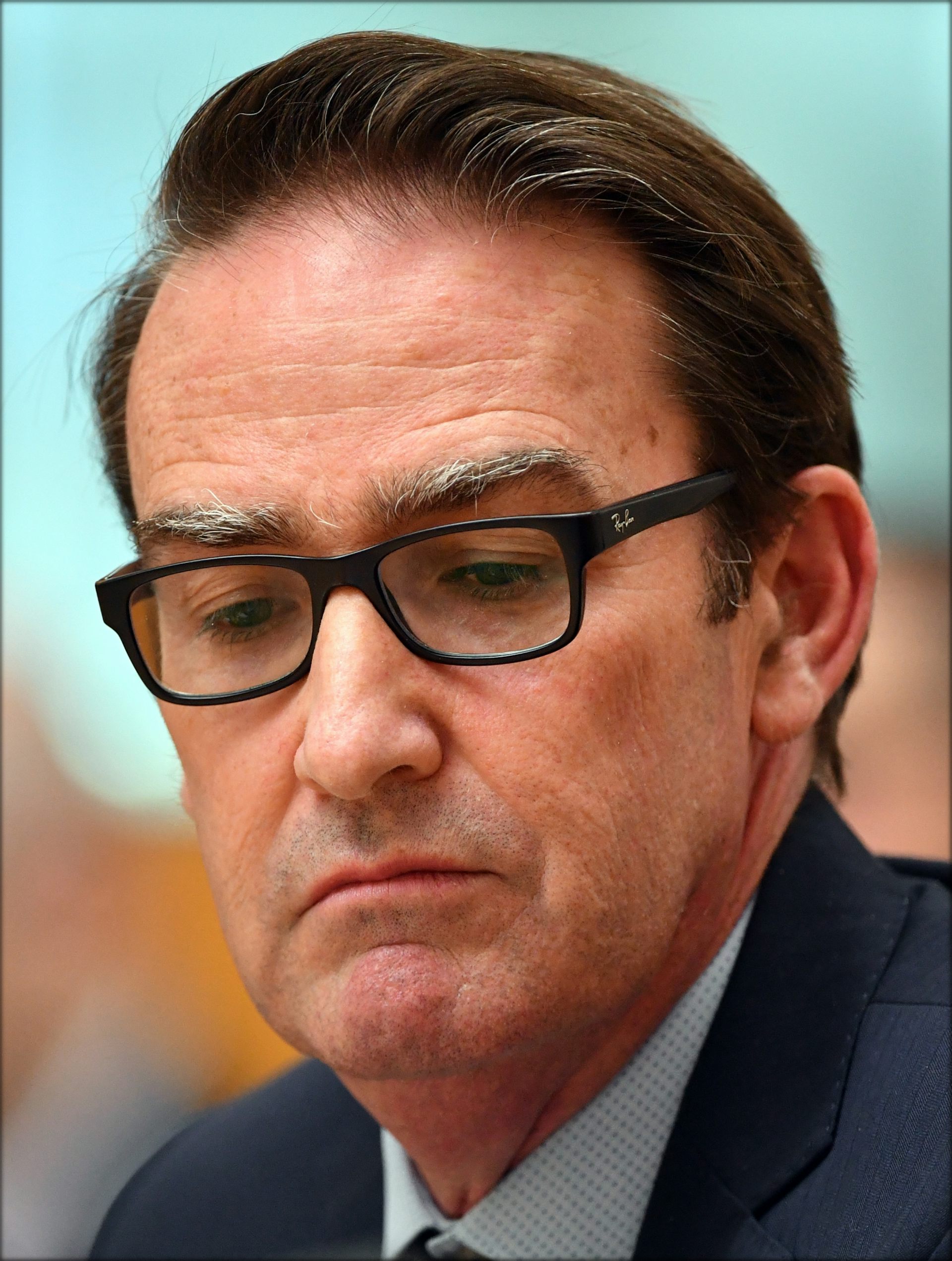
Kennedy rejected the idea of extra spending except in an emergency, saying Treasury could best serve Australia’s interests by a “stable and predictable” policy framework that kept the budget near balance over time.

There would be times when a downturn cut revenue and increased spending on support payments, pushing the budget into deficit, but beyond allowing those so-called automatic stabilisers to operate there wasn’t normally a case for doing more.

The exceptions were “periods of crisis”.

“It is important to consider separately broader policy objectives and temporary responses to crisis,” Kennedy said.

“The circumstances or crisis that would warrant temporary fiscal responses are uncommon.”

Although Australia’s economy is not in crisis, Brexit, the US-China trade war and turmoil in Hong Kong have slowed economic and trade growth worldwide, as businesses opt to stay on the sidelines.

No crisis, but weak growth worldwide

In Australia, economic growth had been unusually weak, weighed down by weak household spending which was itself the result of weak income growth, weak house prices, weak housing investment, and weaker than expected non-mining investment.

Mining investment was down sharply, as was to be expected after the completion of several large liquefied natural gas projects.

Given low interest rates, it was “somewhat of a puzzle” that business investment was not growing faster. Partly that might be because the “hurdle rates” businesses use to assess projects have not been adjusted down as they should have been. Partly it might be because of uncertainties surrounding the global economy and technological change.

Structural factors may also be at play — it is not clear what business investment looks like in a world where more than two thirds of our economy is now services based.

The budget tax cuts that flowed into returns from July have not yet led to a “particularly large improvement” in household spending.

Wages, investment “somewhat of a puzzle”

“We will continue to assess the data on consumption as it becomes available, but it is worth noting that even if households initially use the tax cuts to pay down debt faster, this will still bring forward the point at which households could increase their spending,” Dr Kennedy said.

It is possible that spending might have been even weaker without the tax cuts.

Holding back the economy during the year to June has been drought and dry weather which knocked 0.2 percentage points of the economic growth. Holding it up has been larger than normal growth in government spending that contributed 0.2 percentage points more to economic growth than was normal.


Read more: Why we've the weakest economy since the global financial crisis, with few clear ways out


No one had been able come up with a complete explanation for Australia’s unexpectedly low rate of wage growth. One explanation might be that even though the unemployment rate of 5.2% was unusually low, increases in employment were drawing in older workers and women rather than pushing up wages.

Ultimately what was needed to sustain higher wage growth was productivity growth, and that would be difficult to achieve while business investment was weak. The Productivity Commission had come up with a set of recommendations state and federal ministers were working their way through.

Although economic growth has been very low - just 1.4% in the year to June – it grew more strongly in the last half of that year than the first. It might be “strengthening from here”.The Conversation


Peter Martin, Visiting Fellow, Crawford School of Public Policy, Australian National University

This article is republished from The Conversation under a Creative Commons license. Read the original article.

Read more >>

Thursday, April 19, 2018

I'll say it. We’re spending too much on infrastructure

I am going to say it. We are spending too much on infrastructure – on roads, railways, bridges and the like. We don’t try the cheap things first. And we are spending too much on the NBN.

You probably disagree, especially if you are waiting for a train, or in a car with a driver who is stuck in traffic. If you go to the footy you would prefer a better stadium, if you use the internet, you would like it faster.

Here’s what those sorts of projects, and many more like them, set to be funded in upcoming budgets and elections, have in common: the people who use them don’t pay for them. Train fares cover at most 30 per cent of the cost of the trips.

The income from fuel excise and rego and licence fees no longer covers the cost of maintaining and building roads.

The national broadband network will never get its money back, despite what was promised, and neither will spending on stadiums, especially when governments persist in knocking them down and rebuilding them, starting the cycle all over again.

(There is a reason I haven’t mentioned electricity. That market works well, also despite what you’ve heard. Any company proposing a new electricity plant needs to pay for it and be pretty sure it’ll get its money back.

The days of government-built generators are behind us, unless this one decides to build a coal or nuclear white elephant, which would kind of prove my point.

Even Malcolm Turnbull’s much loved Snowy Hydro pumped storage scheme is probably uneconomic when the costs of construction and the construction of transmission lines are taken into account.)

I am not arguing for the users of roads and trains and stadiums to be charged the full cost of providing them, and neither are Stephen Bell and Michael Keating, a professor of economics and the former head of government departments including Finance and Prime Minister and Cabinet, who set out their claims in a new book entitled Fair Share, Competing Claims and Australia’s Economic Future. I am arguing that where users don’t have to pay the full costs they will pressure the government to build too much.

Or the government will be tempted to offer uneconomic infrastructure as a bribe, believing it’ll get voters across the line who will get the benefits without having to pay the full costs.

Big pseudo-commercial projects such as the NBN and the inland rail line are especially attractive because they can be funded off-budget through an odd convention that removes their impact so long as the government asserts they will one day make money.

On budget night the Melbourne Airport rail link might become another. The $5 billion Turnbull has promised will look attractive to travellers and needn’t make a dent in Scott Morrison’s budget, even though Infrastructure Victoria says it won’t make sense until 2032 or 2047.

Bell and Keating’s point is that it is not enough to say that roads are congested, or that things could be better. If roads were never congested, we would have spent too much. Without commercial discipline, governments need to conduct cost-benefit studies to determine what’s value for money. They are imperfect, but they are no good if they are ignored.

During the 2016 federal election the Coalition committed to 21 transport infrastructure projects, each costing more than $100 million; only five had been approved by Infrastructure Australia. Labor committed to 28; only one had been approved by Infrastructure Australia.

Often it’s better to do nothing, or little. The much-hyped tram line from Sydney’s Central station to the University of NSW will deliver passengers slower than the existing bus shuttle. Infrastructure Victoria says the Melbourne rail link would deliver passengers slower than could the existing SkyBus with priority signalling. Scores of capital city households are finding the NBN more expensive than the commercial service it replaced.

Productivity Commission chairman Peter Harris has a three-stage rule when it comes to infrastructure. It’s this: “First identify the problem, then identify the least-cost solution, then take a deep breath."

If it had been applied to the NBN, it would have been delivered only to the places that private providers wouldn’t serve, for a fraction of the cost. If it had been applied to Melbourne’s airport rail link, the bus service would have been fixed first. If it had been applied to roads, congestion charges would have been tried first.

And not building things buys time. Since the government committed to the NBN in 2009, 4G (and soon 5G) mobile services have grown to an extent not envisaged, making the project even less economic than it seemed at the time. By the time we’ve built many of the freeways we are repeatedly planning, congestion charging or driverless cars might have arrived, making them much less economic.

Doing nothing, or little, is hard for politicians, even if it eventually means lower taxes. They come to office pledging restraint and, after their first budgets, don’t deliver it. I’m happy to vote for the party that promises straight up to build the least next election. It’ll probably make the best decisions.

In The Age and Sydney Morning Herald
Read more >>

Thursday, April 12, 2018

Why the Tullamarine rail link barely stacks up

Just months ago in December, Infrastructure Victoria published the most comprehensive analysis yet of Victoria’s infrastructure needs.

It examined 300 potential projects, many of them desperately needed, and pronounced the Melbourne Airport Rail Link only “supported in principle”.

And not for a long time.

Upgrades to SkyBus should be pursued first, as “a more cost effective solution in the short-term”.

How long was that short term? Infrastructure Victoria said the airport rail link wouldn’t be needed for 15 to 30 years.

The supporting analysis prepared by consultants KPMG, Arup and Jacobs said the most cost-effective time for a Tullamarine railway to open would be between 2036 and 2039 - two decades away.

Infrastructure Victoria said if the rail link cost $3 billion to $5 billion, and was opened way into the future when the need was greater, it would have a benefit-cost ratio of between 1 and 1.4, meaning its benefits would exceed the costs - a conclusion that might not apply to the Turnbull government’s proposal, which would cost more than twice as much and open as soon as possible.

The reason Infrastructure Victoria wanted to wait is that the alternative of using priority signals for Skybus is so much cheaper - a total cost of only $50 million to $100 million according to its estimates.

Giving buses priority all the way to Melbourne airport wouldn’t even need dedicated lanes on the freeway, although it would on several of the roads leading up to it, including the entry and exit to Adderley Street and Footscray Road.

Ramp metering and priority traffic signals could do the trick, avoiding inconvenience to other users.

Infrastructure Victoria reckons the cheap changes will allow buses to run every three to five minutes during peak times with “a reliable 20-to-25-minutes journey time”, in contrast to the rail proposal in which trains would run every 10 minutes, with a journey time to the city of 30 minutes.

Eventually, decades on, the freeway would become congested enough for the railway to make sense. But in the meantime, improving SkyBus provided “the opportunity to defer the significant cost of a heavy rail link to the airport”.

The billions of dollars saved “could be used to fund other high priority projects”.

Delaying projects that aren’t yet needed is one of the best ways governments can manage money.

The Grattan Institute’s John Daley puts it this way: “In capital investment, sequencing is everything. The value of deferring a project is enormous. Put another way, the cost of building a project early is enormous.”

And in the next 20 to 30 years things might change. The report says in a few decades driverless cars may make the calculations different.

And the report delivers a warning: A rail link wouldn't allow users of public transport to have their cake and eat it too. For the train to make sense, city buses would have to stop, as they did in Sydney.

That’s because the railway would scarcely bring about any increase in the number of passengers using public transport. In the words of the report, the increase would be “not that significant”.

Driving to the airport would remain attractive, and become more so, which is one of the claimed benefits of the railway.

Premier Daniel Andrews supports the project. He has promised that construction will be “well under way” by the time the Metro Tunnel is completed in 2026.

And he'll be grateful for the money. Before the announcement, Treasury calculations had Victoria getting less than 10 per cent of Commonwealth infrastructure funds, even though Victoria accounts for more than 25 per cent of Australia’s population.

Five billion from the Commonwealth will take it to 18 per cent.

In The Age and Sydney Morning Herald
Read more >>

Monday, December 11, 2017

Mega projects mean shortages, Treasurer says

So big is Melbourne's infrastructure boom that Treasurer Tim Pallas fears Victoria will run low on the specialist skills and resources such as gravel needed to make it happen.

"We've known for a while that the technical and the specialist skills required for transport projects, particularly rail projects, have been hard to get," he told The Age. "The more projects you start the harder it gets. We've only a handful of rail signallers in the entire state to manage not only the existing network but also the upgrades planned and under way.

"That's just one illustration. We are also hearing of shortages in project management, finishing trades, commercial advisory skills, industry analysis, systems engineering and tunnelling. For high-end skills, it's obvious, but its also a problem for entry-level skills."

"Only on Friday I was meeting with the extractive industries representative body, and everybody around that table was saying there is so much demand for raw materials, quarry materials, cement and sand and so on that suppliers are choosing which jobs they bid on.

"You've got to expect pressure on price."

Mr Pallas said that at $9.6 billion per year, Victoria's infrastructure spending program was unprecedented. As a proportion of the state budget it was the biggest since that of the Bolte Liberal government in the 1960s and 1970s that began construction of the Melbourne Underground Rail Loop.

Victoria's $9.6 billion per year program was in competition for resources with the NSW $12.1 billion per year program, also the biggest on record. Other big projects in Queensland and New Zealand meant that the market for skills along the east coast was tightening, as it had in Western Australia during the mining construction boom.

"We are having to get people from further away and pay them more than we thought," Mr Pallas said. "Ultimately we have to pay what the market is prepared to offer."

"Look at what happened with Sydney's Westconnex. The entire industry in NSW put in one single consolidated bid that put the state government at a disadvantage. Here, we are facing the same sort of thing with the North East Link. You can only bring so many people in from interstate. You get to a point where you hit bedrock in terms of imported skills."

Mr Pallas said it wasn't yet clear that the pressure on skills and resources would delay or push up the price of any of the major projects.

"We are not seeing substantial blowouts. The Melbourne Metro should be on time, we are pretty confident about that," he said.

The government's Major Projects Skills Guarantee ensured that at least 10 per cent of the work on major projects was undertaken by apprentices, trainees or engineering graduates.

"There are plenty of young people looking for work," Mr Pallas said. "Youth unemployment is still 13 per cent. But what we don't have is a skills base. We need to demonstrate to industry that this pipeline of work is here to stay, that it's not 'here today, gone tomorrow'. We need to make it clear that we are building to a plateau of projects, not a peak."

Asked why Victoria didn't simply proceed with fewer major projects so that it wasn't competing with itself for resources, Mr Pallas said that if it did, the resources would go to NSW.

"In my own electorate of Werribee we get 100 kids born every week. That's a primary school every seven weeks. You don't get a choice about these things," he said.

"There is a capacity across this nation that will either get spent here or somewhere else. We are in something of a war for resources. If I were to say we starting to get nervous about this, it wouldn't be clear we had the pipeline of work and the resources would go elsewhere."

Melbourne had an advantage over Sydney in attracting workers because its housing costs were 20 to 25 per cent lower. A guaranteed pipeline of work was attracting former mining construction workers from Western Australia.

"The pace is a bit frightening, but it's also a bit thrilling," Mr Pallas said. The buzz and the congestion we are getting on our rail and road network is a direct consequence of all the work we are doing, and also all the work private firms are doing as a consequence. It is building on itself."

"We've got problems but they are problems I would prefer to have than those associated with the downturn and malaise Victoria had just four years ago. In February 2013 your newspaper declared that the state was at a standstill. We've gone to the other extreme."

"From my perspective I can't take my foot off the accelerator at a time when the community is demanding improvements in their material circumstances."

In The Age and Sydney Morning Herald
Read more >>

Thursday, March 17, 2016

Expect great things from Turnbull’s first budget. No, seriously

While the media has been obsessing about tax, Malcolm Turnbull has been focused on setting Australia up. To do it, he'll need to borrow big sums of money for exceptionally long periods at at extraordinarily low interest rates.

We should have done it sooner. Right now Australia can borrow for 10 years at 2.7 per cent, just a few points above the the Reserve Bank's inflation target of 2.5 per cent, meaning we are able to get money for close to nothing. But it's still unattractive for long-term projects because there's a risk that in a decade's time when the loans have to be refinanced, the new rates will be higher. So Turnbull's looking at borrowing for 30 years.

Australia has never before issued 30-year bonds, although we have been experimenting with borrowing for 24 and 25 years. The US and Britain borrow for 30 years and get certainty for their repayments right through the life of very big projects.

What will Turnbull want the money for? Here's where it gets interesting. He dropped broad hints in a speech in Sydney on Friday.

The mining boom was made possible by investment in physical infrastructure such as mines, railways and ports. Over time it will make Australia rich. Turnbull believes the next boom will also require physical investment. If it's the result of people providing services in fields such as finance, law, health and others not dreamt of, you may think it requires little more than people, a good education system and the phone system or national broadband network to bring them together.

The Grattan Institute finds that workers in the Melbourne CBD (including Docklands and Southbank) typically produce $87 an hour, much more than the Melbourne-wide average of $53. Workers in the Sydney CBD produce $100 an >hour, much more than the Sydney-wide average of $61. The combined CBDs of these two cities alone – a landmass of just 7.1 square kilometres – accounts for nearly 10 per cent of Australia's production, three times what's produced by agriculture.

Turnbull quotes economist Edward Glaeser, who wrote Triumph of the City, to make the point that cities are our greatest invention. We not only work better when we rub shoulders with others, we are also more likely to be hired by them, more likely to hire them and more likely to steal ideas from them.

The fact that people need to work with each other and bump into each other was a point never acknowledged in the screeds of reports Labor commissioned about how the NBN would free us from travelling in to work.

Getting more people into cities boosts the Australian economy, boosts incomes and boosts government revenue. Which is where the budget comes in.

Turnbull's predecessor funded roads more or less as he wanted. He didn't insist on thorough analysis. And despite labelling himself the infrastructure prime minister, Tony Abbott never spent that much money. Turnbull is prepared to spend more, so long as it can be rigorously demonstrated that the project will pay dividends.

In Britain it is done through so-called "city deals". If a city such as Manchester can demonstrate that a road or rail line that gets more people into it will lift incomes, the central government backs it as a long-term investment. It knows it will cream off one-third of the extra earnings in tax. The Melbourne Metro would have passed such a test. The East West Link would have failed it...

As well, Turnbull will insist that the states go further than they have been prepared to in grabbing benefits for themselves. Traditionally when a railway station or a hospital opens in a new location, the nearby businesses and landowners get a windfall. Turnbull wants the states to grab a large chunk of it, perhaps charging the locals a third of the increase in value of their businesses or their homes. Then he'll need to put in less, funding perhaps four major projects for what would have been the price of two.

States talk about capturing value, then chicken out. They don't like offending the locals. Turnbull wants to give them cover. By insisting that they won't get anything unless they grab some of the proceeds for themselves (and perhaps for the Feds) he'll allow them to say he made them do it.

Value capture isn't a new idea, just one that's fallen into disuse. Melbourne's underground rail loop was funded in part by a long-running 1 per cent levy on the value of land held by city businesses and householders. It turned out to be more than worth their while.

Turnbull's major projects minister, Paul Fletcher, will produce a discussion paper outlining how value-capture will work within weeks. It could open the way for all sorts of projects previously regarded as uneconomic or not yet economic, including a Melbourne-Brisbane freight rail line, a railway to the site of Sydney's second airport,  and (perhaps) a Melbourne-Brisbane high-speed passenger line.

At the same time it would close the door on future projects like Peninsula Link, that arguably did little more than allow high-income Melbournians to escape quickly to their holiday homes.

If he is really bold, Turnbull will change the way the budget is presented, showing the income and expenses related to the ordinary running of government on one page (where the deficit is hopefully shrinking) and the borrowing and spending on major projects as well as the projected payoffs on another (where the borrowing will be hopefully growing).

It will take some explaining. But Turnbull, more than any prime minister since Hawke, is capable of explaining good ideas and taking the Australian public with him. The rare coincidence of unusually low long-term interest rates and good ideas with demonstrable payoffs is too good to waste.

In The Age and Sydney Morning Herald
Read more >>

Tuesday, May 19, 2015

How the East West Link cooked Abbott's budget numbers

Tony Abbott thinks we're mugs.

Deflecting attention from a budget that left Australia's second biggest state with only a fraction of Australia's infrastructure spending, he said he was so committed to the East West Link that he "gave Victoria $1.5 billion to actually get cracking".

It's true, he did give Victoria $1.5 billion for the East West Link in his first 2014-15 budget ($500 million of which was diverted from other Victorian projects). But in extraordinarily odd timing, he handed it over in 2013-14, just ahead of the year to which that budget referred.

Like all budgets these days the 2014-15 budget was handed down in May. The 2013-14 financial year had seven weeks to run. The budget shovelled out the money immediately, before 2014-15 began and well ahead of when it could possibly have been needed. The East West Link contract wasn't signed until September.

The immediate payment had nothing to do with enabling Victoria to get cracking. It had everything to do with cooking the books.

Labor's last budget covered 2013-14. By shovelling out the East West Link money before 2013-14 ended he loaded up Labor's last financial year with extra spending. The 2013-14 deficit climbed from a forecast $18 billion to $48.5 billion. A lot of the deterioration was due to the collapse in commodity prices. The iron ore price slid from $US124 to $US93.

The rest was due to higher spending, most of it tacked on to Labor's budget by the Coalition. It directed $8.8 billion to the Reserve Bank within weeks of taking office, pushing up "Labor's" deficit by $8.8 billion. Then it directed $1.5 billion to Victoria well before it was needed.

The manoeuvres not only made Labor's last budget look bad, they made the Coalition's first two look good...

Having funded the East West Link in 2013-14 the budget didn't need to fund it in 2014-15 (nor as it turned out in 2015-16) and it didn't need to find several billions in 2014-15 to top up the Reserve Bank's reserve fund. Indeed, with the reserve fund topped up the bank resumed paying dividends, giving Abbott $1.235 billion from its performance in 2013-14; half of which he directed to the 2014-15 budget, and half of which he held over until July in order to boost the 2015-16 budget.

And the early gift dressed up Denis Napthine's final Victorian budget. Taking it back will harm Daniel Andrews' first one.

It's particularly irksome that he gave Andrews no notice that he planned to take it back. Victoria's budget, delivered a week before the federal budget, is based on the assumption that the $1.5 billion can stay.

Abbott is using Victoria as a piggy bank. He paid it $1.5 billion at a time when it would hurt a Labor budget. He wants to take it back out at a time when it will help the Coalition's. He has already booked it in the budget as having been returned.

The billboards he is sending around Melbourne's eastern suburbs are a smokescreen. "Stuck in traffic! Blame Labor" they say. What they don't say is that the East West Link is such a bad project that a conventionally-constructed benefit cost analysis finds it returns just 45 cents for every dollar it costs. What they don't say is that the $1.5 billion could be better spent on projects whose returns exceed their costs. What they don't say is that Victoria voted against the East West Link in an election Abbott himself described as "a referendum on the East West Link".

Victorians voted for a rail project, one Abbott ought to be prepared to submit to Infrastructure Australia along with the East West Link. After all, that's what the policy he took to the federal election said he would do: "We will require all Commonwealth-funded projects worth more than $100 million to undergo a cost-benefit analysis by Infrastructure Australia to ensure the best use of available taxpayer monies," it said.

By refusing to do what he said he would do he is setting up a stand-off between Victoria and the Commonwealth, one that will enhance his budget's bottom line for as long as it goes on. If he can drag it out another year it will enhance the next budget's bottom line as well.

But he'll have to cave. Victoria has 25 per cent of Australia's population but is getting only 12 per cent of its infrastructure funds. Billboards and bluster can't obscure that forever.

And there are plenty of other sleights of hand in Abbott's second budget. He is advancing $5 billion over five years for non-commercial infrastructure facilities in Australia's north, the kind the banks won't touch. Because the $5 billion will be "lent" rather than spent, it won't add to the most widely quoted measure of the budget deficit. But loans for non-commercial ventures are (by definition) highly likely to never being repaid. Eventually some, maybe even most, of the $5 billion will find its way on the deficit. But not now. That's a problem for the longer term. Right now Abbott wants to us to think he's fixing the budget.

In The Age and Sydney Morning Herald
Read more >>

Wednesday, January 21, 2015

Low bond rates. Abbott prepares to pass up the deal of the century

Who'd say no the deal of a lifetime? Tony Abbott would, and it's our tragedy.

The ten year bond rate is the rate at which the government can borrow for ten years at a fixed rate of interest. Right now its just 2.55 per cent, an all-time low.

By way of comparison in the 1970s it exceeded 10 per cent, in the 1980s it passed 16 per cent, in the 1990s it passed 10 per cent, in the 2000s 5 per cent, and until now in this decade it has usually been above 3 per cent. It dived below 3 per cent at the end of last year and is now just 2.55 per cent, the lowest in living memory.

If Australia was to borrow, big time, for important projects that took the best part of a decade to complete, it would have no risk of ever having to fork out more than 2.55 per cent per year in interest. The record low rate would be locked in, for the entire ten years.

Australia's inflation rate is currently 2.3 per cent. Although it will almost certainly fall in the wake of the collapse in oil prices when it is updated next week, the Reserve Bank has a mandate to keep the rate centred at around 2.5 per cent. That means that right now our government is being offered billions for next to nothing, billions for scarcely more than the expected rate of inflation.

If Abbott was the chief executive of a company with good prospects he'd grab the money and borrow as many billions as he could without impairing his credit rating.

In Australia's case that's probably an extra $100 billion. That's enough to build the long-awaited Brisbane to Sydney to Melbourne high speed rail line, or to build Labor's original national broadband network, or to build Sydney's $11 billion WestConnex road project plus Melbourne's $11 billion metro rail project plus Melbourne's $16 billion East West Link plus something big in each of the other states.

And it would cost next to nothing. All each of these projects would need is a positive real rate of return (which several of those listed above lack) and we would get ahead.

All we would need is confidence in the worth of our ideas.

It's rare to be offered money for nothing...

It's happening because interest rates in the rest of the world have dropped to near zero. Japan's ten year bond rate is 0.24 per cent, Germany's is 0.40 per cent, Britain's 1.54 per cent. Even in the United States where the economy is improving, the ten year bond rate is just 1.81 per cent. Without the ability to earn decent returns in the nations to our north investors are flocking to here and buying our government bonds. In order to get them they are prepared to bid down the rates we have to pay them to all time lows.

It mightn't last. In October Reserve Bank assistant governor Guy Debelle warned of a "relatively violent" correction in bond markets. He said as soon as it looks as if interest rates will climb, the purchasers of bonds will demand much higher rates in order to cover themselves for what's likely over the next ten years. The opportunity will vanish.

If we are prepared to grasp it, there's no shortage of projects that would set us up for decades to come. In education, in health, in the delivery to railway lines into suburbs that are at present barely accessible - in all of these areas there are projects whose benefits would exceed their costs and exceed them by more than enough to pay the minimal rate of interest being demanded.

Some are visionary. Bank of America Merrill Lynch economist Saul Eslake says if Australia was to get serious about reducing its dependence on coal it would consider paying coal producers to close, and speeding up the commercialisation of battery technologies that would allow Australians with the next wave of solar panels to live off the grid.

The risk is that bad projects would be chosen over good ones and the money wasted. Abbott himself provides reason for concern. Despite promising during the election to "require all Commonwealth-funded projects worth more than $100 million to undergo a cost-benefit analysis by Infrastructure Australia" his first budget funded scores of road projects without such approval. Some of the cost-benefit studies weren't even published, in others the figures were massaged to make them look better than they were.

The Grattan Institute's John Daley suggests setting up an independent statutory authority along the lines of the Reserve Bank to vet proposals for spending big money. Its members would be appointed by the Governor-General for terms of five to seven years, it would report directly to parliament and it would publish of all of its findings compete with the assumptions behind them. He says even cheap money should be spent well.

Could the Coalition grab the opportunity before it vanishes? There are some good signs. With help from the Greens it axed Labor's debt ceiling. Since taking office it has run up an extra $78 billion in debt. But it is unorganised, behind in the polls and a prisoner of some of the silly things it said about debt while in opposition.

We have a once in a lifetime opportunity. It'll slip through our fingers.

In The Age and Sydney Morning Herald


Related Posts

. 2012. Hockey wants to hold down the debt ceiling. What could possibly go wrong?

. 2010. Debt free. Got any other ideas to stifle growth?

. Worried about government debt? Look at its history


Read more >>

Tuesday, December 02, 2014

Memo to Abbott. Mess with Victoria and you mess with the nation

Here's a tip: Tony Abbott won't make good his threat to rip $3 billion out of Victoria's economy.

Before the election he said the money promised for the East West Link would vanish if an incoming government used it for any other purpose.

"I want to make it absolutely clear to the people of Victoria that the $3 billion the Commonwealth government has committed to this project is for one purpose and one purpose only - and that is to build East West Link," he wrote to both Dan Andrews and Denis Napthine. "If a future government is not prepared to spend the money on East West Link, then that money will not be forthcoming."

Such a decision would shrink what Abbott repeatedly calls the biggest infrastructure investment program in Australia's history. And it would shrink it in the state where he needs to spend the most.

Victoria accounts for more than one-fifth of Australia's economy. No other state, apart from NSW, produces more. Yet in the past six years its output per person has stalled. Victoria produces scarcely any more per person than it did in 2008.

Victoria's construction industry stood still in 2014. Over the year to September it grew just 0.7 of one per cent. No other state performed as badly. The NSW construction industry grew 19 per cent.

To withdraw a promised $3 billion from Victoria's construction industry (half for East West Link stage 1, half for stage 2) would be to deny a boost to the state that needs it the most, and to deny a boost to the national economy in the process. Abbott himself said building the East West Link would create almost 7000 temporary jobs.

There's every reason to believe that Melbourne Metro would create as many jobs. It is the purpose for which the $3 billion was originally intended before Abbott diverted it into roads...

On Sunday his language softened. He said merely he was determined to do what he could to ensure the East West Link proceeded.

Melbourne Metro would do far more for Melbourne than would East West Link. That must be what the cost-benefit statements show, otherwise Napthine would have made them public. When Andrews makes them public in a matter of days Abbott will have to explain why he was determined to lock Victoria in to the least beneficial of the two projects.

He is granting money to every Australian state for a major infrastructure project. In NSW it is WestConnex, in Brisbane it is Gateway Motorway North, in Adelaide it is the South Road upgrade and so on. In every case it is money collected from the citizens of those states via taxes.

It is inconceivable that he would damage the national economy by leaving out the one state that needs it, especially when it was he who dubbed the election "a referendum on the East West Link".

And here's another tip: Abbott and Joe Hockey as good as wrote off Victoria during the campaign in order to salvage their budget. And not in the way you might think.

It would have made political sense to ditch the Medicare fee increases and the bulk of the changes to university funding before or during the election campaign. They weren't likely to get through the Senate.

Instead they, kept them as government policy to tide them through to an event they believed was more important than the Victorian election - the release of the Mid-Year Economic and Fiscal Outlook on December 16.

If those programs are still regarded as government policy Abbott and Hockey can include them in the statement as zombies - neither alive nor dead. They can book the best part of $5 billion they would have raised from them even if it won't come near the budget.

As shadow treasurer, Hockey, every budget night, was keen to distribute a very useful document detailing the accounting tricks Wayne Swan had used to forecast yet another unlikely surplus.

This year he'll be the one using accounting tricks if he persists in booking the income from zombies. He might as well. The Coalition denied Napthine a lifeline so that he could.

It will fool no-one of course. Budget analysts will simply add the best part of $5 billion to whatever deficits he forecasts for the next four years and mark him down for trickery, like they marked down Swan. Even without the zombies the budget update is looking horrific.  

The ABC reports the Treasury will use an iron-ore price of about $60 a tonne. The budget itself was struck when the price was $103. Deloitte Access says even with the zombies this year's income will be $2.3 billion worse than the budget forecast and next year's income $7 billion worse.

Most of it will be due to the impact of a lower iron-ore price on company profits and tax receipts. But not all.

Disturbingly, Deloitte notes that "whereas once the red ink was mostly confined to the profit taxes, the combination of wobbly job growth and an extended period of weak wage gains now looks like being just as big a budget buster". Income taxes are set to fall short of budget estimates by $2.9 billion this financial year and $4.2 billion next financial year.

Victoria's jobs growth is close to the weakest in the nation. In the past year Victorian employment has climbed by less than 0.5 per cent, about half the weak national growth rate of 0.9 per cent.

In The Age and Sydney Morning Herald
Read more >>

Sunday, July 27, 2014

Abbott and infrastructure. Nation building, one elephant at a time

We're on the road to Utopia. Unfortunately.

The team from Frontline and The Hollowmen is at it again.

This time their angle is “nation building – one white elephant at a time.”

Entitled Utopia their new program is “a satire about the difficult process of taking grand, uncosted, inadequately planned and fundamentally flawed schemes - and passing them off as nation building”.

But it’s not the sort of thing you would see in real life is it? Certainly not repeatedly, deliberately, at the hands of the Coalition.

Here’s the ABC publicity blurb: “Set inside the offices of the Nation Building Authority, a newly-created government organisation responsible for overseeing major infrastructure projects, Utopia explores that moment when bureaucracy and grand dreams collide.  It’s a tribute to those political leaders who have somehow managed to take a long-term vision and use it for short-term gain.”

It couldn’t be happening right now, when we are forever being told the budget is tight...

Tony Abbott has his heart set on becoming Australia’s Infrastructure Prime Minister. Whatever the state of the budget he is determined to spend massive sums building the “Roads of the 21st Century,” NorthConnex, WestConnex and the East West Link and so on.

The one saving grace in the election campaign was his promise that all Commonwealth infrastructure spending worth more than $100 million would “subject to analysis by Infrastructure Australia to test cost-effectiveness”. It was reassuring, until he ditched it.

Two weeks ago Labor tried to force the Coalition to make good its promise moving in the Senate that the reward payments made to states that privatise assets and use the funds for new projects be subject to Infrastructure Australia cost benefit analysis.

It rejected the proposal of hand.

Cost benefit analysis by the Commonwealth on top of whatever the states did was “red tape with no additional benefit”. It would “stand in the way of the government building a stronger more prosperous economy,” minister Mathias Cormann told the Senate.

On climate change the Coalition’s detractors accuse it of being anti-science. On roads they could accuse it of being anti-numbers.

And of providing material for Utopia.

That’s how Infrastructure Australia itself sees it. It has titled its latest report on road spending: “Spend more, waste more”. On the cover is a roulette wheel...

“Australia has a true gambler’s addiction to roads, the money spent is not a rational investment,” it writes in the draft that was leaked to Fairfax Media. “Unlike almost every other agency imaginable."

“Highway funding for example is not predicated on any nationally accepted standard related to the current quality of that highway, to a safety rating or to traffic flow levels.”

“No one community has any ability of knowing whether ‘their’ highway upgrade is more deserving than that of another. Under these arrangements, political success in roads is likely to be reduced increasingly to simply outspending one’s political rivals - regardless of how inefficient or ineffective these spending patterns might be.

“This problem is probably insoluble in the absence of measuring roads against national standards.”

It’s an approach endorsed by the Coalition in opposition then eschewed in government. The $3.5 billion to be spent on highways leading to a yet-to-be-built second Sydney airport is the standout example of a project that wouldn’t pass muster if it had to be graded alongside other more immediately worthwhile contenders.

Conceding that its assessment is “challenging” Infrastructure Australia says Australian politicians routinely prioritise roads over rail.

“Australia is the 12th largest economy in the world, and one of the most dependent on freight efficiency given the wide dispersal of its economy across big distances. Most casual observers would presume that for a freight task of such magnitude a core intercontinental heavy rail freight sector would be the dominant freight mode – as is the case in Europe, Canada, the United States and Russia,” it says.

Yet “road agencies continue to plan and undertake regular expensive upgrades of the highways that are the direct competitors of major commercial rail projects. It would be hard to imagine a way in which commercial rail could be further disadvantaged.”

In the cities Infrastructure Australia says inflated estimates of road congestion are routinely used to direct money away from public transport and into roads.  It has asked the government for more realistic forecasts but hasn’t got them.

It says we need better. Utopia isn’t enough.

Utopia premieres Wednesday August 13 at 8.30pm on ABC TV.

In The Age and Sydney Morning Herald


Related Posts

. A cost-benefit analysis for the Snowy Mountains Scheme?

. What passes as cost-benefit analysis of the NBN

. "Some people hate the bus. Not me, I can't get enough"

Read more >>

Tuesday, April 22, 2014

Abbott's biggest broken promise - to build our cities well

Expect an avalanche of broken promises in the first Abbott budget four weeks from today, none of them as important as the promise he has just broken.

Broken promises are inevitable when an opposition comes in. It’s the first time it gets to see the books, and usually the first time it gets good advice. But none are as overarching as the promise Abbott broke last week.

It was a promise about the way he would govern - about the way he would make really big decisions, the ones that cost us billions.

With the experience of Rudd’s back-of-the-envelope $43 billion national broadband network fresh in his mind he promised that in future his government would require Infrastructure Australia to “routinely publish public cost-benefit analyses for all projects being considered for Commonwealth support”.

The cut in point would be $100 million. Any project worth more than that was to be assessed for cost-effectiveness before Abbott gave it a tick.

Infrastructure Australia was also going to rank projects in order of payoffs. The ones at the top of the queue would be the most deserving.

As Abbott and Hockey have repeatedly told us, governments can’t do everything. That’s why it is crucially important that it direct its limited funds to the projects that most boost productivity.

Then out of the blue last week he announced a second airport for Sydney. A few days earlier the Napthine government announced a rail link to Tullamarine. Abbott will have to stump up funds for that as well. He has promised to contribute 15 per cent to the cost of new projects funded from the sale of assets such as the Port of Melbourne.

The second Sydney airport can better be described as "roads to nowhere". There's no especial reason to think it will ever be built and if it is built there's no reason to think it'll have many customers. But the roads leading to it will be built. Abbott is starting on them first. Like Melbourne's East West Link they will move cars between suburbs rather than into the city.

Infrastructure Australia says East West Link has a direct benefit-cost ratio of just 0.8:1 meaning it will return a loss-making 80¢ for each $1 spent. The benefit-cost ratio of the second Sydney airport is unknown but is unlikely to be any better and there’s little evidence (yet) that a train to Tullamarine would achieve much more than the existing Skybus.

The proposed Melbourne Metro is much better. The rail extensions have a direct benefit cost ratio of 1.2: 1  meaning their benefits clearly exceed their cost. That’s because they will get people into the city.

Cities are where workers are at their most productive. They bump into each other, bump into workers from other businesses and are in easy reach of potential employers. A UK study found a 10 per cent increase in the proportion of workers packed into the city centre typically boosts productivity 1.25 per cent, an enormous figure given Australia’s current productivity improvements. The Rudd and Gillard governments were particularly resistant to the idea of bringing more people to city centres, having hitched their wagons to the NBN, one of whose claimed benefits was to take workers out of cities.

In its Productive Cities report the Grattan Institute outlines the experience of SKM, a global engineering consulting firm that used to be based in Armadale, just seven kilometres south-east of Melbourne’s centre. Doubtless a convenient location for many people, with good parking and on two tram routes, it cost SKM around 40 per cent less per square metre than office space in the city.

Yet when the time came to renovate or move, it moved to the city.

“A central location allows the firm to recruit from a deeper talent pool,” Grattan explains. “Previously, some skilled workers and top graduates from the west or north of Melbourne were put off.”

“Clients are far more likely to come to SKM at its new address,” it says. “Most external meetings can be reached with a brief walk or tram ride. These short trips in the CBD are much more productive than taxi trips from the old suburban HQ. In the rich, supportive ecosystem of the CBD, SKM employees say they often bump into professionals from other high-knowledge firms, building personal networks and sharing knowledge. Despite the cost, SKM has little doubt that the move made good business sense.”

Cities exist because they work. And they work best when workers can get into the centre.

Urban economist Edward Glaeser puts it more grandly in his book Triumph of the City. He says, like ants and monkeys, humans are intensely social and excel in producing things together.

“Just as ant colonies do things that are far beyond the abilities of isolated insects, cities achieve much more than isolated humans,” he writes. “Cities enable collaboration, especially the joint production of knowledge that is mankind's most important creation. Ideas flow readily from person to person in the dense corridors of Bangalore or London, and people are willing to put up with high urban prices just to be around talented people, some of whose knowledge will rub off.”

Glaeser says the central paradox of modern cities is that “proximity has become ever more valuable as the cost of connecting across long distances has fallen”.

Knowledge-intensive work is where big productivity gains come from. Our wharves are becoming increasingly more mechanised.-The employees who work out how to mechanise them work in cities away from the wharves, rubbing shoulders with others who can contribute to their ideas.

Pushing more knowledge workers into our city centre and in to each other is our best bet of producing more. Slow roads to the centre and a train system stretched beyond its limits slows that down. (As well as level crossings, replacing them with overpasses or underpasses turns out to be extraordinarily effective.) It is these things rather than "roads to nowhere" that’ll do the most to lift productivity and lift incomes.

That’s what Infrastructure Australia would have told Tony Abbott if he had kept his one really worthwhile election promise and asked.

In The Age and Sydney Morning Herald
Read more >>

Sunday, March 23, 2014

Public-private sector partnerships a mirage. The PC says so

Of all the strange things to have flowed from the corruption inquiry engulfing the former assistant treasurer, few are stranger than his use of the word ''passionate''. Arthur Sinodinos says Australian Water Holdings is a ''company whose mission I believed in and was passionate about''.

Passionate? Australian Water Holdings built pipes, tanks and pumps for Sydney Water that it could have built itself.

It's easy to imagine getting passionate about such a mission if it was the only means of getting pipes, tanks and pumps to Sydney's north-west. Or if AWH could do it more cheaply than Sydney Water itself.

Both are claimed by spruikers of public-private partnerships. In fact they are often asserted as universal truths.

Joe Hockey did so shortly after the election when he asked the Productivity Commission to inquire into ways to use the private sector more. ''The capacity of government to meet expectations for improved infrastructure services is always limited,'' he said. ''Options involving the private sector can reduce the call on government.''

The father of NSW public-private partnerships, the late 1980s and early 1990s premier Nick Greiner, made it a mantra.

Opening the privately built (and then privately run) M4 motorway, he said: ''The choice is very simple. Either have the road as a privately owned tollway or not have the road at all.''

It's complete nonsense, and a draft Productivity Commission report delivered to Hockey spells out the fallacy in excruciating detail. The private sector can't do anything the public sector can't, unless it charges. And the government itself could do that if it wanted to.

Sometimes the private sector will do things better than the public sector. The commission cites three studies that find private projects are more likely to be completed on time and near budget than government ones.

Often it'll do things worse. Borrowing is more expensive for firms such as AWH (chaired by Sinodinos) and the firm that built the M4 (whose board Greiner later joined). And the salaries are more expensive. Sinodinos was paid $200,000 for a part-time job as AWH chairman. Eddie Obeid jnr was paid $350,000. If AWH had scored the contract it was angling for, Sinodinos was set to get a bonus that would take his shareholding to about $20 million.

The fallacy is the view companies such as AWH can get access to money the government can't - what the commission calls the ''magic pudding'' fallacy.

Private sector money has to come from somewhere. Most often the private firm will siphon it out of the government, as AWH did when it billed Sydney Water for expenses including limousine rides, pornographic movies and Sinodinos' salary. Or it might borrow the money and later siphon it out of the government, meaning the government will face the same sort of costs as if it had borrowed itself.

Or it might charge tolls, which the government itself could do if it had the guts.

Either way there's nothing stopping the government borrowing more than it has for worthwhile projects. The commission thinks it can. On that point it thinks Hockey and Greiner are wrong. And probably also NSW Treasurer Mike Baird.

His plan is more subtle. It's called ''recycling''. He has sold the leases on Port Botany and Port Kembla to use the proceeds to build the first stage of WestConnex. When that's built, he will sell it and then use the proceeds to build the second stage, and so on.

As a piece of financial engineering, it's admirable. But the commission thinks it confuses two very different questions: whether something is worth building and whether it's better off privately run.

It's not happy with Baird's view of the world, but it reads as if it is much happier than it would have been with Greiner's, during whose term as premier the company that is now AWH gained the Sydney Water contract.

In The Age and Sydney Morning Herald
Read more >>

Tuesday, March 18, 2014

How to pay for roads


Why is it that whenever anyone asks about the funding of roads they end up getting a report that reads like 1960s' science fiction?

Kevin Rudd didn't expect it when he asked the Henry tax review to examine roads. It found that fuel tax was on the way out. New developments in technology mean increasing numbers of cars don't use fuel. Henry suggested ''telematics'', where each vehicle reported its trips to a central computer that charged its owners per kilometre driven.

Four years on Tony Abbott has been ambushed by the same suggestion. He asked the Productivity Commission to inquire into the financing of public infrastructure. He wants more of the funds to come from the private sector. Instead the commission's draft report released on Thursday found that private financing was ''not a magic pudding'' and recommended a trial of telematics. Abbott backed away quickly. Telematics was ''not something this government is considering''.

But it keeps being suggested because it's the right answer. When Abbott's ''Son-of-Henry'' tax review gets under way shortly it will probably suggest it as well. And it's far from the only confronting common sense suggestion in the draft report.

Its starting point is that we probably don't need as many new freeways and toll roads (and rail lines and desalination plants) as we think we do. It says we should first work out what we want to achieve (such as moving cars quickly) and then work out the cheapest means of achieving it. It might be congestion taxes or priority lanes for cars with three or more passengers.

It points to the national broadband network as a classic example of what not to do. Rudd developed a solution without first identifying the nature of the problem and considering whether there were cheaper ways of solving it. When none of the companies bidding to build the NBN handed in acceptable tenders Rudd decided to build a grander one with government funds at 10 times the cost. At every turn Rudd blocked attempts to compare costs and benefits.

If governments decide they should build something, ultimately the private sector won't be much help. It's not where the money comes from. In the end it can come from only four sources, according to the commission: user charges; user-specific taxes; general taxes; and (rarely) philanthropy.

Private sector funds have to come from somewhere, and to the extent that they are borrowed at high interest rates they will be more expensive than public funds.

Governments love public-private partnerships (PPPs). Victoria has 23 of them. But they are a sleight of hand.

''There is a perception that they offer a way to increase the provision of public infrastructure without drawing on a government's purse, thereby circumventing budgetary and borrowing constraints,'' the commission says.

In reality the money has to come from somewhere, either from charges or tax, but shifted in time in an effort to enable governments to keep their AAA credit ratings.

''There are benefits to maintaining a AAA credit rating,'' the commission says. ''However, there may be situations where public financing of infrastructure would be more efficient and welfare enhancing than either obtaining private financing or not providing the infrastructure.

''In these circumstances, it is in the community's interest for governments to weigh up all considerations and not just focus on credit rating concerns.''

The commission believes governments have plenty of scope to borrow more for worthwhile projects even if their credit ratings slip, and believes they probably wouldn't slip any more than if they had signed up for a PPP. Ratings agencies see through them.

And the commission has little time for the related fad of ''recycling''. Joe Hockey talks about it as a magic ingredient of this year's federal budget. Victoria's Michael O'Brien wants to do it with the Port of Melbourne. NSW is the pioneer, funding roads then selling them and funding more roads with the proceeds.

''It involves two decisions that should be considered independently,'' the commission says. ''First, whether a government-owned asset should be sold; and second, whether the government should procure new infrastructure.''

The commission has no doubt that ports and electricity generators should be sold. But it believes the arguments stand on their own. They are to do with who would best manage the assets rather than whether the proceeds should be plundered.

Asked to endorse the fashionable view that high labour costs and restrictive practices are pushing up the cost of big projects, the commission largely refuses.

''There is no single culprit,'' it says. ''Labour costs have risen steeply, particularly for (largely non-unionised) engineering design and consulting services, but so too have material input prices. For the construction industry as a whole the labour share of total costs has not changed appreciably over the past two decades.''

It's an uncommonly calm and uncommonly forward-looking assessment of the way Abbott and the states can go about building the things we need. All the more so because it's not what he expected.


In The Age and Sydney Morning Herald
Read more >>

Tuesday, July 24, 2012

After mining investment will come housing investment - BIS Shrapnel

Let's hope

The other side of Australia’s mining investment boom won’t look so bad according to new long-term forecasts released today by BIS Shrapnel.

The research firm says dwelling investment is about to take off in most of the country and investment in the two thirds of the economy not exposed to international trade is not too far behind.

“Mining investment will soon stop growing,” says senior economist Tim Hampton. “It should remain high but it will stop growing.”

“In its place we see an upswing in residential property investment from later this year.”

“The carbon tax has come and gone and households have realised it isn’t the end of the world; in fact they’ve more money in their pockets than they had.”

Mr Hampton says the return to housing investment will be driven by chronically short supply in NSW, Queensland and Western Australia.

“Particularly in NSW we’ve gone for so long without building houses that the vacancy rates are so low the rents are starting to move aggressively. Victoria is an exception... It has had better policies in place, meaning it doesn’t have the pent-up demand.”

“When dwelling investment picks up it’ll also mean more demand for accountants and lawyers, and NSW simply hasn’t been building the commercial property. We haven’t had enough non-mining business investment to underwrite even moderate levels of demand, so as demand recovers we’ll see big capacity constraints.”

BIS Shrapnel is forecasting economic growth of 2.9 per cent per year for the next five years climbing to Australia’s long-run average of 3.2 per cent after 2017.

It says the biggest risk to its forecast is a collapse in energy prices toward the end of the decade, big enough to bring on a recession.

“We are not so much worried about a slowdown in Chinese demand. We can handle that because it will bounce back up. What would be worrying would be an unexpected jump in supply, particularly of liquefied natural gas. That would permanently depress prices and stall investment. It’s not our central forecast, but it’s a risk,” Mr Hampton says.

Separate Bureau of Statistics figures released ahead of Wednesday’s inflation result show producer prices contained. The index for the final stage of production rose 0.5 per cent in the June quarter, producing an annual increase of just 1.1 per cent, the lowest for two years.

In today's Sydney Morning Herald and Age


Related Posts

. Your investment boom is about to end - Access

. The Age Economic Survey. They're optimistic

. The right way to present forecasts

6427.0
Read more >>

Tuesday, June 19, 2012

Business lobby on another planet. Smith on tax and investment

A key member of the Henry Tax Review has rounded on business lobbyists calling for a cut in the company tax rate saying the government was right not to cut it and it’s wrong to say the review wanted it to.

“I advocated a cut in the company tax rate when I signed the Henry report,” former Treasury deputy secretary Greg Smith told a Committee for the Economic Development of Australia function in Canberra.

“But that was - from our point of view - a ten or a twenty year reform. We certainly didn’t see it as an immediate thing. And I certainly also imagined it would only occur in the context of a significant increase in rent taxes.”

“We’re not going to get that. With tax reform you’ve got to look at the whole, and once you fail on one front what’s desirable and the timing of what you do on another front has to change. I think the government is right to go slow on company tax.”

Mr Smith was particularly scathing of calls by the Business Council and others for even more investment in Australia.

“We already have the highest investment rate in the developed world. The idea that we can increase it in the next five years is ridiculous, completely absurd".

“We can try to restructure it and we should. We do infrastructure in the wrong places, we do the wrong things. But we are not going to get a higher share of GDP higher than 29 to 30 per cent without enormous trouble.”

"Already it's an enormous stress on our economy... It is leadign to a massive switch in the utilisation of rents from profit earners to workers in those industries."

“If you tried to go to 35 to 40 per cent of GDP all that would happen is that you would see interest rates and other adjustments creating further problems in order to offset the inflationary and other and marcoreconomic problems that such an investment level would bring."

Australia’s biggest problem was changing demography, not lack of investment. Life expectancy was advancing a year every decade and yet the super system encouraged retirement at 60.

“Now I’ve been personally associated with creating the superannuation industry in this country,” Mr Smith told the conference, referring to his role as an advisor to Treasurer Paul Keating in the 1980s. “I don’t feel very proud about that. I think it’s an achievement yes, but it’s not the answer.”

“We cannot have retirement going for 25, 30 years. That’s why the Henry Review wanted to get the preservation age of super up from 60.”

“Super is basically an early retirement system. It is not dealing with the very high costs of aged care and health in late retirement.”

The planned increase in compulsory super contributions was set to cost more in tax concessions than it would save by taking retirees off the pension.

In today's Sydney Morning Herald and Age


Related Posts

. Henry's not dead, not resting.

. Your guide to Tuesday's Tax Summit

. We need more GST - Greg Smith


Read more >>

Wednesday, February 01, 2012

The new Brisbane line divides the new haves from the new have-nots

Gina Reinheart is one of the new haves

Mention "the Brisbane Line” to someone old enough and they will think of the line on a map allegedly drawn during the second world war to separate the Australia’s South East from the rest of the nation which would be ceded to Japan in the event of an invasion.

The line was a myth, eventually found by a royal commission to have never been part of
Australian defence planning.

But Deloitte Access Economics says a new Brisbane Line has emerged, one that travels from the south east corner of Queensland to Adelaide confining the 80 per cent of Australian workers who live south east of it to a relatively small triangle of land.

The difference is that this time it is the 20 per cent of our workers who live north and west of the line who’ll prosper.

Access says 53 per cent of the major investment projects either under way or approved live north and west of the line...

Writing in this morning’s Access Investment Monitor economist David Rumbens says “rarely have Australia’s economic prospects been as geographically skewed”.

“Even within Queensland the line provides a handy dividing line,” he says. “Brisbane and the Gold Coast struggle with weak construction and a weak housing market, while to the north the struggle is about how to find and house workers.”

North Queensland is hosting three massive liquefied natural gas developments – a $20 billion off-shore project near Gladstone, due for completion in 2016, a $16 billion coal seam methane project in Gladstone and a $15 billion inland gas pipeline terminating near Gladstone.

South Australia is waiting for word from BHP on the proposed $20 billion expansion of the Olympic Dam uranium and copper mine.

Mr Rumbens said even within states the “Queensland line” denotes those parts set to grow quickly from those less fortunate.

“Olympic Dam is north of the line in South Australia, manufacturing is south of it,” he told the Herald.

“You can use the line to predict economic growth. Investment leads to economic growth. Growth will be fast on one side of the line, slower on the other,” he said.

In the December the number of major projects under construction or about to start reached a new record high of $415 billion, up 43 per cent on a year earlier.

A separately released National Australia Bank survey shows business confidence growing strongly in Western Australia and Queensland, growing weakly in Victoria and South Australia, and falling in Tasmania.

Published in today's SMH


Related Posts

. Stone dead? Iron ore and coal exploration surge to new highs

. It's the west and north that's doing it. Why our economic growth looks good

. Extraordinary. The boom is spreading job prospects more evenly


Read more >>

Thursday, December 01, 2011

Miners invest, Minerals Council sledges "socioeconomic policy agenda"

The government has hailed new mining investment figures as a “resounding vote of confidence” as the industry itself complains about an “increasingly regressive shift in Australia's socioeconomic policy agenda”.

Business investment climbed 12 per cent in the September quarter and 31 per cent over the year to September - the fastest growth on record. Mining investment surged 22 per cent in the quarter and 60 per cent over the year. Manufactuing investment jumped 10 per cent in the quarter and around 30 pc over the year.

“This is are a resounding vote of confidence in the future of our economy,” said Treasurer Wayne Swan. “They underscore our fundamental strengths and help demonstrate why we are better placed than just about anyone in the face of the current global instability.”

The Bureau of Statistics figures follow Bureau of Resources and Energy Economics calculations putting committed resource investments at a record $232 billion. A further $224 billion in investment is planned but not yet committed.

“Of course we can expect to see some lumpiness in investment as we go forward due to the massive scale of individual projects,” the Treasurer said. “But there is no doubt the mining industry has a very bright future and is continuing to power ahead.”

Minerals Council chief Mitch Hooke as sounded a more bitter note in an email to full and associate members...

“The increasingly regressive shift in Australia's socioeconomic policy agenda is quite rightly starting to get significant public media air play,” he writes in the memo dated Friday November 25.

Of concern is the “greater emphasis on the reallocation and redistribution of wealth [rather] than building the productive capacity of the economy - carving up the pie, than growing it”.

The email bemoans “the convenience of demonising the resources sector as the political scapegoat for the inevitable pressures of Australia's economic structural adjustment, and as the substance to the politics of envy and class warfare”.

Government intervention is increasingly focused on “a predilection that government's know better than efficiently functioning markets”. Reinstitutionalised union involvment in commercial decision making is “reestablishing in the bargaining process a legitimacy for matters not directly relating to the employment relationship”.

On average firms upgraded their planned spending this financial year by 6 per cent to planned growth of 35 per cent over the financial year, well in excess of the 14 per cent predicted in Tuesday’s mid-year budget update.

The results strengthened speculation about a very strong September quarter economic growth figure due next Wednesday, with some predictions as high as a rebound of 1 per cent.

Published in today's SMH


From: Mitchell Hooke [mailto:Mitchell.Hooke@minerals.org.au]
Sent: Friday, 25 November 2011 7:46 AM
Subject: The emerging contest to the regressive public policy environment!

TO: FULL AND ASSOCIATE MEMBERS OF THE MINERALS COUNCIL OF AUSTRALIA
CORPORATE AFFAIRS GROUP

The increasingly regressive shift in Australia's socio-economic policy
agenda is quite rightly starting to get significant public media air
play as concern within the business community increases and as the
contest becomes more acute for intellectual capital among the key
opinion leaders.

Accordingly, I thought you might appreciate a copy of the speech Gary
Banks, Chairman, Productivity Commission, gave to the ACCI 2011 Annual
Dinner on Wednesday evening last, which resonates strongly with the
MCA's views and advocacy platform.

As I'm sure you appreciate, we are increasingly concerned, and
therefore focussed in our advocacy efforts, at the profound shift in
the national public policy climate confronting the minerals industry.
Quite simply, the policy circumstances have profoundly shifted from
the opportunity costs of the "passive failures" of economic reform
inertia in addressing capacity constraints, to the adversity of the
"active threats" of the regression to what some commentators liken to
"the toxic norms of the 1970's" - the time of the last significant
commodities boom.

The key drivers being:

* greater emphasis on the reallocation and redistribution of
wealth than building the productive capacity of the economy - carving
up the pie, than growing it.

* the convenience of demonising the resources sector as the
political scapegoat for the inevitable pressures of Australia's
economic structural adjustment, and as the substance to the politics
of envy and class warfare.

* the re-institutionalisation of union third party direct
involvement in the commercial decision making of companies -
compromising workplace flexibility, principally direct relationships
between the employer and the employee, and re-establishing in the
bargaining process, a legitimacy for matters not directly relating to
the employment relationship.

* increasing Government intervention in the market - greater
regulation - and with increasing emphasis in State Constitutional
responsibilities - founded in a predilection that Government's know
better than efficiently functioning markets, and that the legitimate
cause of national consistency/harmonisation is better effected through
centralised control than an efficiently functioning federation, and

* an emerging protectionist sentiment justifying direct or
quasi industry assistance as a political defence to, rather than
effectively targeted transitional assistance to enable industry's to
better adjust.


Those of you who attended the MCA Full Council meeting in Sydney in
mid October, will recall that the "shifting sands" of the public
policy agenda and the misguided focus on the "ill effects" of the
resources boom, was central to the Council's discussions.

Next week the MCA Board will consider the Council's Business Plan and
Budget for next year, a central component of which is our policy
advocacy strategy and tactics in this space.

We will keep you posted on developments.


Related Posts

. Let's see, there's a carbon tax, a mining tax... we'll invest 82 billion

. The carbon tax, the mining tax, they'll kill mining right?

. Could our mining executives have been having a lend of us?


5625.0 8501.0

Read more >>

Wednesday, February 23, 2011

Public transport, Melbourne style

Yes, bike racks.

With bikes, $2.50 for a day:


Your drop them back at any rack you like when you are finished.

But you have to come prepared with a helmet, which makes it difficult.

Gee I like Melbourne.


Related Posts

. "Some people hate the bus. Not me, I can't get enough"

. So, this idea of pay-as-you-drive taxes, what's it all about?


Read more >>