Tuesday, April 11, 2023

What made rents soar? It might have been COVID, and pairing off

So, you think you know why rents climbed.

You probably think was skyrocketing interest rates and a tsunami of migration.

It’s true that interest rates have jumped more over the past year than at any time on record, and it’s true that migration has roared back – in the six months to September 2022 (the latest month for which we’ve official figures) arrivals exceeded departures by 170,000.

But here’s the thing. Advertised rents began climbing sharply in late 2021 – six months before the Reserve Bank began pushing up interest rates, and at a time when it was forecast not to.

And “net migration” was negative back when rents were taking off – meaning the number of arrivals didn’t even match the number of departures.

It’s supply and demand

Something else made rents move.

As it happens, there’s no particular reason to think interest rates would have quickly affected rents even if they had been climbing. If higher rates force some landlords to sell, and they sell to other landlords, the number of properties for rent won’t change. If those landlords sell to owner occupiers who would otherwise rent, they cut both the number of rental properties and the number of renters.

What matters for rents, as for any price, is the demand for and the supply of the product being priced. More demand (more renters wanting properties) and the price climbs. More supply (more properties available for rent) and the price falls.

On the face of it, neither demand nor supply was changing much during COVID as rents started climbing. Australia’s population was growing more slowly than at any time in modern history. And, as best as we can tell, the number of properties available for rent was climbing, albeit weakly.

What did change during COVID, according to the research department of the Reserve Bank, was the average number of people per household.

The change doesn’t sound big – the average fell from a bit above 2.6 residents per household to a bit below 2.55 – but applied to millions of households it meant about 140,000 more houses and apartments were needed than would have been.


Average household size (capital cities)
Average number of persons usually resident in an occupied private dwelling, trend and actual. RBA, ABS

The sudden change was awfully for hard for the building industry to respond to, especially when it was laid low by COVID.

Why did we suddenly want to live with fewer people?

The head of the Bank’s economic division, Luci Ellis, thinks it was COVID itself, and lockdowns. We suddenly became more precious about sharing space.

‘Love the one you’re with’

Ellis says proportion of Australians living in group houses declined and stayed low. Faced with the choice of living with a large number of housemates and just one other person, perhaps a romantic partner, a lot of renters left group houses and shacked up with each other.

As she put it last year:

On the question of who you would rather be locked down with, at least some Australians have voted with their removalists’ van, by moving out of their share house and in with their partner.

There’s more to it of course, but where the supply and demand for anything are roughly in balance (rents had been increasing by less than 1% per year in the four years before COVID, and fell in the first year of COVID) any sudden change in either supply or demand can move prices quickly.

Advertised rents aren’t typical …

Having said that, for most renters prices are still moving slowly. Advertised capital city rents are up 13% over the past year, and advertised regional rates up 9%. But average rents (the average of what all renters pay) are up only 4.8%.

The rents charged to ongoing tenants climb much more slowly than the rents charged to new tenants, in part because landlords often like their tenants, and in part because for the first year renters are usually on fixed contracts.

But over time as renters move home, and landlords become less squeamish, more and more renters tend to pay the rents advertised. It makes the increase in advertised rents an unwelcome sign of what’s to come.

… but they’re a sign of rents ahead

And it might get worse. Reserve Bank Governor Philip Lowe says population growth is set to climb to 2% – near the peak reached during the resources boom.

We won’t be able to build houses anything like that fast. Lowe says the last time Australia’s population surged it took about five years for housing supply to fully respond to housing demand.

We’ve ways of dealing with it of course. One is to re-embrace group homes, another is to delay moving out of our partents’ homes, or to move back in.

But even if this does happen, Lowe says, with typical understatement, that rent inflation – ultra-low before COVID – is likely to stay “quite high” for some time.The Conversation

This article is republished from The Conversation under a Creative Commons license. Read the original article.

Read more >>

Tuesday, April 04, 2023

Sure, the RBA froze interest rates this time, but there’s plenty of pain to come

Australia’s Reserve Bank has hit pause on interest rates after ten successive hikes, but for many Australians, the pain it has inflicted is about to begin.

The Bank says more than one million households will come off ultra-low fixed-rate mortgages this year and the next, some of those rates fixed for as low as 1.95%. They will be pushed onto loans as high as 5%, meaning that if they borrowed $600,000, instead of paying $2,500 per month they’ll be paying $3,500.

That’s an extra $1,000 those borrowers will need to find each and every month – an extraordinary $250 they will need to find each week. The Bank says 880,000 fixed-rate mortgages will expire this year and another 450,000 next year.

How much harm will that do to the economy? Quite a lot. The Bank said the full effect of its interest rate increases to date was “yet to be felt”.

Fixed-rate borrowers face trouble

The Bank’s research finds fixed-rate borrowers are more likely to have larger loans relative to their incomes than other borrowers, and more likely to have high loan-to-valuation ratios, in part because they tend to be more recent borrowers.

Its rule of thumb is that borrowers who spend more than 30% of their income on scheduled payments run the risk of having problems paying. At the moment only one in ten fixed-rate borrowers is in such a situation. When those fixed loans expire and they switch to the higher variable rates, it will be one in four of them.

Which is a good reason for taking stock. The Bank may well increase interest rates again. It said it expected to on Tuesday. But it knows a lot of the damage from what it has already done is yet to come.

After its last meeting in March, the board produced a checklist of the things it said it would consider in April in deciding whether to hit pause. On this list were inflation, jobs, retail spending, business conditions and developments overseas.

Inflation easing

On inflation, the board says a range of information suggests the rate has peaked.

The official figures only come out four times a year, and the next ones aren’t due for some weeks. But since the last lot we have had two new readings of the quasi-experimental monthly index, and they have both been down.

On that monthly measure (which excludes 30% of the items in the quarterly measure, among them gas and electricity) inflation fell from 8.4% in the year to December to 7.4% in the year to January, to 6.8% in the year to February.


A further indication that price pressures are moderating is what trade unions asked for in the minimum wage case before the Fair Work Commission. They didn’t ask for the official inflation rate of 7.8%, but for 7%, which suggests they accept the monthly figures and believe inflation is coming down.

On employment (the second item on the Bank’s checklist), the official figures showed a jump in February after declines in December and January, but the Bank says this is more likely to reflect changing seasonal hiring patterns than a genuine surge. Job vacancies have been falling for six months.

Economy weakening

Retail spending (the third item on the checklist) grew just 0.2% in February, much less than price growth of 0.6%, at a time when Australia’s population grew quickly, suggesting what was bought per person went backwards. ANZ card data for the first two weeks of March shows a further weakening.

The Bank says the combination of higher interest rates, cost-of-living pressures and a decline in housing prices is leading to a “substantial slowing in spending”. While some households have savings buffers, others are experiencing a “painful squeeze on their finances”.

Business conditions (the fourth item of the checklist) remained healthy in February according to the National Australia Bank survey, although confidence slipped into negative territory (meaning pessimists outweighed optimists).

So weak was Australia’s overall economy on the last reading that gross domestic product (spending and income) grew just 0.5% in the three months to December, by about as much as population, meaning GDP per person didn’t grow.

The Bank says it expects “below trend” growth for the next couple of years.

Overseas headwinds

Overseas developments (the last item on the checklist) have been grim since the last board meeting.

The Bank says the international outlook is “subdued” with below-average growth likely in the years ahead, weighed down by bank crises in the US and Switzerland.

Lowe’s moment of truth

Governor Philip Lowe will address the National Press Club on Wednesday.

It’s likely to be his last chance to explain what he is doing before Treasurer Jim Chalmers releases the report of the independent review of the Bank he received in March.

That report is likely to suggest big changes to the organisation of the bank (such as more experts and fewer business figures on the board) and a more open culture.

But in something of a vindication for Lowe, it is set to find little reason to change either the Bank’s targets (2–3% inflation and full employment) or the single tool it uses to achieve them, which is adjusting the so-called cash rate.

After Chalmers makes changes as a result of the review, The Bank is likely to continue attempting to do what it is attempting to do now, which is using monthly (or perhaps less frequent) reviews of the cash rate to try to get inflation and employment somewhere near where it wants them. It won’t be easy.The Conversation

This article is republished from The Conversation under a Creative Commons license. Read the original article.

Read more >>

Wednesday, March 29, 2023

Inheritance taxes, resource taxes and an attack on negative gearing: how top economists would raise $20 billion per year

Asked to find an extra A$20 billion per year to fund government priorities like building nuclear submarines and responding to climate change, Australia’s top economists overwhelmingly back land tax, increased resource taxes, an attack on negative gearing and extending the scope of the goods and services tax.

The 59 leading economists surveyed by The Conversation and the Economic Society of Australia were asked to pick from a list of 13 options (many of them identified in the government’s 2022-23 Tax Expenditures and Insights Statement) and reply as if political constraints were not a problem.

The economists chosen are recognised as leaders in their fields, including economic modelling and public policy. Among them are former International Monetary Fund, Treasury and OECD officials, and a former member of the Reserve Bank board.

Asked to choose tax measures on the basis of efficiency – minimising the economic damage the extra taxes or tightening of tax concessions would do – 40% chose increased or new taxes on land, while 39% choose increased resource taxes.


International consultant Rana Roy said every major economist in every strand of modern economics had found taxes on the use of land and natural resources to be the least damaging way of raising money.

This was confirmed in Hong Kong, which charged for the use of crown land; in Norway, which heavily taxed oil and gas resources; and in countries such as Australia, which charge for the use of broadcast spectrum.

Former OECD official Adrian Blundell-Wignall said Australia’s natural resources were the birthright of every Australian. It was time for a resource rent tax along the lines of the one introduced by the Rudd and Gillard governments and abolished by the Abbott government in 2014.

Blundell-Wignall said politicians should ignore the usual hysteria that arose whenever the idea was discussed.

Centre for Independent Studies economist Peter Tulip said he would lump income from inheritances in with income from changes in land value. In both cases the income was unexpected, undeserved, and not compensation for sacrifice. And it disproportionately went to the already fortunate.

Negative gearing an ‘easy win’

A quarter of those surveyed backed winding back the ability to negatively gear (write off against tax) expenses incurred in owning investment properties, a concession costed by Tax Expenditures Statement at $24.4 billion per year.

Blundell-Wignall said negative gearing should have been wound back years ago. Few other countries allowed it, and it contributed to the build up of exposure to property in Australia’s banking system and financial risk as interest rates climbed.

University of Sydney economist James Morley described getting rid of negative gearing as an “easy win”. There were better ways to support home building.

Independent economist Saul Eslake said while he was inclined to extend capital gains tax to the sale of high-end family homes, the problem with the idea was that it might allow owners to write off against tax their mortgage payments (as is the case for investors who negatively gear), encouraging even larger mortgages.

One quarter of those surveyed wanted to broaden the scope of the goods and services tax (at present it excludes spending on education, health, childcare and fresh food) and one fifth wanted to increase the rate, pointing out that a 10%, it was low by international standards.

‘Unfair’ super concessions and tax-free inheritances

Asked to choose measures on the basis of equity – not treating similar people differently – 52% backed inheritance taxes, 37% backed winding back superannuation tax concessions and 32% backed increased resource taxes.

None would broaden the GST on equity grounds, and only 3.4% would increase its rate on equity grounds.


Grattan Institute chief executive Danielle Wood said two-thirds of the value of super tax breaks went to the top fifth of income earners, who are already saving enough for their retirement and would do so without tax concessions.

Wood said the government should go further than the measures taken against super accounts worth more than $3 million announced in February.

The University of Adelaide’s Sue Richardson said super concessions had a negative impact on budget revenue, amounting to tens of billions per year. They were used for tax minimisation by high earners who obtained expensive advice.

Missing fixes: Stage 3 and a carbon tax

Guyonne Kalb of the University of Melbourne said the most important tax measure for fairness was one not listed as an option: scrapping the legislated “Stage 3” tax cuts for high earners, due to take effect in 2024.

The tax cuts scheduled for people earning between $120,000 and $200,000 would not have much or any positive impact on Australia’s labour supply and would cost the budget more than $100 billion in their first seven years.

Three panellists, Frank Jotzo, Michael Keating and Stefanie Schurer, said they would have selected “carbon pricing to raise revenue” had it been an option.

Jotzo said if Australia fully taxed emissions at $100 per tonne, the revenue would be around $15 billion per year from electricity, $18 billion from industry, and $9 billion from transport – very large sums in relation to other options.

Schurer would also take away all subsidies to fossil fuel industries. In 2021-22 measures that wholly, primarily or partly assisted fossil fuel industries cost federal, state and territory governments $11.6 billion.

If the government needed $20 billion per year, it could raise around half from fossil fuel subsidies alone.


Individual responses:

The Conversation

This article is republished from The Conversation under a Creative Commons license. Read the original article.

Read more >>

Tuesday, March 21, 2023

How can Australia pay $368 billion for new submarines? Some of the money will be created from thin air

Australia’s decision to buy three nuclear-powered submarines and build another eight is so expensive that, for the A$268 billion to $368 billion price tag, we could give a million dollars to every resident of Geelong, or Hobart, or Wollongong.

Those are the sort of examples used by former NSW treasury secretary Percy Allan on the Pearls and Irritations blog, “in case you can’t get your head around a billion dollars”.

Such multi-billion megaprojects almost always go over budget.

For instance, when Prime Minister Malcolm Turnbull announced the Snowy Hydro 2.0 pumped hydroelectricity project in 2017, it was supposed to take four years and cost $2 billion. The latest guess is it’ll actually take 10 years and cost $10 billion.

So to pay for those two megaprojects alone, there’s an awful lot of money we will need to find from somewhere. Or will we?

‘No simple budget constraint’

In the first year of the pandemic, Australians were given a glimpse of a truth so unnerving that economists and politicians normally keep to themselves.

It’s that, for a country like Australia, there is “no simple budget constraint” – meaning no hard limit on what we can spend.

“No simple budget constraint” is the phrase used by Financial Times’ chief economics commentator Martin Wolf, but he doesn’t want it said loudly.

The problem is, he says, “it will prove impossible to manage an economy sensibly once politicians believe there is no budget constraint”.

A quick look at history shows he is correct about there being no simple budget constraint, despite all the talk about the need to pay for spending.

As you can see below, Australia’s Commonwealth government has been in deficit (spent more than it earned) in all but 17 of the past 50 years. The US government has been in deficit for all but four of the past 50.


Commonwealth government surpluses and deficits since 1901

Ashley Owen, Stanford Brown

There is no hard limit on how the Commonwealth can spend over and above what it earns, just as there’s no hard limit on how much you and I can spend. But whereas you or I have to eventually pay back what we have borrowed, governments face no such constraint.

Because the Commonwealth lives forever, it can keep borrowing forever, even borrowing to pay interest on borrowing. And unlike private corporations, it can borrow from itself – borrowing money it has itself created.

Governments create money

That’s what the Morrison government did in 2020 and 2021, in the early days of COVID.

To raise the money it needed for programs such as JobKeeper, the government sold bonds (which are promises to repay and pay interest) to traders, which its wholly-owned Reserve Bank then bought, using money it had created.

The government could have just as easily cut out the traders and borrowed directly from its wholly-owned Reserve Bank, using money the bank had created – effectively borrowing from itself. But the Reserve Bank preferred the appearance of arms-length transactions.

And there’s no doubt the Reserve Bank created the money it spent, out of thin air.

Asked in 2021 whether it was right to say he was printing money, Governor Philip Lowe said it was, although the money was “created”, rather than printed.

People think of it as printing money, because once upon a time if the central bank bought an asset, it might pay for that asset by giving you notes, you know, bank notes. I’d have to run my printing presses to do it. We don’t operate that way anymore.

These days the Reserve Bank creates money electronically. It credits the accounts of the banks that bank with it.

One way to think about it (the way so-called modern monetary theorists think about it) is that none of the money the government spends comes from tax.

The government creates money every time it gets the Reserve Bank to credit the account of a private bank (perhaps in order to pay a pension), and destroys money every time someone pays tax and the Reserve Bank debits the account.

If it creates more money than it destroys, it’s called a budget deficit. If it destroys more than it creates, it’s called a budget surplus.

Too much spending creates problems

Can the government create more money than it destroys without limit? No, but where it should stop is a matter for judgement.

If it spends too much money on things for which there is plenty of demand and a limited supply, it’ll push up prices, creating inflation.

Where to stop will depend on how much others are spending.

If there’s little demand (say for builders, as there was during the global financial crisis) the government can safely spend without much pushing up prices (as it did on builders during the global financial crisis).

If it wants to spend really big (say on building submarines), it might have to restrain the spending of others, which it can do by raising taxes.

What matters is what others are spending

But it’s not a mechanical relationship. The main function of tax is not to pay for government spending, but to keep other spenders out of the way.

If the economy is weak in the decades when the subs are being built, the burst of government spending will be welcome, and needed to create jobs. There will be no economic need to offset it by raising tax.

But if the economy is strong, so strong the government would have to bid up prices to get the subs built, it might have to push up tax to wind other spending back.

This truth means there’s no simple answer to the question “how they are going to pay for subs?” – just as there was no simple answer to questions about how to pay for a much-needed increase in the JobSeeker, or anything else.

The deeply unsatisfying answer is that, from an economic perspective, it depends on who else is spending what at the time.The Conversation

This article is republished from The Conversation under a Creative Commons license. Read the original article.

Read more >>

Tuesday, March 14, 2023

Working Australians pay tax in real-time – now the richest Australians making capital gains should too

In drawing up his plans to more effectively tax large superannuation accounts, Treasurer Jim Chalmers might have stumbled upon a really good idea.

If applied more broadly, it could at last tax rich Australians in something like the same way as the rest of us.

The wealthiest Australians are taxed differently from other Australians, because they earn much of their money in a different way.

Most of us get taxed at standard rates on the only income we have: income from working, and interest on savings in bank accounts.

High-wealth Australians make a lot of their money in other ways: from investments in shares and properties. And while the dividends from shares and the rental income from properties are taxed at standard rates, what happens to profits made by selling those shares and properties is anything but standard.

How capital gains are taxed differently

The profits made from buying and selling shares and properties are called “capital gains”. Until 1985, most of them were untaxed.

Sure, a section of the Tax Act said if you made a profit selling an asset after less than a year you would pay tax – but you could avoid that by waiting for more than a year. It also said if you sold something for the purpose of making a profit you could be taxed, but you could avoid that by saying profit wasn’t your purpose.

The capital gains tax, introduced in 1985, changed that.

Income from the profits made from buying and selling shares and properties was taxed as income – but with two important exceptions.

Rewriting one exception to the rules

One of those exceptions was that less of the income would be taxed than for other types of income. At the moment only half of each capital gain is taxed.

(During its unsuccessful 2016 and 2019 election campaigns, Labor promised to halve the discount, meaning 75% of each gain would be taxed.)

The other exception – the one Chalmers is breaking ground by winding back when it is used by super funds – is that the tax is only due when the asset is sold.

This is quite different to the way tax is charged on interest earned in bank accounts. We pay as the interest accumulates, not years or even decades later when the money is withdrawn.

The 2010 Henry Tax Review saw this special treatment as a problem.

A better deal than most Australians get

The Henry Review said collecting tax only on “realisation” (when assets were sold) rather than “accrual” (as they grew in value) encouraged investors to hold on to shares and property to delay paying tax – a response it called “lock-in”.

All the better for the investors if, when they eventually sold, they had retired and were on a much lower tax rate, meaning they would scarcely pay any tax on decades worth of gains.

During financial crises when prices fell, the rules encouraged investors to do the reverse – to sell quickly to realise tax losses, destabilising markets.

Henry would have preferred tax to be collected as the gains accrued, but said back then that wasn’t practical.

While improvements in technology might improve things, in 2010 it was hard to get a good read on changes in the value of buildings or rental properties until they were sold.

Real-time collection has become easier

Not now. Firms such as CoreLogic revalue property daily, and not just in the general sense. If you want to know what has happened to the value of a three-bedroom home with two bathrooms, on a particular size block of land, in a particular street, CoreLogic can tell you.

And real-time values are being used for all sorts of purposes. Pensioners owning rental properties get their value updated annually for the pension assets test. Services Australia doesn’t wait until they are sold to declare they are worth more.

It is the same with council rates. Property values are updated annually, rather than down the track when they change hands. There’s no longer a practical impediment to doing this, and there’s never been a practical impediment to valuing shares. They are valued daily on the stock exchange.

Finally taxing super funds in real time

That’s the simple approach Chalmers has now taken to valuing super fund income for the purpose of imposing the 15% surcharge on high balances, as announced a fortnight ago.

Rather than taxing capital gains only when assets are sold (as will still happen for the bulk of what’s in super accounts), the surcharge will be calculated by applying a 15% tax rate to the increase in the value of the relevant part of each fund. Super funds are already valued quarterly.

Chalmers isn’t talking about doing it more broadly. But what he is doing shows it would be fairly easy.

An option for Australia

Denmark is planning to do it this year, becoming the first country in the world to introduce what it calls the “mark to market” taxation of real estate capital gains.

Adopting the same approach in Australia would create difficulties that would have to be worked through, perhaps by providing loans. Some property owners wouldn’t have enough ready cash to pay an annual capital gains tax, just as some don’t have enough ready cash to pay rates.

But mark to market taxation of real estate capital gains would have benefits.

It would make investment properties less attractive, putting downward pressure on prices and making it easier for homeowners to buy. And it would make the tax system fairer by preventing wealthy Australians from postponing tax until their tax rate was low, raising much-needed money.

Following Denmark’s lead is not going to happen in a hurry – if at all. But by moving in that direction, Chalmers has brought fairer taxation of capital gains for all Australians a little closer than before.The Conversation

This article is republished from The Conversation under a Creative Commons license. Read the original article.

Read more >>

Tuesday, March 07, 2023

Why RBA interest rate hikes could end by September – but brace for at least one more

Tuesday’s tenth successive Reserve Bank interest rate hike is the culmination of a process that has added $1,080 to the monthly cost of payments on a $600,000 variable mortgage.

I’ve calculated this increase in payments – which amounts to $12,960 per year – by comparing payments on the National Australia Bank’s base variable mortgage rate before the Reserve Bank started its series of hikes in May 2022 with payments after the NAB lifts its rates in accordance with Tuesday’s decision.

Before the Reserve Bank started hiking in May 2022, the NAB rate was 2.19%. After nine Reserve Bank hikes, ahead of Tuesday’s meeting, it was 5.24%.

It will soon be 5.49%, meaning the monthly payment on a 25-year $600,000 NAB base variable mortgage will have climbed from $2,600 to $3,680.

And Tuesday’s statement from the Reserve Bank indicates there’s more to come.

But an end to these rate rises is within sight – possibly as soon as mid-September.

Bank on at least 1 more rate rise

The best guide to what the Reserve Bank has in mind is usually the first few words of the final paragraph of its statement.

Last time, in February, those words referred to further interest rate “increases”, making it clear the bank expected more than one.

This time, there’s no plural. The sentence refers merely to “further tightening”, which could mean as little as one more increase, and not necessarily next month.

The statement, like the last, says rate hikes work “with a lag, and that the full effect of the cumulative increase in interest rates is yet to be felt in mortgage payments”. That’s a reference to the large number of borrowers who are about to be hit with higher payments as they come off low fixed rates.

And, unlike the last statement, this one says inflation may have peaked.

So there are reasons for easing off, but also – as I’ll explain shortly – important institutional forces propelling Governor Philip Lowe to keep going.

Reasons for easing off on further rate hikes

The whole point of the dramatic interest rate hikes has been to make sure Australia’s sudden reemergence of high inflation is only temporary.

Inflation hit 7.8% in December, well outside the Reserve Bank’s 2-3% target zone and the most since 1990.


The good news is to the extent that inflation comes from overseas in the prices for fuel and other imports, it seems to be easing.

US inflation has been falling for seven months now, from a high of 9.1% in June to 6.4% in January. UK inflation has been falling for three months, from 10.1% to 9.1%.

To the extent that inflation is driven by a surge in spending at home, that surge has stopped. Retail spending has been flat (unchanged) for four months notwithstanding a growing population and growing prices.

We’re winding back spending

This means what’s bought per person is falling, as would be expected if we were tightening our belts in response to higher interest rates and higher prices.

In February consumer confidence, as measured by Westpac and the Melbourne Institute, dived to its lowest point since the 2020 COVID recession.

Asked whether now was a good time to buy a major household item, only 17% of Australians surveyed said yes. Twice as many – 39% – said no.

Last week’s national accounts showed gross domestic product, the official measure of everything earned, bought and sold in the economy, climbing only 0.5% in the three months to December.

But buried in the fine print was something worse. Were it not for a fall in imports in the December quarter, GDP would have gone backwards.

It is one of the truly bizarre mathematical oddities of the way the GDP is calculated that a fall in imports boosts measured GDP, even though it is a sign we are tightening our belts.

And we’ve been having to tighten our belts. Wage figures released since February’s board meeting show growth of just 3.3% in the year to December, way below the increase in prices, and way below the entrenched growth of 5% the governor has said would concern him.

One of the reasons wages aren’t yet climbing particularly fast is that (unusually) wage earners expect inflation to fall. Throughout most of its life, the Melbourne Institute survey of inflation expectations has pointed to higher inflation than was actually experienced. At the moment it is pointing to lower inflation.

Nevertheless, the RBA board “remains alert to the risk of a prices-wages spiral” according to Tuesday’s statement. This implies it isn’t yet reassured by the official figures and that its liaison program with 600 or so business operators has identified increases yet to come.

6 months left to leave a legacy

That’s the economics, which points to taking things gently on rate rises from here on. But as I mentioned, there’s something else at play that might propel Governor Lowe to keep going a little further.

Governor Lowe’s five-year term expires on September 17. As his predecessor did, he would like to hand over the bank in good order.

That means having clearly broken the back of runaway inflation. It might mean going harder for longer on interest rate rises than he otherwise would to get things in order. It’s what his predecessor did for him in August 2016.

Glenn Stevens cut interest rates one last time before he left office to make sure Lowe didn’t take over the bank having to do it himself. Lowe left rates unchanged for almost three years. He had been handed the keys to a car in working order.

Seen this way, Lowe’s determination to be sure inflation is on the way down before leaving office is a matter of etiquette. He has six months left to get his house in order.

It’s a consideration that might mean more mortgage rate pain than would have been the case had Lowe not been near the end of his term.The Conversation

This article is republished from The Conversation under a Creative Commons license. Read the original article.

Read more >>

Tuesday, February 28, 2023

Tax-free super for the super rich is a bad deal for the rest of us – and Morrison said it first

You’d be forgiven for thinking Treasurer Jim Chalmers had done something dramatic.

From 2025 he will double the tax rate on earnings from superannuation balances above A$3 million, lifting it from 15% to 30%.

Only 80,000 Australians have accounts that large, and many of them who have retired have shoved the maximum permissible $1.7 million into a separate so-called retirement account whose earnings are entirely tax-free.

That’s right. Retirees with $1.7 million in retirement accounts pay nothing whatsoever on what those accounts earn, which in normal years amounts to $85,000.

By way of comparison, wage earners on $85,000 get taxed $18,000.

But though you’d never know it from some of the “socialist tax grab” commentary around this week, Chalmers isn’t the first treasurer to act on this rort. Scott Morrison got there first.

Howard’s super deal for the richest 1%

In 2006, in what economist Saul Eslake describes as one of the worst taxation decisions in modern times (an honour for which he says there’s a fair bit of competition), then Prime Minister John Howard exempted from tax withdrawals from super for Australians aged 60 and over.

By itself, this was unremarkable. We don’t tax withdrawals from bank accounts, because the interest they earn has been taxed within the account.

But Howard left in place a preexisting exemption from tax for earnings within the retirement accounts of Australians aged 60 and over.

This meant the earnings on the sometimes very large accounts of retirees aged 65 and over weren’t taxed at all. Not at the normal super tax rate of 15%, not at any rate – without limit, no matter how much was earned, merely because the person owning the account was aged 65 or over and had retired.

Morrison wound Howard’s policy back

In office, the Labor governments of Kevin Rudd and Julia Gillard didn’t touch the open-ended opportunity to earn unlimited amounts from super tax-free. Instead, we had to wait a decade, until Prime Minister Malcolm Turnbull and his Treasurer Scott Morrison wound it back in 2016.

Facing off against critics in his own party, Morrison cut the amount that could be transferred from an ordinary super account into a tax-free “retirement” super account to $1.6 million, a ceiling that is adjusted every few years with inflation.

“If you’ve got more than $1.6 million in a superannuation account, you’re in the top 1% and you’ve worked hard to get there, that’s fabulous,” Morrison said at the time. “But that $1.6 million is the limit.”

The seeds of Chalmers’ new plan

They were words echoed by Chalmers on Tuesday, who said his change would only affect half of the top 1%. If people had done well, that was “a good thing”.

But Chalmers said the system should be fairer.

And I think for any objective observer, the idea that ordinary working people subsidise incredibly generous tax breaks for people with millions and millions of dollars in superannuation doesn’t stack up.

Chalmers did more than channel Morrison’s language. The idea of a 30% super tax rate isn’t new.

Most Australians pay 15% on contributions, but in 2016 then treasurer Morrison expanded a 30% contributions rate from Australians with combined incomes and super contributions exceeding $300,000 to Australians with incomes and contributions exceeding $250,000.

And Chalmers received encouragement from another source.

In last year’s pre-budget submission, the Association of Superannuation Funds (ASFA) pointed the new treasurer to 11,000 super accounts holding more than $5 million, some of them holding hundreds of millions, “well in excess of retirement needs”.

The peak body for super funds called on the then Morrison government to end super tax concessions when accounts grew to $5 million, an amount it said could not “reasonably be justified as necessary to support a comfortable lifestyle in retirement”.

On Tuesday Chalmers picked up the idea – an idea that came from the super industry itself – but made the limit $3 million, instead of $5 million.

As ASFA proposed, that ceiling won’t climb over time with inflation, meaning over time more and more Australians will be taxed at 30%.

You don’t need millions for a comfortable retirement

There are two points worth noting. One is that the quoted tax rate of 30% won’t work out at 30%. The best guess within the industry is that few pay anything like 15%. They are able to use concessions on capital gains and dividend imputation to drive down the tax actually paid to something nearer 7%.

The other is most Australians don’t need anything like what $3 million would buy in retirement – or even the $1.7 million they are allowed to use tax-free.

The ASFA retirement income standard has a “comfortable” retirement costing $48,266 per year (or $68,014 for a couple).

ASFA defines comfortable to mean $90 per month on broadband, $80 in alcohol, $46 in Netflix-like services, $258 dining out, top-flight private health insurance, and one domestic flight per year and an international flight every seven years.

It’s a level of largess not bestowed on many of us while working. If it was felt necessary in retirement (and doubtless many wealthy retirees do feel it is necessary) there’s no reason to expect them to get it all from super.

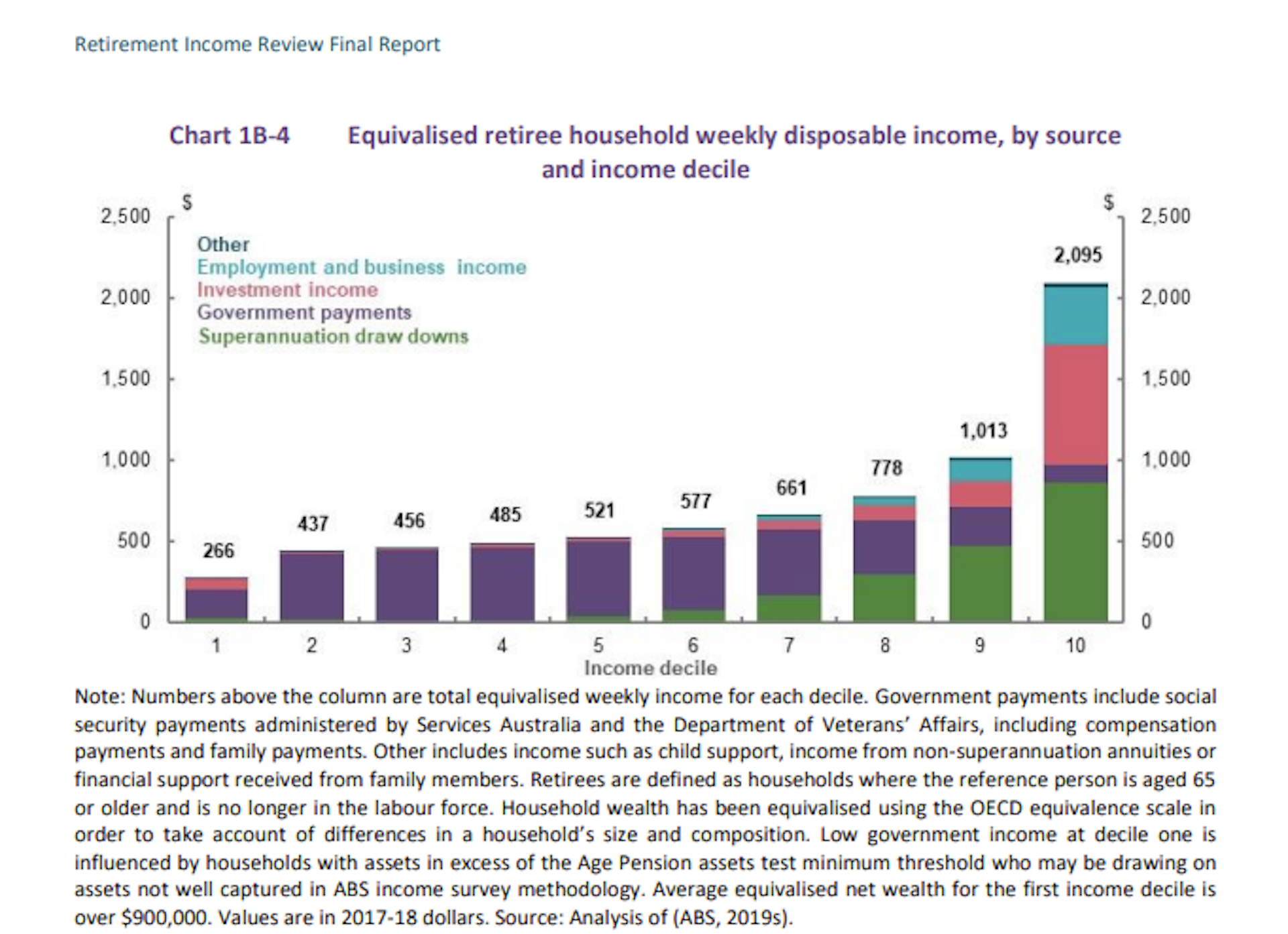
The government’s 2020 retirement income review found high-income Australians earned as much again from investment income outside super as they made from withdrawals from it. They do alright.

Scott Morrison, much criticised for the generosity to high income earners of his Stage 3 tax cuts, moved in the right direction on super. Jim Chalmers is picking up where he left off.The Conversation

This article is republished from The Conversation under a Creative Commons license. Read the original article.

Read more >>

Tuesday, February 21, 2023

See when Australia’s biggest banks stopped paying proper interest on your savings – and what you can do about it

Whenever interest rates went up in the past, I used to get told it wasn’t all bad news. At least it was good for some people: savers – people with money in the bank.

I hear a lot less of that these days.

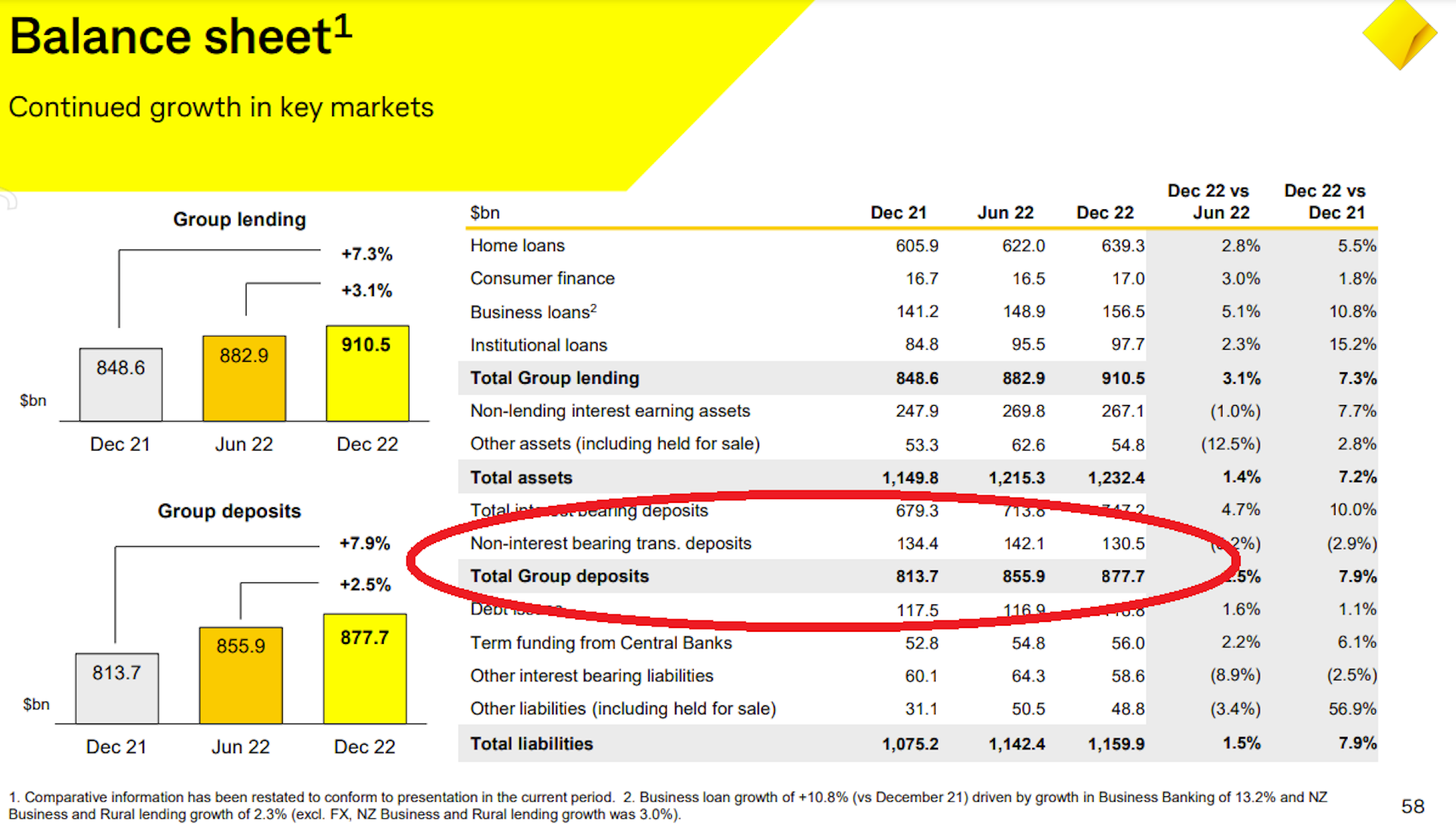
If you’ve got money in the bank, you’re now lucky to earn anything at all. One in seven of the deposit dollars held by the Commonwealth bank (Australia’s biggest for deposits) is in a “transaction account” on which it no longer pays interest.

Where interest is paid, it is so tiny compared to what it was that Treasurer Jim Chalmers this month directed the Australian Competition and Consumer Commission to conduct an inquiry, using its compulsory information-gathering powers.

The last time the commission conducted such an inquiry, into mortgage rates in 2018, it gained access to nearly 40,000 documents from the big four banks and more than 7,000 from the smaller banks.

Bad news for savers: when your rates began to fall

What the commission is likely to find is that whereas transaction accounts stopped paying interest some time ago, so-called online accounts offering interest on large deposits were paying very reasonable interest – up until five years ago.

How do I know that’s the likely finding? Here’s what I found, when I graphed the Reserve Bank’s measure of the average online rate for a $10,000 deposit against the Reserve Bank’s cash rate, going back to 2010.


What the graph shows is that, until about five years ago, the online rate for big deposits moved in line with the cash rate and (as it happened) almost exactly matched it. When the cash rate was 3%, the online deposit rate was 3%, and so on.

But from 2018, the deposit rate fell away. Except for the time when both rates were close to zero during the early years of COVID, the rate paid on large deposits has stayed well below the cash rate ever since.

That’s what the official figures say. But Anna Bligh, chief executive of the Australian Banking Association, sees them differently.

“This time last year, the four major banks, nobody, no bank was offering more than 0.3% on their savings account,” she told the Australian Financial Review this month. “Right now, they’re all offering at least 4% or more. So that’s a massive increase.”

But the rates Bligh quotes aren’t the standard ones.

The Commonwealth Bank is indeed paying 4% on its so-called NetBank Saver account, but the 4% is an introductory rate for new customers only – before slipping back to 1.6% after five months.

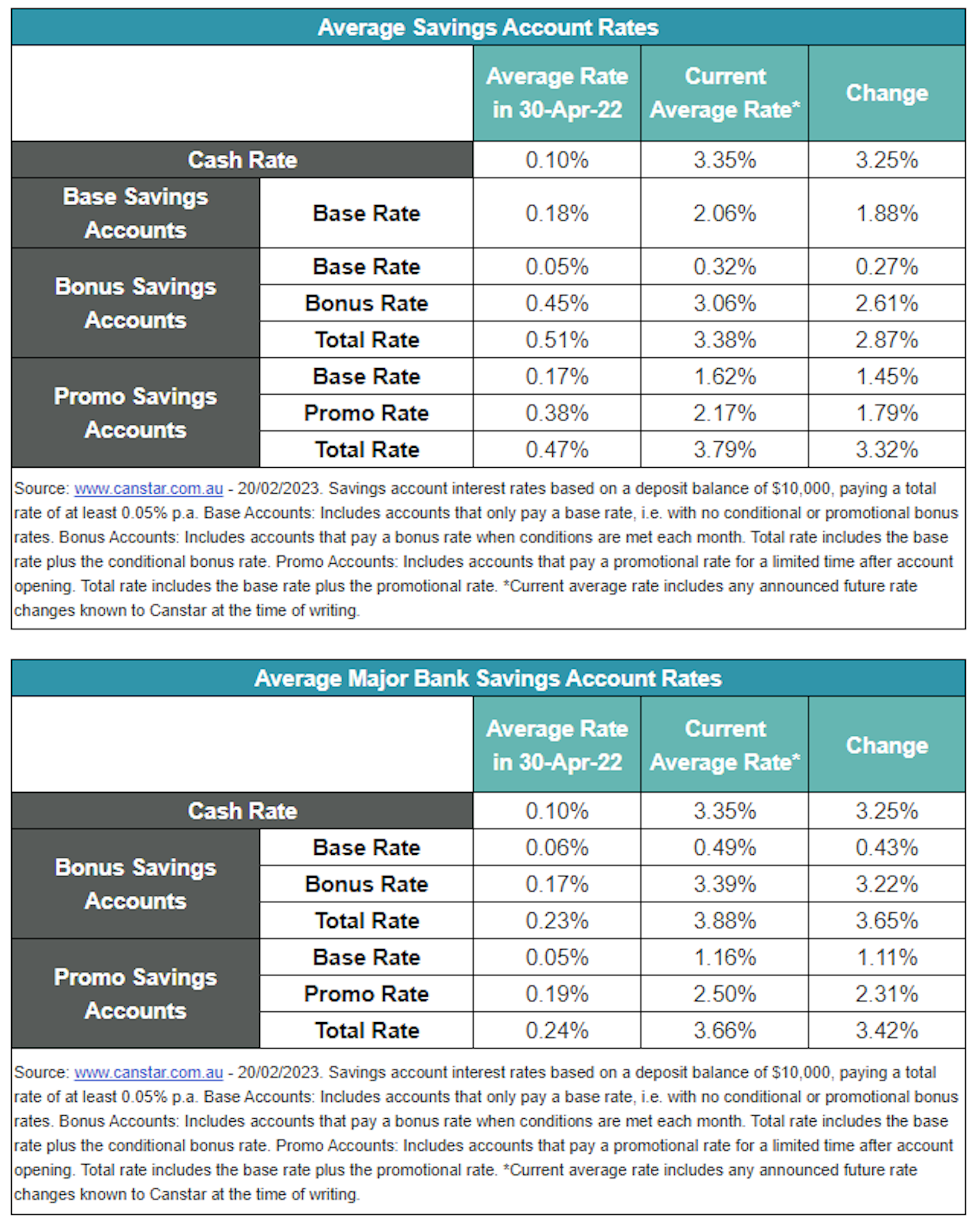
The web comparison site Canstar finds the average big bank introductory rate on $10,000 is 3.66%, up from 0.24% before the Reserve Bank put up the cash rate by a total of 3.25 points.

But the average rate offered when the introductory bonus wears off has climbed by much less, from 0.05% to just 1.16%.

Complexity and suspected collusion makes switching hard

And some of the high-looking rates have special conditions.

The Commonwealth’s GoalSaver account also offers 4%, but only if you put in more money in each month. If you can’t, or if you make a withdrawal, the rate plummets to 0.25%.

The Australian Competition and Consumer Commission’s inquiry is likely to find that the complex nature of the deals makes switching hard, just as does the complex nature of electricity and health insurance deals.

That’s what it found about the bank’s mortgage offerings in 2018.

It found the “opaque” nature of the offers inflated the costs of shopping around (including time and effort) and was one of the reasons why 70% of borrowers surveyed by one of the big banks said they signed up after getting just one quote.

It said the big four banks profited from the suppression of incentives to shop around and lacked strong incentives to make prices more transparent.

So why have the deposit rates offered by the big four banks dropped away?

When it came to mortgages, the ACCC suspected tacit collusion. Its 2018 report referred to a “synchronised” approach to rates seven times.

Why the banks won’t act – unless we make them

In very recent years, the banks have had less reason to offer high rates. During the first 15 months of COVID, the Reserve Bank made available A$188 billion of funding to banks at the extraordinarily low rates of 0.25% and 0.1%.

This meant banks had less need to attract deposits, and in any event, they were overwhelmed with deposits. Elevated savings rates during COVID pushed an extra $300 billion through their doors, as worried and locked-down households sought out safe places to stash cash.

Both of these things are changing. The last of the Reserve Bank’s cheap three-year loans to banks expires mid-next year, and households are stashing less into banks than they used to.

It is possible deposit rates might be about to improve, all the more so because the banks will be under scrutiny until the ACCC inquiry reports at the end of the year.

When announcing the inquiry, the treasurer invoked fairness. Chalmers called on the banks to “pass on the interest rate rises to savers as quickly as you pass on the interest rate rises to mortgage holders”.

But fairness has little to do with it. The banks will pay depositors more only when they need to, or when they are pressured to. Until then, for many of us, deposits will earn next to nothing, regardless of where the Reserve Bank moves rates.

So if you’ve got a savings account, why not call up your bank, quote this article – and ask them what they’re going to do about it.The Conversation

This article is republished from The Conversation under a Creative Commons license. Read the original article.

Read more >>

Tuesday, February 14, 2023

Australians need good financial advice more than ever to pay for soaring interest rates. Here’s how to get it

Hundreds of thousands of us who took out fixed-rate mortgages in 2020 and 2021 are about to be hit with massive increases in payments.

After nine successive interest rate increases and at least two more to come, those of us on variable rates will soon be paying as much as A$1,000 a month more.

With such an uncertain economic outlook, should we switch our super fund’s investment strategies from “growth” to “conservative”? Should we rent rather than buy while home prices fall?

We need answers to our financial questions – but they’re now much harder to get.

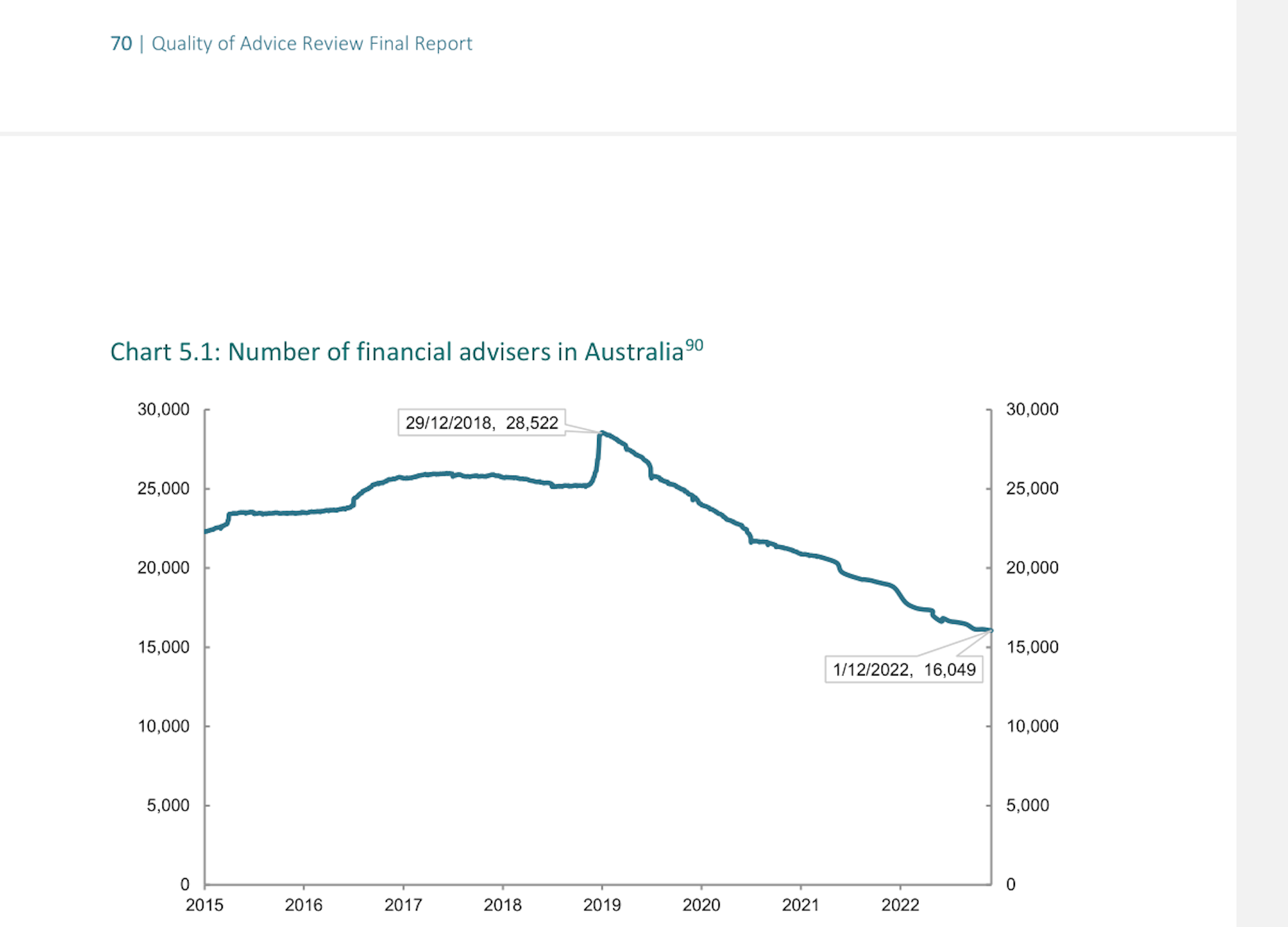
Five years ago, Australia had 28,000 financial advisers. Today there are 16,000. That’s according to a review of financial advice commissioned by the previous government and released by the Albanese government last week.

Thousands of advisers are leaving the industry each year. The ones that remain are charging far more than they used to – $3,710 is said to be common, up 48% in five years, and enough to turn many people away.

So how did it come to this? And what does the new report recommend we do to make it easier for more Australians to get good, more affordable financial help?

Fixing rorts, where even dead people paid a price

This is a story about how Australia, under successive Labor and Coalition governments, let aiming for what’s perfect get in the way of what’s good. Up until I read the Quality of Advice Review last week, I was guilty of doing it too.

For years, I argued we should make financial advice perfect: delivered by genuinely professional advisers, who weren’t receiving kickbacks from firms wanting access to our money. I also argued we should pay for that advice in full upfront, because, whatever the cost, the advice will save us money in the long run.

We needed to do something. Back before a series of explosive Four Corners reports and the 2019 Hayne royal commission into the financial services industry, advisers and the funds they pushed us towards sucked money out of our accounts and presented us with options that made money for them – rather than us.

The consequences were shocking. Dead people were being charged for financial advice, and even for life insurance. Gym instructors and other “introducers” were used to lure people into products that charged unnecessarily high fees.

The professionals we now call investment advisers used to be called insurance salesmen. They were paid through commissions to beguile us into signing up for products that charged high fees and paid them high ongoing commissions.

Unintended results of tougher standards

Ahead of the Hayne royal commission, things began to change.

The Rudd Labor government outlawed commissions and introduced legislation requiring advisers to “place clients’ interests ahead of their own”. After winning government, the Coalition tried to undo the changes, before adopting just about the lot after Hayne reported.

It’s now illegal for financial advisers to accept commissions (although mortgage brokers and people who sell insurance still can) and illegal to offer advice that isn’t in the “best interests” of the customer taking almost everything into account. This makes it all but impossible for bank tellers and super funds to offer advice.

So I have been having second thoughts about the arguments I once made for no commissions, best interests, and lots of disclosure documents – especially after reading the Quality of Advice Review. Ironically, its release was largely drowned out by coverage of Australians’ growing financial stress.

The report’s author Michelle Levy is a senior lawyer and expert on superannuation, life insurance, distribution and financial services law.

As well as being a partner at Allens, she’s also a parent – and knows more than most how vile predatory financial advisers can be.

During the royal commission, we heard about a man with Down syndrome who was signed up for life insurance over the phone, even though he lived on a pension, had no dependants and could not afford the premiums.

In her review, Levy discloses that she has a daughter who, “like this gentleman”, lives with a disability and has bank accounts, but does not know the difference between $10 and $1,000, does not know how to use a credit card, or what superannuation is.

Levy writes that her daughter ought to be able to rely on her bank and super fund to assist her.

She says by stopping firms from providing advice that isn’t perfect, we’ve inadvertently stopped our financial institutions from providing advice that is “good”. We have made it hard for human beings to help each other.

Why ‘good’ might be a better benchmark than ‘best’

So Levy wants to allow super funds and banks to offer advice which is “good” but isn’t comprehensive, in the same way as sales assistants are able to offer advice on clothes and mechanics are able to offer advice on cars.

Good advice does not mean “okay advice” or “good enough” advice, she says.

It is unlikely to be good advice to recommend a poorly performing superannuation product. It will not be good advice to recommend that a person who is unable to pay their mortgage open a term deposit.

If the advice isn’t good, the full force of the existing law will come down on the person who provides it (the maximum penalty for an individual is $1.11 million). But it needn’t be comprehensive; not every piece of financial advice needs to be a lifetime plan.

What Levy is proposing, and what the government is now considering, is more subtle than what we are doing at the moment – which is simply banning self-interested parties from giving advice.

Levy wants to allow the self-interested to give advice, while ensuring it “also serves the interests of their customers”.

In the meantime, if you are in serious financial difficulty (rather than simply needing advice) the National Debt Helpline is one of a number of places that can help. You can request a free, confidential meeting with a financial counsellor on 1800 007 007.The Conversation

This article is republished from The Conversation under a Creative Commons license. Read the original article.

Read more >>

Tuesday, February 07, 2023

RBA warns of at least 2 more interest rate rises in coming months, as the economic outlook worsens

Australia’s cash rate has hit 3.35%, after the Reserve Bank raised interest rates for the ninth time in a row – and signalled more interest rate pain ahead. The 0.25 percentage point rise adds A$90 a month to a $600,000 variable mortgage.

Ahead of Tuesday’s statement from the Reserve Bank board, there was talk of just one more 0.25 point rate hike this year.

That was the view of traders in the money market, who had priced loans on the basis that the bank’s cash rate would climb just 0.35 points further after being lifted to 3.35% on Tuesday, before plateauing and then falling.

No longer. The statement released after Tuesday’s board meeting included this carefully-considered plural:

The Board expects that further increases in interest rates will be needed over the months ahead to ensure that inflation returns to target and that this period of high inflation is only temporary.

The reference was to “increases”, not an “increase”, and to those increases in the months ahead, implying (at least) two more increases within months.

Within minutes, traders adjusted their prices to a peak in the cash rate of 3.9%, rather than 3.7% – which coincidentally was around the average forecast of participants in The Conversation’s economic survey at the start of the week.

The bank is lifting rates even though it thinks inflation is heading down.

In a preview of its full set of forecasts to be released on Friday, it said it expected inflation to slide from its present 7.8% to 4.74% by the end of this year, and to around 3% by mid-2025, which is also in line with the forecasts of the Conversation’s panel.


The steam is coming out of inflation partly because of interest rate hikes here and overseas, and partly because the global effects of Russia’s invasion of Ukraine are fading.

Last Wednesday, the head of the US Federal Reserve Jerome Powell (the equivalent of Australia’s Reserve Bank Governor Philip Lowe) began talking about “disinflation”.

“We can now say, I think for the first time, that the disinflationary process has started,” he told a press conference, and to underline the point he used the word “disinflation” ten more times in 44 minutes.

US inflation has been falling since the middle of last year, from a peak of 9.1% in June to 6.5% in December.

Powell says inflation is falling mainly because the global shortages of goods and commodities caused by Russia’s invasion of Ukraine have been “fixed”.

But inflation is also falling because of the work Powell has done. In the US, the Federal Funds rate (similar to our Reserve Bank cash rate) has climbed from something near zero to 4.5% in the space of a year, denting consumer spending.

Disinflation abroad, weak wage pressure at home

In Australia, figures released by the Bureau of Statistics on Monday show spending fell in the three months to December – not in absolute dollar terms, because December is always a big month, but compared to what would have been expected given the end of the year.

Continuing to hold up inflation in the US and in the UK – but not in Australia – has been very high wages growth. Higher prices have become baked into higher wages, which have been fed into higher prices, which have in turn fed back into higher wages.

Not here. Whereas in the US and the UK wage growth has topped 6%, here it is officially 3.1% – way below what would be needed to hold up inflation.

In part, we’ve a former Labor government to thank for the absence of a wage-price spiral.

Prime Minister Paul Keating steered Australia toward enterprise bargaining at the start of the 1990s, locking many of us into wage agreements that are only struck once every three or so years, and are unable to respond quickly to prices.

So why is the Reserve Bank determined to whack inflation further, rather than watch it slowly die?

Perhaps to send a message that it is really, really serious, and that it is not a good idea to get relaxed about spending, thinking the worst will soon be over.

Bleak times ahead

Between the lines though, the bank is hinting it’s likely to soon ease off.

Its statement says rate increases affect the economy “with a lag” and that Australians on fixed-rate mortgages have yet to feel the full effect of the cumulative increases since May.

The bank’s assessment of the economy after the increases are over is bleak.

It says it expects GDP growth to slow to only 1.5% during 2023 and 2024, which is an even more dismal forecast than the International Monetary Fund’s, which has economic growth of just 1.6% this year, climbing to a historically-low 2.2% by 2026. The Conversation’s forecasters expect 1.7%, climbing to 2.5%.

The RBA’s forecast would mean income per person barely increases for years to come (although the unemployment rate would stay below 5%), a condition that before COVID was known as secular stagnation.

This would mean the economic resources Australian governments needs to provide the services we’re likely to need (such as to get to net zero emissions, and to deal with climate change) are going to be harder to come by.

It’s what Treasurer Jim Chalmers intends to spend much of 2023 readying us for.

Later this month Chalmers will release a revamped tax expenditures statement, setting out the scope to wind back tax breaks, including those for profits made selling high-end family homes. That’s something Chalmers says he isn’t considering, but which the IMF has recommended.

And then later in the year, he will release the first intergenerational report to properly spell out the financial costs of climate change – right through to 2063.

2023 is going to be quite a year.The Conversation

This article is republished from The Conversation under a Creative Commons license. Read the original article.

Read more >>

Sunday, February 05, 2023

Higher interest rates, falling home prices and real wages, but no recession: top economists’ forecasts for 2023

Wes Mountain/The Conversation

Australia’s Reserve Bank is set to push up rates once again at its first meeting for the year on Tuesday, according to all but two of the 29 leading economists surveyed by The Conversation at the start of 2023.

Those experts predict we will still be living with higher rates by the end of the year, although they should start to come down in 2024.

Their average forecast is an increase in the bank’s cash rate target from 3.1% to 3.6% during 2023. That’s enough to add an extra A$190 to the monthly cost of servicing a $600,000 variable mortgage, bringing the total increase in the cost of servicing such a mortgage since the bank began hiking rates in May 2022 to more than $1,000.


All but three of the specialists surveyed expect the Reserve Bank’s cash rate target to peak during 2023, and on average the panel expects it to fall back to close to its present level during 2024.

Panelist Jo Masters of Barrenjoey Capital says the bank’s keenness to bring down inflation will be tempered by the knowledge that a large number of borrowers are set to exit the very cheap three-year fixed-rate loans they took out early in the pandemic and are facing very steep increases indeed.


The highest forecast for a peak in the cash rate is from former Reserve Bank research manager Peter Tulip, who expects a cash rate of 5% by December 2024 – enough to add a further $725 to the monthly cost of servicing a $600,000 mortgage.

The panel assembled by The Conversation includes macroeconomists, economic modellers, former Treasury, International Monetary Fund and financial market economists, and a former member of the Reserve Bank board.

Most expect inflation to fall sharply from here on, with all but five believing the quarterly rate will turn out to have peaked at 7.8% in December 2022.


Financial markets economist Warren Hogan says the food and fuel prices pushed up by Russia’s invasion of Ukraine are already falling, and the only question is how quickly inflation falls, and how soon it returns to the Reserve Bank’s 2-3% target band.

Former federal Labor minister Craig Emerson says, unlike in the 1970s, wage rises aren’t helping sustain inflation. Then, more than half the Australian workforce was unionised and wage setting was centralised. Today only one-eighth of the workforce is unionised and most wages are not set centrally.

The panel expects real wages to go backwards for the third consecutive year in 2023, as wages growth of 3.9% is overpowered by prices growth of 4.5%.


Wage growth is expected to fall back to 3.6% in 2024 as the economy weakens and as an increase in immigration helps fill labour shortages. But the average forecast is wage growth to outstrip price rises next year for the first time since 2020, as inflation falls back to 3.2%.

Recession unlikely at home, more likely abroad

The panel assigns a 26% probability to a recession in the next two years, an increase on the 20% it assigned in mid-2022.

Former Department of Foreign Affairs and Trade chief economist Jenny Gordon says if Europe goes into a recession in its 2023-24 winter and China’s recovery is slow, a recession in Australia will become more likely.

While the panel expects China’s decision to end COVID lockdowns will lift its growth rate from 3% in 2022 to 4.7% in 2023, it does not expect anything like a return to the previous growth rates of 8% or more.

Industry economist Julie Toth says China is facing resource depletion and population decline, as well as a cyclical downturn in industrial and residential investment. COVID-19 presents an immediate threat to its people and economy.

The panel assigns a 42% probability to a recession in the United States within the next two years, a 57% probability to a recession in the European Union, and a 73% probability to a recession in the United Kingdom.

Four of the economists surveyed believe the UK recession has already started. As in the US, it is likely to result from the run of interest rate increases put in place to contain inflation.

University of Tasmania economist Mala Raghavan expects the US to skirt an outright recession and instead experience a “rolling recession”, in which different parts of the economy take time to turn down.


KPMG forecaster Sarah Hunter says while Australia should avoid a recession as commonly described (two consecutive quarters in which production shrinks) economic growth could well turn negative for one quarter at the start of the year, as household spending turns down and mining shipments are disrupted by floods.

Regardless, the economy will be “very weak by historic standards” in 2023. The panel expects economic growth of only 1.7% in 2023, climbing to 2.5% by 2026.


The panel is forecasting very weak growth in household spending of 2.2% over the year to December, and a further decline in the household saving ratio from 6.9 to 5.1%.

Non-mining business investment is expected to hold up, climbing 2.8% over the year to December, up from 1.75%. Mining investment is expected to climb 3.4%, with much depending on demand from the rest of the world.

Home prices are expected to fall further in 2023 in response to higher interest rates, slipping another 7% in Sydney and 6% in Melbourne.

AMP economist Shane Oliver says the buying power of someone on average full-time earnings with a 20% deposit has fallen by more than one quarter as a result of interest rate hikes, and prices are yet to fully reflect this.


Jobs to hold up

Australia’s unemployment rate dipped below 4% for the first time in five decades in 2022. It is expected to stay below 4% (at 3.96%) in 2023 and then remain below 5% in 2024 even as immigration builds up, in part because low unemployment has made previously unemployed Australians employable.

As former Deloitte Access director Chris Richardson puts it, previously hard to employ Australians have been “polishing their skills and their resumes”.

Federation University economist Margaret McKenzie also points to the large amount of sick leave being taken, creating demand for workers to fill the gaps.


On average, the panel is expecting a flat share market in the year ahead, but the forecasts range from growth of 8% to a decline of 17%, led down by weaker bank stocks and household spending as interest rate increases bite.

The panel expects the iron ore price to remain roughly steady at US$105 throughout 2023, rather than falling to the US$55 assumed in the budget.

Partly as a result, the panel is forecasting a budget deficit of A$29.4 billion in 2022-23, down from the officially forecast $36.9 billion.


The Conversation’s Economic Panel

Click on economist to see full profile.

Download the 2023 economic surveyThe Conversation

This article is republished from The Conversation under a Creative Commons license. Read the original article.

Read more >>