Showing posts with label forecasting survey. Show all posts

Saturday, February 03, 2024

Mortgage and inflation pain to ease, but only slowly: how 31 top economists see 2024

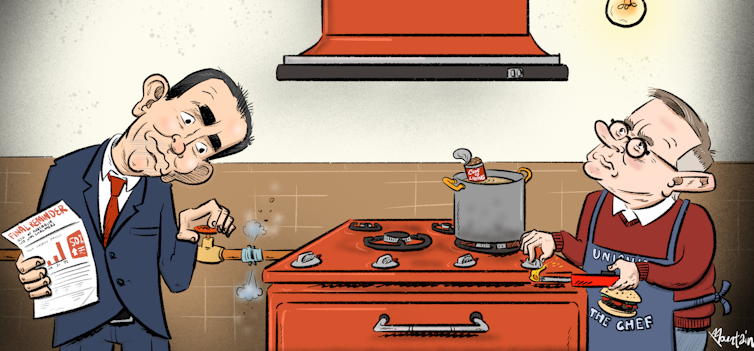
Wes Mountain/The Conversation, CC BY-ND

A panel of 31 leading economists assembled by The Conversation sees no cut in interest rates before the middle of this year, and only a slight cut by December, enough to trim just $55 per month off the cost of servicing a $600,000 variable-rate mortgage.

The panel draws on the expertise of leading forecasters at 28 Australian universities, think tanks and financial institutions – among them economic modellers, former Treasury, International Monetary Fund and Reserve Bank officials, and a former member of the Reserve Bank board.

Its forecasts paint a picture of weak economic growth, stagnant consumer spending, and a continuing per-capita recession.

The average forecast is for the Reserve Bank to delay cutting its cash rate, keeping it near its present 4.35% until at least the middle of the year, and then cutting it to 4.2% by December 2024, 3.6% by December 2025 and 3.4% by December 2026.


The gentle descent would deliver only three interest rate cuts by the end of next year, cutting $274 from the monthly cost of servicing a $600,000 mortgage and leaving the cost around $1,100 higher than it was before rates began climbing.

Six of the experts surveyed expect the Reserve Bank to increase rates further in the first half of the year, while 20 expect no change and three expect a cut.

Former head of the NSW treasury Percy Allan said while the Reserve Bank would push up rates in the first half of the year to make sure inflation comes down, it would be forced to relent in the second half of the year as unemployment grows and the economy heads towards recession.

Warwick McKibbin, a former member of the Reserve Bank board, said the board would push up rates twice more in the first half of the year as insurance against inflation before leaving them on hold.

Former Reserve Bank of Australia chief economist Luci Ellis, who is now chief economist at Westpac, expects the first cut no sooner than September, believing the board will wait to see clear evidence of further falls in inflation and economic weakening before it moves.


Inflation to keep falling, but more gradually

Today’s Reserve Bank board meeting will consider an inflation rate that has come down faster than it expected, diving from 7.8% to 4.1% in the space of a year.

The newer more experimental monthly measure of inflation was just 3.4% in the year to December, only points away from the Reserve Bank’s target of 2–3%.

But the panel expects the descent to slow from here on, with the standard measure taking the rest of the year to fall from 4.1% to 3.5% and not getting below 3% until late 2025.

Economists Chris Richardson and Saul Eslake say while inflation will keep heading down, the decline might be slowed by supply chain pressures from the conflict in the Middle East and the boost to incomes from the tax cuts due in July.


Slower wage growth, higher unemployment

While the panel expects wages to grow faster than the consumer price index, it expects wages growth to slip from around 4% in 2023 to 3.8% in 2024 and 3.4% in 2025 as higher unemployment blunts workers’ bargaining power.

But the panel doesn’t expect much of an increase in unemployment. It expects the unemployment rate to climb from its present 3.9% (which is almost a long-term low) to 4.3% throughout 2024, and then to stay at about that level through 2025.

All but two of the panel expect the unemployment rate to remain below the range of 5–6% that was typical in the decade before COVID.

Economic modeller Janine Dixon said the “new normal” between 4% and 5% was likely to become permanent as workers embraced flexible arrangements that allow them to stay in jobs in a way they couldn’t before.

Cassandra Winzar, chief economist at the Committee for the Economic Development of Australia, said the government’s commitment to full employment was one of the things likely to keep unemployment low, along with Australia’s demographic transition as older workers leave the workforce.


Slower economic growth, per-capita recession

The panel expects very low economic growth of just 1.7% in 2024, climbing to 2.3% in 2025. Both are well below the 2.75% the treasury believes the economy is capable of.

All but one of the forecasts are for economic growth below the present population growth rate of 2.4%, suggesting that the panel expects population growth to exceed economic growth for the second year running, extending Australia’s so-called per capita recession.


The lacklustre forecasts raise the possibility of what is commonly defined as a “technical recession”, which is two consecutive quarters of negative economic somewhere within a year of mediocre growth.

Taken together, the forecasters assign a 20% probability to such a recession in the next two years, which is lower than in previous surveys.

But some of the individual estimates are high. Percy Allen and Stephen Anthony assign a 75% and 70% chance to such a recession, and Warren Hogan a 50% chance.

Hogan said when the economic growth figures for the present quarter get released, they are likely to show Australia is in such a recession at the moment.

The economy barely grew at all in the September quarter, expanding just 0.2% and was likely to have shrunk in the December quarter and to shrink further in this quarter.

The panel expects the US economy to grow by 2.1% in the year ahead in line with the International Monetary Fund forecast, and China’s economy to grow 5.4%, which is lower than the International Monetary Fund’s forecast.

Weaker spending, weak investment

The panel expects weak real household spending growth of just 1.2% in 2014, supported by an ultra-low household saving ratio of close to zero, down from a recent peak of 19% in September 2021.

Mala Raghavan of The University of Tasmania said previous gains in income, rising asset prices and accumulated savings were being overwhelmed by high inflation and rising interest rates.

Luci Ellis expected the squeeze to continue until tax and interest rate cuts in the second half of the year, accompanied by declining inflation.

The panel expects non-mining investment to grow by only 5.1% in the year ahead, down from 15%, and mining investment to grow by 10.2%, down from 22%.

Johnathan McMenamin from Barrenjoey said private and public investment had been responsible for the lion’s share of economic growth over the past year and was set to plateau and fade as a driver of growth.

Home prices to climb, but more slowly

The panel expects home price growth of 4.6% in Sydney during 2024 (down from 11.4% in 2024) and 3.1% in Melbourne, down from 3.9% in 2024.

ANZ economist Adam Boyton said decade-low building approvals and very strong population growth should keep demand for housing high, outweighing a drag on prices from high interest rates. While high interest rates have been restraining demand, they are likely to ease later in the year.


In other forecasts, the panel expects the Australian dollar to stay below US$0.70, closing the year at US$0.69, it expects the ASX 200 share market index to climb just 3% in 2024 after climbing 7.8% in 2023, and it expects a small budget surplus of A$3.8 billion in 2023-24, followed by a deficit of A$13 billion in 2024-25.

The budget surplus should be supported by a forecast iron ore price of US$114 per tonne in December 2024, down from the present US$130, but well up on the US$105 assumed in the government’s December budget update.


The Conversation’s Economic Panel

Click on economist to see full profile.

Download the answers as XLS PDFThe Conversation

This article is republished from The Conversation under a Creative Commons license. Read the original article.

Read more >>

Sunday, July 02, 2023

Two more RBA rate hikes, tumbling inflation, and a high chance of recession: how our forecasting panel sees =2023-24

Of the 27 leading economists assembled by The Conversation to forecast the financial year that’s just begun, every one expects inflation to continue to fall.

The official quarterly measure of inflation peaked at 7.8% in the year to December and is now 7%, and the newer monthly measure peaked at 8.4% and is now 5.6%.

What’s at issue is how quickly inflation will continue to fall, how many more times the Reserve Bank will push up interest rates to make sure it falls as quickly as it wants, and the damage those rate hikes will do to an already very weak economy.

Twelve of the 27 think a recession is either more likely than not, or an even chance. And almost all expect a “per-capita recession”, in which economic growth fails to keep pace with population growth, sending living standards backwards.

Now in its fifth year, The Conversation survey draws on the expertise of leading forecasters in 25 Australian universities, think tanks and financial institutions – among them economic modellers, former Treasury, International Monetary Fund and Reserve Bank officials, and a former member of the Reserve Bank board.

Two more interest rate hikes this year

After 12 interest rate hikes that lifted the Reserve Bank’s cash rate from 0.1% to 4.1% in a little over a year, the panel expects two more.

The panel predicts a cash rate of 4.5% by the end of this year, followed by a decline to 4.3% by the middle of next year, and to 3.9% by the end of 2024.


Asked to specify the month in which the cash rate will peak, and how high it will go, the panel settled on a peak of 4.7% in November.

A cash rate of 4.7% would lift the typical rate on a new mortgage from 5.4% to 6%, adding a further $200 per month to the cost of servicing a $600,000 loan.


But the extra pain would be short-lived. Asked how long the cash rate would stay at its peak before being cut, the panel’s average guess was six months, meaning rates would begin to fall in June next year.

Several of those surveyed warned against expecting rates ever to fall back to anything like the emergency lows of 2020 and 2021. Others noted that the one thing that could force the Reserve Bank to cut rates faster than expected was a recession.

Plummeting inflation, an uptick in real wages

The panel expects inflation to slide from 7% to 5.2% by the end of the year, then to 3.9% by mid-2024, and to 2.9% a year later – putting it back within the Reserve Bank’s 2-3% target band.

Although steep, the fall in inflation isn’t as fast as predicted by the bank itself (3.6% by mid-2024) or the Treasury (3.25% by mid-2024).


Barrenjoey Chief Economist Jo Masters said while price pressure from imported goods and fuel was easing, inflation was increasingly being driven by the prices of services such as rents that tended to be persistent.

Margaret McKenzie of Federation University identified the reopening of borders as a source of downward pressure on prices, saying it would ease labour shortages.

Moody’s Analytics’ Harry Murphy Cruise said although weaker spending was putting downward pressure on inflation, the Reserve Bank seemed unwilling to let that take its course and wanted to slow inflation more quickly, risking “knocking the wind out” of an already fragile economy.

A welcome upside of much lower inflation forecasts is a forecast of the first increase in real wages in three years, albeit a small one.

The panel expects wages growth of 4% in the financial year ahead, just beating price growth of 3.9%. The resulting 0.1% increase in the so-called real wage would be followed by a more substantial increase of 0.7% in 2024-25 as wages growth of 3.6% topped price growth of 2.9%.


A per-capita (if not an actual) recession

New Zealand is already in a recession, and the panel assigns probabilities of 59% and 42% to the prospect of recessions in the United Kingdom and United States respectively, with the most likely start for both being the final three months of this year.

Throughout 2023, the panel expects economic growth of just 1.2% in the US and historically weak growth of 4.9% in China, suggesting Australia’s biggest customer for minerals will be unable to provide much help as Australia’s own economic growth dwindles.

The panel is forecasting Australian economic growth of just 1.2% in 2023 – the lowest rate outside a recession in more than 30 years, climbing to just 1.5% in the year to June 2024 and 2.3% in the year to June 2025.


AMP Chief Economist Shane Oliver said if the low growth rate turns into what is usually called a recession (two consecutive quarters of shrinking gross domestic product) it will be because the Reserve Bank pushes up interest rates too far for highly indebted Australians to withstand.

He said consumer spending is almost certain to shrink as debt servicing costs hit a record high and, on the Bank’s own analysis, 15% of households with a variable-rate mortgage – roughly a million people – experience negative cash flow.

Asked to estimate the chance of the Australian economy going into recession in the next two years, the panel’s average answer was 38%, well up from the 26% the panel assigned to a recession in February’s survey.

KPMG Chief Economist Brendan Rynne assigned a 100% probability to what he called a “shallow, extended recession”, in which growth is first weighed down by a downturn in housing investment, followed by a slowdown in business investment.

The average forecast start date of a recession, should there be one, is the final three months of this year.


The panel’s economic growth forecast of 1.5% for 2023-24 is well below the Treasury’s forecast of population growth of 2%, suggesting output per person will shrink in what is called a per-capita recession.

Unemployment climbing, albeit slowly

The panel expects a gradual increase in the unemployment rate from its present near-50-year low of 3.6% to 4.3% by mid-next year, followed by an increase to 4.6% by mid-2025.

The forecasts are in line with those of the Treasury and Reserve Bank, and suggest Australia is unlikely to surrender the big gains in employment made in the aftermath of the COVID lockdowns and return to the pre-COVID unemployment rate of 5%.

University of Tasmania economist Mala Raghavan said while job markets would become less tight as the economy weakened and as foreign students and migrants returned, the impact would be felt first in the underemployment rate, which reflects the extent to which workers are working fewer hours than they want.


Less household buying, higher house prices

The panel expects growth in real household spending of just 1.5% in 2023-24, meaning the amount bought per household is likely to shrink.

Yet at the same time, it is forecasting continued modest growth in home prices, which climbed for the fourth month in a row in June after falling since mid-2022.

Most of the panel expects further growth in Sydney and Melbourne home prices in the 12 months ahead, with only four panel members predicting declines. The average forecast is for both Sydney and Melbourne prices to climb a further 2%.

Former Productivity Commission economist Jenny Gordon identified renewed migration as a driver of demand, offset by declining real wages and the risk of a recession.

Jo Masters said sellers appeared to be withdrawing supply, with total listings a third lower than normal, while the buyers appeared to have higher incomes than before and lower debt-to-income ratios, meaning they were less troubled by high interest rates.


Tiny share market growth, tiny budget deficit

The panel expects the budget surplus for the financial year just ended to be followed by only a tiny budget deficit of A$9.4 billion in 2023-24, which would be less than 0.4% of GDP.

Two panellists, Mariano Kulish and Stephen Anthony, expect this year’s surplus to be followed by another one of $18 billion to 20 billion. Anther, Jenny Gordon, expects this year’s surplus to be followed by a budget in balance.

The forecasts reflect an iron ore price expected to stay near US$104 per tonne at the end of the year, instead of falling towards US$60 as forecast in the budget.

The panel expects modest share market growth of 3% in the year to June 2024, with the results sensitive to home prices (through the profits of financial corporations) and minerals prices (through the profits of mining companies).


The Conversation’s Economic Panel

Click on economist to see full profile.

Download the results on one pageThe Conversation

This article is republished from The Conversation under a Creative Commons license. Read the original article.

Read more >>

Sunday, February 05, 2023

Higher interest rates, falling home prices and real wages, but no recession: top economists’ forecasts for 2023

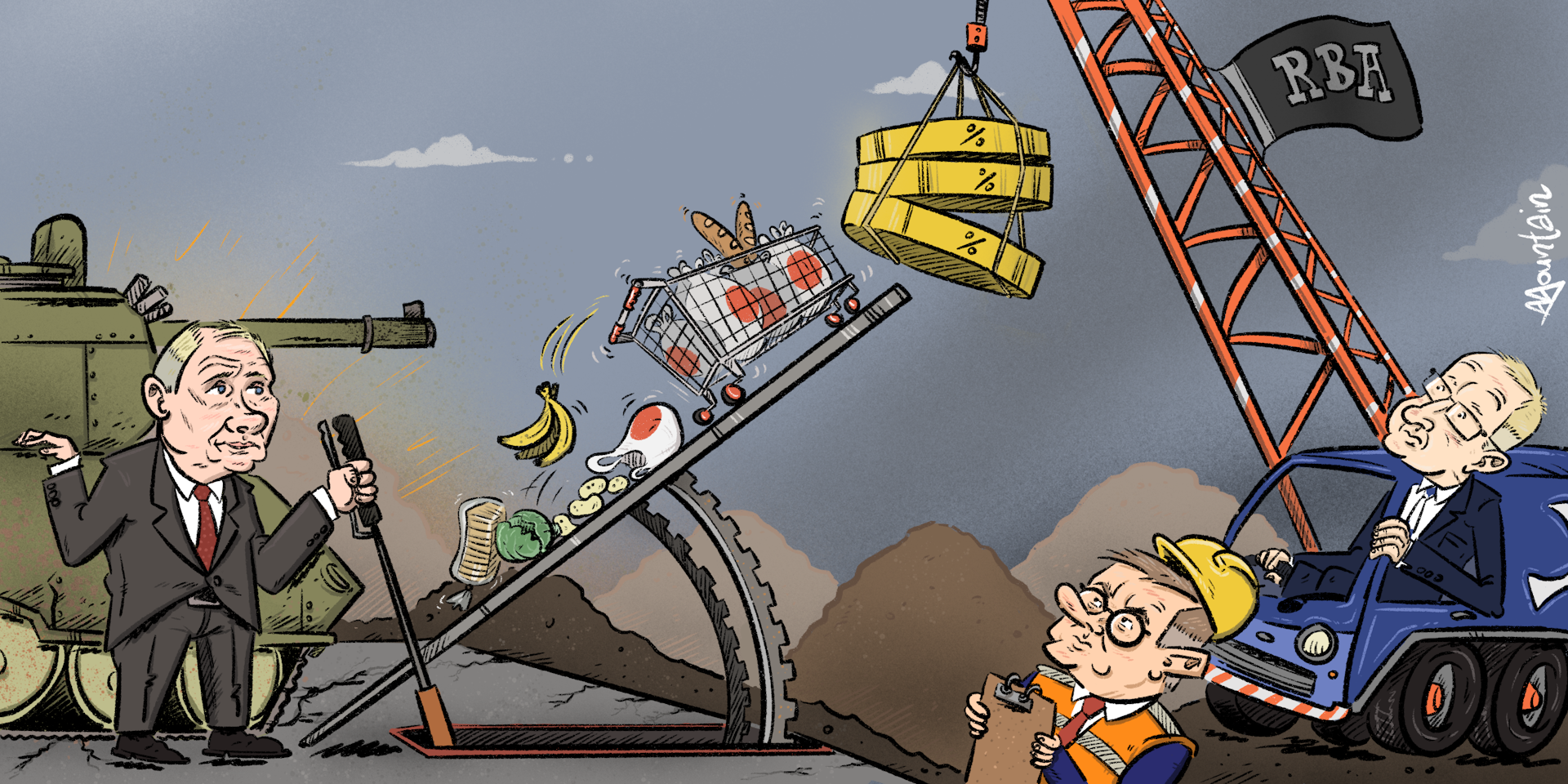
Wes Mountain/The Conversation

Australia’s Reserve Bank is set to push up rates once again at its first meeting for the year on Tuesday, according to all but two of the 29 leading economists surveyed by The Conversation at the start of 2023.

Those experts predict we will still be living with higher rates by the end of the year, although they should start to come down in 2024.

Their average forecast is an increase in the bank’s cash rate target from 3.1% to 3.6% during 2023. That’s enough to add an extra A$190 to the monthly cost of servicing a $600,000 variable mortgage, bringing the total increase in the cost of servicing such a mortgage since the bank began hiking rates in May 2022 to more than $1,000.


All but three of the specialists surveyed expect the Reserve Bank’s cash rate target to peak during 2023, and on average the panel expects it to fall back to close to its present level during 2024.

Panelist Jo Masters of Barrenjoey Capital says the bank’s keenness to bring down inflation will be tempered by the knowledge that a large number of borrowers are set to exit the very cheap three-year fixed-rate loans they took out early in the pandemic and are facing very steep increases indeed.


The highest forecast for a peak in the cash rate is from former Reserve Bank research manager Peter Tulip, who expects a cash rate of 5% by December 2024 – enough to add a further $725 to the monthly cost of servicing a $600,000 mortgage.

The panel assembled by The Conversation includes macroeconomists, economic modellers, former Treasury, International Monetary Fund and financial market economists, and a former member of the Reserve Bank board.

Most expect inflation to fall sharply from here on, with all but five believing the quarterly rate will turn out to have peaked at 7.8% in December 2022.


Financial markets economist Warren Hogan says the food and fuel prices pushed up by Russia’s invasion of Ukraine are already falling, and the only question is how quickly inflation falls, and how soon it returns to the Reserve Bank’s 2-3% target band.

Former federal Labor minister Craig Emerson says, unlike in the 1970s, wage rises aren’t helping sustain inflation. Then, more than half the Australian workforce was unionised and wage setting was centralised. Today only one-eighth of the workforce is unionised and most wages are not set centrally.

The panel expects real wages to go backwards for the third consecutive year in 2023, as wages growth of 3.9% is overpowered by prices growth of 4.5%.


Wage growth is expected to fall back to 3.6% in 2024 as the economy weakens and as an increase in immigration helps fill labour shortages. But the average forecast is wage growth to outstrip price rises next year for the first time since 2020, as inflation falls back to 3.2%.

Recession unlikely at home, more likely abroad

The panel assigns a 26% probability to a recession in the next two years, an increase on the 20% it assigned in mid-2022.

Former Department of Foreign Affairs and Trade chief economist Jenny Gordon says if Europe goes into a recession in its 2023-24 winter and China’s recovery is slow, a recession in Australia will become more likely.

While the panel expects China’s decision to end COVID lockdowns will lift its growth rate from 3% in 2022 to 4.7% in 2023, it does not expect anything like a return to the previous growth rates of 8% or more.

Industry economist Julie Toth says China is facing resource depletion and population decline, as well as a cyclical downturn in industrial and residential investment. COVID-19 presents an immediate threat to its people and economy.

The panel assigns a 42% probability to a recession in the United States within the next two years, a 57% probability to a recession in the European Union, and a 73% probability to a recession in the United Kingdom.

Four of the economists surveyed believe the UK recession has already started. As in the US, it is likely to result from the run of interest rate increases put in place to contain inflation.

University of Tasmania economist Mala Raghavan expects the US to skirt an outright recession and instead experience a “rolling recession”, in which different parts of the economy take time to turn down.


KPMG forecaster Sarah Hunter says while Australia should avoid a recession as commonly described (two consecutive quarters in which production shrinks) economic growth could well turn negative for one quarter at the start of the year, as household spending turns down and mining shipments are disrupted by floods.

Regardless, the economy will be “very weak by historic standards” in 2023. The panel expects economic growth of only 1.7% in 2023, climbing to 2.5% by 2026.


The panel is forecasting very weak growth in household spending of 2.2% over the year to December, and a further decline in the household saving ratio from 6.9 to 5.1%.

Non-mining business investment is expected to hold up, climbing 2.8% over the year to December, up from 1.75%. Mining investment is expected to climb 3.4%, with much depending on demand from the rest of the world.

Home prices are expected to fall further in 2023 in response to higher interest rates, slipping another 7% in Sydney and 6% in Melbourne.

AMP economist Shane Oliver says the buying power of someone on average full-time earnings with a 20% deposit has fallen by more than one quarter as a result of interest rate hikes, and prices are yet to fully reflect this.


Jobs to hold up

Australia’s unemployment rate dipped below 4% for the first time in five decades in 2022. It is expected to stay below 4% (at 3.96%) in 2023 and then remain below 5% in 2024 even as immigration builds up, in part because low unemployment has made previously unemployed Australians employable.

As former Deloitte Access director Chris Richardson puts it, previously hard to employ Australians have been “polishing their skills and their resumes”.

Federation University economist Margaret McKenzie also points to the large amount of sick leave being taken, creating demand for workers to fill the gaps.


On average, the panel is expecting a flat share market in the year ahead, but the forecasts range from growth of 8% to a decline of 17%, led down by weaker bank stocks and household spending as interest rate increases bite.

The panel expects the iron ore price to remain roughly steady at US$105 throughout 2023, rather than falling to the US$55 assumed in the budget.

Partly as a result, the panel is forecasting a budget deficit of A$29.4 billion in 2022-23, down from the officially forecast $36.9 billion.


The Conversation’s Economic Panel

Click on economist to see full profile.

Download the 2023 economic surveyThe Conversation

This article is republished from The Conversation under a Creative Commons license. Read the original article.
Read more >>

Friday, July 01, 2022

Sky-high mortgages, 7.1% inflation, and a 20% chance of recession. How the Conversation’s panel sees the year ahead

Homeowners will face mortgage rates near 5.5% in a little over a year, according to a survey of 22 leading Australian economists.

The Conversation’s 2022-23 forecasting survey predicts an increase in the Reserve Bank’s cash rate from its present 0.85% to a peak of 3.1% by next August.

If fully passed on, the series of rate hikes would lift the cost of payments on a variable $500,000 mortgage by about $600 per month and the cost of payments on a $800,000 mortgage by about $1,000 per month.

Sydney and Melbourne home prices would slide 6-7%.

The panel believes the Reserve Bank will push its cash rate to its highest point since the 2010-2012 resources boom in an effort to contain inflation, which it expects to jump from its present 5.1% to a peak of 7.1% before the end of the year.

Panel members put the risk of an overreaction by authorities bringing on a recession at a 40% chance in the United States, and a lower 20% probability in Australia.

Now in its fourth year, The Conversation’s survey draws on the expertise of leading forecasters in 20 Australian universities and financial institutions, among them economic modellers, former Treasury, International Monetary Fund and Reserve Bank officials, and a former member of the Reserve Bank board.

Inflation

The panel expects the next inflation figure to be released later this month to show prices climbed 6.7% in the year to June – the most since the early 1990s.

Panelist Saul Eslake says it hard to be confident about when inflation will peak without being confident about when and how the conflict in Ukraine will end, although he says it is difficult to see energy prices climbing higher, and there is some evidence COVID-related supply disruptions are beginning to ease.


On balance the panel expects inflation to peak at 7.1% towards the end of this year before declining next year.


Interest rate rises

The panel expects the equivalent of five 0.25 point increases in the Reserve Bank’s cash rate in the next six months, and just short of another two 0.25 point increases in the six months that follow.


On balance, the panel expects the cash rate to stop climbing when it gets to 3.1% next August, but some members expect much steeper increases.

Warwick Mckibbin, a former member of the Reserve Bank board, expects a cash rate of 4.5% (implying mortgage rates of 6.75%) by March, and he says that is less than required.

He says the cash rate needs to climb above the 3.5% that would normally be thought of as neutral, and stay there for a sustained period to bring inflation back to the Reserve Bank’s target.

Former Commonwealth Treasury and financial markets economist Warren Hogan sees rates climbing for as many as five years, although his forecast is for four.

RBC Capital Markets head of economics Su-Lin Ong believes that won’t be needed to cool the economy, as the expiry of the ultra-cheap three-year fixed rate mortgages taken out during COVID will deliver a “market-induced tightening”.


Recession risk in the US and Australia

The panel believes the United States is at a much greater risk than Australia of a miscalculation in which rates are pushed so high to contain inflation that they bring on a recession.

The US economy has already turned down in the first three months of this year, and the panel expects it to finish the year just 2.2% larger than when the year began. The panel expects unusually low economic growth of 2.6% in China.


In the United States, the task of defining the start and end of recessions is assigned to the National Bureau of Economic Research’s business cycle dating committee.

The panel believes there is a 40% chance it will call a recession in the next two years, with the most likely start being March 2023.


The panel assigns a lower 20% probability to a recession in Australia (commonly defined as two consecutive quarters of negative economic growth) and believes the most likely start date is August 2023.


Economic growth

Absent recession, the panel expects economic growth to decline in line with forecasts in the March budget from year-on-year growth of 4.25% in 2021-22 to 2.5% over the coming five years.


Living standards

The substantial increase in wage growth the panel expects from 2.4% in the year to March to 3.6% by June next year will be nowhere near enough to prevent real wages sliding.

Even with inflation down to 4.8% by then as forecast, real wages would go backwards by a further 1.2%.


Weighing on further increases in wages growth will be a forecast nudge up in the rate of unemployment, from 3.9% to 4.2%.

ANZ chief economist Richard Yetsenga says while reopening Australia to skilled migrants, temporary visa holders, students and backpackers will add to the supply of workers, it should also boost already very strong consumer spending, limiting any increase in unemployment.


The panel expects outsized real growth in household spending of 4.5% in 2022-23 boosted by what Barrenjoey Capital’s chief economist Jo Masters describes as elevated household savings, combined with continuing fixed rate mortgages and the low and middle income tax offset payments due to hit accounts from July.

The broadest measure of living standards, real net disposable income per capita, should continue to advance, although modestly.


Home prices

The panel expects mortgage rate driven falls in home prices to reach 6-7% in Sydney and Melbourne over the coming year.

Julie Toth of Swinburne University and Nous Group expects the biggest impact in low and medium income suburbs, where buyers are more vulnerable to mortgage increases.


Markets

The panel nonetheless expects solid growth in non-mining business investment of 6.4% (and mining investment of 7.6%), and an iron ore price above US$100 an ounce but sliding down from its present US$130 to US$108.

It expects the Australian share market to end the financial year 2% lower.


After a year in which the 10-year bond rate that determines the government’s cost of borrowing soared from 1.5% to 3.7%, panelists expect only a small further increase in 2022-23, to 3.9%.

After sliding from 75 US cents to 69 US cents, they expect the Australian dollar to climb modestly to 72 cents during 2022-23, putting some downward pressure on inflation.


The Conversation Economic Panel

Click on economist to see full profile.

Download the 2022-23 economic surveyThe Conversation

Peter Martin, Visiting Fellow, Crawford School of Public Policy, Australian National University

This article is republished from The Conversation under a Creative Commons license. Read the original article.

Read more >>