Tuesday, February 14, 2023

Australians need good financial advice more than ever to pay for soaring interest rates. Here’s how to get it

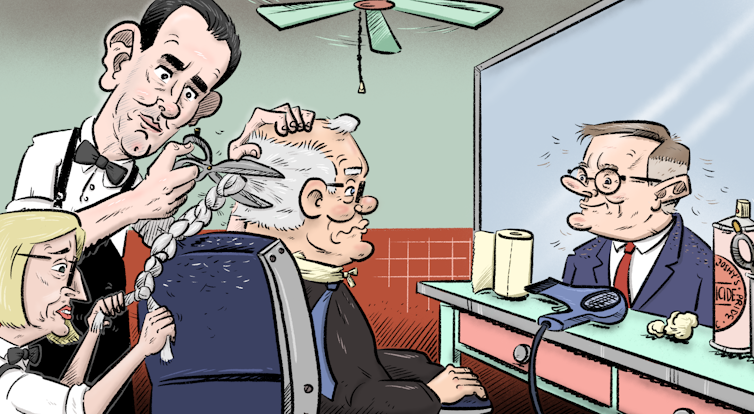
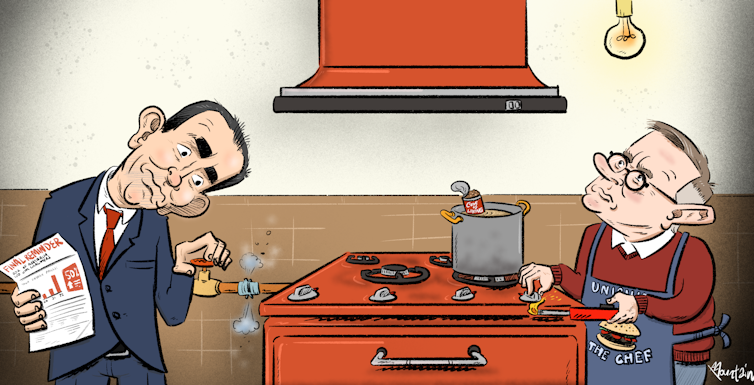
Hundreds of thousands of us who took out fixed-rate mortgages in 2020 and 2021 are about to be hit with massive increases in payments.

After nine successive interest rate increases and at least two more to come, those of us on variable rates will soon be paying as much as A$1,000 a month more.

With such an uncertain economic outlook, should we switch our super fund’s investment strategies from “growth” to “conservative”? Should we rent rather than buy while home prices fall?

We need answers to our financial questions – but they’re now much harder to get.

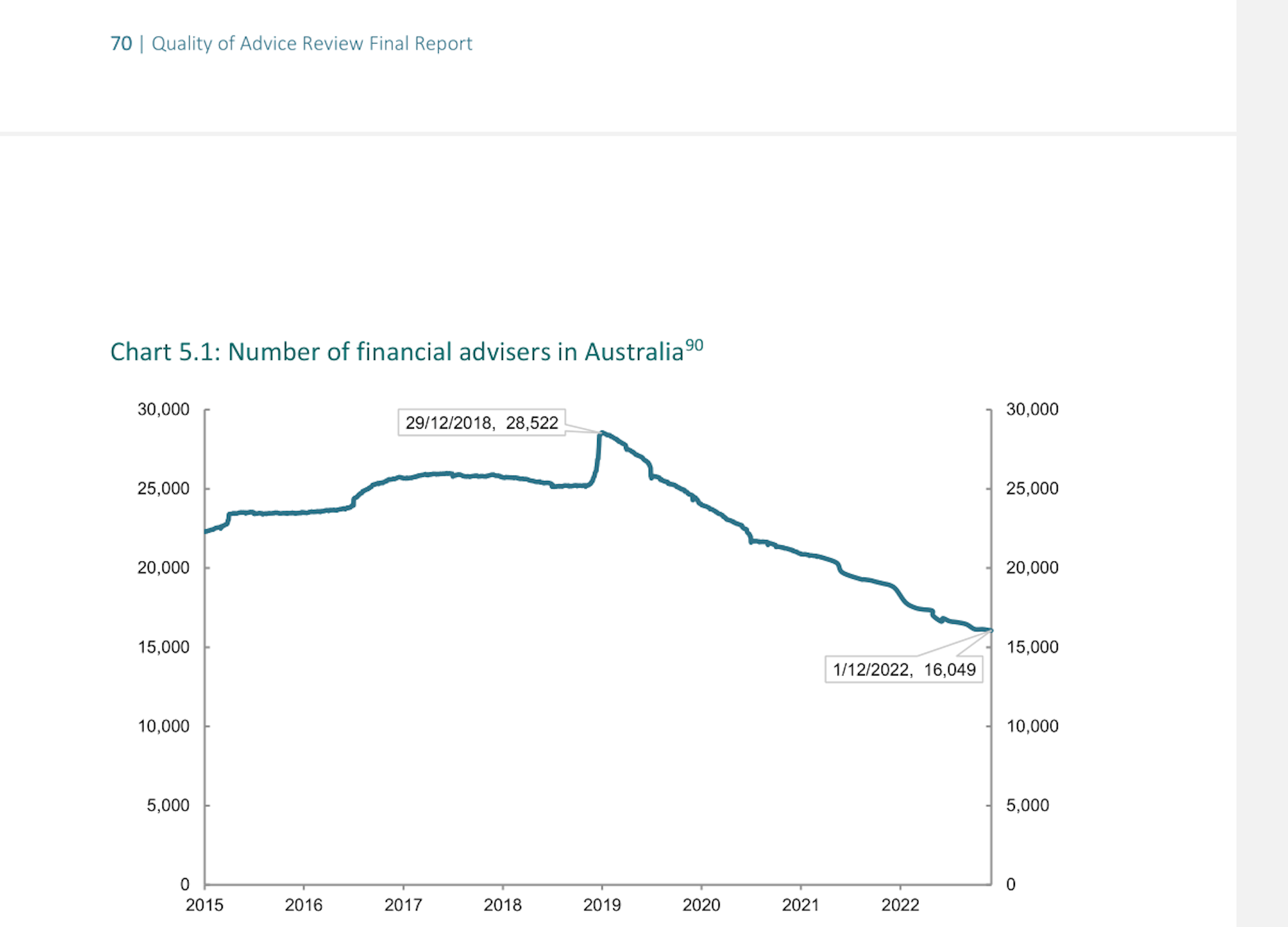
Five years ago, Australia had 28,000 financial advisers. Today there are 16,000. That’s according to a review of financial advice commissioned by the previous government and released by the Albanese government last week.

Thousands of advisers are leaving the industry each year. The ones that remain are charging far more than they used to – $3,710 is said to be common, up 48% in five years, and enough to turn many people away.

So how did it come to this? And what does the new report recommend we do to make it easier for more Australians to get good, more affordable financial help?

Fixing rorts, where even dead people paid a price

This is a story about how Australia, under successive Labor and Coalition governments, let aiming for what’s perfect get in the way of what’s good. Up until I read the Quality of Advice Review last week, I was guilty of doing it too.

For years, I argued we should make financial advice perfect: delivered by genuinely professional advisers, who weren’t receiving kickbacks from firms wanting access to our money. I also argued we should pay for that advice in full upfront, because, whatever the cost, the advice will save us money in the long run.

We needed to do something. Back before a series of explosive Four Corners reports and the 2019 Hayne royal commission into the financial services industry, advisers and the funds they pushed us towards sucked money out of our accounts and presented us with options that made money for them – rather than us.

The consequences were shocking. Dead people were being charged for financial advice, and even for life insurance. Gym instructors and other “introducers” were used to lure people into products that charged unnecessarily high fees.

The professionals we now call investment advisers used to be called insurance salesmen. They were paid through commissions to beguile us into signing up for products that charged high fees and paid them high ongoing commissions.

Unintended results of tougher standards

Ahead of the Hayne royal commission, things began to change.

The Rudd Labor government outlawed commissions and introduced legislation requiring advisers to “place clients’ interests ahead of their own”. After winning government, the Coalition tried to undo the changes, before adopting just about the lot after Hayne reported.

It’s now illegal for financial advisers to accept commissions (although mortgage brokers and people who sell insurance still can) and illegal to offer advice that isn’t in the “best interests” of the customer taking almost everything into account. This makes it all but impossible for bank tellers and super funds to offer advice.

So I have been having second thoughts about the arguments I once made for no commissions, best interests, and lots of disclosure documents – especially after reading the Quality of Advice Review. Ironically, its release was largely drowned out by coverage of Australians’ growing financial stress.

The report’s author Michelle Levy is a senior lawyer and expert on superannuation, life insurance, distribution and financial services law.

As well as being a partner at Allens, she’s also a parent – and knows more than most how vile predatory financial advisers can be.

During the royal commission, we heard about a man with Down syndrome who was signed up for life insurance over the phone, even though he lived on a pension, had no dependants and could not afford the premiums.

In her review, Levy discloses that she has a daughter who, “like this gentleman”, lives with a disability and has bank accounts, but does not know the difference between $10 and $1,000, does not know how to use a credit card, or what superannuation is.

Levy writes that her daughter ought to be able to rely on her bank and super fund to assist her.

She says by stopping firms from providing advice that isn’t perfect, we’ve inadvertently stopped our financial institutions from providing advice that is “good”. We have made it hard for human beings to help each other.

Why ‘good’ might be a better benchmark than ‘best’

So Levy wants to allow super funds and banks to offer advice which is “good” but isn’t comprehensive, in the same way as sales assistants are able to offer advice on clothes and mechanics are able to offer advice on cars.

Good advice does not mean “okay advice” or “good enough” advice, she says.

It is unlikely to be good advice to recommend a poorly performing superannuation product. It will not be good advice to recommend that a person who is unable to pay their mortgage open a term deposit.

If the advice isn’t good, the full force of the existing law will come down on the person who provides it (the maximum penalty for an individual is $1.11 million). But it needn’t be comprehensive; not every piece of financial advice needs to be a lifetime plan.

What Levy is proposing, and what the government is now considering, is more subtle than what we are doing at the moment – which is simply banning self-interested parties from giving advice.

Levy wants to allow the self-interested to give advice, while ensuring it “also serves the interests of their customers”.

In the meantime, if you are in serious financial difficulty (rather than simply needing advice) the National Debt Helpline is one of a number of places that can help. You can request a free, confidential meeting with a financial counsellor on 1800 007 007.The Conversation

This article is republished from The Conversation under a Creative Commons license. Read the original article.

Read more >>

Tuesday, February 07, 2023

RBA warns of at least 2 more interest rate rises in coming months, as the economic outlook worsens

Australia’s cash rate has hit 3.35%, after the Reserve Bank raised interest rates for the ninth time in a row – and signalled more interest rate pain ahead. The 0.25 percentage point rise adds A$90 a month to a $600,000 variable mortgage.

Ahead of Tuesday’s statement from the Reserve Bank board, there was talk of just one more 0.25 point rate hike this year.

That was the view of traders in the money market, who had priced loans on the basis that the bank’s cash rate would climb just 0.35 points further after being lifted to 3.35% on Tuesday, before plateauing and then falling.

No longer. The statement released after Tuesday’s board meeting included this carefully-considered plural:

The Board expects that further increases in interest rates will be needed over the months ahead to ensure that inflation returns to target and that this period of high inflation is only temporary.

The reference was to “increases”, not an “increase”, and to those increases in the months ahead, implying (at least) two more increases within months.

Within minutes, traders adjusted their prices to a peak in the cash rate of 3.9%, rather than 3.7% – which coincidentally was around the average forecast of participants in The Conversation’s economic survey at the start of the week.

The bank is lifting rates even though it thinks inflation is heading down.

In a preview of its full set of forecasts to be released on Friday, it said it expected inflation to slide from its present 7.8% to 4.74% by the end of this year, and to around 3% by mid-2025, which is also in line with the forecasts of the Conversation’s panel.


The steam is coming out of inflation partly because of interest rate hikes here and overseas, and partly because the global effects of Russia’s invasion of Ukraine are fading.

Last Wednesday, the head of the US Federal Reserve Jerome Powell (the equivalent of Australia’s Reserve Bank Governor Philip Lowe) began talking about “disinflation”.

“We can now say, I think for the first time, that the disinflationary process has started,” he told a press conference, and to underline the point he used the word “disinflation” ten more times in 44 minutes.

US inflation has been falling since the middle of last year, from a peak of 9.1% in June to 6.5% in December.

Powell says inflation is falling mainly because the global shortages of goods and commodities caused by Russia’s invasion of Ukraine have been “fixed”.

But inflation is also falling because of the work Powell has done. In the US, the Federal Funds rate (similar to our Reserve Bank cash rate) has climbed from something near zero to 4.5% in the space of a year, denting consumer spending.

Disinflation abroad, weak wage pressure at home

In Australia, figures released by the Bureau of Statistics on Monday show spending fell in the three months to December – not in absolute dollar terms, because December is always a big month, but compared to what would have been expected given the end of the year.

Continuing to hold up inflation in the US and in the UK – but not in Australia – has been very high wages growth. Higher prices have become baked into higher wages, which have been fed into higher prices, which have in turn fed back into higher wages.

Not here. Whereas in the US and the UK wage growth has topped 6%, here it is officially 3.1% – way below what would be needed to hold up inflation.

In part, we’ve a former Labor government to thank for the absence of a wage-price spiral.

Prime Minister Paul Keating steered Australia toward enterprise bargaining at the start of the 1990s, locking many of us into wage agreements that are only struck once every three or so years, and are unable to respond quickly to prices.

So why is the Reserve Bank determined to whack inflation further, rather than watch it slowly die?

Perhaps to send a message that it is really, really serious, and that it is not a good idea to get relaxed about spending, thinking the worst will soon be over.

Bleak times ahead

Between the lines though, the bank is hinting it’s likely to soon ease off.

Its statement says rate increases affect the economy “with a lag” and that Australians on fixed-rate mortgages have yet to feel the full effect of the cumulative increases since May.

The bank’s assessment of the economy after the increases are over is bleak.

It says it expects GDP growth to slow to only 1.5% during 2023 and 2024, which is an even more dismal forecast than the International Monetary Fund’s, which has economic growth of just 1.6% this year, climbing to a historically-low 2.2% by 2026. The Conversation’s forecasters expect 1.7%, climbing to 2.5%.

The RBA’s forecast would mean income per person barely increases for years to come (although the unemployment rate would stay below 5%), a condition that before COVID was known as secular stagnation.

This would mean the economic resources Australian governments needs to provide the services we’re likely to need (such as to get to net zero emissions, and to deal with climate change) are going to be harder to come by.

It’s what Treasurer Jim Chalmers intends to spend much of 2023 readying us for.

Later this month Chalmers will release a revamped tax expenditures statement, setting out the scope to wind back tax breaks, including those for profits made selling high-end family homes. That’s something Chalmers says he isn’t considering, but which the IMF has recommended.

And then later in the year, he will release the first intergenerational report to properly spell out the financial costs of climate change – right through to 2063.

2023 is going to be quite a year.The Conversation

This article is republished from The Conversation under a Creative Commons license. Read the original article.
Read more >>

Sunday, February 05, 2023

Higher interest rates, falling home prices and real wages, but no recession: top economists’ forecasts for 2023

Wes Mountain/The Conversation

Australia’s Reserve Bank is set to push up rates once again at its first meeting for the year on Tuesday, according to all but two of the 29 leading economists surveyed by The Conversation at the start of 2023.

Those experts predict we will still be living with higher rates by the end of the year, although they should start to come down in 2024.

Their average forecast is an increase in the bank’s cash rate target from 3.1% to 3.6% during 2023. That’s enough to add an extra A$190 to the monthly cost of servicing a $600,000 variable mortgage, bringing the total increase in the cost of servicing such a mortgage since the bank began hiking rates in May 2022 to more than $1,000.


All but three of the specialists surveyed expect the Reserve Bank’s cash rate target to peak during 2023, and on average the panel expects it to fall back to close to its present level during 2024.

Panelist Jo Masters of Barrenjoey Capital says the bank’s keenness to bring down inflation will be tempered by the knowledge that a large number of borrowers are set to exit the very cheap three-year fixed-rate loans they took out early in the pandemic and are facing very steep increases indeed.


The highest forecast for a peak in the cash rate is from former Reserve Bank research manager Peter Tulip, who expects a cash rate of 5% by December 2024 – enough to add a further $725 to the monthly cost of servicing a $600,000 mortgage.

The panel assembled by The Conversation includes macroeconomists, economic modellers, former Treasury, International Monetary Fund and financial market economists, and a former member of the Reserve Bank board.

Most expect inflation to fall sharply from here on, with all but five believing the quarterly rate will turn out to have peaked at 7.8% in December 2022.


Financial markets economist Warren Hogan says the food and fuel prices pushed up by Russia’s invasion of Ukraine are already falling, and the only question is how quickly inflation falls, and how soon it returns to the Reserve Bank’s 2-3% target band.

Former federal Labor minister Craig Emerson says, unlike in the 1970s, wage rises aren’t helping sustain inflation. Then, more than half the Australian workforce was unionised and wage setting was centralised. Today only one-eighth of the workforce is unionised and most wages are not set centrally.

The panel expects real wages to go backwards for the third consecutive year in 2023, as wages growth of 3.9% is overpowered by prices growth of 4.5%.


Wage growth is expected to fall back to 3.6% in 2024 as the economy weakens and as an increase in immigration helps fill labour shortages. But the average forecast is wage growth to outstrip price rises next year for the first time since 2020, as inflation falls back to 3.2%.

Recession unlikely at home, more likely abroad

The panel assigns a 26% probability to a recession in the next two years, an increase on the 20% it assigned in mid-2022.

Former Department of Foreign Affairs and Trade chief economist Jenny Gordon says if Europe goes into a recession in its 2023-24 winter and China’s recovery is slow, a recession in Australia will become more likely.

While the panel expects China’s decision to end COVID lockdowns will lift its growth rate from 3% in 2022 to 4.7% in 2023, it does not expect anything like a return to the previous growth rates of 8% or more.

Industry economist Julie Toth says China is facing resource depletion and population decline, as well as a cyclical downturn in industrial and residential investment. COVID-19 presents an immediate threat to its people and economy.

The panel assigns a 42% probability to a recession in the United States within the next two years, a 57% probability to a recession in the European Union, and a 73% probability to a recession in the United Kingdom.

Four of the economists surveyed believe the UK recession has already started. As in the US, it is likely to result from the run of interest rate increases put in place to contain inflation.

University of Tasmania economist Mala Raghavan expects the US to skirt an outright recession and instead experience a “rolling recession”, in which different parts of the economy take time to turn down.


KPMG forecaster Sarah Hunter says while Australia should avoid a recession as commonly described (two consecutive quarters in which production shrinks) economic growth could well turn negative for one quarter at the start of the year, as household spending turns down and mining shipments are disrupted by floods.

Regardless, the economy will be “very weak by historic standards” in 2023. The panel expects economic growth of only 1.7% in 2023, climbing to 2.5% by 2026.


The panel is forecasting very weak growth in household spending of 2.2% over the year to December, and a further decline in the household saving ratio from 6.9 to 5.1%.

Non-mining business investment is expected to hold up, climbing 2.8% over the year to December, up from 1.75%. Mining investment is expected to climb 3.4%, with much depending on demand from the rest of the world.

Home prices are expected to fall further in 2023 in response to higher interest rates, slipping another 7% in Sydney and 6% in Melbourne.

AMP economist Shane Oliver says the buying power of someone on average full-time earnings with a 20% deposit has fallen by more than one quarter as a result of interest rate hikes, and prices are yet to fully reflect this.


Jobs to hold up

Australia’s unemployment rate dipped below 4% for the first time in five decades in 2022. It is expected to stay below 4% (at 3.96%) in 2023 and then remain below 5% in 2024 even as immigration builds up, in part because low unemployment has made previously unemployed Australians employable.

As former Deloitte Access director Chris Richardson puts it, previously hard to employ Australians have been “polishing their skills and their resumes”.

Federation University economist Margaret McKenzie also points to the large amount of sick leave being taken, creating demand for workers to fill the gaps.


On average, the panel is expecting a flat share market in the year ahead, but the forecasts range from growth of 8% to a decline of 17%, led down by weaker bank stocks and household spending as interest rate increases bite.

The panel expects the iron ore price to remain roughly steady at US$105 throughout 2023, rather than falling to the US$55 assumed in the budget.

Partly as a result, the panel is forecasting a budget deficit of A$29.4 billion in 2022-23, down from the officially forecast $36.9 billion.


The Conversation’s Economic Panel

Click on economist to see full profile.

Download the 2023 economic surveyThe Conversation

This article is republished from The Conversation under a Creative Commons license. Read the original article.

Read more >>

Tuesday, December 13, 2022

Hotel booking sites actually make it hard to get cheap deals, but there’s a way around it

Booking a place to stay on holidays has become a reflex action.

The first thing many of us do is open a site such as Wotif, Hotels.com or trivago (all of which are these days owned by the US firm Expedia), or their only big competitor, Booking.com from the Netherlands.

Checking what rooms are available – anywhere – is wonderfully easy, as is booking, at what usually seems to be the lowest available price.

But Australia’s Assistant Competition Minister Andrew Leigh is concerned there might be a reason the price seems to be the lowest available. It might be an agreement not to compete, or the fear of reprisals against hotel owners who offer better prices.

Agreements to not compete

Leigh has asked the treasury to investigate, and if that’s what it finds, it may be the booking sites have the perverse effect of keeping prices high, especially when the substantial fees they charge hotels are taken into account.

For now, the treasury is seeking information. It has set a deadline of January 6 for hotel operators and booking sites to tell it:

  • the typical fees charged by online booking platforms

  • the details of any agreements not to compete on price

  • whether hotels that try to compete get ranked lower on booking sites.

What’s likely to come out of it is a ban on so-called price-parity clauses that prevent discounting, or a ban on “algorithmic punishment,” whereby hotels that do discount get pushed way down the rankings on the sites.

But in the meantime, there are things we can do to get better prices, and they’ll help more broadly, as I’ll explain.

Flight Centre precedent

Back in 2018, in a case that went all the way to the High Court, the Australian Competition and Consumer Commission (ACCC) forced Flight Centre to pay a penalty of A$12.5 million for attempting to induce airlines not to undercut it on ticket prices.

That the ACCC eventually won the case might be an indication price-parity clauses are already illegal under Australian law. But it’s a difficult law to enforce. This is why the treasury is considering special legislation of the kind in force in France, Austria, Italy and Belgium.

The ACCC has known for some time that Expedia and Booking.com have included clauses in their contracts preventing hotels offering the same room for any less than they do, even directly.

Rather than take the big two to court, in 2016 the ACCC “reached agreement” with them to delete the clauses that prevented hotels offering better deals face-to-face.

The concession that conceded little

From then on, hotels were able to offer better deals than the sites over the phone or in person, but not on their own websites. Given we are less and less likely to walk in off the street or even use the phone to book a hotel, it wasn’t much of a concession.

Then, in 2019, with the Commission under renewed pressure from hotel owners for another investigation, Expedia (but not Booking.com) reportedly waived the rest of the clauses, giving hotel owners the apparent freedom to advertise cheaper prices wherever they liked including on their own sites without fear of retribution.

Except several appear to fear retribution, and very few seem to have jumped at the opportunity.

Algorithmic punishment

An Expedia spokesman gave an indication of what might be in store when he was quoted as saying a hotel that undercut Expedia might “find itself ranked below its competitors, just as it would if it had worse reviews or fewer high-quality pictures of its property”.

Being ranked at the bottom of a site is much the same as not being ranked at all, something Leigh refers to as “algorithmic punishment”.

It’s not at all clear the present law prevents it, which is why Leigh is open to the idea of legislating against it.

Although you and I may not often think about what hotels are paying to be booked through sites such as Wotif and Booking.com, and although what’s charged to the hotel isn’t publicised, it appeard to be a large chunk of the cost of providing the room.

One figure quoted is 20%. Leigh says hotel owners have told him the fees are in the “double digits”, something he says is quite a lot when you consider the sites don’t need to clean the toilets, change the sheets or help on the front desk.

‘Chokepoint capitalism’

What this seems to mean (the treasury will find out) is almost all bookings are more expensive than they need to be because firms that sit at the “chokepoint” between buyers and sellers are squeezing sellers.

A hotel could always abandon the sites and offer much cheaper prices, but for a while – perhaps forever – it will be much harder to find.

In their defence, the operators of the platforms might say they need to get the best offers from hotels in order to make it worthwhile for the operators to invest in their sites, an argument the treasury is inviting them to put.

In the meantime, with some hotels reluctant to put their best rates on their websites, but with them perfectly able to offer better rates over the phone, there’s a fairly simple way we can all get a better deal – and help fix the broader problem by weight of numbers.

If we look up the best deal wherever we want online, and then phone and ask for a better one (or a better room), we might well find we get it. We might be saving the owner a lot of money.

Leigh reckons the more we do ring up, the more the sites might feel pressure to discount their own fees, helping bring prices down even before he starts to think about writing legislation.The Conversation

This article is republished from The Conversation under a Creative Commons license. Read the original article.

Read more >>

Tuesday, December 06, 2022

This latest increase in RBA interest rates might well be the last, for some time

Peter Martin, Crawford School of Public Policy, Australian National University

You might not know it from reading Tuesday’s statement announcing Australia’s eighth consecutive increase in interest rates, but our Reserve Bank might finally have done enough.

The statement says inflation is still “too high” and that the bank expects to increase rates further, although it is “not on a pre-set course”.

But, as it happens, the bank is unlikely to increase rates again for a further two months. The board doesn’t meet in January, meaning the nine weeks between now and its first meeting for 2023 on February 7 will provide an unusually long time for reflection – the first after eight relentless months of hikes.

From time to time, Reserve Bank officials talk about the idea of a “pause”. AMP chief economist Shane Oliver has counted the number of occasions they have referred to the prospect of a “pause” in public pronouncements in the past month. He has counted six.

Inflation to hit 8%, while weakening

Although the annual inflation figure for the year to December due on January 25 is expected to be high – the bank is expecting 8% – the quarter-to-quarter result is likely to show inflation weakening.

The Bureau of Statistics releases the quarterly inflation figures only once every three months. But for some time now it has also been calculating inflation monthly, using a smaller survey that seems to give a pretty good indication of what the larger survey is about to show.

Oliver has graphed what the smaller survey has been saying each month about inflation over the previous three months alongside what the larger quarterly survey has been saying. The two line up, except that in recent months the monthly measure has been sliding.


This suggests that the official quarterly figure released in January will be weak.

Oliver concedes that the new monthly measure needs to be interpreted with caution, partly because it excludes 30% of the items included in the official quarterly measure, among them gas and electricity. But he says if 70% of the quarterly measure is cooling down, “that has to be a positive sign”.

Globally, oil prices and wheat prices and the prices of other things affected by Russia’s invasion of Ukraine are down one-quarter to one-third from their peaks in the middle of the year, undoing much of what has been driving inflation.

The US is considering moderation

In the United States, where inflation peaked at 9.1% in June and has since slid to 7.7%, the head of the Federal Reserve Jerome Powell has begun talking about “moderating the pace of rate increases” saying given all he has done, he mightn’t need to raise rates much further to tame inflation.

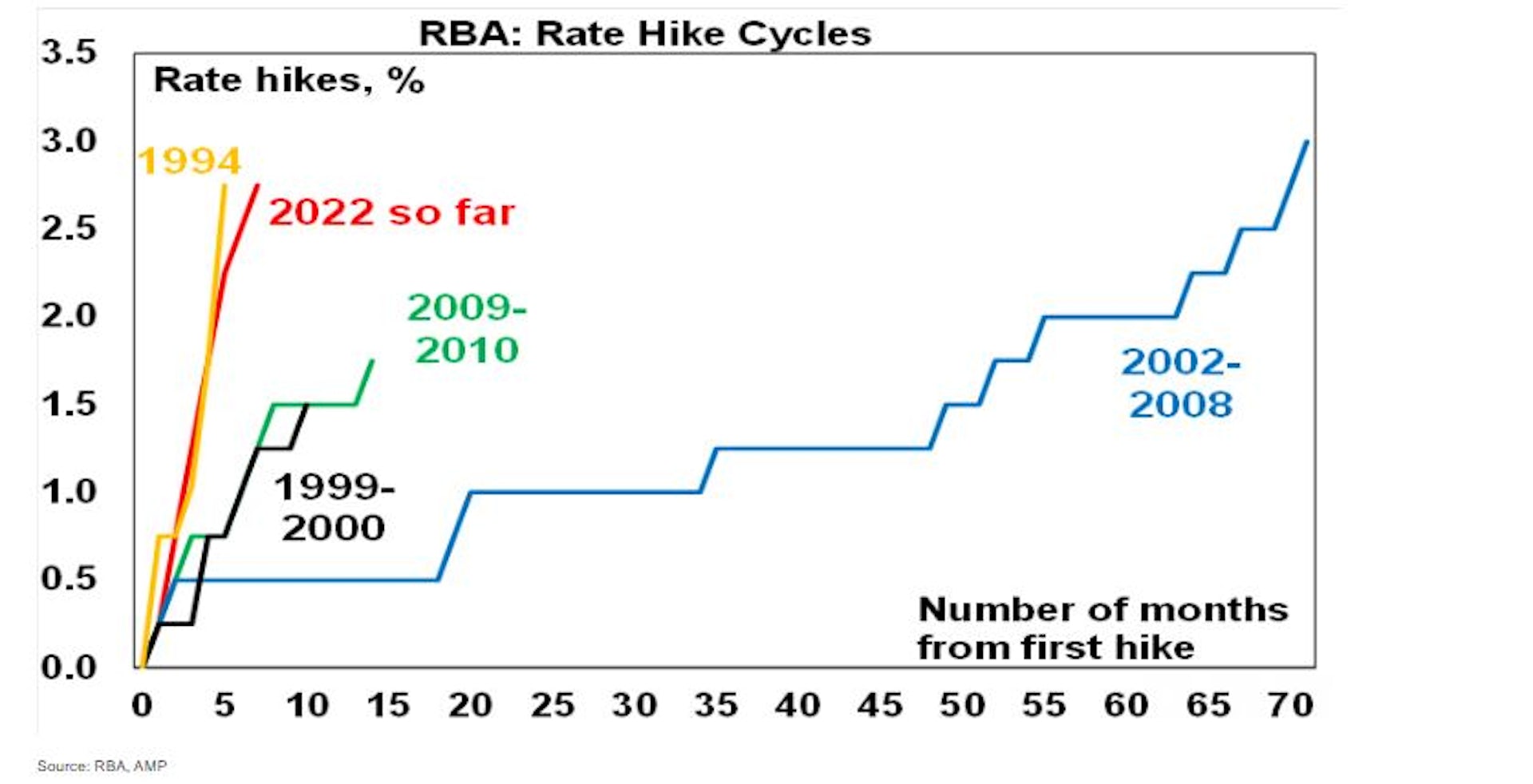
Australia’s Reserve Bank has already moderated the size of its increases, cutting each one from 0.5 percentage points per month to 0.25 points in September.

If it merely wants to get inflation down (as it says it does) and not needlessly damage the economy along the way, there’s a good case for leaving rates steady at its first meeting for the year in February, and then waiting until sees the full impact of what it has done so far.

Australia’s eight rate rises to date are set to push up the cost of payments on a typical $600,000 variable mortgage by a total of $1,000 per month.

The bank said in October that although most borrowers should be able to weather that increased financial pressure for some time, many would “need to curtail their consumption and some could ultimately see their savings buffers exhausted”.

If these households have limited ability to make adjustments to their financial situation (such as by increasing their hours worked) they could fall into arrears and “may eventually need to sell their homes or may even enter into foreclosure”.

For fixed-rate borrowers, things are worse. About one-third of mortgages are on fixed rates, and about two-thirds of them are due to expire next year. Many were taken out at fixed rates of around 2%. Depending on how high the Reserve Bank pushes things, those borrowers will suddenly find themselves paying 6-7%.

We’re tightening our belts

Spending plans are already crumbling. Asked whether now is a “good time to buy a major household item” in the Westpac-Melbourne Institute November confidence survey, consumers’ answers were about as dismal as they have ever been. Around 40% said they planned to spend less on gifts this year than the year before – the highest proportion since the question was first asked in 2009.

Wednesday’s national accounts will show company profits fell by a seasonally adjusted 12.4% in the three months to September, led down by profits in retail (-6%), manufacturing (-21%) and finance (-43%). Accommodation (up 64% after years in which it was hard to travel) is the only big exception.

Quarterly economic growth is expected to be weak, although the annual figure will look good because things were worse during the lockdowns a year before.

The national accounts will also show a jump in wage payments of 2.9% over the quarter, and 11% over the year – which sounds high, but much of it will be because of the extra 690,000 people employed. Pay per worker will have climbed 4.7%.

A good reading of Wednesday’s national accounts will be that eight consecutive increases in mortgage rates are starting to bite into household budgets in exactly the way the Reserve Bank wants, and that there’s a chance they’ll bite too hard.

On February 7 the board might feel entitled to take the view that it might have done enough, and hold off for a while while it waits to see how things play out.The Conversation

This article is republished from The Conversation under a Creative Commons license. Read the original article.

Read more >>

Tuesday, November 29, 2022

‘Zombie’ wage deals have hurt Australians for years. Here’s how new industrial relations laws could finally end your wage pain

Imagine you were trying to design a system that would hold back wages. You would design one pretty much like the one we’ve got today.

That’s why the government wants to change it.

Those of us on enterprise bargaining agreements get our wage rises locked in only every three or so years. If we didn’t lock in enough in last year’s agreement to cover this year’s sudden outbreak of inflation, there’s nothing much we can do about it for another two or so years.

It’s a built-in inertia identified by financial services firm JP Morgan in its attempts to explain to foreign clients why Australian wages growth is so low.

Australian enterprise agreements, JP Morgan explains in a note to clients, both delay wages growth and trim its peaks.

Here’s how that came about – and how the Albanese government’s new industrial relations law might finally end Australians’ pay freeze.

Wages used to be mostly set by awards

For nearly a century, Australian wages were generally set by judges in state and federal industrial relations tribunals. They had the power to intervene and set an “award” wage for an industry or occupation in which there was a dispute. And it was easy enough for unions and employers to create disputes.

Because they almost always intervened, the tribunals got to ensure that wages didn’t move too much relative to each other, and it got an insight into the state of the economy from the government, which made submissions.

From one point of view, the strength of this peculiarly Australian system of setting wages was that each employer covered by a decision was compelled to deliver the same increase as its competitors, meaning none were disadvantaged.

From another point of view, this strength was becoming a weakness. The weak firms as well as the strong had to pay the increases, whether it was easy or not.

Enterprise agreements unleashed productivity

In the early 1990s, perhaps with an eye to the possibility that an incoming Coalition government might make even greater changes, the Keating Labor government changed the law to channel the workers and employers within each workplace into enterprise bargaining.

The tribunals would have a more limited role, checking that each enterprise agreement passed a “better off overall” test, and continuing to set awards that became more like backstops, slipping below what most workers (usually through their unions) were able to negotiate with individual employers.

Workers and unions did well at first, because they were able to get together with employers and nut out ways to save money to pay for wage rises – something they had had little incentive to do when wages were set centrally.

And it was something that could only really be done at the level of each enterprise, because each was different, and it was the workers on the ground who knew how to make it better.

Zombie agreements and frozen wages

But productivity couldn’t be unleashed in the same way forever. After a while, the easy gains had been had. Workers got good pay rises in return for streamlining unwieldy processes at the start, then had few unwieldy processes left to streamline.

Productivity surged during the first decade, until the early 2000s. Then employers became more cautious about granting pay rises, and by the 2010s became good at stringing out negotiations or letting agreements expire, which meant they rolled over as “zombie agreements” without an increase.

As the Business Council explained in a report on the state of enterprise bargaining in 2019, agreements that had lapsed but were still operational came to act “like a wage freeze for some employees”.

With union membership down from 40% of workers when enterprise bargaining began, to just 14% in 2020, there was little workers on frozen agreements could do to get more, other than fall back on awards, which at least usually climbed with inflation.

It means the system has come to work in a way hardly anyone actually intended. It is acting as a brake on pay rises, while becoming more centralised.

The Reserve Bank says it can see some signs that wages growth is picking up, even in new enterprise agreements, but that it will take some time to flow through to all agreements in general because of the “multi-year duration” of the agreements.

How the new law could break the pay freeze

What the Albanese government has proposed – and is about to finally get through the Senate with the help of the Greens and independent David Pocock – is an attempt to bust the inertia.

Expanding multi-employer bargaining will allow employers to bargain knowing their competitors will have to pay what they pay.

Air-conditioning manufacturers have already begun talks with the Australian Manufacturing Workers Union in a bid to drive up workplace standards and pay in a way they know won’t be undercut by cheaper competitors.

Allowing employers with genuine ongoing enterprise agreements to escape multi-employer bargaining will encourage more genuine agreements.

And loosening the “better off overall” test will make it easier to get agreements of all kinds registered.

Particularly helpful will be “supported bargaining”, in which the Fair Work Commission will sit around the table with workers in fields such as childcare, who have traditionally found it hard to bargain. Where necessary, the commission will pull in outside funders (such as the government for childcare) for talks.

None of it will work miracles. But it should help. And it’s unlikely to hurt.The Conversation

This article is republished from The Conversation under a Creative Commons license. Read the original article.

Read more >>

Tuesday, November 15, 2022

To start cutting gas and electricity prices, here’s what the government looks likely to deliver by Christmas

Treasurer Jim Chalmers says he’ll have a system in place to deal with rising energy prices by Christmas.

He can’t yet tell us what it will be, because that will depend on the outcome of negotiations with gas and electricity companies, and possibly on legislation he might have to get through parliament.

But thanks one of the treasurer’s most trusted confidants, we can now piece together a pretty good picture of what lies ahead.

Clues from the head of Treasury

The head of the treasurer’s department, Treasury secretary Steven Kennedy, shared his thoughts with a Senate estimates committee last week.

While Kennedy presented them as his own thoughts, Kennedy’s day job is helping Chalmers work out what to do.

The first thing to note is that Kennedy, like Chalmers, doesn’t like the idea of intervening in markets just because prices are high.

As he told the Senate, usually the solution to high prices “is high prices”.

What he means is that usually when prices jump it’s because there isn’t enough of something. The high prices encourage new suppliers to get into business supplying that thing, and that forces prices down.

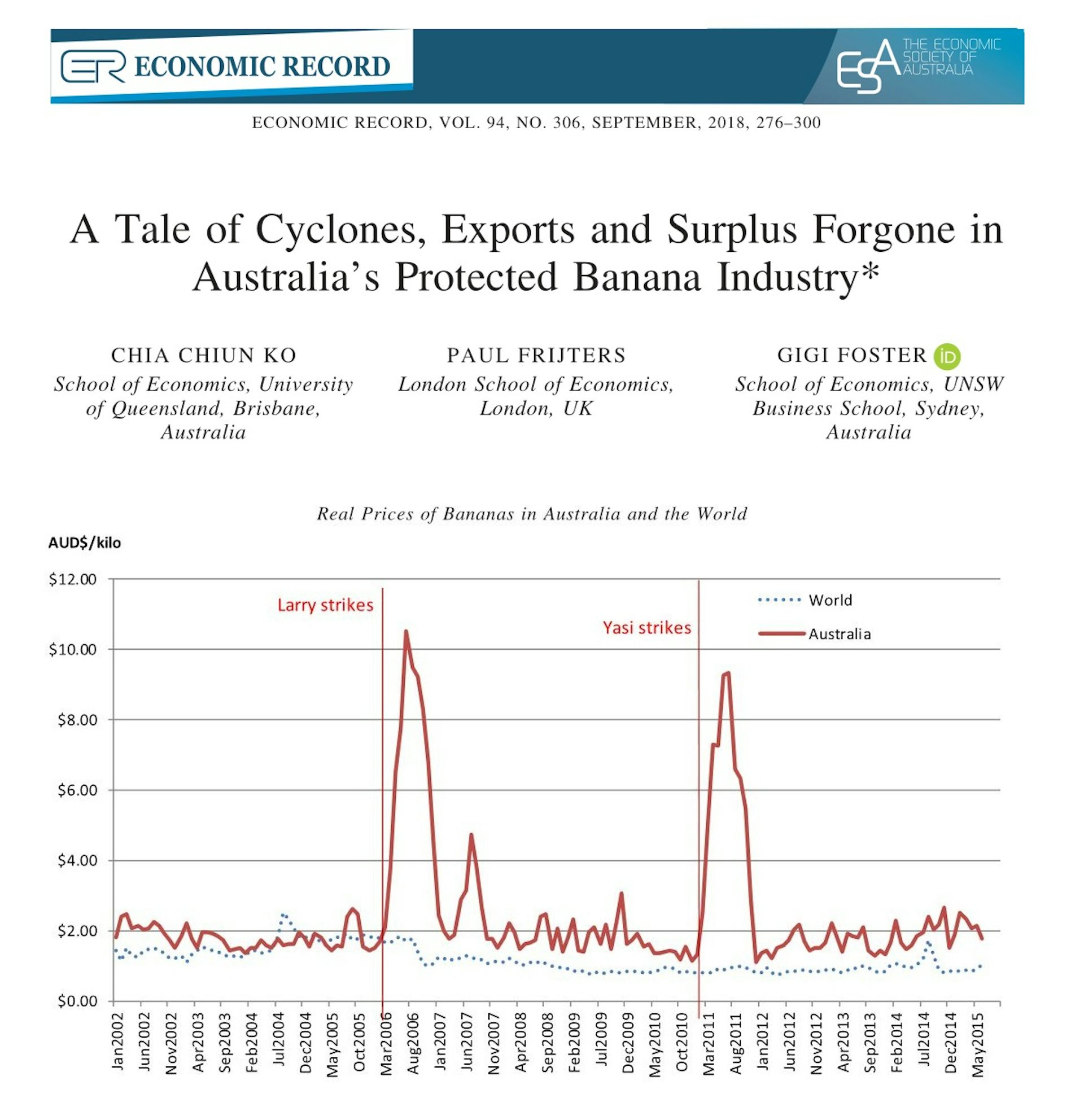
If that can’t happen quickly enough, the high prices will encourage users of that something to switch to a substitute, as we did when cyclones hit Queensland’s banana crops in 2006 and 2011. We switched to other fruits grown elsewhere.

Interfering with high prices interferes with those adjustments. Usually.

However, at the moment, there needn’t be an Australian gas shortage. Australia’s east coast produces roughly three times as much gas as it uses each year.

Although most of the rest of the gas is exported in accordance with long-term contracts, an increasing amount is being exported over and above those contracts to take advantage of the temporary spike in international prices following Russia’s invasion of Ukraine.

If that gas was sold here at pre-invasion prices, there wouldn’t be a shortage, and Australian prices wouldn’t be up to four times what they used to be, pushing manufacturers to the brink and pushing electricity prices way beyond normal.

Whatever is done will be temporary

Kennedy’s first point is that the global price hike is likely to be temporary, or as he put it, “hopefully temporary”. Even if the conflict persists, international supply and demand are likely to adjust to bring global prices back down. That means any intervention should be temporary, so it doesn’t distort markets forever.

Kennedy’s second point is that the gas exporters selling for ultra-high prices over and above what they are contracted to sell are making exceptionally high profits – “well beyond the usual bounds of investment and profit cycles”. They would do just fine if their profits were merely ordinarily high rather than super high.

His third point is that the temporarily high prices are hacking into the profits of other Australian businesses and “raising questions about their viability”.

Households, especially lower-income households, will be severely affected.

Summing up more clinically, Kennedy says what’s happening in Ukraine is “leading to a redistribution of income and wealth, and disrupting markets”.

The national interest case for this redistribution is “weak, and it is not likely to lead to a more efficient allocation of resources”.

Beyond a gentleman’s agreement

In August the government signed a sort of gentleman’s agreement with the three east coast gas exporters in which they’ve agreed to offer uncontracted gas to local customers first, before offering it overseas.

But (and it’s a big but) they’ll offer it at international prices, with the only stipulation being that local customers “not pay more” than overseas customers.

Although well-intentioned, it will allow prices many times higher than the A$8 a gigajoule that was common before COVID – high enough to send some customers to the wall.

The two-step solution Kennedy is pointing to goes further, temporarily.

Agreement on lower prices – or a tax might be next

The first step is likely to be to ask the producers to supply enough gas to local customers to get local prices down to A$10 a gigajoule, an idea suggested by the former Australian Competition and Consumer Commission chief Rod Sims.

Sims thinks the producers are likely to agree. The Commonwealth has the power to impose export controls. If they don’t agree, Kennedy has hinted at stage two.

That fallback position would be a temporary tax on the excess profits of exporters and use it to subsidise domestic prices, along the lines of the temporary tax in the United Kingdom.

Economic purists, including those surveyed by The Conversation this month, would prefer the tax was paid to the victims of ultra-high prices in cash, rather than in subsidised prices, because it would encourage them to get off gas.

But Kennedy (and probably Chalmers) believe the ultra-high prices are temporary. Both want to bring down the current ultra-high rate of recorded inflation. It’s something price subsidies would do, but cash handouts would not.

The two-step nature of the process is probably why it is taking so long.

Chalmers and colleagues need to ascertain what the exporters are prepared to do about prices if merely asked, and to prepare legislation for a temporary tax – should they need to take that final step.The Conversation

This article is republished from The Conversation under a Creative Commons license. Read the original article.

Read more >>

Tuesday, November 08, 2022

In defence of RBA Governor Lowe: an easy scapegoat for rates

Reserve Bank Governor Philip Lowe is getting terrible press, most of it undeserved.

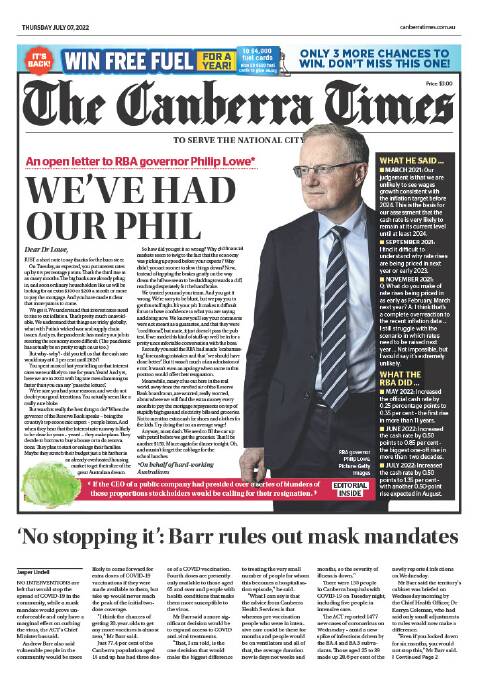
“Lowe Blow” and “Take a Hike” were two of the headlines on the front page of one of our newspapers. “We’ve had our Phil” was on the front page of another.

His critics – the ones complaining about continual increases in interest rates – seemed happy enough when he was keeping them low.

Daily Telegraph, August 2, 2022

Lowe and his board are pushing up rates at almost the fastest pace on record, for the same reason they cut them to the lowest level on record – to try to get the economy back into some sort of balance.

It’s tough. But it has been done before, and it worked.

In fact, the man who pushed rates down then up even more aggressively than we’re seeing now, former RBA Governor Bernie Fraser, told me this week he approves of the way Lowe is doing his job – with just one exception.

How Lowe’s low rates saved jobs

When COVID hit in 2020, at a time when the Reserve Bank’s cash rate was already a then-record low of 0.75%, the bank cut to what Lowe described as the “effective lower bound” of 0.25%, before cutting again to 0.1%, and offering banks near-free loans at 0.1%.

Lowe’s promise to buy as many government bonds as were needed to push the three-year bond rate down to 0.1% drove three-year fixed-rate mortgages below 2%. Variable-rate mortgages slid to 2.5%.

In concert with the Morrison government, which spent massively in response to COVID, Lowe cut rates to try to keep alive an economy that was shutting down.

The best measure of unemployment is the one that counts as unemployed the Australians working zero hours. It climbed to 15% in April 2020 – the worst since the Great Depression.

The stimulus programs, the arrival of vaccines and the end of lockdowns worked magic, as did the Reserve Bank’s determination to ensure that almost anyone who wanted to borrow could borrow for next to nothing. Spending bounced back, and by July this year unemployment had fallen to a five-decade low of 3.4%.

Then this year inflation – which had remained close to the Reserve Bank’s target of 2-3% for a record 30 years – broke free and climbed; at first to 5%, then to 6% and now 7.3%, all in the space of a few months.


Despite earlier hopes (those who were hopeful in the US and the UK, where this has also happened, called themselves “team transitory”) inflation hasn’t come back down, and shows little sign of returning to 2-3% of its own accord.

Inflation reawakened

Seven per cent inflation matters because an increase in prices of 2-3% per year is very different from an increase of 5-7%. It makes inflation, in the words of former Governor Bernie Fraser, “a subject you don’t discuss at barbecues”.

At 2-3%, people adopt a mental model of fairly steady prices in which, when they agree to provide a service for a certain price, they know what they are getting into.

It’s not so much that high inflation creates winners and losers; the problem is that it becomes almost impossible to tell who those winners and losers will be. It’s the arbitrariness of who does well from timing price increases, and who gets hurt by them, that makes businesses difficult to run and spending difficult to plan.

The RBA’s clear instructions

The Reserve Bank has a written riding instruction from the treasurer to aim to get “inflation between two and three per cent, on average, over time”.

About the only tool it has to achieve that is the manipulation of interest rates.

It is certainly true that much of what set off the latest sudden burst of inflation won’t be restrained by high interest rates. Diesel and petrol prices are set internationally, and soared after Russia invaded Ukraine.

But a lot of what set off and is sustaining the resurgence of inflation most certainly can be tamed by high interest rates.

The rising cost of almost everything

Home building is expensive because of an (internationally-driven) shortage of building materials, and a shortage of workers not laid low by COVID. It is true that more materials and healthier workers would bring down prices, but so too would less demand for building work. Higher interest rates help restrain the demand.

Even the global price of oil can be restrained by high interest rates – not by high interest rate here, but by high rates in the US, which is a big enough nation for consumers tightening their belts to make a difference.

In any event, Australia’s inflation is now incredibly widespread, encompassing almost everything sold here, including most of the things made here.

Ten years ago, 32 of the 87 items priced by the Bureau of Statistics were falling in price, while most of the others climbed. In the latest consumer price update, I counted only six falling in price.

The verdict from a former RBA governor

This week, I rang up the person who’s arguably best qualified to assess the job Lowe’s doing as RBA governor now – someone who was in his shoes three decades ago.

Bernie Fraser was the Reserve Bank’s governor between 1989 and 1996. He pushed down the cash rate 15 times in three years to speed the recovery from the early 1990s recession. Then in 1994, at the first sign of renewed inflation, he pushed them up faster and more aggressively than Lowe has so far this year.

Fraser told me he had wanted to “shock people – let them know that you’re there, that you are concerned about inflation and you want to head it off”.

Fraser stopped pushing up rates only when he had got inflation down to where it has stayed for most of the past three decades. As it happened, he was able to do it without much pushing up unemployment.

Fraser said he approves of the way Lowe has been doing his job – though he said Lowe was wrong to give the imply during COVID that rates would stay low for three years. But he also noted setting rates is more art than science.

Fraser thinks that in due course shortages will ease and inflationary pressure will abate. In the meantime, it’s essential to let people know that the bank will do what’s needed to bring inflation down, right up until the point of (but not necessarily including) increasing unemployment.

Fraser thinks there’s a good chance Lowe can bring inflation back down to 2-3%. He should know – he did it before.The Conversation

This article is republished from The Conversation under a Creative Commons license. Read the original article.

Read more >>

Monday, November 07, 2022

Leading economists back federal government action to curb rising gas and electricity prices

Wes Mountain/The Conversation, CC BY-ND

Australia’s top economists have overwhelmingly endorsed intervention to restrain gas and electricity prices, with only three of the 47 leading economists surveyed believing the best thing the government can do is to leave things to the market.

The 47 economists surveyed are members of a panel selected by a committee of the Economic Society of Australia for its expertise in fields including public policy and economic modelling. Among its members are former Reserve Bank, Treasury and OECD officials, and a former member of the Reserve Bank board.

Previously unpalatable options

Told that Treasurer Jim Chalmers is examining options that until recently would have “not have seemed palatable” in the wake of forecast retail electricity and gas price increases of 56% and 44% over the next two years, the panel was presented with a list of options and asked to choose the most valuable.

Only three ticked the option titled “government should not intervene”.


Two-thirds of those surveyed picked options that would cap domestic gas prices, use an extra tax on the profits of gas exporters to subsidise energy prices, or reserve gas that would otherwise be exported for domestic use.

Gas prices feed into electricity prices because gas generators are usually the last to be turned on after cheaper options have been exhausted, meaning they determine the price for which extra wholesale electricity is sold.

Tax excess profits

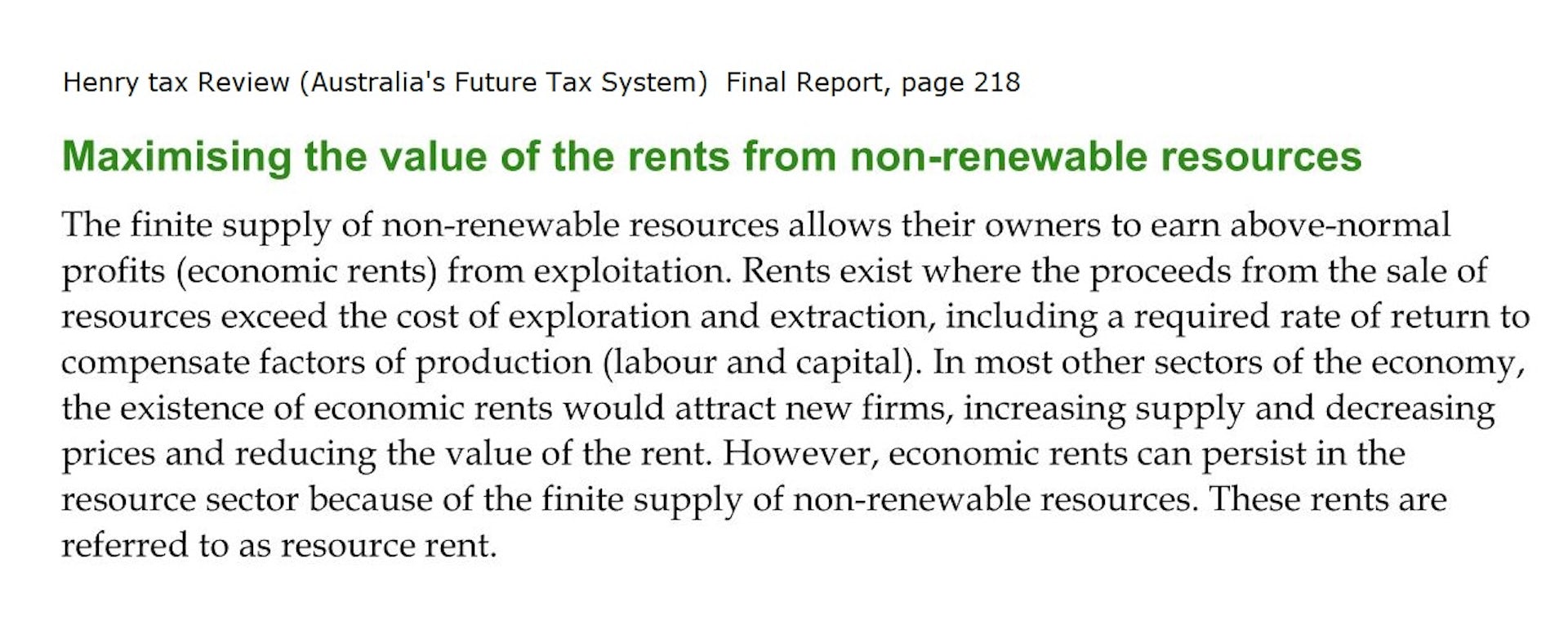
The measure that attracted the most support (13 out of the 47 economists) was increasing the tax of the “resource rents” enjoyed by gas producers, and using proceeds to cut electricity and gas prices.

Resource rents are the excess profits earned from the sale of resources that flow from the sellers’ exclusive access to the resource.

Australian gas producers already face a special resource rent tax, but weaknesses in its design mean that, even at the present unprecedentedly-high gas prices, it is expected to bring in just A$2.6 billion in 2022-23, falling to $2 billion by 2025-26.

Innovation expert Beth Webster from Swinburne said the windfall gains to gas exporters flowing from Russia’s invasion of Ukraine should not go to shareholders, many of whom were foreign, but to national priorities such as price relief for Australians on low incomes.

Independent economist Rana Roy said while energy prices had traditionally been too low to cover the society-wide costs of producing the energy, at the moment prices were, in many instances, “well above” the social cost.

Help low earners first

Six of the 13 economists who backed an increased resource rent tax wanted the proceeds directed to assisting lower-income energy consumers before others.

Another six wanted targeted subsidies for low-income consumers even if they weren’t funded by increased resource rent taxes.

Offered the option of picking a measure not on the list, two of the 47 picked “unrestricted cash transfers”. They made the point that lower retail prices would have the unhelpful side effect of encouraging the continued use of gas, whereas cash payments would enable consumers to cut their use of gas while banking the cash.

Reserve gas for locals

Eleven of those surveyed wanted the government to reserve gas equivalent to 15% of each eastern state liquefied natural gas (LNG) export project for use in Australia, as happens in Western Australia.

Former senior Organization for Economic Co-operation and Development official Adrian Blundell-Wignall said the requirement seemed to be “tried and tested” and was the best of a list of uncomfortable choices.

Curtin University economist Harry Bloch said while reserving 15% of the output of LNG projects would change the conditions under which they were licensed, the operators applied for the licences at a time when expected prices were lower.

Ken Clements of the University of Western Australia strongly disagreed, saying Western Australia’s 15% reservation policy should be scrapped. It operated as an export tax and shielded West Australians from the high prices needed to encourage conservation and look after the environment.

Curtin University’s Margaret Nowak said it was “too late” to hit the the eastern state exporters with licence restrictions after the licences had been granted.

The best that could be done was to ask the eastern state exporters to supply more gas to Australians, as the government has done, and to impose a price cap on those sales that was closer to the pre-invasion price than to the present international price.

Cap prices for agreed supply

Six of the 47 economists supported a cap on the price at which producers can sell what they have already agreed to supply domestically, even though several would normally “be hesitant to promote this type of intervention”.

Grattan Institute chief executive Danielle Wood said the magnitude of the internationally-driven price hikes constituted an exceptional circumstance that justified a time-limited fix.

So long as regulators picked a reasonable benchmark for the price cap, such as the pre-invasion price, producers would continue to earn healthy returns.

Boost supply longer term

Two of the economists surveyed nominated an item not on the list – encouraging the development of gas fields to boost supply – that would be unlikely to have an immediate impact on prices.

Of the three who picked “government should not intervene” one (Gigi Foster) said measures to restrain prices would get in the way of “basic economics”, which required consumers to cut back on their use of energy as prices rose.

Another (John Freebairn) said he nevertheless supported a higher resource rent tax to increase the government’s share of the above-normal profits generated by corporations granted licences to mine Australian-owned deposits.

Treasurer Chalmers said on Thursday he expected to produce a costed plan for restraining energy prices by Christmas.


Detailed responses:

The Conversation

This article is republished from The Conversation under a Creative Commons license. Read the original article.

Read more >>

Tuesday, November 01, 2022

Why has the RBA raised interest rates for a record 7th straight month? High inflation – and worse is on the way

Pushing up interest rates isn’t something the Reserve Bank does lightly.

But what’s worrying the Reserve Bank – and why it increased interest rates for a record seventh consecutive month on Melbourne Cup Tuesday – is that inflation seems to have become completely detached from the bank’s target band.

That target band of 2-3% was introduced in the early 1990s, at a time when that’s where inflation was. With one brief exception during the introduction of the goods and services tax, at the start of the 2000s, inflation has never since been far away from the band – until now.

The jump in inflation from 6.1% to 7.3%, revealed last Wednesday, made it clear that, even after six consecutive interest rate hikes, inflation was further away from the Bank’s target band than it had ever been.


Inflation breaks free of the target band


When the Reserve Bank began hiking its so-called cash rate during the May election campaign, the National Australia Bank’s standard variable mortgage rate was 3.45%. It’s now 5.95% and about to go to 6.2%.

For a borrower with a $500,000 mortgage, the increase in payments amounts to $800 per month. For a borrower on a fixed-rate loan of 2% that’s about to expire, the burden will be even greater.

So the Reserve Bank wants to be sure the jump in inflation to 7.3% is real.

How the cost of buying a home skews inflation

The first thing to say is that 7.3% is almost the real thing, but not quite.

The Bureau of Statistics collects information on millions of prices per week, at times by going into stores in eight cities and noting down what’s on price tags, at times by direct feeds from supermarkets, petrol stations and electricity suppliers, and at times by “scraping” prices quoted on the web for home deliveries.

The bureau categorises the things it prices as either essential or non-essential (its words are “non-discretionary” and “discretionary”).

It’s found that the prices of essential items (those we generally have to buy) climbed by more than 7.3% in the year to September – by an extraordinary 8.4% – whereas the prices of things we generally don’t need climbed 5.5%.

For obvious reasons, food is among the bureau’s list of essential or “non-discretionary” items. Food prices continue to be pushed up by floods and labour shortages.

But what many people don’t realise is that also among that list of supposedly “non-discertionary” items is one type of purchase people don’t make often – and which some of Australians will never make.

And that single item – “new dwelling purchase by owner-occupiers” – makes up more of the consumer price index than anything else.

Buying a home is so expensive compared to the other things we buy (such as bread and milk) that it accounts for almost 9% of the consumer price index.

Worse still, being classified as essential, it makes up almost 15% of the “essentials” index, even though for most of us in any given year buying a home is optional.

In most years, this anomaly doesn’t matter much. The price of a new home (what’s priced is only the construction of the home, not the land) climbs pretty much in line with everything else.

But building material shortages, COVID-induced labour shortages, and an explosion in demand for building fed by the government’s HomeBuilder grant have pushed up the price of new dwellings by an astonishing 20.7% in the past year. That’s enough to add an awful lot to the reported rate of inflation.

The real cost of living is probably up 6%

A rough calculation suggests Australia’s inflation rate would be 6%, instead of 7.3%, if the price of new homes didn’t have such an outsized influence.

We will know more by mid-Wednesday. The bureau actually produces separate living cost indexes a week after the consumer price index that substitute mortgage payments for the cost of home-building.

Lately these indexes have been pointing to increases one to two percentage points below the official rate of inflation.

Accurately measuring rent rises

Another peculiarity is that the rent increases recorded in the consumer price index are so far below those we keep hearing about.

The bureau says in the year to September, average capital city rents climbed just 2.8%, compared to the figures of 10%, and in some suburbs, 20%, quoted by real estate analysts.

In part, this is because the bureau only reports capital city rents. But more importantly it is because it does its job better than real estate analysts.

It collects data on not only the rents that are advertised (these are climbing strongly), but also on the hundreds of thousands of rents paid by continuing renters, which either aren’t climbing at all or aren’t climbing as strongly.

The bureau compares the two by describing a bathtub of water.

The water in the tub represents all rents being paid by households, while the water entering the tub from the tap represents new rental agreements. The consumer price index is measuring the overall temperature of the bathtub whereas an advertised rents series measures the temperature of the water flowing into the tub.

Worse news ahead

Perhaps surprisingly, the bureau finds the average retail price of electricity only climbed 3.2% in the year to September, and the price of gas by only 16.6%, much less than the 56% and 44% mentioned in last week’s federal budget.

But the budget numbers were predictions of what’ll happen over the next two years unless the government provides relief. The bureau was telling us what has happened.

Which is why the Reserve Bank is worried. While gas and electricity prices will subside eventually, inflation is likely to climb even higher before it falls – the bank says to around 8%.

The way back to the target band of 2-3% is anything but clear. That means for homebuyers, there’s no relief in sight just yet.The Conversation

This article is republished from The Conversation under a Creative Commons license. Read the original article.
Read more >>

Tuesday, October 25, 2022

Jim Chalmers’ 2022-23 budget mantra: whatever you do, don’t fuel inflation

Wes Mountain/The Cartoon, CC BY-ND

Terrified by the prospect of further stoking the worst inflation in three decades, Treasurer Jim Chalmers and Finance Minister Katy Gallagher have delivered a budget that takes out of the economy about as much as it pumps into it.

In the March 2022-23 budget, delivered ahead of the May election, the Coalition gave away most of the extra A$40 billion that was to flow from higher commodity prices and an improved economy in new programs and tax cuts. But this budget has hung on to the bulk of what’s turned out to be an extra $52.5 billion.

Over the four years to 2025-26, Chalmers forecasts $144.6 billion more in tax than was expected in March. Most of this is from much higher company tax flowing from higher mineral and gas prices. This is offset by $92.1 billion in extra spending, mainly necessitated by higher inflation.

Out of the net $52.5 billion he plans to spend only a net $9.8 billion, most of which is $7.4 billion in recovery funding for communities affected by disasters.


Labor has largely paid for its election spending promises (all of which appear to have been implemented in full) by hacking into Coalition programs and spending announced in the March budget that hasn’t yet taken place.

Although the monthly measure of inflation has been falling – to 6.8% for the year to August (with the September update due on Wednesday) – the budget forecasts a reacceleration to a peak of 7.75% by the end of the year.

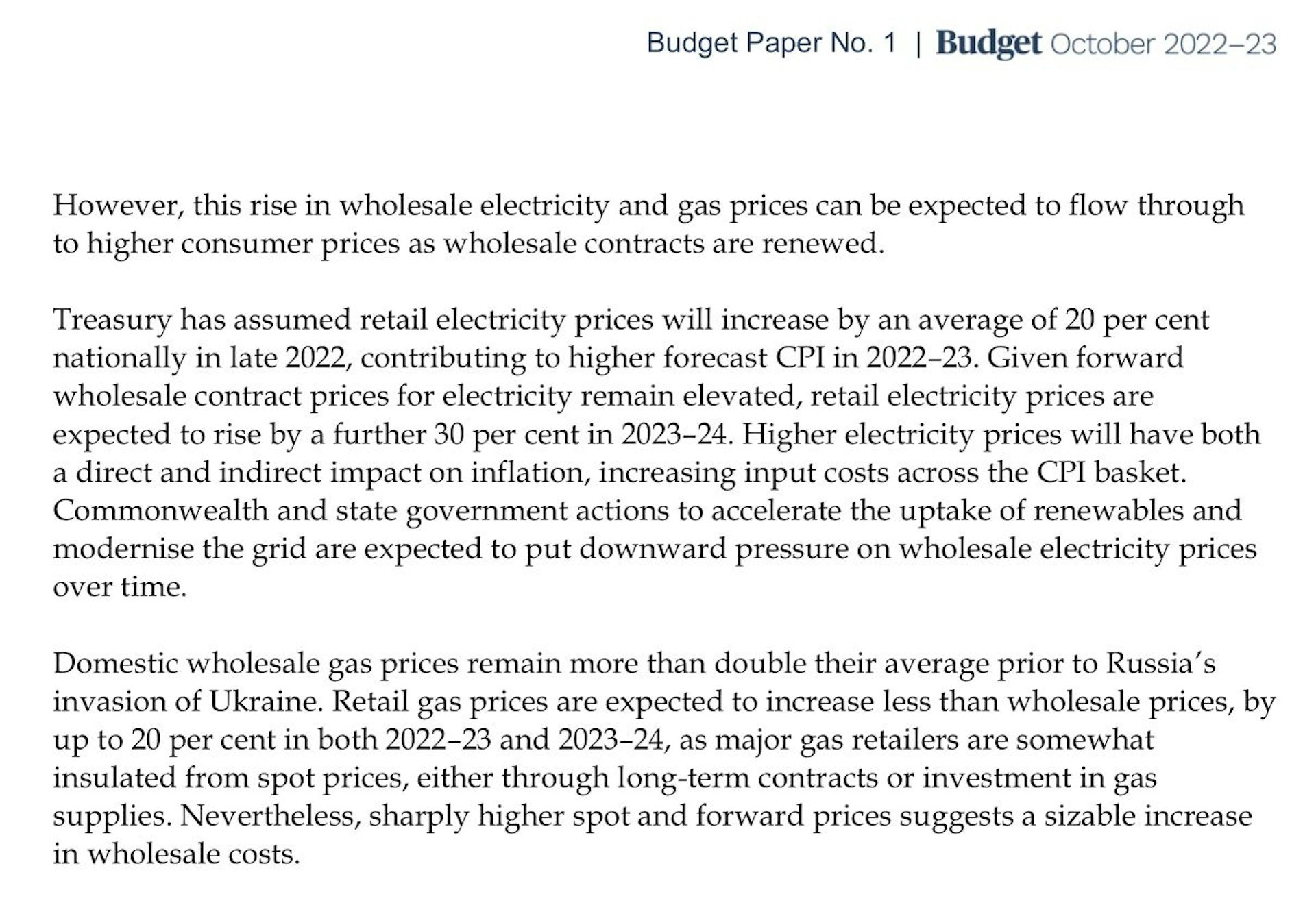
It expects retail electricity prices to climb by 20% this year and a further 30% in 2023–24. It expects retail gas prices to climb 20% in both years. It says these higher prices should flow through into the cost of almost everything we buy.

Nevertheless, as international price pressures ease and as higher Reserve Bank interest rates squeeze spending, it expects inflation to fall back to 5.75% by mid next year, 3.5% by mid-2024 and (perhaps optimistically) to the middle of the Reserve Bank’s 2-3% target band by mid-2025.

Encouragingly, it expects wage growth to accelerate almost immediately, from its present 2.6% to 3.75% by the middle of next year, taking wages growth back up above prices growth of 3.5% by mid-2024.


Whether or not this slow glide down from higher inflation and quick lift in wages growth is realistic, many of the assumptions in Chalmers’ first budget are more believable than those of his predecessors.

Previous budgets made their forecasts look better by plugging in high productivity growth of 1.5% per year, which has been the average over the past 30 years. But productivity growth hasn’t been anything like that high for two decades. On average it has been 1.2%, which is the much lower number Chalmers has plugged in, cutting forecast economic growth by 1.75% over the next decade.

The previous budget expected the National Disability Insurance Scheme to cost $46 billion per year by 2025-26. This budget expects it to cost $51.7 billion in the light of new actuarial projections, pointing to spending increases of 14% per year.

The previous budget expected net interest payments to amount to 0.8% of gross domestic product by 2032-33. This budget factors in almost double the cost – 1.5% of GDP – as a result of much higher interest rates.

By 2025-26 it expects interest payments to cost $26.5 billion, which is more than it expects to spend that year on family payments, pharmaceutical benefits, or schools. It expects net debt of 31.9% of GDP by June 2033, well up on the 26.9% expected in March.


As is a Treasury tradition, the revenue forecasts are conservative. Whereas the March budget assumed iron ore, coal and gas prices would fall from exceptionally high levels to long-term averages by September 2022, the October budget assumes the same fall, but for March 2023.

In truth it’s hard to tell what will happen six months into the future, let alone the four years for which the budget makes forecasts and the ten years for which it makes projections, as what’s happened since March makes clear.

But taken together, Chalmers’ more cautious assumptions and the enthusiasm with which Gallagher has embraced cost-cutting paint a weak picture of the year. Economic growth is forecast to be 3.25% this financial year, down from 3.5% forecast in March.


Next financial year it is expected to be 1.5% down from 2.5% forecast in March (albeit while countries including the United Kingdom and the United States grapple with recessions).

Unemployment is expected to be much higher than forecast in March – 4.5% instead of the 3.75% by mid 2024, which would mean an extra 100,000 or so people out of work.

It’s a price Chalmers and Gallagher seem prepared to pay if it means getting on top of inflation, although it wasn’t one they were prepared to draw attention to.

The budget papers say employment will climb in each of the next four years, and doubtless it will, because the population will climb, but isn’t a particularly strong claim to make.

The Conversation

This article is republished from The Conversation under a Creative Commons license. Read the original article.

Read more >>