Showing posts with label electricity. Show all posts

Tuesday, November 15, 2022

To start cutting gas and electricity prices, here’s what the government looks likely to deliver by Christmas

Treasurer Jim Chalmers says he’ll have a system in place to deal with rising energy prices by Christmas.

He can’t yet tell us what it will be, because that will depend on the outcome of negotiations with gas and electricity companies, and possibly on legislation he might have to get through parliament.

But thanks one of the treasurer’s most trusted confidants, we can now piece together a pretty good picture of what lies ahead.

Clues from the head of Treasury

The head of the treasurer’s department, Treasury secretary Steven Kennedy, shared his thoughts with a Senate estimates committee last week.

While Kennedy presented them as his own thoughts, Kennedy’s day job is helping Chalmers work out what to do.

The first thing to note is that Kennedy, like Chalmers, doesn’t like the idea of intervening in markets just because prices are high.

As he told the Senate, usually the solution to high prices “is high prices”.

What he means is that usually when prices jump it’s because there isn’t enough of something. The high prices encourage new suppliers to get into business supplying that thing, and that forces prices down.

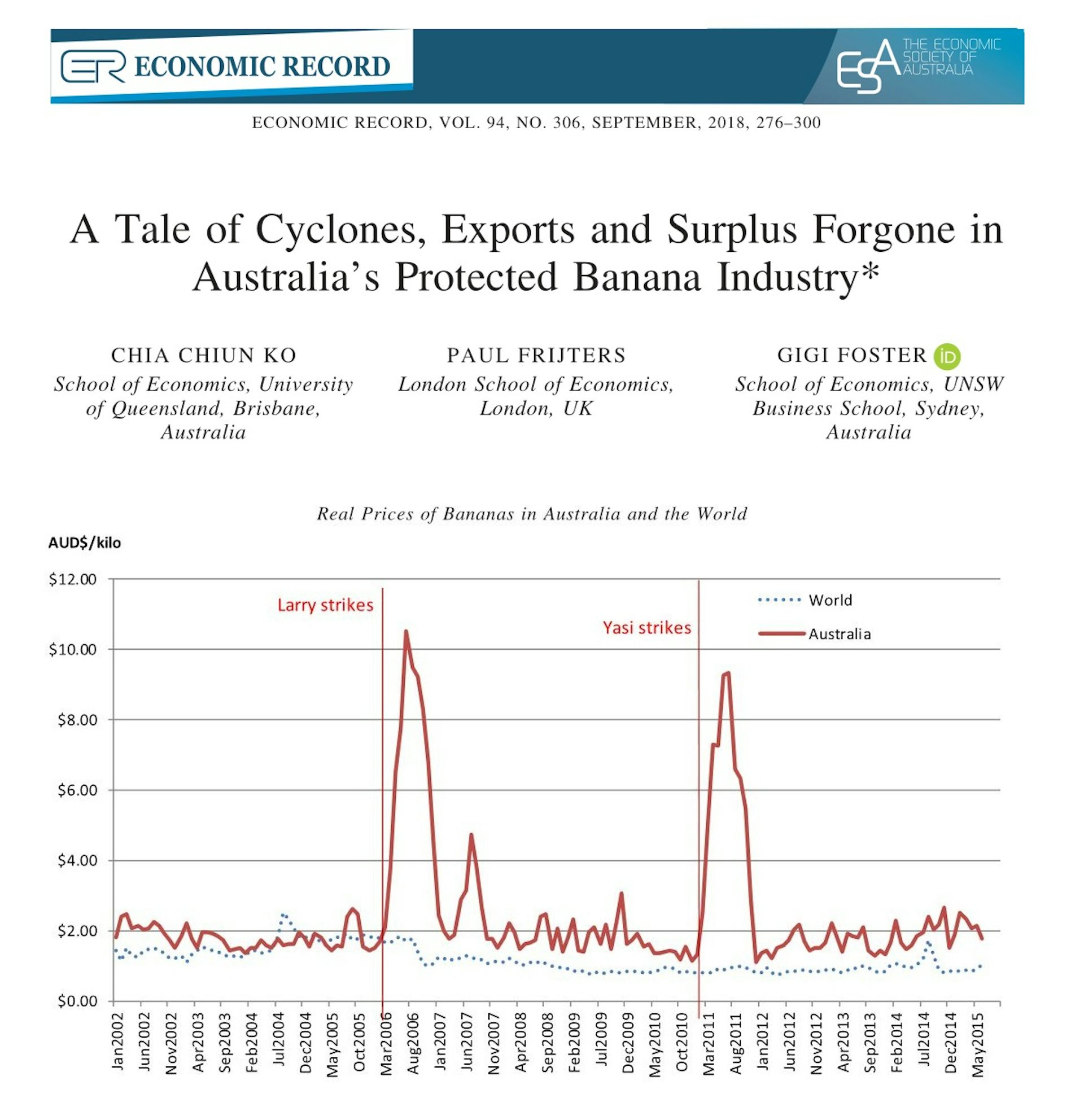
If that can’t happen quickly enough, the high prices will encourage users of that something to switch to a substitute, as we did when cyclones hit Queensland’s banana crops in 2006 and 2011. We switched to other fruits grown elsewhere.

Interfering with high prices interferes with those adjustments. Usually.

However, at the moment, there needn’t be an Australian gas shortage. Australia’s east coast produces roughly three times as much gas as it uses each year.

Although most of the rest of the gas is exported in accordance with long-term contracts, an increasing amount is being exported over and above those contracts to take advantage of the temporary spike in international prices following Russia’s invasion of Ukraine.

If that gas was sold here at pre-invasion prices, there wouldn’t be a shortage, and Australian prices wouldn’t be up to four times what they used to be, pushing manufacturers to the brink and pushing electricity prices way beyond normal.

Whatever is done will be temporary

Kennedy’s first point is that the global price hike is likely to be temporary, or as he put it, “hopefully temporary”. Even if the conflict persists, international supply and demand are likely to adjust to bring global prices back down. That means any intervention should be temporary, so it doesn’t distort markets forever.

Kennedy’s second point is that the gas exporters selling for ultra-high prices over and above what they are contracted to sell are making exceptionally high profits – “well beyond the usual bounds of investment and profit cycles”. They would do just fine if their profits were merely ordinarily high rather than super high.

His third point is that the temporarily high prices are hacking into the profits of other Australian businesses and “raising questions about their viability”.

Households, especially lower-income households, will be severely affected.

Summing up more clinically, Kennedy says what’s happening in Ukraine is “leading to a redistribution of income and wealth, and disrupting markets”.

The national interest case for this redistribution is “weak, and it is not likely to lead to a more efficient allocation of resources”.

Beyond a gentleman’s agreement

In August the government signed a sort of gentleman’s agreement with the three east coast gas exporters in which they’ve agreed to offer uncontracted gas to local customers first, before offering it overseas.

But (and it’s a big but) they’ll offer it at international prices, with the only stipulation being that local customers “not pay more” than overseas customers.

Although well-intentioned, it will allow prices many times higher than the A$8 a gigajoule that was common before COVID – high enough to send some customers to the wall.

The two-step solution Kennedy is pointing to goes further, temporarily.

Agreement on lower prices – or a tax might be next

The first step is likely to be to ask the producers to supply enough gas to local customers to get local prices down to A$10 a gigajoule, an idea suggested by the former Australian Competition and Consumer Commission chief Rod Sims.

Sims thinks the producers are likely to agree. The Commonwealth has the power to impose export controls. If they don’t agree, Kennedy has hinted at stage two.

That fallback position would be a temporary tax on the excess profits of exporters and use it to subsidise domestic prices, along the lines of the temporary tax in the United Kingdom.

Economic purists, including those surveyed by The Conversation this month, would prefer the tax was paid to the victims of ultra-high prices in cash, rather than in subsidised prices, because it would encourage them to get off gas.

But Kennedy (and probably Chalmers) believe the ultra-high prices are temporary. Both want to bring down the current ultra-high rate of recorded inflation. It’s something price subsidies would do, but cash handouts would not.

The two-step nature of the process is probably why it is taking so long.

Chalmers and colleagues need to ascertain what the exporters are prepared to do about prices if merely asked, and to prepare legislation for a temporary tax – should they need to take that final step.The Conversation

This article is republished from The Conversation under a Creative Commons license. Read the original article.

Read more >>

Wednesday, March 17, 2021

Electricity is a jigsaw. Coal can't provide the missing pieces

There’s something the energy minister said when they announced the early closure of Victoria’s second-biggest coal-fired power station last week that was less than complete.

Yallourn, in the Latrobe Valley, provides up to 20% of Victoria’s power. It has been operating for 47 years. Since late 2017 at least one of its four units has broken down 50 times. Its workforce doubles for three to four months most years to deal with the breakdowns. It pumps out 3% of Australia’s carbon emissions.

On Wednesday Energy Australia gave seven years notice of its intention to close it in mid-2028, four years earlier than previously announced, a possibility for which regulators had been preparing.

In what might have been a rhetorical flourish, Energy Minister Angus Taylor warned of “price spikes every night when the sun goes down”.

Then he drew attention to what had happened when two other coal-fired power stations closed down — Victoria’s Hazelwood and South Australia’s Northern (South Australia’s last-remaining coal-fired generator).

He said “wholesale prices skyrocketed by 85%”.

And there he finished, without going on to detail what really mattered. South Australia and Victoria now have the lowest wholesale power prices in the National Electricity Market — that’s right, the lowest.

Coal-fired plants close, then prices fall

Before Northern closed, South Australia had Australia’s highest price.

Five years after the closure of Northern in 2016, and four years after the closure of Hazelwood in 2017, South Australia and Victorian have wholesale prices one-third lower than those in NSW and two-fifths lower than those in Queensland.

Something happened after the closure (largely as a result of the closure) that forced prices down.

South Australia became a renewables powerhouse.

The Australian National University’s

Hugh Saddler points out that renewable-sourced power — wind and grid solar — now accounts for 62% of power supplied to the South Australian grid, and at times for all of it.

Much of it is produced near Port Augusta, where the Northern and Playford coal-fired power stations used to be, because that’s where the transmission lines begin.

Being even cheaper than the power produced by the old brown-coal-fired power stations, there is at times so much it that it sends prices negative, meaning generators get paid to turn off in order to avoid putting more power into the system than users can take out.

It’s one of the reasons coal-fired plants are closing: they are hard to turn off. They are just as hard to turn on, and pretty hard to turn up.

Coal can’t respond quickly

There are times (when the wind doesn’t blow and there’s not much sun, such as last Friday in South Australia) when prices can get extraordinarily high.

But coal-fired plants, especially brown-coal-fired plants such as Victoria’s Hazelwood and Yallourn and Victoria’s two remaining big plants, Loy Yang A and B, are unable to quickly ramp up to take advantage of them.

Although “dispatchable” in the technical meaning of the term used by the minister, coal-fired stations can’t fill gaps quickly.


Read more: The death of coal-fired power is inevitable — yet the government still has no plan to help its workforce


Batteries can respond instantly to a loss of power from other sources (although not for very long), hydro can respond in 30 to 70 seconds, gas peaking plants can respond within minutes.

But coal can barely move. As with nuclear power, coal-fired power needs to be either on (in which case it can only slowly ramp up) or off, in which case turning it on from a standing start would be way too slow.

What was a feature is now a bug

That’s why coal-fired generators operate 24-7, to provide so-called base-load, because they can’t really do anything else.

Brown coal generators are the least dispatchable. Brown coal is about 60% water. To make it ignite and keep boiling off the water takes sustained ultra-high temperatures. Units at Yallourn have to keep burning coal at high output (however low or negative the prices) or turn off.

In the days when the other sources of power could be turned on and off at will, this wasn’t so much of a problem.

Hydro or gas could be turned on in the morning when we turned on our lights and heaters and factories got down to business, and coal-fired power could be slowly ramped up.

At night, when there was less demand for coal-fired power, some could be created by offering cheap off-peak water heating.

But those days are gone. Nationwide, wind and solar including rooftop solar supplies 20% of our needs. It turns on and off at will.

Wind often blows strongly at night. What was a feature of coal — its ability to provide steady power rather than fill gaps - has become a bug.

Gas and batteries can fill gaps coal can’t

It’s as if our power system has become a jigsaw with the immovable pieces provided by the wind and the sun. It’s our job to fill in the gaps.

To some extent, as the prime minister says, gas will be a transition fuel, able to fill gaps in a way that coal cannot. But gas has become expensive, and batteries are being installed everywhere.

Energy Australia plans to replace its Yallourn power station with Australia’s first four-hour utility-scale battery with a capacity of 350 megawatts, more than any battery operating in the world today. South Australia is planning an even bigger one, up to 900 megawatts.


Read more: Huge 'battery warehouses' could be the energy stores of the future


Australia’s Future Fund and AGL Energy are investing $2.7 billion in wind farms in NSW and Queensland which will fill gaps in a different way — their output peaks at different times to wind farms in South Australia and Victoria.

Filling the gaps won’t be easy, and had we not gone down this road there might still have been a role for coal, but the further we go down it the less coal can help.

As cheap as coal-fired power is, it is being forced out of the system by sources of power that are cheaper and more dispatchable. We can’t turn back.

Peter Martin, Visiting Fellow, Crawford School of Public Policy, Australian National University

This article is republished from The Conversation under a Creative Commons license. Read the original article.

Read more >>

Friday, December 25, 2020

What’s the best way to boost the economy? Invest in high-voltage transmission lines

When, in the midst of the pandemic, the Economic Society of Australia invited 150 of Australia’s keenest young thinkers to come up with “brief, specific and actionable” proposals to improve the economy, amid scores of ideas about improving job matching, changing the tax system, providing non-repayable loans to businesses and accelerating telehealth, two proposals stood out.

They were actually the same proposal, arrived at independently by two groups of “hackers” in the society’s annual (this time virtual) “hackathon”.

I was one of the judges.

The mentors who helped test and guide the proposals were some of the leading names in economics, among them Jeff Borland, John Quiggin, Gigi Foster, Deborah Cobb-Clark, Peter Abelson and John Hewson.

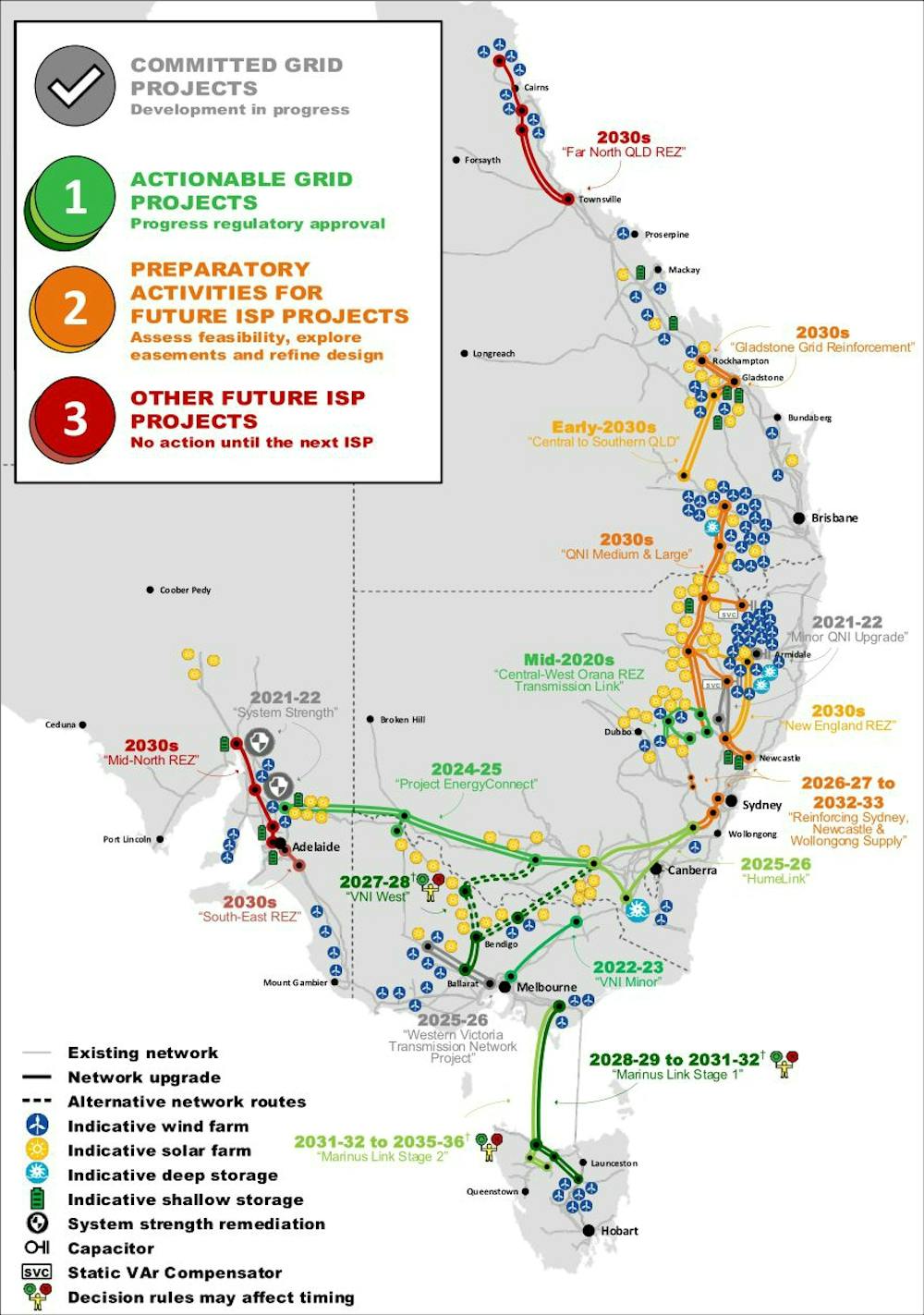
The proposal is to fast track the 15 or more projects already identified by the Australian Energy Market Operator as essential to meet the electricity grid’s transmission needs over the next 20 years.

Starting them immediately, when business investment is weak and there’s a need for jobs and governments can borrow at rates close to zero, will bring forward all of the benefits of being able to bring ultra-cheap power from the places it will be made to the places it will be needed as expensive fossil-fuel generators bow out or are out competed.


Read more: Explainer: what is the electricity transmission system, and why does it need fixing?


Judges Alison Booth, Jeremy Thorpe and I noted that policy hacks were the most useful where neither the market nor the government was getting the job done.

The proposal would help ensure renewables can connect to the grid, something “neither the market nor the government is managing to do quickly”.

A few weeks later Labor leader Anthony Albanese used his budget reply speech to propose the same thing – a Rewiring the Nation Corporation to turn the projects identified in the Energy Market Operator’s integrated system plan into reality.

Here is what is proposed in the winners’ own words:

Accelerating priority transmission projects

Nick Vernon, Agrata Verma, Bella Hancock

Investment in new renewable generators in Australia sank 40% in 2019. A major factor holding them back is grid access. The best locations for wind and sun often have poor access to the cables that transport electricity to consumers.

Our near-term recommendation is to guarantee Project EnergyConnect, a 900-kilometre cable between NSW and South Australia due to begin construction next year. The network operators got approval in January, but there is now uncertainty over whether they will get the funding.


Read more: 'A dose of reality': Morrison government's new $1.9 billion techno-fix for climate change is a small step


We propose that the two state governments agree to cover the shortfall between approved revenues and realised costs (up to a pre-determined limit) to ensure construction starts on time in 2021.

Medium-term, we recommend the Australian Energy Regulator conduct the regulatory investment test and revenue adjustment processes for all priority projects in parallel to condense approval timelines and that the Commonwealth and state governments underwrite priority projects’ early works.

This would allow service providers to commission new transmission lines sooner after regulatory approval.

AEMO Integrated System Plan

The case for fast tracking transmission

Patrick Sweeney, Sam Edge, Elke Taylor, Jacob Keillor, Timothy Fong

Currently valued at A$20 billion, the Australian transmission network was designed for a centralised 20th century power mix and suffers from aging infrastructure.

The $6 billion upgrade we propose would have as its centrepiece 15 projects the Energy Market Operator has already identified as essential.

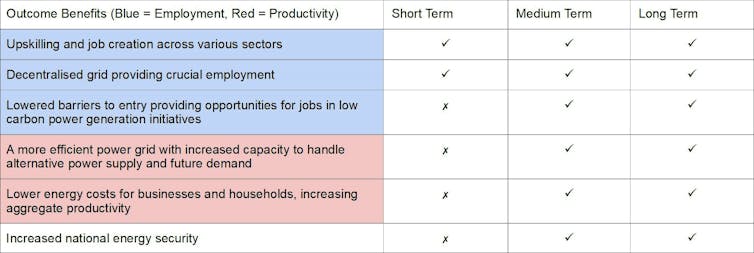
Fast-tracking these projects has the potential to generate 100,000 jobs, to bring about strong private investment in low-carbon power production, and to place downward pressure on wholesale power prices, producing $11 billion in benefits.

A national taskforce consisting of the department of energy and the market operator would oversee a project of a similar size to the Snowy Mountains scheme, which itself created more than 100,000 jobs during its lifecycle.


Read more: The verdict is in: renewables reduce energy prices (yes, even in South Australia)


The government would procure the funds by issuing bonds, with recent rates indicating the yield payable will be less than the rate of inflation.

Firms that tendered for the work would be evaluated on their capacity to upscale production to meet milestones and on their plans to generate long-term, sustainable employment.

Peter Martin, Visiting Fellow, Crawford School of Public Policy, Australian National University

This article is republished from The Conversation under a Creative Commons license. Read the original article.

Read more >>