Showing posts with label music. Show all posts

Wednesday, December 30, 2020

Sure, interest rates are negative, but so are some prices, and when you look around, they’re everywhere

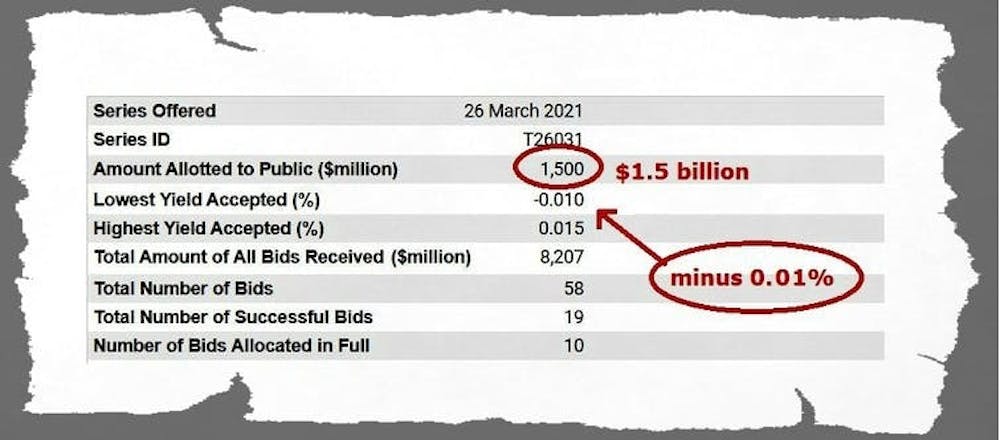
On December 10, it finally happened. Instead of demanding an interest payment from the government in return for lending it money, a group of investors offered to pay the government in order to lend it money.

Naturally enough, the offer was accepted.

The government needed A$1.5 billion which it promised to repay on March 26.

It sought tenders. What was the lowest return an investor would accept to lend it the money?

It wasn’t short of offers. It fended off $8.2 billion of bids, and some of them were prepared to accept very low returns indeed.

The lowest was -0.01%. The minus sign indicates that, instead of the government paying the lender a return for lending to it, the lender would pay the government a return for the privilege of lending to it – a perfectly-legal backhander if you like.
AOFM

The government got a fair chunk of the $1.5 billion for less than nothing.

Some of the bidders demanded more, but nothing too far into positive territory.

It happened because the sale of bonds benefits both parties: the government gets to borrow money it needs and the investor gets a safe place to park their money.


Read more: The government has just sold $15 billion of 31-year bonds. But what actually is a bond?


In those circumstances, where benefits flow in both directions, there’s no reason to suppose that the final payment will flow in only one direction.

And sometimes the direction chosen is arbitrary. Economist Joshua Gans made the point on Twitter talking about the coronavirus vaccine.

He said “half of the economists out there think people should be paid to be vaccinated, the other half think they should pay to be vaccinated earlier.

He asked: "can we at least work out whether the price is positive or negative?”

Which bank pays which bank?

Two banks are involved when you whip out a debit card to pay for a purchase – your bank (that issues the card), and the seller’s bank (that accepts the card).

Which should pay which? Usually the seller’s bank pays a fee to buyer’s bank, but not always. Depending on the type of card and bank, sometimes the fee flows the in the other direction, from the buyer’s bank to the seller’s bank.

The truth is both parties benefit from the transaction, and who the banks ultimately manage to pass the fee on to (the buyer or the seller) is another question altogether.

Home taping is killing music?
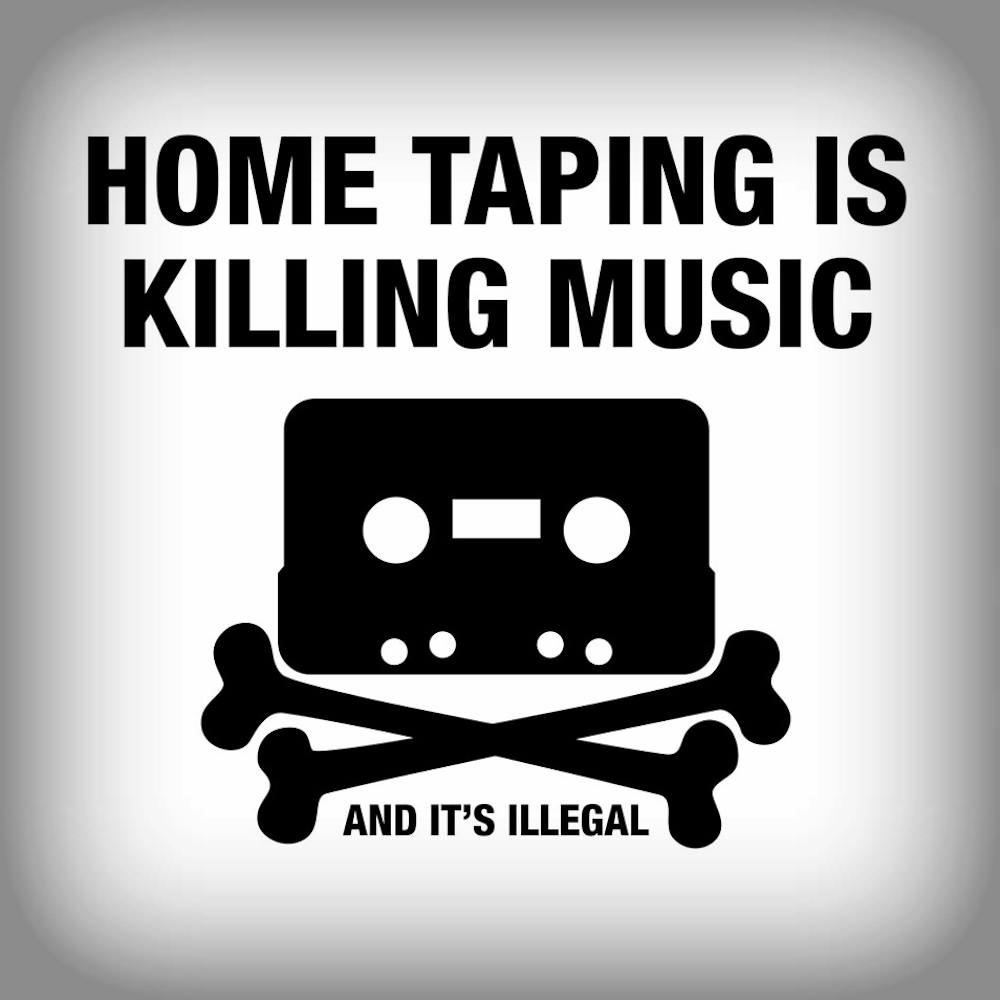
The advent of cassette recorders frightened record companies, and throughout the 1970s, 1980s and 1990s they persuaded governments in Australia, Canada, the United States and much of Europe to impose levies (taxes) on the sale of blank recording media such as cassette tapes and compact discs in order to compensate the companies that would suffer.

There was only one problem. The companies didn’t suffer. The advent of the cassette made it possible to listen to recorded music in places other than the loungeroom record player (most notably in cars and later, with the Walkman while walking or jogging).

The amount of time people spent listening to recorded music shot up, recorded music sales in the US more than doubled, and the record companies took in more money than ever before.

Radio stations should pay to play, or…

If anything, record companies should have been paying the purveyors of cassette tapes rather than the other way around.

The same sort of two-way exchange happens when radio stations play music.

Radio stations pay the artists, composers and record companies for the music they play (although not very much) and sometimes the recording companies pay the radio stations (payola) in order to ensure their records are played.


Read more: Spotify may soon dominate music the way Google does search — this is why


In 1970 Australia’s six largest record companies demanded more money from the radio stations, which they refused to pay. The resulting “record ban” saw commercial radio drop the British and Australian artists represented by the majors and instead play the American and independent local artists whose companies weren’t demanding more money.

Without airplay, sales faded. The Long and Winding Road cracked the top five most places it was released, but not in Australia.

Six months on, each side realised it needed the other.

Google should pay newspapers, or….

Now the government is insisting that platforms such as Google and Facebook pay news organisations for the content they link to, in something of a world first.

Or at least it seems to be. The original draft legislation released in April required the arbitrating panel to take account of the direct and indirect benefits of the news content to the digital platform.

After representations from Google and Facebook the revised final legislation released in December also requires the panel to take account of the benefit “to the registered news business” of having the digital platform pointing to its content.

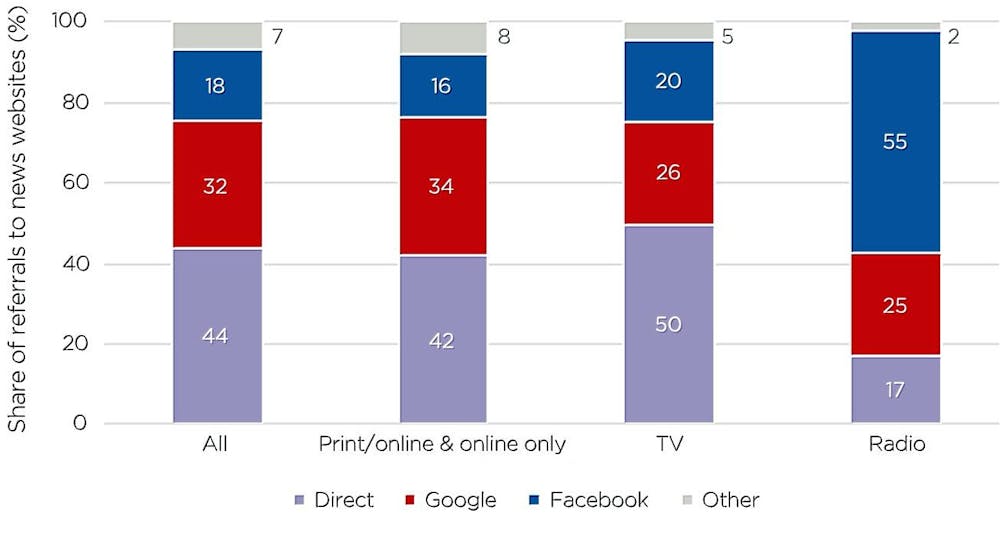
That benefit is huge. Without Google and Facebook, news websites would be bereft of traffic (which is why they allow Google and Facebook to point to their content).


Means of accessing Australian news sites
2017-18. ACCC Digital Platforms Inquiry, final report

The Treasurer calls it a “two-way value exchange”. At least to me, it’s no longer clear in which direction the money should flow.

Prices can be negative as well as positive.

Peter Martin, Visiting Fellow, Crawford School of Public Policy, Australian National University

This article is republished from The Conversation under a Creative Commons license. Read the original article.

Read more >>

Sunday, January 21, 2018

Enjoy the Hottest 100, but it's not all it seems

Wanna rig the Hottest 100?

It's surprisingly easy. I am not talking about blatant write-in campaigns of the kind that attempted to push Shake It Off to the top in 2015. They've been headed off by a new rule that says "votes made as part of a competition that promotes a song or artist, or a campaign that undermines the Hottest 100 may be disqualified or ignored".

I am talking about the kind of manipulation that happens all the time, where songs are pushed to the top of the charts and into the crevices of our hearts without us knowing.

Senator Cory Bernardi, who this week took the unusual step of creating his own alternative "Conservatives 100" in protest at triple J moving the Hottest 100 from Australia Day, achieved little. The best way to control what people want to hear is to control what they do hear.

US station manager Todd Storz twigged to the idea in the 1950s. Like most radio stations, his had been playing a bit of everything, what he thought people wanted. Then as he waited in a restaurant to pick up his girlfriend, who was a waitress, he noticed that the other waitresses were programming into the jukebox the same songs they had been hearing all day. They had come to like what they had been forced to hear. He invented Top 40 and never looked back.

But triple J is different. Its listeners have minds of their own, right?

Liam Lenten and Jordi McKenzie, economists and music tragics from La Trobe and Macquarie universities, think not.

They've just completed what is probably the only economic analysis of Australian pop music charts. Published in the Economic Record, it was intended to be a study of what kept songs at the top of the all-time Hottest 100 and what let new ones in.

The Hottest 100 comes in two forms. The annual survey, which these days is limited to tracks released in the previous year, is followed by a release of a double CD. The best tracks of all-time survey, which used to be annual, now takes place once every 10 or so years. Both are decided by popular vote.

Lenten and McKenzie's initial findings were that songs released in the lead-up to the best songs of all time polls did unreasonably well, and that there was something special about Joy Division's Love Will Tear Us Apart. It has been always been at or near the top.

Then a different, one-off, Hottest 100 put them on to something fascinating. It was conducted in 2013 and limited to the best tunes of the previous 20 years. In each of those years triple J had released Hottest 100 CDs, but because of copyright and other restrictions, none had included anything like the entire 100. Many didn't even include the hottest of the 100. In Lenten and McKenzie's words, "a significant proportion of songs featured each year were low-ranked".

Yet these low-ranked songs, not overly liked at the time, turned out to be over-represented in the hottest of the past 20 years list, eclipsing some that had made it to the top five. They only thing they had that many of the better-liked songs did not have was inclusion in the CD. Lenten and McKenzie conclude that "the radio station itself played a significant role in the results" by what it chose to put on the CD.

A decade ago two Columbia University sociologists asked people to rate 48 songs and download those they liked most. Half were told the truth about which had been the most downloaded. Half were lied to and told the reverse, that the least downloaded were the most downloaded. They downloaded the initially unpopular songs surprisingly often.

Enjoy the Hottest 100, it's democracy in action. But democracy is imperfect. We're more easily manipulated than we think.

In The Age and Sydney Morning Herald
Read more >>

Saturday, July 22, 2017

Why pop songs move us. It's not about us

What was it that drove 600 generally sane men, women and children to don red dresses to swoop, leap and sway to the biggest Kate Bush hit of all time at Melbourne's Edinburgh Gardens last Saturday?

The Most Wuthering Heights Day Ever was a fundraiser to help organisations dealing with domestic violence, as were satellite Most Wuthering Heights Days in Canberra, Adelaide, Brisbane, Sydney, Newcastle and Wollongong.

But the devotees weren't doing it primarily to fight domestic violence, and they weren't doing it only because they liked Kate Bush. They were doing it because of the song: because of what four minutes 26 seconds of Wuthering Heights means to them.

In his just-published book, The Memory of Music, the ABC's Andrew Ford says that while a Beethoven symphony invites us to enter its world, a pop song like Wuthering Heights enters ours; it colonises us, imprints itself on us.

"It is small wonder, then, that we associate pop songs with the time and place in which we most vividly encountered them, the girlfriend we had at the time, the summer holiday we were on, the college we were at," he says.

In most pop songs the repetition begins almost instantly, within seconds, and the fade, beginning mere minutes later, prolongs the sense of endless repetition, sometimes to infinity. Ford says the repetition encourages us "to believe the song will never end, that we still have that girlfriend, that we're still on that holiday''.

Songs are like elevators between floors of our lives. They transport us to where we were when we first heard them: the faces, the places, even the smells.

They are precious, but not necessarily because they are good. When I play songs I find important to my daughter she sometimes dismisses them. Other times she is entranced. I want to believe that those songs take hold of me because they are good. Yet I've got to confront the uncomfortable reality that I first heard most of them between the ages of 12 and 22. It'll probably be the same for my daughter. It's unlikely that the best music of all time happened to happen when I was in my teens and early 20s. It's more likely that those songs are special to me because of exposure; because they were forced on me.

In Hit Makers, released in January, and in Climbing the Charts, released in 2015, authors Derek Thompson and Gabriel Rossman lay bare the brutal way in which it happens.

Hit songs don't "go viral", spreading by infecting one listener after another as is commonly believed, even these days in the age of the internet. They are spread by broadcasting, as are tweets (in this case by uber-tweeters such as Oprah Winfrey).

"It's not so much a million one-to-one shares, as a handful to one to one-million shares," Thompson says.

Rossman has graphed the airplay of hits such as Rihanna's Umbrella. Instead of growing via infection like a virus, it began high and stayed high.

"To explain how so many radio stations came to play Umbrella, we can't resort to arguments about contagion or cascades," he says. "Rather, we must look to something apart from peer influence to explain why so many stations started playing the song so quickly without waiting to see if their peers would play it first."

By the 1980s CBS had been paying $10 million a year to get songs played. As an experiment in 1979 it decided to pay nothing in Los Angeles for Another Brick in the Wall. After all, it was already a hit elsewhere and the band was on tour. The top four stations refused to play it, sales went nowhere, and Pink Floyd's management relented and ordered CBS to hand over the money.

We share our love of special songs with others who grew up loving them, but not necessarily because they are objectively special. Mostly it's because they've been made special.

In The Age and Sydney Morning Herald
Read more >>

Tuesday, January 12, 2016

The bonds that fell to earth. Bowie's part in the financial crisis

Did David Bowie spark the global financial crisis?

It was a question seriously asked after Lehman Brothers collapsed in 2008.

A decade earlier in 1997 he pioneered what came to be called Bowie Bonds. The first was essentially a long-term loan to him in return for the future revenue from the 287 tracks he released before 1990.

He and his financial engineer collected $55 million. The bond holders collected the rights to the income from singles such as Space Oddity, Heroes, Changes and Ashes to Ashes. After 10 years Bowie had to return the $55 million (plus interest) and the bond holders had to return to rights to income from his tracks.

Securitisation, as it was called, had been around for a while, but Bowie showed it could be used for almost anything. By the late 2000s it was being used on an industrial scale to bundle the future income from bad US home loans with the future income from good ones and offload it to unsuspecting investors.

In the new movie The Big Short opening in Australia on Thursday Brad Pitt and Ryan Gosling outline what happened.

Bowie got the better end of his deal.

His bonds were given a AAA credit rating. Prudential Insurance bought the lot. Yet by 2004 they were downgraded to just above junk status. The growth of the internet and body blows to the traditional method of distribution meant his catalogue performed far worse than thought.

He knew it was going to happen.

An early internet service provider (he set up BowieNet at about the time Malcolm Turnbull helped set up Ozemail) he foresaw the arrival of digital downloads and streaming services years before they took off...

Here he is talking to the New York Times in 2002:

"I don't even know why I would want to be on a label in a few years, because I don't think it's going to work by labels and by distribution systems in the same way. The absolute transformation of everything that we ever thought about music will take place within 10 years, and nothing is going to be able to stop it. I see absolutely no point in pretending that it's not going to happen."

"Music itself is going to become like running water or electricity," he said. "You'd better be prepared for doing a lot of touring because that's really the only unique situation that's going to be left. It's terribly exciting. But on the other hand it doesn't matter if you think it's exciting or not; it's what's going to happen."

Bowie didn't spark the financial crisis. He was ahead of his time in applying to music the techniques that sparked the crisis.

As always, he spawned imitators. To this day a Los Angeles firm called Royalty Advance gives artists a quick cash advance on their royalties. But those artists are unlikely to ever do anything like as well out of securitising the future as Bowie.

A man of his time, and beyond his time, he was a one-off.

In The Age and Sydney Morning Herald


Read more >>

Sunday, January 10, 2016

Relax, Spotify won't stop the music

Remember how the internet was going to kill music?

Seriously. And before that home taping, the arrival of the radio, and the invention of the record player.

Each was going to cut the return for making music. As a result, we would be surrounded by less of it. Seriously. At home I have a copy of a 1990s CD entitled "Don't stop the Music". The Australian record industry sent it around to warn that Australian music would vanish if the government allowed the unregulated import of CDs, which it did. The record player was going to cut sales of sheet music, putting composers out of business. Radio was going to cut sales of records, putting recording artists out of business. Home taping was going to cut multiple sales of records, meaning that artists would no longer find it worth their while to record. And the internet was going to cut payments to artists altogether.

Now there's streaming radio. It charges two prices: nothing (backed up by advertising), and very little. It pays the recording companies just 0.7 US cents per play. The artists and composers get a fraction of it.

Yet all these years on we are still surrounded by music. It follows us throughout a day from our bedside to our commutes to our earphones at work to our drive home to settling into bed.

And an astonishing amount of it is new. A decade after the arrival of file sharing, US economist Joel Waldfogel charted what had happened in a paper called Bye, Bye, Miss American Pie? The Supply of New Recorded Music since Napster.

There is no doubt that recording companies are making less money since file sharing, he says. But that doesn't necessarily mean they are making less music, or even less good music...

Assembling data on the quality of songs from the "all-time best" lists compiled each year by Rolling Stone and other magazines he finds that the albums regarded as good tend to be recent, and increasingly so as the internet age wears on.

The good new ones aren't even by old artists. He says around half of the good new albums are by artists who only started recording since file sharing. It has neither killed new music, nor frightened people away from beginning to make music.

But it is killing albums. The biggest revolution wrought by the internet wasn't illegal downloading (it's diminishing rather than growing), it was the ability to buy tracks one at a time.

Most albums are filled with fillers. After the standout tracks (the ones the producers put an effort into) the rest are close to junk, the kind of tracks that wouldn't be bought unless they were bundled onto albums.

While it has always been possible to buy individual tracks in the form of singles, they used to be inconvenient to play. Who wanted to change a CD every few minutes? Now that it's easy to play hours of single tracks without interruption, there's no longer much reason to buy albums.

A decade ago albums (physical and digital) outsold singles four to one. Now singles outsell albums four to one.

We are no longer buying what we don't want, and increasingly, we are no longer buying at all. Pandora, Spotify and similar services allow us to pay just to listen. So they've become the next big threat. At the annual general meeting of the American Economic Association last week Waldfogel previewed a new paper he has written examining whether they boost or harm sales.

It's quite clear they boost the sales of particular tracks. When Pandora tried playing some tracks in some regions and not others the sales of the tracks increased in the locations where they were played. It's what happens with radio and it's why artists are keen to get airplay. But that doesn't mean that Pandora itself boosts sales. Without Pandora and Spotify, would music sales in general be higher?

His answer is yes, but not by much, and it's not the end of the story. Every 137 streamed tracks appear to cut legitimate sales by one track (and to cut illegitimate downloads by much more).

That lost sale is a cost to the record company. It misses out on the 82 US cents it would have got from a retailer such as iTunes. In return it gets 0.7 US cents per play. Multiplied by 137 that gives it 95.9 cents in return for losing 82 US cents, putting it slightly ahead.

So please don't feel guilty listening to music at work. It isn't going to stop.

In The Age and Sydney Morning Herald
Read more >>

Wednesday, January 06, 2016

Blockbusters. The net is the force that is making us all alike

It's getting hard to see movies other than Star Wars.

 Playing on a record 941 Australian screens, The Force Awakens is squeezing other films out. Want to see a different film? You'd better be quick. Since December, other films have been on screens for mere days, replaced by others on for mere days, as The Force and The Force in 3D monopolise real estate and obliterate potential competition.

Fortunately, many filmgoers I know don't seem to want to watch other films. Some have seen The Force Awakens repeatedly. Others who aren't that interested feel they have to see it in order to find out what everyone else is talking about.

It isn't what we were told would happen.

Ten years ago, in an award-winning book titled The Long Tail: Why the Future of Business is Selling Less of More, the editor of Wired magazine Chris Anderson argued that blockbusters were on the way out. In their place would be "a market of multitudes". There would still be big sellers, of course, but beyond them would be an ever-growing tail of niche products that would do surprisingly well, "shattering the mainstream into a zillion different cultural shards".

Anderson used the example of a long-forgotten British book, Touching the Void, by mountain climber Joe Simpson. It sold poorly, until a decade later a fellow mountaineer, Jon Krakauer​, released another book, Into Thin Air, which became a sensation, causing Touching the Void to start selling with renewed vigour. It became a movie and a paperback and eventually outsold the Krakauer book two to one.

It happened because of the internet and online bookseller Amazon recommendations. Amazon's software told people who bought the Krakauer book that they might also like Simpson's story, and ecstatic reader feedback pushed the software to keep recommending it until it rose from the dead.

It could do it because bookstores no longer had physical limits...

"Scarcity requires hits," Anderson wrote. "If there are only a few slots on the shelves or the airwaves, it's only sensible to fill them with the titles that will sell best."

But with bookstores and record stores and movie stores suddenly limitless, and with search engines suddenly clever, the real money was to be made in the "long tail" of smaller sellers, which, when added together, would outsell the blockbusters.

Anderson's data seemed to show the tail growing. Record stores would have once sold only a few thousand units. Apple told him every one of the 1 million tracks in its iTunes store had sold at least once. Netflix told him that almost all of its massive collection of movies had been seen at least once. The tail seemed limitless.

Except it didn't work out that way. According to more recent data pulled together by Harvard Business School professor Anita Elberse, the long tail is weakening while blockbusters grow stronger.

She says of the 8 million digital music tracks sold in 2011, an astonishing 7.5 million were barely heard at all, selling fewer than 100 copies. An astounding 32 per cent sold only one copy.

"Yes, that's right: of all the tracks that sold at least one copy, about a third sold exactly one copy," Elberse writes.

It's the opposite of what Anderson predicted. Two years earlier, 27 per cent of tracks sold just one copy. Two years before that, 24 per cent sold one copy. The more digital sales have grown, the less important the tail has become.

Meanwhile, the head is swelling. When Anderson wrote his book, million-selling tracks accounted for 7 per cent of total sales. By 2011, they accounted for 15 per cent.

Google's Eric Schmidt, who endorsed Anderson's book at the time, now says things are moving in the other direction. "I would like to tell you that the internet has created such a level playing field that the long tail is absolutely the place to be, that there's so much differentiation," he told McKinsey Quarterly. "Unfortunately, that is not the case," he said.

"In fact, it is probable that the internet will lead to larger blockbusters and more concentration of brands. When you get everybody together, they still like to have one superstar."

Google ought to know. Few of us ever look past the first few search results. We want what others have found. In the 1950s, when the radio rule was that "no tune ought to be repeated within 24 hours", Todd Storz and Bill Stewart of radio station KOWH in Omaha, Nebraska, broke ranks by repeatedly playing the most popular tunes, to the exclusion of lesser-known songs.

The idea came from a restaurant across the road, where they noticed that when the staff were cleaning up they programmed the jukebox to play exactly the same songs their customers had been listening to all day. The top 40 has been with us ever since.

We want what others want. In 2006, three researchers from Columbia University set up a fake market in which 14,300 internet users were asked to rate 48 previously unknown songs. Those who were told how others rated the songs were far more likely to agree with their peers.

Australians flocked to December's Taylor Swift concerts partly because she is a good performer and also because others were going, too. It became an event, a communal experience, like the Olympics, a grand final, or the final episode of The Voice.Even Netflix, the ultimate long-tail company with a near unending catalogue, felt the need to create House of Cards.

The internet has made it easier for us to find things in the long tail, and diminished our need to do so. Why have separate pop stars for different countries when one or two will do for the entire world?

For a while, it looked as if the internet would free us to be different. Instead, for good or bad, it is binding us together.

In The Age and Sydney Morning Herald
Read more >>

Sunday, November 18, 2012

Why does Elton do it? Intellectual property question


Tight. Flawless. Incredible sound. That was Elton John, at the Canberra Stadium Wednesday.

I don't often go to concerts, but two things surprised me.

1. There was attempt whatsoever to stop people making their own videos (maybe that's impossible these days).

2. As we left the stadium listening to the car radio we heard the concert replayed on Mix 106.3. Really. The very same concert. The "brought to you by" radio station had taped the whole thing straight from the mixing desk and was playing it back, song by perfectly-mixed song, ad lib by ad lib.

It made the concert experience richer, thicker, more long-lasting. For my daughter, who has grown up during the digital age, it validated the experience - made it more real.

Clearly Elton doesn't mind bootlegs. He probably sees them as advertisements, gathering an audience for his next concert.

It's light years from the days when academics would give lectures in the dark so students couldn't take notes (believing that if notes were in circulation students wouldn't pay to go to lectures) and when movie studios forbade the release of their songs on records (believing that if people could hear the songs on records they wouldn't pay to hear them at the movies).

Oh yes. And in 1970 Australian record companies forbade the playing of their records on commercial radio, apparently believing that if they weren't heard on radio music lovers would rush to buy them.


Related Posts

. Home taping is not killing music

. Concerts make the money

. Everyone speaks Elton John


Read more >>

Friday, October 05, 2012

A half a century since Love Me Do. I don't bloody believe it.


The Guardian:

"Listening to it with fresh ears, Love Me Do sounds unlike anything else in the charts of the day... Love Me Do is weird. It's not compressed to hell.. nor string-sweetened.. It's dry, stark, almost "live": the extreme simplicity of the lyric and, on occasion, the stop/start, almost halting arrangement (check out the oddly burlesque bass drum "boomph" at around 1'52") makes you think that this is a group operating near the limits of their ability.

The lyric, while entirely within period romantic cliches, is both slightly awkward – "love me do": who ever says that when they're chatting someone up? – and direct ("someone like you"). Which makes it a pretty faithful expression of teen courting rituals, with their mixture of uncertainty and desire.
"

Enjoy.


Read more >>

Saturday, August 04, 2012

Weekend listening. A working man's anthem, for @SwannyDPM


Swannie, your'e not wrong to love The Boss.


Read more >>

Wednesday, May 02, 2012

Tomorrow we remember Jimmy Little


There will be a memorial service at the Opera House.

Followed by a celebration concert in the Concert Hall 8.00 pm Thursday.

Musicians are begging to be included. There is a limit of two tickets per person.

All of us who have been touched by Jimmy Little have been forever uplifted.

He is lifting the standards in heaven now, and it's our loss.

Brendah Gallagher created the album Messenger with him.

Here's how he described what happened:


"I met Jimmy Little by accident. I'd gone to an inner-city Sydney venue to see a friend's band and as I breasted the top of the stairs and looked through the front door I could see up on stage a good luoking, fifty-something Aboriginal man resplendent in a red shirt, with a guitar, singing a song. I was instantly drawn to a table in front of the stage by one of the most beautiful voices I had heard. I sat transfixed as Jimmy worked his way through a set of standards with such grace and style that I forgot to go to the bar and buy a drink, very unusual behaviour on my part.

I knew Jimmy's songs from when l was a small boy, particularly "The Royal Telephone" which has become part of the Australian cultural firmament. I'd lost track of him over the years and was pleasantly surprised to find him still performing. All I could think of was getting that voice on tape, so after the gig I introduced myself and solicited his phone number with a view to meeting up in the future. I was won over at once by his trademark gentle nature and courtesy.

In my address book, like most other penple, I write underneath the name and phone number a little note as to who they are e.g. plumber, accountant etc. Under Jimmy Little I wrote 'legend'.

For a long time I'd wanted to cover the Reel's 'Quasimodo's Dream’ as a kind of Texas waliz, very simple and intimate. With Jimmy I had found the perfect interpreter for the song. From that came the idea to revisit other seminal Australian compositions: some well known, others not so. Like Captain Kurtz in Apocalypse Now, it hit me like a diamond bullet. I was very nervous when I first rang Jimmy at home with my idea. It was iike a teenage phone call to your first girlfriend. Will I, won't I, will I ...? I did of course, and Jimmy was very cool about it.

The premiss of the exercise was always that this album should be the grand summit of a very special singer and some very special songs. My job was to be a kind of sonic mid-wife and make a bed for something unique but which was still true to the singer and the songwriters.

Together we began this project in June ‘95 and bit by bit, song by song, between my involvement with Karma County and Jimmy's gngoing touring commitments, we finished it in March '99.

Looking back over the last few years some moments stand out. I remember the day Jimmy recorded the vocal for Down Below at my home studio in Bondi. I asked him to freestyle over the outro, whatever came to mind and was comfortable. I sat back and watched Jimmy, eyes closed, silhouetted against the afternoon sun as he whispered his transcendent monologue, a hot norwester pouring through the open window behind him. If you listen closely you can just hear the fluttering curtains. 0r Jimmy raiding the kitchen cupboard for the honey jar just before a session.

Jimmy always wanted to know what was going on in the songs lyrically. Most of them were unfamiliar to him.

It was an experience muddling my way through explanations of the cynical commentator in Quasimodo's Dream, or the domestic carnage of The Way I Made You Feel, but it was integral to his performance. He ate and breathed these songs.

This is his testament. It is a shining moment in my music career."

Brendah Gallagher Sydney, March 1999.


Now listen:


And listen here live all day Thursday.

@JaneHolley48 ABC Digital Extra will broadcast a celebration concert.

@JaneHolley48‏ And Jimmy Little archival material all day as well. Some lovely interviews and and an Awaye! special.


Related Posts

. Want to improve indigenous lives? Build more houses

. Our Parliament, made right.\

. Mixed progress. Our Indigenous gap widens, narrows


Read more >>

Sunday, February 26, 2012

#respillsongs, they're trending on Twitter


Highlights:


Six months in a leaky caucus #respillsongs

Still haven't found who I'm voting for #respillsongs

Rudd on the tracks - Bob Dylan #respillsongs

Tears in Kevin - Eric Clapton #respillsongs

Monday Ruddy Monday #respillsongs

Manic Monday. #respillsongs

"I see Rudd" #respillsongs

Down Among the Dead Men #respillsongs

I can get no (satis)factions #respillsongs

Peter Garrett serenades Caucus with "Short Memory" #respillsongs

You're so vain, you probably think this party's about you, don't you.@latikambourke #respillsongs

No Joy Division here "Rudd will tear us apart..." #respillsongs

"Rudd, Rudd Whine" #respillsongs

Am I ever gonna see you face again #respillsongs

(Tell me why) I don't like Monday's #respillsongs

I will come for you at night time (Washington Time) #respillsongs

The fool on the hill #respillsongs

Julia's got a gun #respillsongs

Murder on the Caucus Floor #respillsongs

Can you Feel the Knives Tonight #respillsongs

Don't Cry For Me Albanese #respillsongs

Dancing Crean #respillsongs

"Do you really want to usurp me?" #respillsongs

Against All Odds #respillsongs

While My Electorate Gently Weeps #respillsongs

"Imagine there's no Kevin" #respillsongs

Apocolypse Now - The full soundtrack #respillsongs


Read more >>

Sunday, February 12, 2012

Thanks Whitney, you did good.

Read more >>

Monday, December 26, 2011

Cover versions. Time to get out the LPs


Read more >>

Sunday, December 25, 2011

Controversial Christmas music

Sounds of Silence: John Cage’s 4’33″ Performed by the BBC Symphony Orchestra.

Enjoy:


OpenCulture: The American experimental composer John Cage (1912–1992) composed 4′33,″ a three-movement composition for any instrument, in 1952. It was Cage’s most famous and controversial piece, a four-and-a-half minute reflection on the sound of silence, on the sounds you hear when the music goes silent and the attention shifts to the audience in the concert hall. The cough at the 4:44 mark is deafening.


Read more >>

Sunday, October 23, 2011

You say you want a revolution, extended to ten minutes

Read more >>

Friday, July 08, 2011

I think it's going to be a long, long time... space shuttle edition


When the last space shuttle launches after midnight our time it'll be over.

No more people into space, from the US anyway.

Russia won. Who would have thought?

(My colleague points out they still have fuel)

The knowledge that we could step into space shaped my life, and shaped my children's lives.

So here's the soundtrack.

Enjoy it, before its a mere memory:


Back to Elton and Bernie.

"I miss the earth so much, I miss my wife..."

That song does so much more than it should, like all the good ones.

Here's an extract from an uplifting Chicago public radio documentary, Everyone speaks Elton John.

A group of musicians were assembled from ads in the paper and asked to play:


Everyone Speaks Elton John by 1petermartin


I think it's going to be a long, long time.


Related Posts

. What if Armstrong and Aldrin had been stranded on the moon?

. A second Apollo 11 Anniversary

. Let's remember


Read more >>

Friday, February 18, 2011

Listen in: "The US dollar took another pounding...


Those words sounded current this week as through a time warp on my favourite radio program I heard a replay of an extraordinarily unlikely 1974 hit single:


"The Americans" by Canadian commentator Gordon Sinclair (then 73 years old) must be about the only radio editorial ever to have to become a hit single, I thought...

...until I remembered this one, from my own home city of Adelaide:

Enjoy. Wallow. The group was "The Young Australians", the background was conscription for the Vietnam war, the year 1967, the voice TV executive Rex Heading (who is also famous for creating Humphrey B Bear).

It too became a hit single even though some DJs refused to play it, and was later included on Bob Hudson and Glenn A Baker's LP "Detestable Disks"


Have a good weekend.


Related Posts

. Really, really good news if you loved the 1970s. Casey's back!

. John Vincent is dead. He can't be.

. Remember when the ads used to be better than the programs?

Read more >>

Wednesday, February 02, 2011

Memo Mark Scott: Just hit play


THIS is a far better news theme than the one you have.

It's the one you used to have, (souped up by the Perth band Pendulum).

Want proof that its better loved?

Hit play, or examine the outcome of your own Tripe-J Hotest 100. This year it came in at Number 11!

Triple J wrote it up wrongly. The writer was under the impression it had been in use up until last year. In fact it was pulled off in 2005. But it will live much much longer in memory than this one, however long you leave it there.

I am guessing the reason JJJ thought it had been still in use was that it was replaced by what sounded (to the untrained ear) like a weaker version of it.

How did that happen? Ego, I suspect. The new head of ABC News wanted to signal a new era. Apparently the brief to the new composer asked him to write something a bit like the old one.

I'd go back to the original one, quite possibly using Pendulum's wonder remix. It is stronger, more memorable, and even after all these years it still says "news".

That young people like it is an incredible bonus. Not one I would dismiss if I was running the ABC.

You are running the ABC. Your predecessors stuffed things up (and were involved in messy litigation over the originality of the replacement, which I am sure you can put behind you).

The composer Peter Wall and the estate of his partner Tony Ansell would be delighted for their creation to return to its rightful place.

As would Australia.

Here's a way to do it. Reintroduce it for the flagship 7.00 pm ABC1 bulletin only. It'll sound right for that bulletin and make it stand out as special, which it is. Later, you can enhance the other bulletins and News 24 as well.

Your Australia Day eve concert broadcast on ABC1 referred to Eagle Rock and I Still Call Australia Home as our unofficial national anthems.

There's another one.


Dancing to Aunty's tune

Bella Counihan

National Times, June 3, 2010

Only five years after one of the most recognisable news themes was canned from the ABC news, the old piccolo trumpet fanfare is getting another lease on life. Pendulum, a drum and bass outfit from Perth, have remixed the tune, and ABC radio station Triple J has been bombarded with requests for it.

It seems to have struck a chord with people who grew up with the song as a feature of daily life. Who would have guessed that the next craze hitting the clubs and bars of this nation would be the intro music for a serious news program. Yes, public servant techno has arrived.

Imagine, if you will, a club full of people pretending to be cool in front of each other, sipping, leaning, posing - all of sudden they drop the pretence. A song comes on and everyone puts on that "hey, I know this" face, throw their hands up in the air and get dancing. As a member of Pendulum told radio when the remix was released, it taps into something deep in the young Australian person's mind: "you can't get away from those horns, I think we woke up and went to sleep to them every night growing up."

The new song has prompted some strong reaction with some arguing that it should become our new national anthem. One journalist noting that it has even been adopted by the souped-up car, mullet parade who have been blaring it out their V8s.

Remixing, of course, is a fine art. It can bomb or it can make something new, stamping a different sound on the original while keeping its fundamentals in place. And this is not even the first news theme to have been remixed. Comedian Bill Bailey did an amazing drum and bass re-interpretation of the BBC world news music. If you didn't know what to play at an apocalyptic rave, this would probably be your best bet.

Peter Wall, one half of the team that composed the original ABC news theme, which lasted 20 years, said it was always one of the best things he and his fellow composer Tony Ansell ever wrote. Wall (who has the original arrangement as his ring tone) says he's "delighted" that this new remix of his work is reaching a whole new audience. Wall is also amazed at how much the 20-somethings are responding to the remix, saying that its probably so popular with this demographic because it’s been with them their whole lives, on loop - "it could be an elephant fart, and they would still love it . . . it's just so familiar".

The current ABC theme, introduced in 2005 although similar, perhaps too similar, does not have the same impact as the original. Many at the time lamented its predecessor's passing, but perhaps this remix, spreading itself on the internet and in the dance music scene, promises a revival of sorts. The daughter of one of the composers is even considering a petition to get it back as the ABC news intro.

The remix is now available on iTunes at about $1.69 a download, but with it freely available on YouTube and on other websites it probably won't generate much money. Wall laments this - "it's getting harder to make a living from music" which he says is "very, very sad." The situation now will make it harder for composers in particular to get into the industry.

Danny Clayton, presenter for Channel V who has the pendulum version as his ring tone, recently played the remix in his DJ set. He said that he turned all the music off, and then let the iconic news tune play in. Initially "people were laughing and smiling" but when the beat dropped in the song "the entire room lit up, people went crazy, the room was electrified." According to Clayton, it's a shame that the original theme has been replaced with "a watered down version" which was much more ‘‘boring’’. Clayton is all for bringing the news theme back to the ABC, saying it would be "a pity to see a music like that disappear."
 
And it is a great piece of music, couple that with some familiarity for a whole generation of people and you have a winning formula. Back in the Hunter Valley 20 years ago Wall's two-year-old son would always jump up and down when he heard the music on the TV around news time. It looks like people, now a similar age to Wall's grown up son, are still jumping around to it. It's clearly time to bring it back.


Related Posts

. This will make you want to watch the news -- Soooo much

. Rupert to the rescue - his little-known role in the creation of ABC 24/7

. "Some people hate the bus. Not me, I can't get enough"


Read more >>

Friday, July 16, 2010

"Moving forward" - now for the jingle

Has there ever been a more vacant slogan?

Turn on the Lights, It's time, Bringing Australia together, Let's stick together... they had content.

But if it is to be "Moving forward," Labor will need a jingle.

With only a few modifications needed, I think I've found one.

It is vacant (of course) but it feels good:


Did you spot the fork in the road?


Related Posts

. Tuesday column: Can media proprietors such as Rupert Murdoch swing elections?

. This will make you want to watch the news -- Soooo much

. I mentioned that I used to work in television news... (funny video)


Read more >>