Tuesday, November 29, 2022

‘Zombie’ wage deals have hurt Australians for years. Here’s how new industrial relations laws could finally end your wage pain

Imagine you were trying to design a system that would hold back wages. You would design one pretty much like the one we’ve got today.

That’s why the government wants to change it.

Those of us on enterprise bargaining agreements get our wage rises locked in only every three or so years. If we didn’t lock in enough in last year’s agreement to cover this year’s sudden outbreak of inflation, there’s nothing much we can do about it for another two or so years.

It’s a built-in inertia identified by financial services firm JP Morgan in its attempts to explain to foreign clients why Australian wages growth is so low.

Australian enterprise agreements, JP Morgan explains in a note to clients, both delay wages growth and trim its peaks.

Here’s how that came about – and how the Albanese government’s new industrial relations law might finally end Australians’ pay freeze.

Wages used to be mostly set by awards

For nearly a century, Australian wages were generally set by judges in state and federal industrial relations tribunals. They had the power to intervene and set an “award” wage for an industry or occupation in which there was a dispute. And it was easy enough for unions and employers to create disputes.

Because they almost always intervened, the tribunals got to ensure that wages didn’t move too much relative to each other, and it got an insight into the state of the economy from the government, which made submissions.

From one point of view, the strength of this peculiarly Australian system of setting wages was that each employer covered by a decision was compelled to deliver the same increase as its competitors, meaning none were disadvantaged.

From another point of view, this strength was becoming a weakness. The weak firms as well as the strong had to pay the increases, whether it was easy or not.

Enterprise agreements unleashed productivity

In the early 1990s, perhaps with an eye to the possibility that an incoming Coalition government might make even greater changes, the Keating Labor government changed the law to channel the workers and employers within each workplace into enterprise bargaining.

The tribunals would have a more limited role, checking that each enterprise agreement passed a “better off overall” test, and continuing to set awards that became more like backstops, slipping below what most workers (usually through their unions) were able to negotiate with individual employers.

Workers and unions did well at first, because they were able to get together with employers and nut out ways to save money to pay for wage rises – something they had had little incentive to do when wages were set centrally.

And it was something that could only really be done at the level of each enterprise, because each was different, and it was the workers on the ground who knew how to make it better.

Zombie agreements and frozen wages

But productivity couldn’t be unleashed in the same way forever. After a while, the easy gains had been had. Workers got good pay rises in return for streamlining unwieldy processes at the start, then had few unwieldy processes left to streamline.

Productivity surged during the first decade, until the early 2000s. Then employers became more cautious about granting pay rises, and by the 2010s became good at stringing out negotiations or letting agreements expire, which meant they rolled over as “zombie agreements” without an increase.

As the Business Council explained in a report on the state of enterprise bargaining in 2019, agreements that had lapsed but were still operational came to act “like a wage freeze for some employees”.

With union membership down from 40% of workers when enterprise bargaining began, to just 14% in 2020, there was little workers on frozen agreements could do to get more, other than fall back on awards, which at least usually climbed with inflation.

It means the system has come to work in a way hardly anyone actually intended. It is acting as a brake on pay rises, while becoming more centralised.

The Reserve Bank says it can see some signs that wages growth is picking up, even in new enterprise agreements, but that it will take some time to flow through to all agreements in general because of the “multi-year duration” of the agreements.

How the new law could break the pay freeze

What the Albanese government has proposed – and is about to finally get through the Senate with the help of the Greens and independent David Pocock – is an attempt to bust the inertia.

Expanding multi-employer bargaining will allow employers to bargain knowing their competitors will have to pay what they pay.

Air-conditioning manufacturers have already begun talks with the Australian Manufacturing Workers Union in a bid to drive up workplace standards and pay in a way they know won’t be undercut by cheaper competitors.

Allowing employers with genuine ongoing enterprise agreements to escape multi-employer bargaining will encourage more genuine agreements.

And loosening the “better off overall” test will make it easier to get agreements of all kinds registered.

Particularly helpful will be “supported bargaining”, in which the Fair Work Commission will sit around the table with workers in fields such as childcare, who have traditionally found it hard to bargain. Where necessary, the commission will pull in outside funders (such as the government for childcare) for talks.

None of it will work miracles. But it should help. And it’s unlikely to hurt.The Conversation

This article is republished from The Conversation under a Creative Commons license. Read the original article.

Read more >>

Tuesday, November 15, 2022

To start cutting gas and electricity prices, here’s what the government looks likely to deliver by Christmas

Treasurer Jim Chalmers says he’ll have a system in place to deal with rising energy prices by Christmas.

He can’t yet tell us what it will be, because that will depend on the outcome of negotiations with gas and electricity companies, and possibly on legislation he might have to get through parliament.

But thanks one of the treasurer’s most trusted confidants, we can now piece together a pretty good picture of what lies ahead.

Clues from the head of Treasury

The head of the treasurer’s department, Treasury secretary Steven Kennedy, shared his thoughts with a Senate estimates committee last week.

While Kennedy presented them as his own thoughts, Kennedy’s day job is helping Chalmers work out what to do.

The first thing to note is that Kennedy, like Chalmers, doesn’t like the idea of intervening in markets just because prices are high.

As he told the Senate, usually the solution to high prices “is high prices”.

What he means is that usually when prices jump it’s because there isn’t enough of something. The high prices encourage new suppliers to get into business supplying that thing, and that forces prices down.

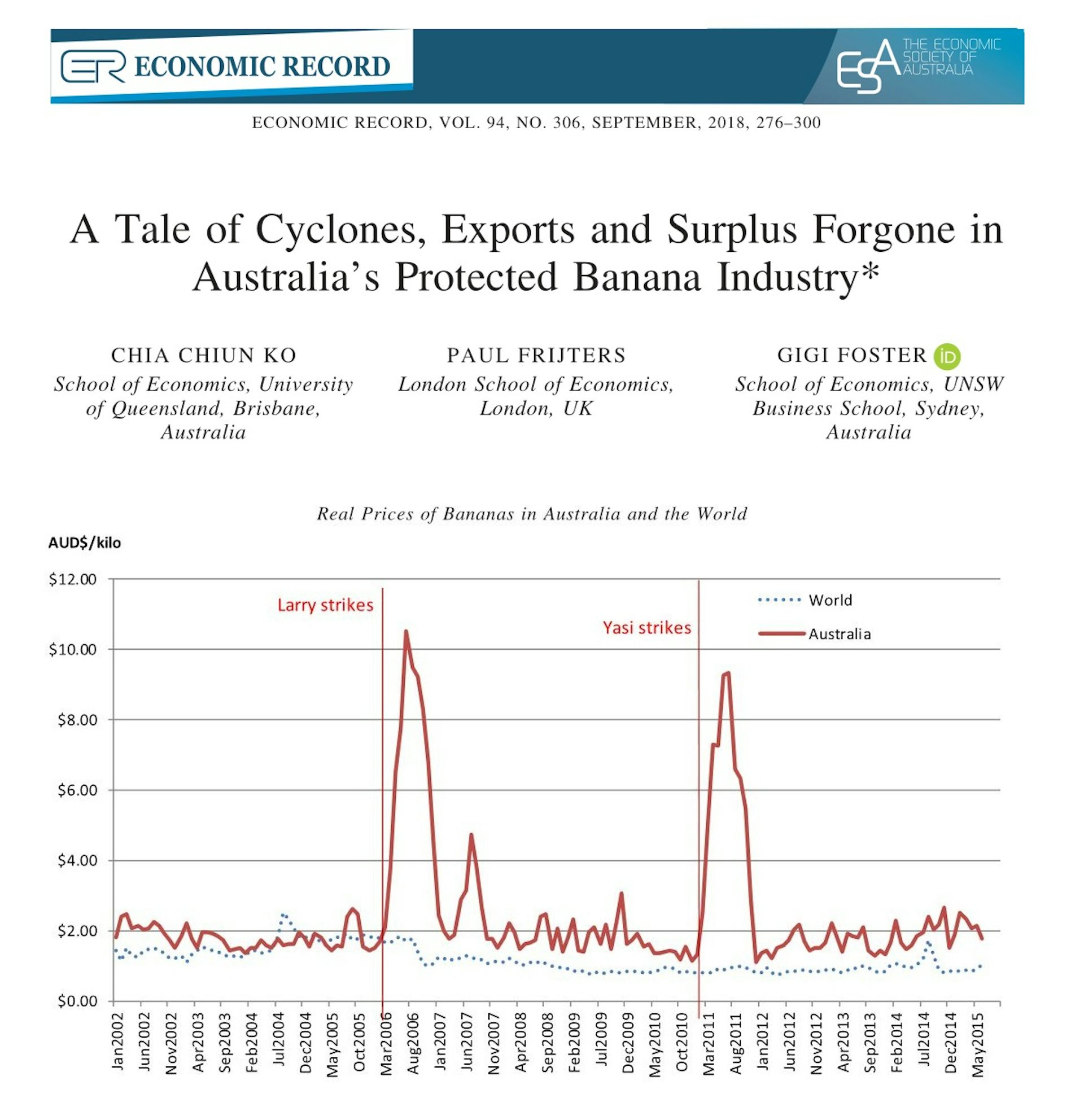
If that can’t happen quickly enough, the high prices will encourage users of that something to switch to a substitute, as we did when cyclones hit Queensland’s banana crops in 2006 and 2011. We switched to other fruits grown elsewhere.

Interfering with high prices interferes with those adjustments. Usually.

However, at the moment, there needn’t be an Australian gas shortage. Australia’s east coast produces roughly three times as much gas as it uses each year.

Although most of the rest of the gas is exported in accordance with long-term contracts, an increasing amount is being exported over and above those contracts to take advantage of the temporary spike in international prices following Russia’s invasion of Ukraine.

If that gas was sold here at pre-invasion prices, there wouldn’t be a shortage, and Australian prices wouldn’t be up to four times what they used to be, pushing manufacturers to the brink and pushing electricity prices way beyond normal.

Whatever is done will be temporary

Kennedy’s first point is that the global price hike is likely to be temporary, or as he put it, “hopefully temporary”. Even if the conflict persists, international supply and demand are likely to adjust to bring global prices back down. That means any intervention should be temporary, so it doesn’t distort markets forever.

Kennedy’s second point is that the gas exporters selling for ultra-high prices over and above what they are contracted to sell are making exceptionally high profits – “well beyond the usual bounds of investment and profit cycles”. They would do just fine if their profits were merely ordinarily high rather than super high.

His third point is that the temporarily high prices are hacking into the profits of other Australian businesses and “raising questions about their viability”.

Households, especially lower-income households, will be severely affected.

Summing up more clinically, Kennedy says what’s happening in Ukraine is “leading to a redistribution of income and wealth, and disrupting markets”.

The national interest case for this redistribution is “weak, and it is not likely to lead to a more efficient allocation of resources”.

Beyond a gentleman’s agreement

In August the government signed a sort of gentleman’s agreement with the three east coast gas exporters in which they’ve agreed to offer uncontracted gas to local customers first, before offering it overseas.

But (and it’s a big but) they’ll offer it at international prices, with the only stipulation being that local customers “not pay more” than overseas customers.

Although well-intentioned, it will allow prices many times higher than the A$8 a gigajoule that was common before COVID – high enough to send some customers to the wall.

The two-step solution Kennedy is pointing to goes further, temporarily.

Agreement on lower prices – or a tax might be next

The first step is likely to be to ask the producers to supply enough gas to local customers to get local prices down to A$10 a gigajoule, an idea suggested by the former Australian Competition and Consumer Commission chief Rod Sims.

Sims thinks the producers are likely to agree. The Commonwealth has the power to impose export controls. If they don’t agree, Kennedy has hinted at stage two.

That fallback position would be a temporary tax on the excess profits of exporters and use it to subsidise domestic prices, along the lines of the temporary tax in the United Kingdom.

Economic purists, including those surveyed by The Conversation this month, would prefer the tax was paid to the victims of ultra-high prices in cash, rather than in subsidised prices, because it would encourage them to get off gas.

But Kennedy (and probably Chalmers) believe the ultra-high prices are temporary. Both want to bring down the current ultra-high rate of recorded inflation. It’s something price subsidies would do, but cash handouts would not.

The two-step nature of the process is probably why it is taking so long.

Chalmers and colleagues need to ascertain what the exporters are prepared to do about prices if merely asked, and to prepare legislation for a temporary tax – should they need to take that final step.The Conversation

This article is republished from The Conversation under a Creative Commons license. Read the original article.

Read more >>

Tuesday, November 08, 2022

In defence of RBA Governor Lowe: an easy scapegoat for rates

Reserve Bank Governor Philip Lowe is getting terrible press, most of it undeserved.

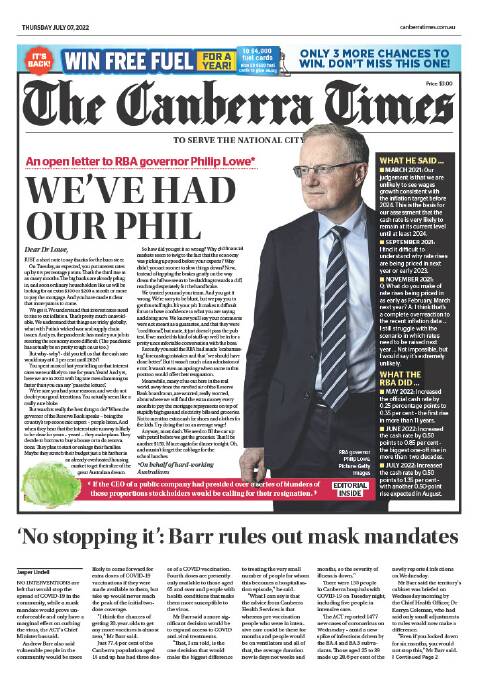
“Lowe Blow” and “Take a Hike” were two of the headlines on the front page of one of our newspapers. “We’ve had our Phil” was on the front page of another.

His critics – the ones complaining about continual increases in interest rates – seemed happy enough when he was keeping them low.

Daily Telegraph, August 2, 2022

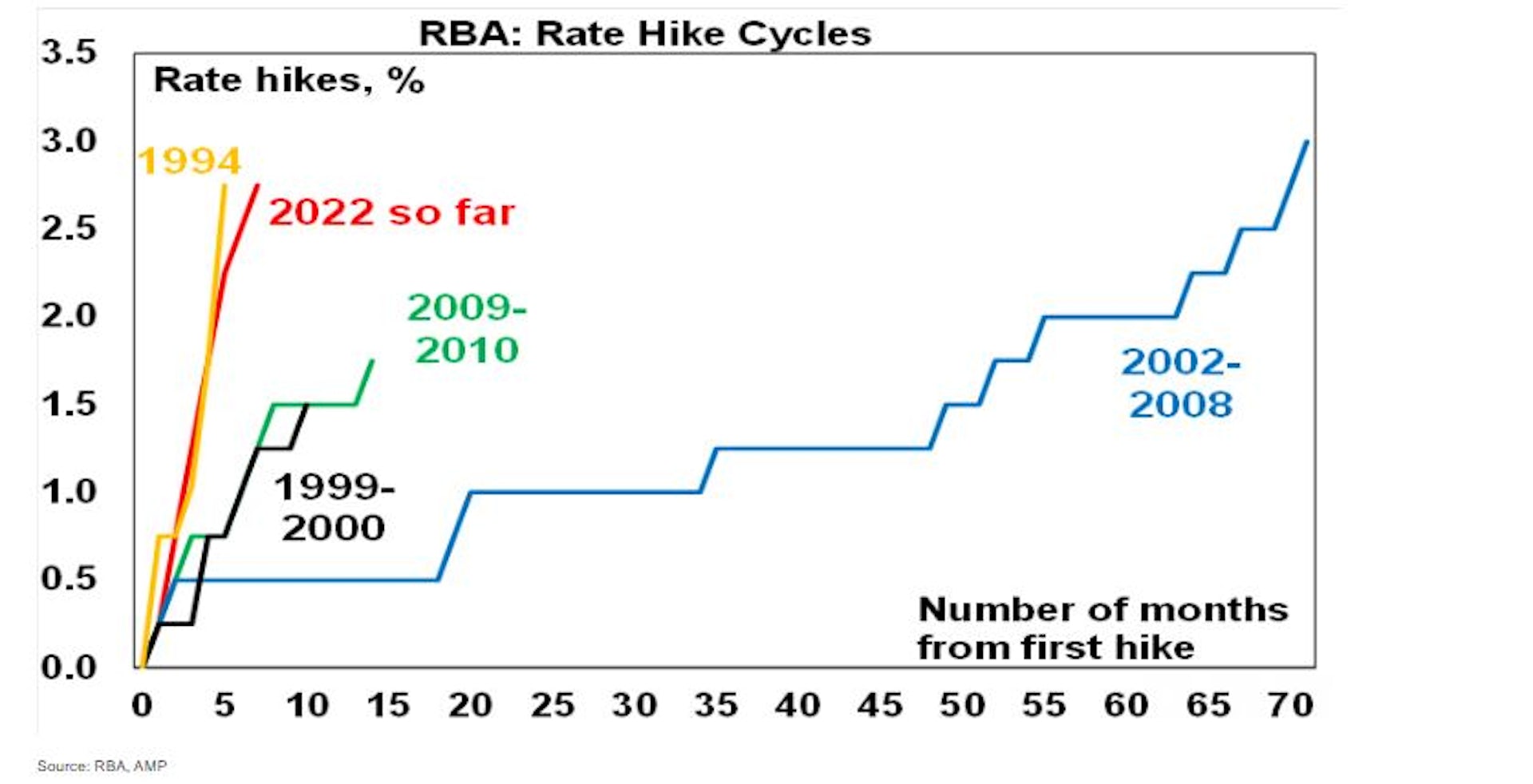
Lowe and his board are pushing up rates at almost the fastest pace on record, for the same reason they cut them to the lowest level on record – to try to get the economy back into some sort of balance.

It’s tough. But it has been done before, and it worked.

In fact, the man who pushed rates down then up even more aggressively than we’re seeing now, former RBA Governor Bernie Fraser, told me this week he approves of the way Lowe is doing his job – with just one exception.

How Lowe’s low rates saved jobs

When COVID hit in 2020, at a time when the Reserve Bank’s cash rate was already a then-record low of 0.75%, the bank cut to what Lowe described as the “effective lower bound” of 0.25%, before cutting again to 0.1%, and offering banks near-free loans at 0.1%.

Lowe’s promise to buy as many government bonds as were needed to push the three-year bond rate down to 0.1% drove three-year fixed-rate mortgages below 2%. Variable-rate mortgages slid to 2.5%.

In concert with the Morrison government, which spent massively in response to COVID, Lowe cut rates to try to keep alive an economy that was shutting down.

The best measure of unemployment is the one that counts as unemployed the Australians working zero hours. It climbed to 15% in April 2020 – the worst since the Great Depression.

The stimulus programs, the arrival of vaccines and the end of lockdowns worked magic, as did the Reserve Bank’s determination to ensure that almost anyone who wanted to borrow could borrow for next to nothing. Spending bounced back, and by July this year unemployment had fallen to a five-decade low of 3.4%.

Then this year inflation – which had remained close to the Reserve Bank’s target of 2-3% for a record 30 years – broke free and climbed; at first to 5%, then to 6% and now 7.3%, all in the space of a few months.


Despite earlier hopes (those who were hopeful in the US and the UK, where this has also happened, called themselves “team transitory”) inflation hasn’t come back down, and shows little sign of returning to 2-3% of its own accord.

Inflation reawakened

Seven per cent inflation matters because an increase in prices of 2-3% per year is very different from an increase of 5-7%. It makes inflation, in the words of former Governor Bernie Fraser, “a subject you don’t discuss at barbecues”.

At 2-3%, people adopt a mental model of fairly steady prices in which, when they agree to provide a service for a certain price, they know what they are getting into.

It’s not so much that high inflation creates winners and losers; the problem is that it becomes almost impossible to tell who those winners and losers will be. It’s the arbitrariness of who does well from timing price increases, and who gets hurt by them, that makes businesses difficult to run and spending difficult to plan.

The RBA’s clear instructions

The Reserve Bank has a written riding instruction from the treasurer to aim to get “inflation between two and three per cent, on average, over time”.

About the only tool it has to achieve that is the manipulation of interest rates.

It is certainly true that much of what set off the latest sudden burst of inflation won’t be restrained by high interest rates. Diesel and petrol prices are set internationally, and soared after Russia invaded Ukraine.

But a lot of what set off and is sustaining the resurgence of inflation most certainly can be tamed by high interest rates.

The rising cost of almost everything

Home building is expensive because of an (internationally-driven) shortage of building materials, and a shortage of workers not laid low by COVID. It is true that more materials and healthier workers would bring down prices, but so too would less demand for building work. Higher interest rates help restrain the demand.

Even the global price of oil can be restrained by high interest rates – not by high interest rate here, but by high rates in the US, which is a big enough nation for consumers tightening their belts to make a difference.

In any event, Australia’s inflation is now incredibly widespread, encompassing almost everything sold here, including most of the things made here.

Ten years ago, 32 of the 87 items priced by the Bureau of Statistics were falling in price, while most of the others climbed. In the latest consumer price update, I counted only six falling in price.

The verdict from a former RBA governor

This week, I rang up the person who’s arguably best qualified to assess the job Lowe’s doing as RBA governor now – someone who was in his shoes three decades ago.

Bernie Fraser was the Reserve Bank’s governor between 1989 and 1996. He pushed down the cash rate 15 times in three years to speed the recovery from the early 1990s recession. Then in 1994, at the first sign of renewed inflation, he pushed them up faster and more aggressively than Lowe has so far this year.

Fraser told me he had wanted to “shock people – let them know that you’re there, that you are concerned about inflation and you want to head it off”.

Fraser stopped pushing up rates only when he had got inflation down to where it has stayed for most of the past three decades. As it happened, he was able to do it without much pushing up unemployment.

Fraser said he approves of the way Lowe has been doing his job – though he said Lowe was wrong to give the imply during COVID that rates would stay low for three years. But he also noted setting rates is more art than science.

Fraser thinks that in due course shortages will ease and inflationary pressure will abate. In the meantime, it’s essential to let people know that the bank will do what’s needed to bring inflation down, right up until the point of (but not necessarily including) increasing unemployment.

Fraser thinks there’s a good chance Lowe can bring inflation back down to 2-3%. He should know – he did it before.The Conversation

This article is republished from The Conversation under a Creative Commons license. Read the original article.

Read more >>

Monday, November 07, 2022

Leading economists back federal government action to curb rising gas and electricity prices

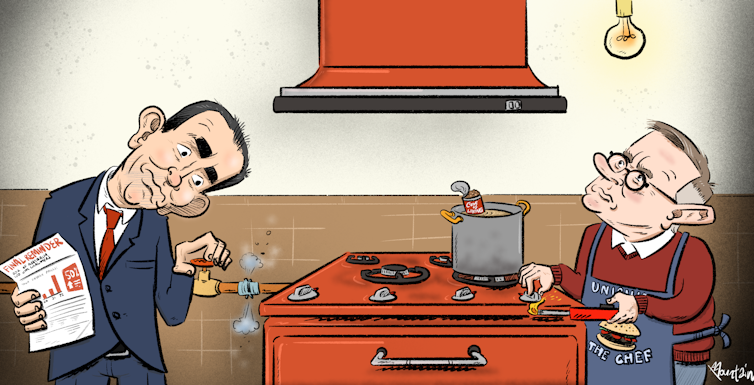
Wes Mountain/The Conversation, CC BY-ND

Australia’s top economists have overwhelmingly endorsed intervention to restrain gas and electricity prices, with only three of the 47 leading economists surveyed believing the best thing the government can do is to leave things to the market.

The 47 economists surveyed are members of a panel selected by a committee of the Economic Society of Australia for its expertise in fields including public policy and economic modelling. Among its members are former Reserve Bank, Treasury and OECD officials, and a former member of the Reserve Bank board.

Previously unpalatable options

Told that Treasurer Jim Chalmers is examining options that until recently would have “not have seemed palatable” in the wake of forecast retail electricity and gas price increases of 56% and 44% over the next two years, the panel was presented with a list of options and asked to choose the most valuable.

Only three ticked the option titled “government should not intervene”.


Two-thirds of those surveyed picked options that would cap domestic gas prices, use an extra tax on the profits of gas exporters to subsidise energy prices, or reserve gas that would otherwise be exported for domestic use.

Gas prices feed into electricity prices because gas generators are usually the last to be turned on after cheaper options have been exhausted, meaning they determine the price for which extra wholesale electricity is sold.

Tax excess profits

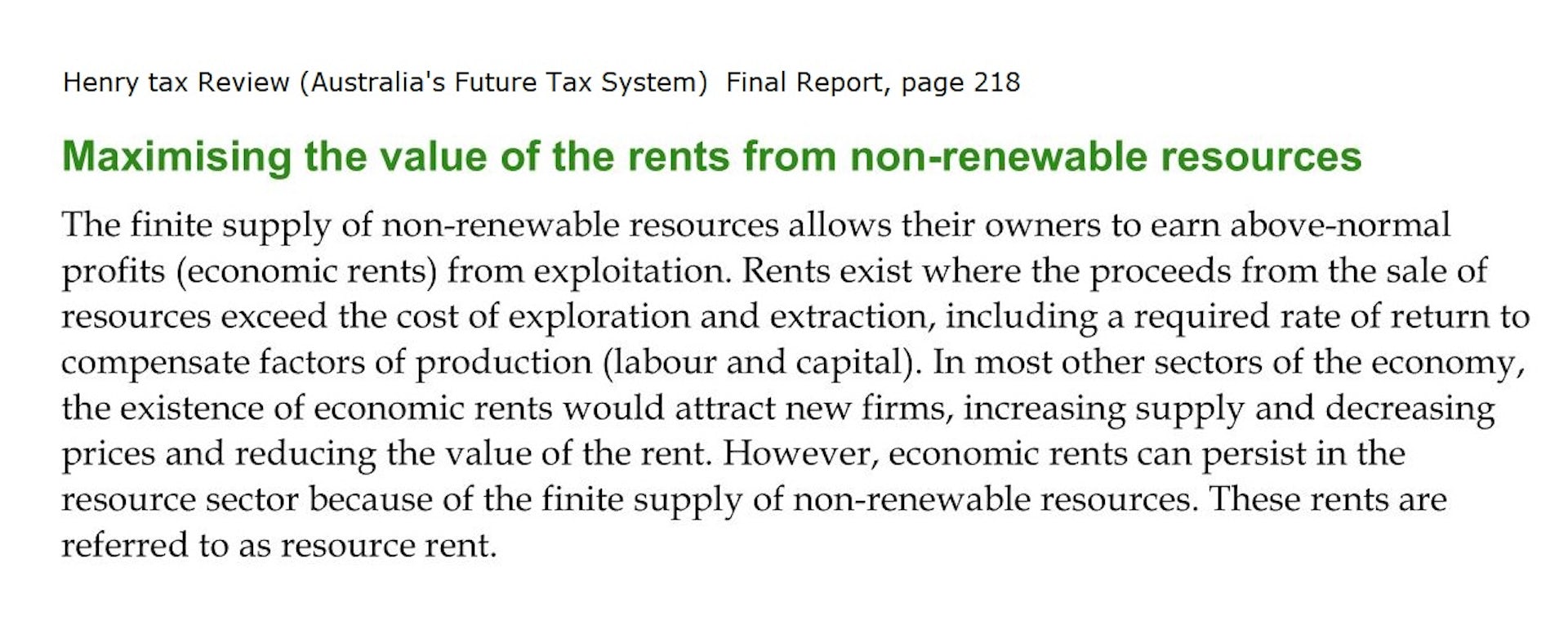
The measure that attracted the most support (13 out of the 47 economists) was increasing the tax of the “resource rents” enjoyed by gas producers, and using proceeds to cut electricity and gas prices.

Resource rents are the excess profits earned from the sale of resources that flow from the sellers’ exclusive access to the resource.

Australian gas producers already face a special resource rent tax, but weaknesses in its design mean that, even at the present unprecedentedly-high gas prices, it is expected to bring in just A$2.6 billion in 2022-23, falling to $2 billion by 2025-26.

Innovation expert Beth Webster from Swinburne said the windfall gains to gas exporters flowing from Russia’s invasion of Ukraine should not go to shareholders, many of whom were foreign, but to national priorities such as price relief for Australians on low incomes.

Independent economist Rana Roy said while energy prices had traditionally been too low to cover the society-wide costs of producing the energy, at the moment prices were, in many instances, “well above” the social cost.

Help low earners first

Six of the 13 economists who backed an increased resource rent tax wanted the proceeds directed to assisting lower-income energy consumers before others.

Another six wanted targeted subsidies for low-income consumers even if they weren’t funded by increased resource rent taxes.

Offered the option of picking a measure not on the list, two of the 47 picked “unrestricted cash transfers”. They made the point that lower retail prices would have the unhelpful side effect of encouraging the continued use of gas, whereas cash payments would enable consumers to cut their use of gas while banking the cash.

Reserve gas for locals

Eleven of those surveyed wanted the government to reserve gas equivalent to 15% of each eastern state liquefied natural gas (LNG) export project for use in Australia, as happens in Western Australia.

Former senior Organization for Economic Co-operation and Development official Adrian Blundell-Wignall said the requirement seemed to be “tried and tested” and was the best of a list of uncomfortable choices.

Curtin University economist Harry Bloch said while reserving 15% of the output of LNG projects would change the conditions under which they were licensed, the operators applied for the licences at a time when expected prices were lower.

Ken Clements of the University of Western Australia strongly disagreed, saying Western Australia’s 15% reservation policy should be scrapped. It operated as an export tax and shielded West Australians from the high prices needed to encourage conservation and look after the environment.

Curtin University’s Margaret Nowak said it was “too late” to hit the the eastern state exporters with licence restrictions after the licences had been granted.

The best that could be done was to ask the eastern state exporters to supply more gas to Australians, as the government has done, and to impose a price cap on those sales that was closer to the pre-invasion price than to the present international price.

Cap prices for agreed supply

Six of the 47 economists supported a cap on the price at which producers can sell what they have already agreed to supply domestically, even though several would normally “be hesitant to promote this type of intervention”.

Grattan Institute chief executive Danielle Wood said the magnitude of the internationally-driven price hikes constituted an exceptional circumstance that justified a time-limited fix.

So long as regulators picked a reasonable benchmark for the price cap, such as the pre-invasion price, producers would continue to earn healthy returns.

Boost supply longer term

Two of the economists surveyed nominated an item not on the list – encouraging the development of gas fields to boost supply – that would be unlikely to have an immediate impact on prices.

Of the three who picked “government should not intervene” one (Gigi Foster) said measures to restrain prices would get in the way of “basic economics”, which required consumers to cut back on their use of energy as prices rose.

Another (John Freebairn) said he nevertheless supported a higher resource rent tax to increase the government’s share of the above-normal profits generated by corporations granted licences to mine Australian-owned deposits.

Treasurer Chalmers said on Thursday he expected to produce a costed plan for restraining energy prices by Christmas.


Detailed responses:

The Conversation

This article is republished from The Conversation under a Creative Commons license. Read the original article.
Read more >>

Tuesday, November 01, 2022

Why has the RBA raised interest rates for a record 7th straight month? High inflation – and worse is on the way

Pushing up interest rates isn’t something the Reserve Bank does lightly.

But what’s worrying the Reserve Bank – and why it increased interest rates for a record seventh consecutive month on Melbourne Cup Tuesday – is that inflation seems to have become completely detached from the bank’s target band.

That target band of 2-3% was introduced in the early 1990s, at a time when that’s where inflation was. With one brief exception during the introduction of the goods and services tax, at the start of the 2000s, inflation has never since been far away from the band – until now.

The jump in inflation from 6.1% to 7.3%, revealed last Wednesday, made it clear that, even after six consecutive interest rate hikes, inflation was further away from the Bank’s target band than it had ever been.


Inflation breaks free of the target band


When the Reserve Bank began hiking its so-called cash rate during the May election campaign, the National Australia Bank’s standard variable mortgage rate was 3.45%. It’s now 5.95% and about to go to 6.2%.

For a borrower with a $500,000 mortgage, the increase in payments amounts to $800 per month. For a borrower on a fixed-rate loan of 2% that’s about to expire, the burden will be even greater.

So the Reserve Bank wants to be sure the jump in inflation to 7.3% is real.

How the cost of buying a home skews inflation

The first thing to say is that 7.3% is almost the real thing, but not quite.

The Bureau of Statistics collects information on millions of prices per week, at times by going into stores in eight cities and noting down what’s on price tags, at times by direct feeds from supermarkets, petrol stations and electricity suppliers, and at times by “scraping” prices quoted on the web for home deliveries.

The bureau categorises the things it prices as either essential or non-essential (its words are “non-discretionary” and “discretionary”).

It’s found that the prices of essential items (those we generally have to buy) climbed by more than 7.3% in the year to September – by an extraordinary 8.4% – whereas the prices of things we generally don’t need climbed 5.5%.

For obvious reasons, food is among the bureau’s list of essential or “non-discretionary” items. Food prices continue to be pushed up by floods and labour shortages.

But what many people don’t realise is that also among that list of supposedly “non-discertionary” items is one type of purchase people don’t make often – and which some of Australians will never make.

And that single item – “new dwelling purchase by owner-occupiers” – makes up more of the consumer price index than anything else.

Buying a home is so expensive compared to the other things we buy (such as bread and milk) that it accounts for almost 9% of the consumer price index.

Worse still, being classified as essential, it makes up almost 15% of the “essentials” index, even though for most of us in any given year buying a home is optional.

In most years, this anomaly doesn’t matter much. The price of a new home (what’s priced is only the construction of the home, not the land) climbs pretty much in line with everything else.

But building material shortages, COVID-induced labour shortages, and an explosion in demand for building fed by the government’s HomeBuilder grant have pushed up the price of new dwellings by an astonishing 20.7% in the past year. That’s enough to add an awful lot to the reported rate of inflation.

The real cost of living is probably up 6%

A rough calculation suggests Australia’s inflation rate would be 6%, instead of 7.3%, if the price of new homes didn’t have such an outsized influence.

We will know more by mid-Wednesday. The bureau actually produces separate living cost indexes a week after the consumer price index that substitute mortgage payments for the cost of home-building.

Lately these indexes have been pointing to increases one to two percentage points below the official rate of inflation.

Accurately measuring rent rises

Another peculiarity is that the rent increases recorded in the consumer price index are so far below those we keep hearing about.

The bureau says in the year to September, average capital city rents climbed just 2.8%, compared to the figures of 10%, and in some suburbs, 20%, quoted by real estate analysts.

In part, this is because the bureau only reports capital city rents. But more importantly it is because it does its job better than real estate analysts.

It collects data on not only the rents that are advertised (these are climbing strongly), but also on the hundreds of thousands of rents paid by continuing renters, which either aren’t climbing at all or aren’t climbing as strongly.

The bureau compares the two by describing a bathtub of water.

The water in the tub represents all rents being paid by households, while the water entering the tub from the tap represents new rental agreements. The consumer price index is measuring the overall temperature of the bathtub whereas an advertised rents series measures the temperature of the water flowing into the tub.

Worse news ahead

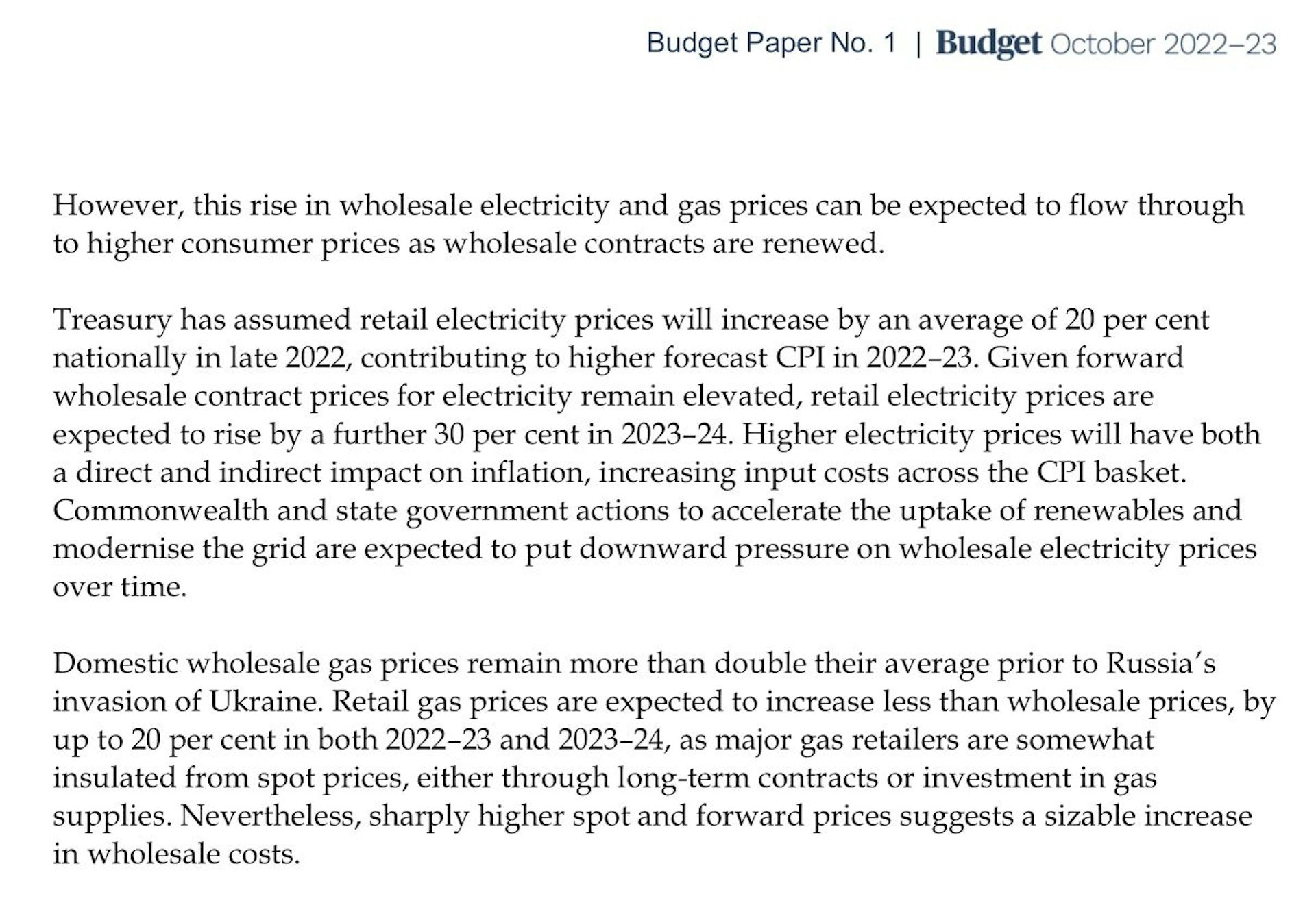
Perhaps surprisingly, the bureau finds the average retail price of electricity only climbed 3.2% in the year to September, and the price of gas by only 16.6%, much less than the 56% and 44% mentioned in last week’s federal budget.

But the budget numbers were predictions of what’ll happen over the next two years unless the government provides relief. The bureau was telling us what has happened.

Which is why the Reserve Bank is worried. While gas and electricity prices will subside eventually, inflation is likely to climb even higher before it falls – the bank says to around 8%.

The way back to the target band of 2-3% is anything but clear. That means for homebuyers, there’s no relief in sight just yet.The Conversation

This article is republished from The Conversation under a Creative Commons license. Read the original article.

Read more >>