Showing posts with label evidence-based decision making. Show all posts

Tuesday, May 30, 2023

Will Albanese live up to his own promises to end pork-barrelling? There is a sliver of hope

Like Kevin Rudd before him, Anthony Albanese is taking an odd approach to evidence.

Before becoming prime minister in 2007, Rudd promised to deliver “good evidence-based policy in terms of producing the best outcomes”.

Yet while in office, Rudd made several of his most important and far-reaching decisions without bothering to compare outcomes to cost – that is to say, without a formal cost-benefit analysis. Those decisions included lifting compulsory super contributions and his preferred model of the national broadband network.

In the case of the national broadband network, Rudd explicitly rejected pleas for a cost-benefit analysis, a stance his finance minister justified by saying

we just formed the view that in effect we had to make the clear decision that said this is the outcome we are going to achieve, come hell or high water, because it is of fundamental importance to the future of the Australian economy.

In opposition, Albanese led the way in pushing for evidence-based policy. So far, his government is reverting to type – even shutting down a move to improve accountability on big projects last week. But there is also one small sign of progress, thanks to a new institution you probably haven’t heard about yet.

Albanese just blocked what he once championed

Back when he was Rudd’s infrastructure minister, Albanese set up Infrastructure Australia, a statutory authority.

At the time, Albanese declared: “This government is determined to bring a fresh approach to developing and modernising the nation’s physical infrastructure — replacing neglect, buck-passing and pork-barrelling with long-term planning”.

Returning to opposition as Labor’s infrastructure spokesman in 2014, Albanese tried to strengthen Infrastructure Australia’s independence.

He moved in parliament to require the authority to perform a cost-benefit analysis of all proposed projects costing $100 million or more, “regardless of what the political views are around a particular project”.

The government blocked the motion. There the idea languished – until last week.

Last Wednesday, independent MP Allegra Spender moved almost exactly the same motion – in almost exactly the same words – requiring Infrastructure Australia to perform a cost-benefit analysis of all proposed projects costing $100 million.

Labor and the Coalition combined to vote the motion down.

There’s something about the idea of making decisions that don’t make financial sense that becomes irresistible to politicians once they are actually in office.

Already this year, Albanese has pledged $240 million to Tasmania for a stadium and $2.2 billion to Victoria for the suburban rail loop.

Spender also unsuccessfully tried to require Infrastructure Australia to publish its infrastructure audits and collate data on costs after projects were completed.

It “astonished” her there was no established mechanism by which governments could learn from what had happened with past projects.

A (small) win for evidence

Yet amid the dismay, there’s a sliver of hope. In the same week the government voted down attempts to give Infrastructure Australia more teeth, it formally unveiled its new Australian Centre for Evaluation.

The pet project of Labor’s assistant minister for treasury, former economics professor Andrew Leigh, it will be tasked with examining whether government programs work, and doing it before they are rolled out.

The method will be randomised trials, something Leigh knows a lot about having written a book about them while in opposition, called Randomistas.

Leigh says what he is proposing isn’t an audit; that happens after the event. And it isn’t a cost-benefit study; that’s done before the event, but on a spreadsheet without real-world knowledge of what will happen.

It will mean implementing programs or pilots in ways that let the government compare the results with what would have happened without them.

Too many programs are rolled out everywhere, all at once, without an opportunity to find out what would have happened if the program wasn’t there.

Inspiration from Mexico

Leigh’s favourite example comes from Mexico. In 1997, the government there was considering changing the way it delivered food and energy subsidies to poor households. It wanted to try handing out cash instead, but on the proviso that children of the families receiving it attended school and health clinics.

Rather than changing the system for all 500 villages at once, it changed it for half in May 1998 and the other half in December 1999. The 18-month window where one half did one thing, and the other half did the other, let it see which half prospered the most.

It was the half that switched to conditional cash handouts – but Mexico wouldn’t have been sure without that trial.

$2 million per year for control groups

Leigh wants to build in that sort of randomisation here. “You might already have a program which is going to be rolled out over the course of two years,” he says. “Why not randomise the way in which you roll it out, so year two is the control group for year one?”

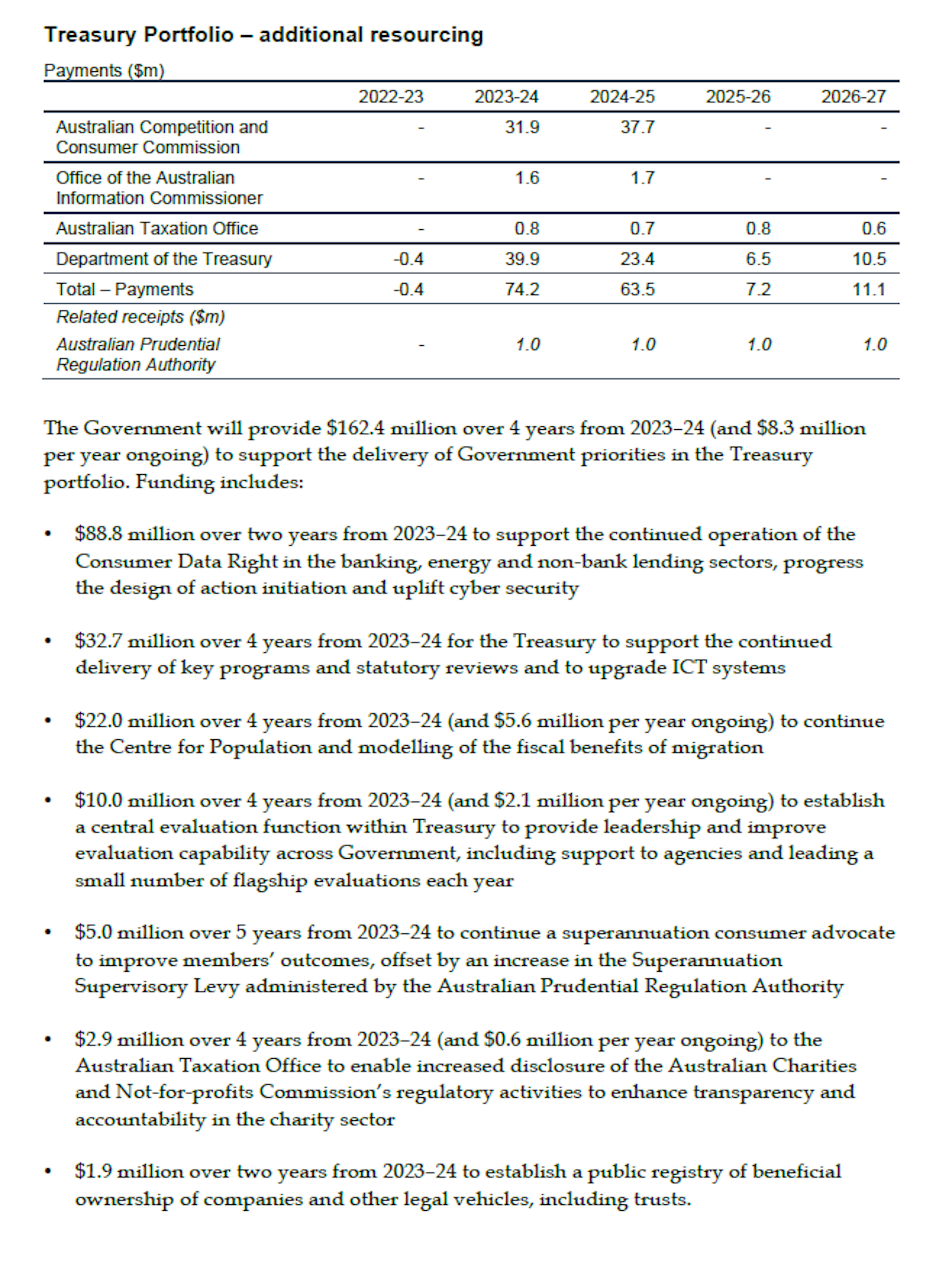
The treasury has been given an extra $2 million per year to get the centre started. Leigh says it will hire about a dozen people and act as a consultant to other departments that are planning programs.

It’s a small start, and at this stage a small exception to what seems to be the prevailing view among governments that they already know what’s best.

Just imagine how much good the new centre could do if it’s allowed to – including, to quote Albanese, finally replacing “neglect, buck-passing and pork-barrelling with long-term planning”.The Conversation

This article is republished from The Conversation under a Creative Commons license. Read the original article.

Read more >>

Thursday, April 05, 2012

Announce it, hope for the best. The NBN-style weakness at the heart of Labor decision making

It might be popular now, but Labor’s $36 billion National Broadband Network is shaping up to be a financial disaster that will set back Labor’s image decades rebranding it the party of waste and extravagance.

That’s the view of Percy Allan, president of the Australian Institute of Public Administration and a former head of the NSW Treasury under premiers Wran, Greiner and Fahey.

Releasing a report card on “Public Policy Drift” he told the Herald that while Kevin Rudd came to office in 2007 promising “evidence-based” decision-making, he never spelled out what the term meant.

“True evidence-based decision making requires consultation. Kevin’s style was to lock himself in a cave and put in all the evidence and then emerge as Moses from the mountain with the tablets to tell the people what they would get.”

The NBN is a case in point.

“It would have been quite possible to say ahead of the election ‘we are going to ensure everybody can have an opportunity to be hooked up to the internet at good speeds, and when we get into power we are going to put out a green paper on the options for doing that and we are going to get feedback and make a choice.”

“That choice might be to spend $36 billion ripping out copper wire and disconnection Foxtel cables and starting afresh, which is the proposition we are facing... But had they examined the need, examined options and consulted they might have discovered cheaper ways to fill the need.”

“If a lower than expected proportion of people end up subscribing to it because they don’t want to pay Rolls Royce prices for a Rolls Royce service this thing is going to be a financial disaster - watch public opinion then.”

From opposition Labor would be tarred as a party of waste.

“It already has an image problem from the Whitlam years. If this thing goes under, the Liberal National party will be able to say here’s just another example of waste and extravagance by Labor, the Labor brand.”

“It may not take that long to backfire. When ten per cent of it is rolled out we will have a good idea of the take-up rate.”

The Institute asked management consultants Howard Partners to examine 18 high-profile Commonwealth projects for the quality of decision making making that brought them about. If finds 10 deficient - the alcopops tax, Building the Education Revolution, the NBN, the Darwin to Alice Springs railway, FuelWatch, the green car innovation fund, the green loans program, the home insulation scheme, Grocery Watch and the set top boxes for pensioners program.

Passing the test were the national disability insurance scheme, the minerals resource rent tax, and the emissions trading scheme.

The Institute wants all projects worth more than $100 million be subject to a ten-step process for establishing a business case.

Instead Mr Allan says politicians like to “decide things things in secrecy, call a dramatic press conference, get the front page splash and have people say - boy they’re smart, they got that right.”

“We find out later they haven’t got it right,” he adds.

In today's Canberra Times, Sydney Morning Herald and Age


Ten Criteria for a Public Policy Business Case

1. Establish Need: Identify a demonstrable need for the policy, based on hard
evidence and consultation with all the stakeholders involved, particularly
interest groups who will be affected. (‘Hard evidence’ in this context means
both quantifying tangible and intangible knowledge, for instance the actual
condition of a road as well as people’s view of that condition so as to identify
any perception gaps).

2. Set Objectives: Outline the public interest parameters of the proposed policy
and clearly establish its objectives. For example interpreting public interest as
‘the greatest good for the greatest number’ or ‘helping those who can’t help
themselves’.

3. Identify Options: Identify alternative approaches to the design of the policy,
preferably with international comparisons where feasible. Engage in realistic
costings of key alternative approaches.

4. Consider Mechanisms: Consider implementation choices along a full spectrum
from incentives to coercion.

5. Brainstorm Alternatives: Consider the pros and cons of each option and
mechanism. Subject all key alternatives to a rigorous cost-benefit analysis. For
major policy initiatives (over $100 million), require a Productivity Commission
analysis.

6. Design Pathway: Develop a complete policy design framework including
principles, goals, delivery mechanisms, program or project management
structure, the implementation process and phases, performance measures,
ongoing evaluation mechanisms and reporting requirements, oversight and
audit arrangements, and a review process ideally with a sunset clause.

7. Consult Further: Undertake further consultation with key affected stakeholders
of the policy initiative.

8. Publish Proposals: Produce a Green and then a White paper for public
feedback and final consultation purposes and to explain complex issues and
processes.

9. Introduce Legislation: Develop legislation and allow for comprehensive
parliamentary debate especially in committee, and also intergovernmental
discussion where necessary.

10. Communicate Decision: Design and implement a clear, simple, and
inexpensive communication strategy


Fail

• Building the Education Revolution
• NBN - National Broadband Network
• Darwin to Alice Springs Railway
• FuelWatch
• Green Car Innovation Fund
• Green Loans Program
• Home Insulation
• Grocery Watch
• Set Top Boxes for pensioners

Pass

• Higher Education – Transforming Australia’s Higher Education System
• Innovation – Powering Ideas: An Innovation Agenda for the 21st Century
• Environment – Caring for our Country
• Taxation – The Resources Super Profits Tax
• Water – The Murray Darling Basin Plan
• Energy – Emissions Trading and Carbon Tax
• Disability – National Disability Strategy 2010-2020
• Regional Development – Regional Development Australia


IPAA Policy Paper - Public Policy


Related Posts

. NBNCo. Don't say you weren't warned.

. We're spending a fortune on new wires. In case you don't want them, we'll disconnect the ones you have

. The great superannuation swindle

. Bring on the evidence


Read more >>