Tuesday, December 05, 2023

Will the RBA raise rates again? Unless prices surge over summer, it’s looking less likely

If you’re looking for clues about whether the Reserve Bank has any interest rate rises left, Governor Michele Bullock offered several in her statement after Tuesday’s board meeting, saying:

  • the latest monthly figures showed inflation “continuing to moderate”

  • inflation expectations remained “consistent with the inflation target”

  • wages growth was “not expected to increase much further”.

The statement reads not only as an account of why the board kept rates on hold this month – as expected, after increasing them in November – but also an account of why it might not need to lift rates again.

Much will depend on “data and the evolving assessment of risks”. The board will make that assessment at its first meeting for the year in February.

Here’s why that next meeting matters so much.

Inflation’s headed in the right direction

The monthly measure of annual inflation has been falling since it peaked in December. Last week we learned that in October it fell from 5.6% to 4.9%, meaning it’s now closer to the Reserve Bank’s target of 2-3% than to the December peak of 8.4%.


A few special government measures helped push it down.

An increase in Commonwealth rent assistance decreased recorded rents; energy bill rebates decreased recorded electricity prices; and changes to the childcare subsidy decreased recorded childcare prices.

Those government measures won’t depress future inflation readings, suggesting that from here on inflation might bounce back.

But on the other hand, from here on the very large inflation outcomes recorded at the end of last year will drop out of the 12-monthly figures.

The mathematics of falling inflation

Simple maths suggests that if this year’s November and December readings are like the average of the other readings this year, annual inflation will fall to 3.1%.

The November figure will be released on January 10 and the December figure on January 31. Both will be available to the Reserve Bank board when it meets on February 5 and 6, along with the latest quarterly measure of inflation.

If that quarterly measure is the same as the average of the past two quarters, it will show annual inflation of 4%.

Such outcomes – which are likely if inflation continues along its present trajectory – would see inflation closing in on the Reserve Bank’s target band and relieve it of any need to further lift rates.

Of course, it mightn’t happen. But there’s a lot driving down inflation.

Prices we don’t much notice are falling

The prices we pay attention to are those we see in the supermarket, what we fork out on mortgage payments and household bills, and what we pay at the petrol pump. (Petrol prices have been falling for weeks now.)

Prices we notice less are far less troubling than they were.

During 2022, the price of household appliances climbed 8.2%. So far this year it has fallen 2%.

The price of furnishings climbed 5.3% during 2022. So far this year it has fallen 1.6%. The price of clothing climbed 5.4%. So far this year it has fallen 2.6%.


All sorts of prices are coming down, partly because the supply bottlenecks driving them up last year are being reversed and partly because – thanks to 13 near consecutive interest rate rises – we are not buying at anything like the rate we used to.

Retail spending grew by just 1.2% over the year to October – the least since the COVID lockdowns.

Likely population growth of 2.4% and what Westpac believes to be retail price growth of 3.6% means the amount bought per person actually fell 4.5%.

Even this year’s more hyped Black Friday spending was up only 0.6% to 1% compared to Black Friday in November last year. Given our population growth was higher than that, it suggests we spent less on those sales per person this year.

Dentistry and haircuts are more expensive

What about the prices that are climbing strongly?

With the exception of rents – up 7.6% over the year – it’s hard to find many.

In a speech after the last Reserve Bank board meeting, Governor Bullock said inflation was increasingly being driven by the price of services, which stands to reason given inflation in the price of goods has been ebbing away.

She nominated increases in the prices charged by hairdressers and dentists, as well as restaurants. And there’s definitely something to see there, for dentists.

During 2022, the statistician’s measure of the price of dentistry climbed 3.9%.

In the first three quarters of this year, it climbed by that much again, meaning the pace picked up. But the increase is not that much more than the overall increase in wages, suggesting dentistry is not being priced much further out of reach.

Haircuts climbed in price a hefty 6% during 2022 and continued to climb at that pace during the first three quarters of 2023, which is uncomfortable, but at least not accelerating.

The price of restaurant meals climbed 6.7% during 2022 but only 3.8% in the first three quarters of 2023, meaning the pace is easing.

Wage growth a risk, but not yet a worry

The governor is concerned high wage growth will become embedded in the price of services. But at 3.9%, wage growth isn’t particularly high.

About a third of workers are covered by enterprise agreements. Jeff Borland of the University of Melbourne points out the increases in most of the newly-lodged enterprise agreements are flat or trending down. Many of us got a top-up at the start of our three-year agreements, which won’t be continued.

Borland’s statistical analysis suggests individual agreements aren’t pushing up wage growth either, but increases granted by the Fair Work Commission to the 20% of workers on awards are. Yet, by design, these increases reflect, rather than drive, inflation.

If inflation does accelerate over the holiday season, the Reserve Bank probably will push up rates further. But as the governor seemed to acknowledge on Tuesday, it’s not looking likely.The Conversation

This article is republished from The Conversation under a Creative Commons license. Read the original article.

Read more >>

Tuesday, November 28, 2023

Governments have been able to overrule the Reserve Bank for 80 years. Why stop now?

Pay close enough attention to parliament these next few days, and you’re likely to witness something truly remarkable: politicians from both sides of politics uniting to remove the power of politicians to overrule the Reserve Bank.

As an instance of self-loathing, it’s hard to top.

Sure, a good many of us don’t trust politicians. But surely politicians ought to trust politicians. Surely politicians ought to realise that we put them there to make decisions – not usually the day-to-day decisions, but the ultimate big decisions. They are meant to be where the buck stops.

That Treasurer Jim Chalmers could be even thinking about axing his ultimate power to veto decisions of the Reserve Bank board shows just how far the myth of an “independent Reserve Bank” has spread.

Scroll through the treasurer’s website, and you’ll find 195 documents referring to the “independent Reserve Bank”, many multiple times.

‘Independent’, but not according to the law

Saying the Reserve Bank is independent suits the treasurer and it suits the prime minister, just as it has suited many of their predecessors. As soon as the bank does something that’s necessary but unpopular (such as pushing up interest rates) they are able to say – wrongly – there’s nothing they can do.

The government’s Reserve Bank is dependent on the government in myriad ways.

The government set up the Reserve Bank. The government appoints every member of its board. The government directly appoints its chief and deputy chief. And from time to time the government gives it running instructions.

But – most importantly – the government can overrule it.

The mechanism is built into the Reserve Bank Act.

In the event of a disagreement, the treasurer can

submit a recommendation to the governor-general, and the governor-general, acting with the advice of the Federal Executive Council, may, by order, determine the policy to be adopted by the bank.

The government is to accept responsibility for the decision taken, and the Reserve Bank board must

thereupon ensure that effect is given to the policy determined by the order and shall, if the order so requires, continue to ensure that effect is given to that policy while the order remains in operation.

After so directing the bank, the treasurer is to table in parliament a copy of the direction, along with a statement explaining the reasons, and a statement from the Reserve Bank board putting the case that failed to convince the treasurer.

These are the clauses – until now unused – that in April the outside review of the Reserve Bank asked the government to do away with.

Its thinking was that the government can’t be trusted.

As the review put it,

if an elected government controls monetary policy there are risks that it may try to push the economy to run above its capacity, resulting in higher inflation but with no lasting impact on employment.

On releasing the review’s recommendations, Treasurer Jim Chalmers said straight away that he agreed in principle with all of them.

Shadow Treasury Angus Taylor said much the same thing, although he now says the Coalition will wait until sees the legislation Chalmers is about to introduce before deciding its position on it.

The veto power is there for a reason

On the face of it, a reasonable position would be that the government’s ability to overrule the bank in extreme circumstances has caused no problem so far.

The review counters this by warning of “the possibility that established conventions cease to be observed”.

But, if that did happen, it would be because there was a serious (and ultimately public) rift between the elected government and an unelected board.

With the exception of judges in Australia’s courts, unelected officials can’t normally overrule elected governments. It’s how our system is designed.

The Reserve Bank tried to overrule the government once, and succeeded, which is why the provision we have was written into the law.

Back in 1930, in the early years of the Great Depression, the Reserve Bank was part of the Commonwealth-owned Commonwealth Bank, run by a board appointed by the government which reported to the government.

In The Conversation earlier this year, Alex Millmow outlined what happened.

Desperate to support the economy, the government begged the government-owned bank to help it finance public works.

The bank refused. Its government-appointed chairman, Sir Robert Gibson, wrote to Treasurer Ted Theodore warning a point was being reached

beyond which it would be impossible for the Commonwealth Bank to provide further financial assistance for the governments in the future

Theodore replied complaining the bank was trying to

arrogate to itself a supremacy over the government in the determination of the financial policy of the Commonwealth, a supremacy which, I am sure, was never contemplated by the framers of the Australian Constitution

While the government did not question the right of the bank’s board to offer such comment or criticism as the board thought proper, the control of the public purse had “heretofore always been regarded as an essential prerogative of the people”.

In the end, it was the government that backed down. But to ensure it could never be overruled again, Labor wrote the veto power into the Commonwealth Bank Act of 1945 and the Coalition wrote it into the Reserve Bank Act of 1959.

That’s the veto power today’s Labor Party, quite possibly with the support of the Coalition, is about to try to remove.

I understand why the Reserve Bank review made the recommendation it did: it wants monetary policy to work well. But I don’t think that’s enough of a reason for the government to attempt to abrogate its responsibility.

And ultimately, it can’t. The Australian public is going to hold the government responsible for the state of the economy even if it succeeds in tying one hand behind its back. But I don’t think it’s wise. One day it might need it.The Conversation

This article is republished from The Conversation under a Creative Commons license. Read the original article.

Read more >>

Tuesday, November 21, 2023

Why further RBA rate hikes are less likely now than even 1 week ago

Since Australia’s Reserve Bank hiked interest rates two weeks ago, there have been two important developments – one in the United States and the other in the United Kingdom.

If it’s not clear to you why events overseas influence Australia’s interest rates, which are meant to be set to control Australian inflation, read on.

US and UK inflation close to zero

We haven’t been complete masters of our own destiny since the Australian dollar was floated 40 years ago next month.

What happened in the US last Tuesday was news of dramatically lower US inflation. When increases and decreases in prices were taken together, overall US prices moved not at all in the month of October. That’s right, inflation was zero.

While zero movement in one month doesn’t mean zero over the entire year, it helps bring down the rate over the entire year. US inflation fell from 3.7% in the year to September to 3.2% in the month to October.

Then the next day we got similar news from the UK.

Taken together, prices in the United Kingdom scarcely grew at all in October, climbing just 0.1%. The screeching halt to UK monthly inflation took the annual rate down from 6.7% for the year to September to 4.6% for the year to October.


In both the US and the UK, there’s talk there will be no need for further interest rate hikes, and very probably a case for interest rate cuts as soon as next year.

We don’t yet know what happened to Australia’s inflation rate in October – the Bureau of Statistics will tell us next week.

But we have an early indication.

The Melbourne Institute inflation gauge, which roughly tracks the bureau’s measure, fell 0.1% in October. If that is what the bureau finds – that overall prices barely moved (or fell) in October – Australia’s annual inflation rate should fall from 5.6% for the year to September to around 5.2% for the year to October.

Inflation down all over

All over the world, inflation is falling for much the same set of reasons: the price of oil is heading back down after Saudi Arabia and Russia tried to restrict supply in the middle of the year, and the price pressures caused by shortages are easing.

As Australia’s Reserve Bank conceded in the minutes of the November board meeting, in which it pushed up rates, there has been “an easing in supply chain pressures and raw materials prices”.

Not that this means the bank is relaxed about what’s happening to inflation; far from it.

In the minutes released on Tuesday and in remarks delivered at a conference ahead of their release, Governor Michele Bullock said what concerned her was stronger-than-expected demand pressures. Australians remained keen to spend.

And she drew attention to disturbing

growing signs of a mindset among businesses that any cost increases could be passed onto consumers

But what has just happened overseas will help, big time. Here’s why.

Australians’ buying power just jumped

As soon as the news of low US inflation came out last Tuesday, the US dollar slid.

Investors became less keen to hold US dollars when it became less likely that US interest rates would rise further, and a good deal more likely they would fall.

Against the Australian dollar, the US dollar fell 2%. From an Australian’s point of view, the buying power of an Australian dollar jumped from 63.7 to 64.9 US cents and has since jumped to 65.8 US cents.


A sudden jump in the value of the Australian dollar

Value of Australian dollar in US cents. Yahoo Finance

This means that, for as long as it lasts, Australian dollars will buy more than they did.

Australians will pay less in Australian dollars for the goods and services ultimately paid for with US dollars. The changed interest rate outlook in the US will act to keep Australian prices low.

In this way, decisions made in the US not to increase interest rates or even to cut them make it easier for Australia’s Reserve Bank not to increase rates – or even to cut them.

A higher dollar means lower inflation

The effect isn’t big. The RBA believes it takes a 10% change in the value of the Australian dollar to move the Australian inflation rate 0.4 percentage points.

But it is better than things moving in the other direction, which is what has been happening until now.

For more than a year now, whenever interest rates have climbed in the US, Australia’s Reserve Bank has been under pressure to push up its rates to stop the Australian dollar falling and prices climbing.

No longer. After last week’s news from the US and the UK, Australian financial markets began pricing in a close to zero chance of further interest rate rises – with a fair chance of a rate cut next year.

It’s always impossible to tell for sure what the Reserve Bank will do to rates. A lot will depend on what actually happens to inflation.

But for the first time in a long time, the Reserve Bank has tail winds from overseas, rather than headwinds.

For the first time in a long time, the bank won’t feel pressured to push up rates just because rates have been pushed up overseas.The Conversation

This article is republished from The Conversation under a Creative Commons license. Read the original article.

Read more >>

Tuesday, November 14, 2023

We could make most Australians richer and still save billions – it’s not too late to fix the Stage 3 tax cuts

The Albanese government is about to have to make a really important decision.

It’s going to have to decide what’s more important: supporting Australians who are financially under water, or keeping an election promise.

And it’ll have to do it soon. It’s already working on its May budget, now just six months away.

That choice will affect almost every Australian, and it could shape whether you’re thousands of dollars a year better off – or not – from July next year.

Household budgets are shrinking

When Labor took office in May 2022, Australians were doing well. Consumer spending and economic growth were on the up and up, and mortgage rates and rents were only starting to climb.

A promise to keep the proposed multi-billion dollar Stage 3 tax cuts – announced but not implemented by the Coalition back in 2018 – seemed worth making to clear away any reasons any voters might have not to vote Labor.

Since May 2022, just about everything has got worse for ordinary Australians – those on typical incomes, which are about $85,000 for full-time workers and $43,000 for adult part-time workers.

The best measure of the buying power of after-tax incomes is real household disposable income per capita. During the past year, it shrank 5.3%, which is more than it shrank in either the early 1990s recession or the global financial crisis.

On my calculations, it’s the worst collapse in 40 years.

From those incomes have to be taken rents and mortgage payments.

The Reserve Bank says scheduled mortgage payments are now taking up a larger share of household disposable income than at any time in history10% when averaged over all households including those that don’t have mortgages, and many times that for those that do.

This means when you go to the supermarket and find you can’t afford what you used to, you’re not imagining it. It hasn’t been like this in decades. And it’s about to get worse.

The Christmas bonus is missing

In the lead up to each of the past four Christmases, ordinary earners have received a bonus from the tax office - the so-called low and middle income earner tax offset, initially worth $1,080 and increased to $1,500 in 2022.

This year, it’s gone. It means middle-earners’ pre-Christmas tax refunds will be up to $1,500 smaller or replaced with bills. Taxpayers who normally have a tax bill will get a bill up to $1,500 bigger.

An estimated 10.5 million Australians submitted their tax forms by October 31.

Most of them – most of those earning up to $90,000 and previously eligible for the full $1,500 offset – are about to find themselves a good deal worse off.

Average earners will lose, while the rich get thousands

The very expensive Stage 3 tax cuts (costing $20 billion in their first year, and $313 billion over ten years) were meant to come to the rescue. They begin next July.

Speaking notes prepared for Treasurer Jim Chalmers and released under freedom of information laws say they will provide relief to low and middle earners and kick in at $45,000.

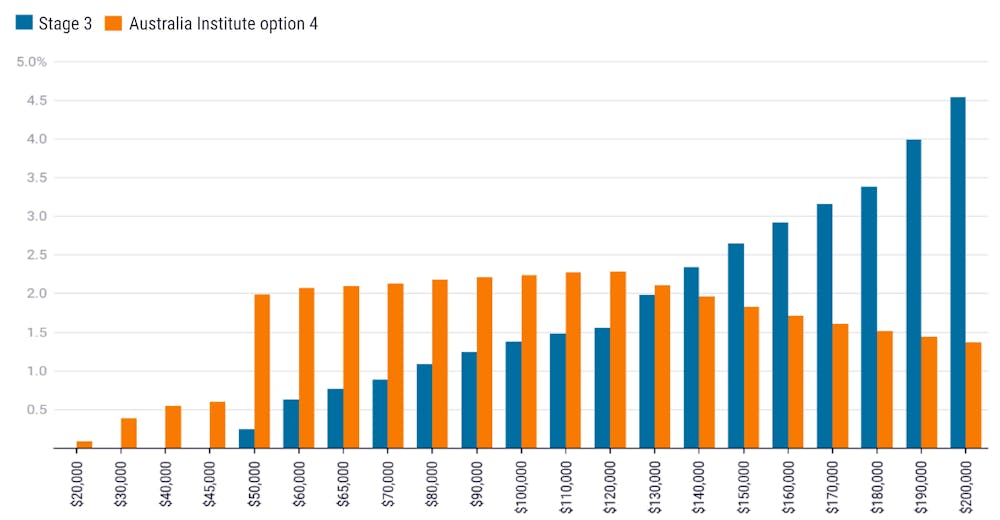
But someone on that income will get no relief. That person will lose an offset of $1,275 in return for a tax cut of zero. Someone on a higher wage of $50,000 will lose $1,500 in order to gain $125, and someone earning the typical full-time wage of $85,000 will have to lose $1,500 to gain just $1,000.

That’s right, a typical full-time worker will get relief of $1,000 from the Stage 3 tax cuts in return for losing the axed tax offset of $1,500.

Higher earners will do much, much better. An Australian earning twice as much as is typical – $190,000 – will get $7,500. An Australian earning a bit more than that again – $200,000 – will get $9,000.

Labor has been handed an opportunity

Handing $9,000 to a high earner but only $1,000 to an ordinary full-time earner is an indulgence that might have seemed okay when it looked as if ordinary earners were doing alright, or wouldn’t notice.

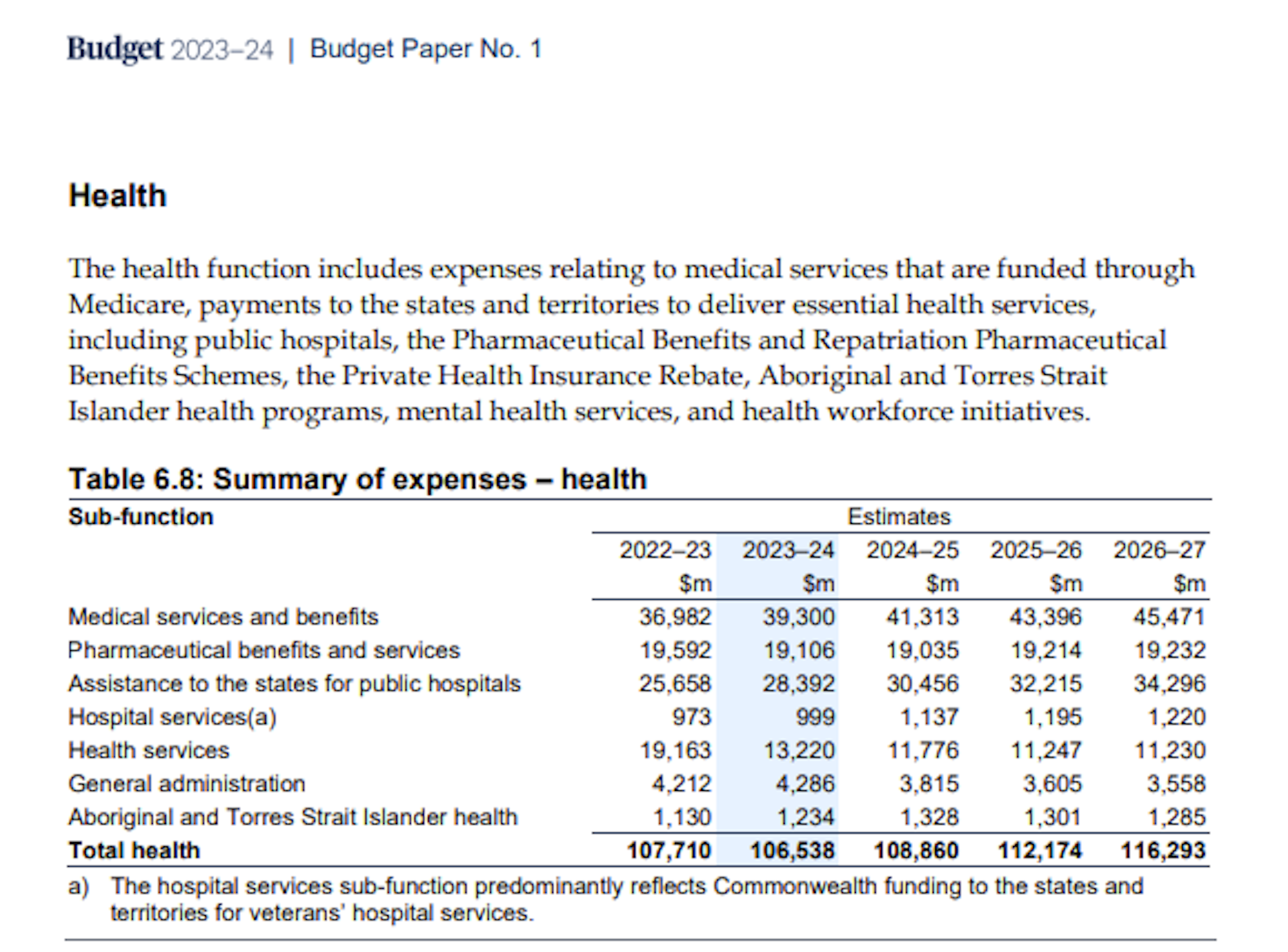
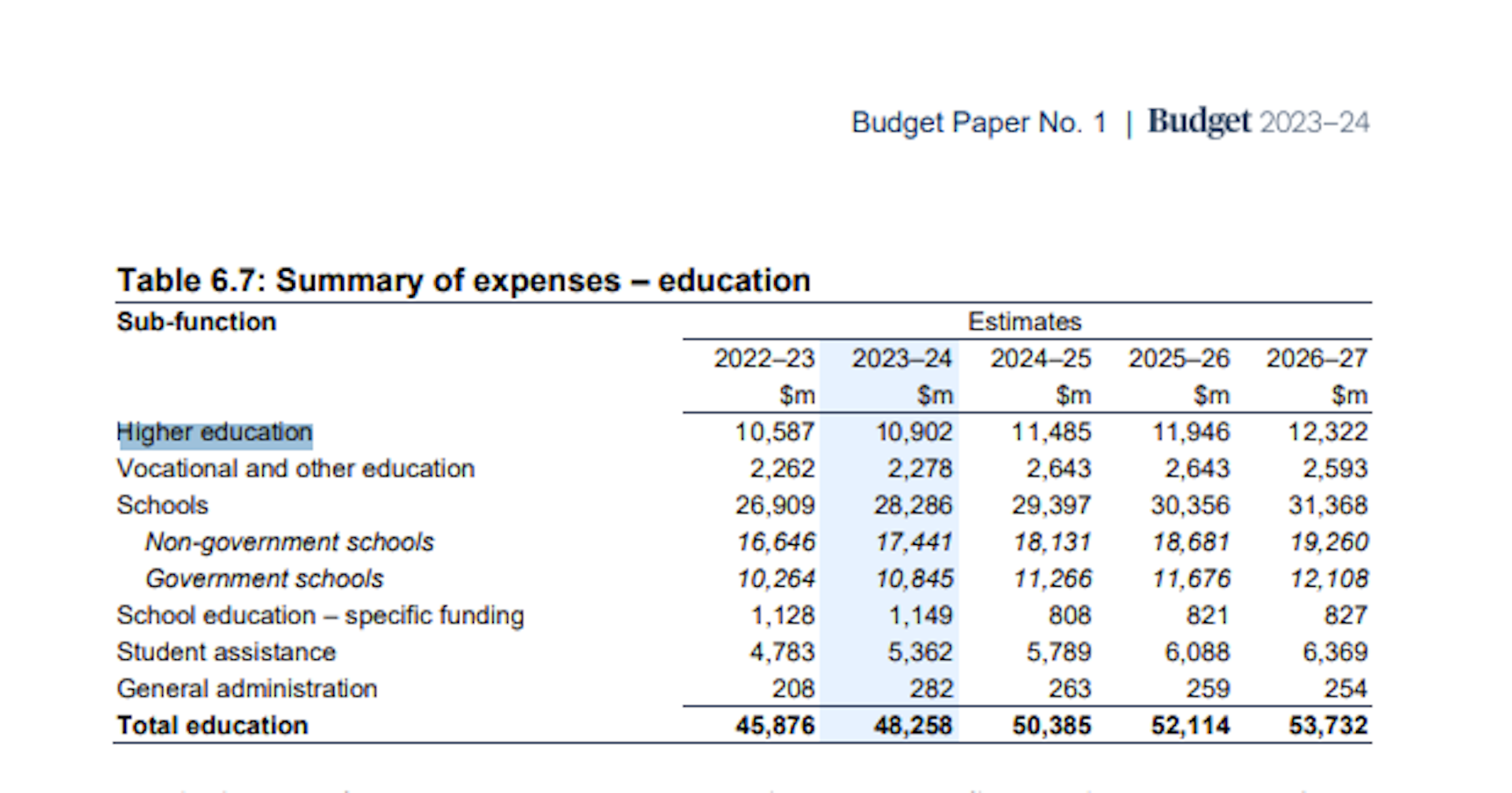
But it’s about to happen, and it’s about to cost $20 billion in its first year. That’s as much as the government plans to spend on the pharmaceutical benefits scheme in that year and almost twice what it plans to spend on higher education.

What if it kept the tax cuts, but reoriented them to Australians who actually needed them – to the more than 80% of Australians who earn less than $120,000 a year – while still providing generous cuts to those who earned more than $120,000?

That’s a task Matt Grudnoff and Greg Jericho set themselves at the Australia Institute, coming up with four options. Each of those four would cost less than Stage 3 cuts, deliver more to Australians on less than $120,000, and even fund a $250 per fortnight increase in the JobSeeker unemployment benefit.

Jericho’s punchline, delivered to the revenue summit at Parliament House last month: “I actually wish it was harder than it was”.

Option 4 costs $70 billion less over ten years but leaves every taxpayer earning up to $132,000 better off.

It doubles the tax cut Stage 3 gives to a typical full-time earner on $85,000, and still gives high earners $2,197 a year each.


Stage 3 vs Australia Institute Option 4, tax cut as percent of taxable income

Graph of percentage benefits from Stage 3 and an alternative at different incomes
The Australia Institute, A better Stage 3: fairer tax cuts for more Australians, October 2023, CC BY-SA

His point isn’t that this is the best option. It is that there are options, many of which give the bulk of Australians – the stressed ordinary voters Labor and the Coalition will need in the next election – much more than Stage 3.

What’s wrong with making 80% of the electorate better off at a time when they desperately need it, and cutting future budget deficits by $70 billion?

Only that it would break a promise, and Prime Minister Anthony Albanese likes keeping promises.

But when asked in an Australia Institute survey what was more important – keeping a promise or reacting to changing economic circumstances – 61% picked reacting to changing circumstances.

Even among Coalition voters, 56% supported reacting to changing circumstances.

It puts the Stage 3 tax cuts in play. There’s still time, and plenty of electoral and economic reasons to rejig them.The Conversation

This article is republished from The Conversation under a Creative Commons license. Read the original article.
Read more >>

Tuesday, November 07, 2023

Why it’s a good bet the Melbourne Cup Day rate hike will be the last

Australia just became the odd one out.

At its meeting last week, the US Federal Reserve kept its official interest rate on hold. A week earlier, the European Central Bank and the Bank of Canada kept their rates on hold, and, at their meetings before that, the Bank of England and the Reserve Bank of New Zealand did the same thing.

Throughout the Western world – with perhaps Australia as the only exception – financial markets have been assuming central banks were done with increasing rates and would soon start pushing them down.

Reserve Bank Governor Michele Bullock’s statement accompanying Tuesday’s hike in Australia’s cash rate makes it look as if we’re about to join that club. It makes it look as if this hike from 4.1% to 4.35% – a 12-year high – will be the last.

And with good reason. Inflation has been falling almost everywhere, and – notwithstanding the recent uptick associated with higher oil prices – is forecast by the International Monetary Fund to keep falling.


The RBA has taken out insurance

So why did Australia’s Reserve Bank push up rates at all, at a time when none of its global peers were?

The statement makes it look as if it wanted to take out insurance.

While the bank still expects inflation to continue to fall, it says progress now looks “slower than earlier expected”.

Its revised set of forecasts, to be released on Friday, still have inflation falling, but to around 3.5% by the end of next year, instead of 3.3%, then to around 3% by the end of 2025 instead of 2.8%.

The bank is particularly worried that the prices of services – things such as service in a cafe, done by hard-to-find workers – are “continuing to rise briskly”.

And it mentions “uncertainties” four times in eight paragraphs. It isn’t that it thinks inflation won’t keep coming down; it’s that it wants to be sure it is.

Australian hikes hit harder than in the US

One argument the bank hasn’t used – and nor should it – is catch-up. The US, the UK, the EU, Canada and New Zealand all have higher official rates than Australia.

But they are all are different to Australia, in an important way.

When the US Federal Reserve pushes up its Federal Funds Rate, nothing much happens to US home borrowers. Here’s why: almost all US home borrowers are on fixed rates, meaning their required mortgage payments don’t increase.

In Australia, only about one-third of home loans are fixed.

And US fixed rates are nothing like Australian fixed rates. The typical term in the US is 30 years, rather than the two to three years common in Australia.

This means that, as long as borrowers in the US don’t refinance or move homes, their payments are fixed for the entire term of their loans. Americans never have to pay more just because the Fed jacks up rates.

At least when it comes to homebuyers, the US Fed has to do a good deal more than Australia’s Reserve Bank to have the same effect.

It means the US official rate of 5.25% has less immediate effect on ordinary Americans than Australia’s new rate of 4.35% will have on us.

That’s what the consumer spending figures show.

After a year of high US rates, American consumers are buying 2.9% more goods and services than they were a year ago.

After a year of less-high Australian rates, Australian consumers are buying 1.7% less.

This means that, as relatively lightweight as our previous 4.1% cash rate had seemed, it might have been packing more punch than the higher 5.25% rate in the US; and also the higher rates in the UK, Canada and New Zealand, where most of the mortgages are also fixed.

‘Painful squeeze’

In her statement, Governor Bullock acknowledged many households were experiencing “a painful squeeze on their finances”. She also noted others were benefiting from rising housing prices, substantial savings buffers and higher interest income.

Bank calculations suggest one in 20 variable-rate borrowers are now going backwards – paying more for essential expenses and housing than they earn.

Among borrowers with big loans relative to their incomes, it’s one in four.

There’s nothing in the governor’s statement to suggest she is thinking of pushing up rates again. After today’s hike, the futures market assigned only a 30% probability to another hike.

The best guess of people who bet on this for a living is that Australia is about to join the rest of the world and leave rates where they are for quite some time.

A frugal Christmas, before possible rate drops in 2024

Alternatively, rates could even begin coming down within 12 months.

The detail of the inflation figures shows monthly inflation surged to 0.8% for one month only, in August, when petrol and diesel prices jumped 9.1%, then fell back to 0.3% in September, which is where it was before petrol prices jumped.

It is also looking like prices scarcely increased at all last month.

The Melbourne Institute inflation gauge, which comes out ahead of the Bureau of Statistics gauge and broadly tracks it, fell 0.1% in October. This suggests that, when taken together, price falls (slightly more than) outweighed price increases.

It’s what you would expect if we were tightening our belts, as we are.

At Big W discount department stories across Australia, sales are down 5.5% on where they were a year ago.

Big W says shoppers have moved away from buying big-ticket items and are instead buying a remarkable number of small gifts, such as Hot Wheels toy cars.

They sell for $2 each, or five for $9.

It’s pointing to a frugal Christmas in which retailers are going to have to discount if they want to move goods, taking further pressure off inflation.

Should that happen, rates could turn down even sooner than financial market traders expect, perhaps by the middle of next year.The Conversation

This article is republished from The Conversation under a Creative Commons license. Read the original article.

Read more >>

Sunday, October 29, 2023

Worried economists call for a carbon price, a tax on coal exports, and ‘green tariffs’ to get Australia on the path to net zero

Australia’s top economists have overwhelmingly backed the reintroduction of the carbon price that helped cut Australia’s emissions between 2012 and 2014.

The government concedes that achieving its legislated emissions reduction target of 43% below 2005 levels by 2030 and net zero by 2050 will be difficult. With official forecasts showing Australia falling short, the Economic Society of Australia asked 50 leading Australian economists what should be done to speed things up.

Offered a choice that included nuclear energy, accelerated investment in large-scale batteries, and a rapid phase-out of traditionally fuelled vehicles, 30 of the 50 picked a carbon price of the kind introduced by the Gillard Labor government in 2012 and abolished by the Abbott Coalition government in 2014.

Another five said they supported an economy-wide carbon price, but wouldn’t nominate it in the survey because it would face “significant political hurdles” and would not be “politically feasible”.


The Department of Climate Change told the government in December it was on track to fall short of its 2030 target of a 43% cut on 2005 levels, but that with “additional measures” it could get to 40%.

In October this year, Climate Change and Energy Minister Chris Bowen described the 43% target as “ambitious” and a “difficult task”.

The scheme the economists were asked about was a “cap and trade” scheme, of the type common in much of the world. In these schemes, the government sets a cap on the total number of emission permits produced each year and allows users to trade them with one another to set a price.

A carbon price by another name

The Gillard government’s scheme was initially a fixed charge per tonne of carbon emitted by big polluters. It was set to switch to a cap and trade scheme after three years, but ended up being abolished after two.

In its place, the Abbott government created a “safeguard mechanism” that currently applies only to the 219 biggest polluting facilities in Australia. It requires each to keep emissions below a government-set baseline, and allows them to trade emissions reductions with one another.

The economists were asked about expanding the mechanism to make it mimic an economy-wide carbon price. In response, 42% said they wanted to boost the number of facilities it covered, and 26% wanted to tighten the baselines to push up the price.


Made with Flourish

All but seven of the 50 economists wanted either an economy-wide carbon price or an expanded safeguard mechanism that would act as one.

Independent economist Hugh Sibly said it might well be that nuclear, hydrogen or other sources of energy were the most efficient ways of decarbonising the economy, but it would be impossible to know until Australia started charging for emitting carbon and allowed the market to work out the cheapest way of coping.

Half of those surveyed wanted to expedite the building of new transmission lines to link places where electricity was being produced with places where it would be needed. One-third wanted expedited investment in large battery storage.

Economists including Macquarie University’s Lisa Magnani justified this by saying it was necessary for the government to move in ahead of the private sector to provide the infrastructure the private sector would need in order to decarbonise “within the time left to act seriously”.

No new mines, taxes on exports from existing mines

Many experts surveyed wanted bolder measures than those proposed by the Economic Society of Australia.

Former OECD official Adrian Blundell-Wignall said Australia’s coal exports create almost two and a half times the emissions Australians produce domestically.

“What is the point of moving to net zero on the latter while we do nothing on coal exports?” he asked.

His proposal, aired in the Australian Financial Review, is for Australia to tax exports of the metallurgical coal used to make steel, forcing up the price and reducing global demand. Australia has 55% of the market.

If higher prices brought in more tax and resulted in less burning of metallurgical coal, it would be a win-win for Australia and the world.

Mark Cully, a former chief economist at the Australian industry department, said Australia should follow the lead of France, Denmark and Sweden and ban new fossil fuel projects.

The supply restriction would push up the relative price of fossil fuels and encourage a faster global take-up of renewable energy.

Impose green tariffs on dirty imports

Australia should also join the European Union in implementing a green tariff, the so-called Carbon Border Adjustment Mechanism that imposed an emissions tax on imported goods whose emissions were not taxed in the country in which they were produced.

Cully said too much of Australia’s concern was directed to energy, a sector where emissions are genuinely beginning to fall. In other sectors, emissions have plateaued or are even rising, making it “inconceivable that Australia can meet its 43% reduction target by 2030, let alone net zero by 2050, without other high-volume emissions sectors contributing”.

Frank Jotzo, director of the Centre for Climate Economics at the Australian National University, said carbon pricing has to be complemented by targeted measures aimed at industries such as transport, building, agriculture and reforestation.

He said Australia will soon need to back measures that suck carbon dioxide back out of the atmosphere, acknowledging that many emissions will continue and will therefore need to be offset in order to get to net zero.

Critical opportunity, but critical challenge

University of Tasmania economist Joaquin Vespignani said state and federal governments should “invest” in the production of the so-called critical minerals that will be needed for decarbonisation via tax deductions.

Australia has more than 20% of the proven global reserves of minerals such as lithium that are essential for clean energy production and storage.

Michael Knox of Morgans Financial noted the International Agency believed the world would need to ramp up its production of critical minerals to three times its present level by 2030.

Energy investment would need to double, and electricity transmission grids would need to roll out an extra two million kilometres of wire per year.

The Agency described the task as Herculean. Knox said it was far from certain to be achieved.


Individual responses. Click to open:

The Conversation

This article is republished from The Conversation under a Creative Commons license. Read the original article.

Read more >>

Tuesday, October 24, 2023

If you’re 65 or over and want to work, you’re far better off in New Zealand than Australia

Peter Martin, Crawford School of Public Policy, Australian National University

Want to keep working after you’ve reached pension age?

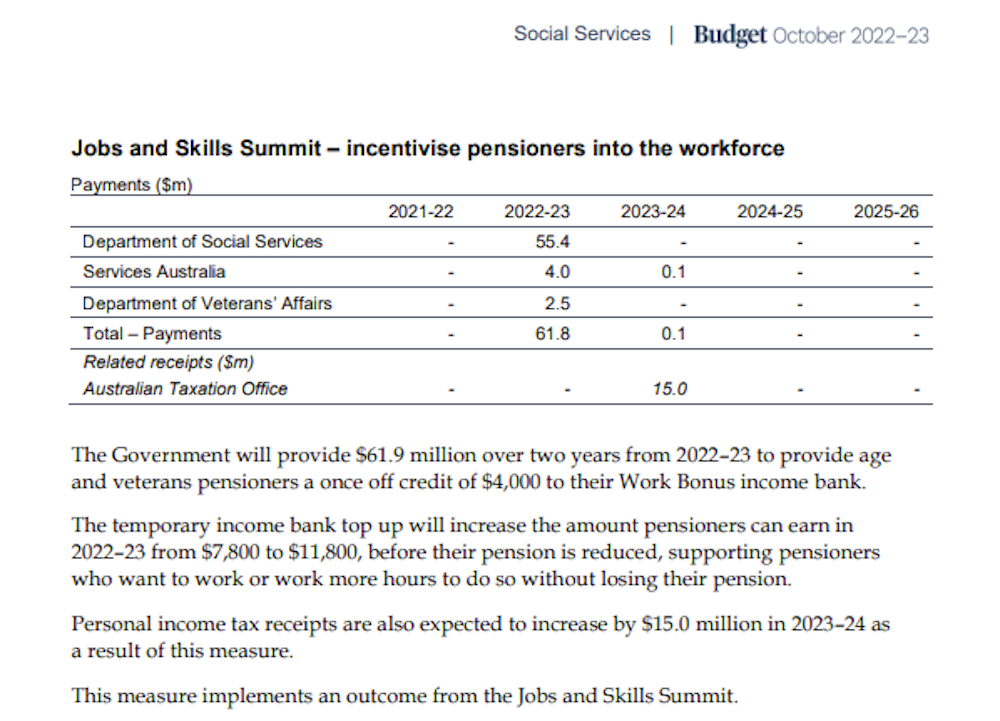
The Australian government has just made it a little bit easier, increasing the amount you can earn per year from work before losing some of your pension by A$4,000 on an ongoing basis.

Late last year, it temporarily upped the so-called work bonus from $7,800 per year to $11,800 to “incentivise pensioners into the workforce”. It was part of the government’s response to its September jobs and skills summit.

It meant pensioners could earn an underwhelming $227 per week from work without harming their pension, up from the previous $150.

The rules for older workers are very different in New Zealand. In fact, if Australia adopted New Zealand’s approach, we could have an extra 500,000 willing workers – a fair chunk of them paying tax.

What’s NZ doing differently for older workers?

Last month, as part of his employment white paper, Australian Treasurer Jim Chalmers made the increase to $227 per week permanent.

Chalmers headlined the announcement: Getting more Australians back into work.

But it’s doing an underwhelming job. In Australia, 15.1% of the population aged 65 and older are in some kind of paid work, up from 14.7% a year earlier.

In contrast, in New Zealand the proportion has just hit 26%. That’s right: more than one-quarter of New Zealanders aged 65 and older are employed.

It’s a similar story if we look at how Australia and New Zealand compared to others internationally on labour force participation (which covers those in paid work plus people actively looking for it).


New Zealand wants to see that number rise further. It has been talking about 33.1% of its population aged 65 or more in paid work, which is what Iceland has.

What is New Zealand doing for over-65s that Australia is not?

You won’t find it mentioned in either treasury’s employment white paper (released in September) or intergenerational report (released in August) – even though National Seniors Australia pointed it out in submissions.

One crucial thing New Zealand is not doing is annoying pensioners who work.

Australian pensioners in paid work get called in for discussions with Centrelink, if it looks as if they are at risk of doing too many hours and going over the $227 per week limit.

The more you work, the more your pension is cut

Pensioners who do go over the $227 per week limit lose half of every extra dollar they earn in a cut to their pension.

Plus tax, this means they lose a total of 69% of what they earn over the limit where their tax rate is 19%, and 82.5% on the portion of earnings taxed at 32.5%.

And this is after the boost designed to “incentivise pensioners into the workforce”.

Last year’s jobs summit also set up a Women’s Economic Equality Taskforce. It reported this week, drawing attention to the “disincentive rates” facing second earners (usually women) who return to work after caring for children.

It said that taking the loss of benefits, tax and childcare costs together, the penalty for returning to work was more than half of what was earned on the first three days of the week, and up to 110% of what was earned on the fourth and fifth days.

My point here is that the losses facing age pensioners who attempt to work are of a similar order – in Australia but not in New Zealand.

Australia’s rules aren’t just stopping pensioners from taking on extra hours. They seem to stop them taking up paid work at all.

There were 2.6 million Australians on the age pension in June this year. Only 83,925 reported income from working. That’s just 3.2%.

NZ pensioners keep their pensions

What’s different about New Zealand is that New Zealand’s pensioners don’t face a penalty if they work. They simply face income tax.

In New Zealand, the age pension (which is called superannuation, making it confusing for Australians) is paid to everyone of pension age. There’s no income test or assets test. You get it because you are a citizen or permanent resident.

Australia wouldn’t need to go as far as New Zealand to get the same benefit. We would simply need to ditch the pension income test in cases where that income came from paid work, leaving the assets test in place.

Then there would be no concern about working.

Half a million reasons for change

If we made that change – and if the same proportion of older Australians chose to work as New Zealanders – we would soon have an extra half a million older Australians able to step into fields such as teaching, where there are 15,500 vacancies, and health care and social assistance, where there are 68,100 vacancies.

It would cost the federal government money because it’d put more Australians of pension age on the pension.

But it’d cost less if we abolished the special tax concession for seniors and pensioners, known as the seniors and pensioners tax offset. In New Zealand, senior citizens face the same tax rates as everyone else.

And it would cost less as more pensioners earned wages and paid income tax.

Calculations prepared for National Seniors Australia by Deloitte suggest that beyond a certain point, the change would become revenue-positive – actually boosting federal coffers – as the extra income tax revenue outweighed the cost of the extra pensions.

National Seniors is calling its campaign “let pensioners work”.

Tapping into the cash economy

Importantly – and here’s where we get to a fact National Seniors might not like me mentioning – that would happen not only because more senior Australians were employed, but also because more senior Australians were employed legitimately.

It’s hard to get a handle on how many senior Australians are working and being paid in cash, which they store rather than bank to avoid tripping the income test. But we do know this.

At the end of March, there were 18 Australian $100 notes in circulation for each Australian resident, an astonishingly high proportion given the use of cash for transactions is collapsing.

In New Zealand at the end of March, there were just five New Zealand $100 notes in circulation for each New Zealand resident.

That may be just a coincidence.

But New Zealand is certainly making it easier for retirees to work legitimately, rather than stay at home or accept cash in hand.The Conversation

This article is republished from The Conversation under a Creative Commons license. Read the original article.

Read more >>

Tuesday, October 17, 2023

Where did the cars go? How heavier, costlier SUVs and utes took over Australia’s roads

If we’re upset about the price of petrol, why do we drive the vehicles we do?

SUVs (so-called sport utility vehicles) use more fuel per kilometre than standard cars – according to the International Energy Agency, up to 25% more.

They weigh more than standard cars – about 100 kilograms more.

And they emit more carbon than standard cars. In Australia, medium-size SUVs emit 14% more carbon per kilometre travelled than medium-size cars. Large SUVs emit 30% more than large cars.

Yet we’re buying them at a rate that would have been unimaginable even a decade ago.

SUVs outsell passenger cars 3 to 1

As recently as 2012, more than half the new vehicles sold in Australia were “passenger cars” – the standard low-slung cars of the type we were used to. About one-quarter were SUVs.

Back further, in the early 1990s, three-quarters of the new vehicles we bought were passenger cars, and only 8% SUVs.

Yet after an explosion in SUV sales, today every second vehicle bought is a SUV. In September, SUVs accounted for 58% of new vehicle sales. Passenger cars accounted for just 17%. This means SUVs outsell passenger cars three to one.


Like country music, SUVs are hard to define, but you know one when you see one.

They are distinguished by being high and squarish – the words used in the official definition are “wagon body style and elevated ride height”, and generally big. They are usually four-wheel drives or all-wheel drives.

Standard passenger cars (be they hatches, sedans or wagons) sit closer to the ground, are usually lighter, and are less likely to kill or seriously injure pedestrians and cyclists, according to US insurers.

So common have the new larger SUVs become that Standards Australia is considering increasing the length of a standard parking bay by 20cm. It wants comments by November.

Also taking market share from smaller standard cars are what we in Australia call utes, which are standard vehicles (they used to be Falcons and Commodores) with a built-in tray attached at the rear.

Utes are categorised as commercial vehicles, even though these days they tend to have four doors rather than two. They are also just as likely to be used for moving families as equipment, even if bought with small business tax concessions.

Australia’s National Transport Commission is so concerned about the rise in sales of both SUVs and utes, it warns they are “tempering Australia’s improvement in transport emissions”.

Vehicles defined as commercial, the bulk of them utes, accounted for one in five vehicles sold a decade ago. Now they are one in four, outselling passenger cars.


Tax only explains so much

Cars get special treatment in Australia’s tax system.

If an employer provides them and their private use is “minor, infrequent and irregular”, or if they are utes “not designed for the principal purpose of carrying passengers”, they can escape the fringe benefits tax.

And from time to time small businesses get offered instant asset writeoffs, which means that all or part of the cost of the car can be written off against tax.

But apart from perhaps helping to explain the increasing preference for utes, these concessions seem insufficient to explain the demise of the standard passenger car and the rise of the expensive (and more expensive to fuel) alternatives.

Australia’s Bureau of Infrastructure and Transport Research Economics identifies the obvious: headroom, legroom and storage space, as well as the ability to drive on bad roads as well as good.

Danger is a perverse selling point

But, in an information paper, the bureau goes on to note that SUVs “appear to be more likely to kill pedestrians than cars”.

They also appear more likely to kill the occupants of standard cars than standard cars when those cars crash, largely because they are higher – a phenomenon the insurance industry refers to as “incompatibility”.

Australia’s Bureau of Infrastructure and Transport Research Economics refers to this as the “other side of the coin”.

But I think that for buyers of SUVs, it might be the same side of the coin. That is, I think it might be becoming a perverse and macabre argument for buying SUVs.

If SUVs are becoming dominant and they put other road users at risk, it makes sense not to be one of those other road users.


I am not suggesting that danger from SUVs is the only reason for the flood of buyers switching to SUVs. But I am suggesting it has helped contribute to a snowballing in demand for SUVs, along with fashion, and changed views about what’s normal.

I’m not sure what can be done at this stage. Higher petrol prices ought to have helped, but they don’t seem to have.

SUV purchases have increased, even as petrol prices have climbed. Extra taxes have been proposed to help curb road deaths, but they mightn’t help either. SUVs are already expensive.

Tighter standards would help

One thing we ought to do straight away is to shift the burden of decision-making from buyers to makers.

The federal government is about to roll out long-overdue fuel efficiency standards, of the kind already common in the rest of the world.

Ideally, those standards would require the entire fleet of vehicles sold by each manufacturer to meet a gradually-tightening average efficiency standard.

Putting more electric vehicles into each fleet would help. But so would increasing the efficiency of its conventionally-powered SUVs – which would mean reducing their weight, and with it, their danger to other people on the road.

The design of the scheme is up for grabs, and the Grattan Institute’s Marion Terrill has made a submission.

She says regardless of the switch to electric cars, Australians are going to be buying petrol and diesel vehicles for some time. That’s why it’s so important those cars become as fuel efficient (and, she could add, as safe) as they can be.The Conversation

This article is republished from The Conversation under a Creative Commons license. Read the original article.

Read more >>

Tuesday, October 03, 2023

No hike yet, but what happens on Melbourne Cup Day depends on petrol

If the Reserve Bank does push up interest rates again, the most likely next date is its next board meeting, on Melbourne Cup Tuesday.

The November 7 meeting is especially important because it is one of four each year in which the board has the full set of quarterly staff forecasts before it, as well as the latest detailed quarterly breakdown of inflation.

For the moment, in its first meeting with the new governor Michele Bullock in the chair, the board decided on Tuesday to keep rates on hold, pointing to “uncertainty surrounding the economic outlook”.

It’s uncertain about what’s happening to China’s economy; it’s uncertain about the lagged effect of the 12 increases to date; and it’s suddenly less certain about inflation.

When the board last met, the official figures showed inflation falling. Not now. And not only in Australia.

Inflation has kicked back up

After sliding throughout the Western world, inflation edged up in the US and Canada in July and August, and in Australia in August.

In the US, annual inflation plummeted from a peak of 9.1% to 3% before edging back up to 3.7%.

In Australia, the monthly measure of annual inflation dived from 8.4% to 4.9% before edging up to 5.2%.

This means inflation is moving further away from, rather than closer to, the Reserve Bank’s 2-3% target band.

The bank had been expecting it to keep falling to 4.1% by the end of this year, then to fall further to 3.3% – within spitting distance of its target – by the end of next year.


So what will Michele Bullock and her board do next time?

The first thing to consider (and they considered it in the first meeting under Michele Bullock on Tuesday) is what’s caused the uptick in inflation.

Petrol is fuelling inflation

Statistically, all of the uptick in inflation (yes, all of the uptick) was caused by an increase in one price – what the Bureau of Statistics calls automotive fuel, and what the rest of us call petrol and diesel.

Had that price not soared an astounding 9.1% in one single month, August, the inflation rate for August would have remained steady at 4.9%.

Absent automotive fuel, in recent months annual increases in the prices of food, clothes and electricity (yes, electricity) have fallen. In the last two months, the monthly increase in rents has inched down, suggesting that, as painful as high rent increases have been, they’ll eventually subside.

The second thing to consider is whether an uptick in inflation, resulting from an increase in the price of one commodity, is reason enough to return to pushing up interest rates.

Suddenly, petrol’s $2.20 per litre or more

Oil prices have shot up because in July one of the biggest producers, Saudi Arabia, began cutting production in what its energy minister said was “a bid to stabilise” the market.

Russia has joined in. The result – bolstered by a much lower Australian dollar – has been soaring prices. We’ve even seen new records set in some places, including Brisbane’s record unleaded price of $2.38.

Melbourne’s average price exceeded $2.20 a few weeks back and is still above $2.10.

Last year, when rocketing petrol and diesel prices were part of a widespread surge in inflation after Russia invaded Ukraine (and Australia temporally cut fuel excise to wind them back), what the Reserve Bank should do was clear: push up interest rates to take the heat out of consumer spending.

But it’s different now. Rising inflation isn’t widespread, and spending per consumer is collapsing.

In August, retail spending grew just 0.2%, at a time of rapid population growth and still rapid price growth. Over the year to August, total retail spending climbed just 1.5% at a time when the population grew 2.2% and prices climbed more than 5%.

It means we are winding back spending, big time. And here’s the thing about the latest increase in petrol prices: it will wind back spending on things other than petrol even further.

Petrol could be fuelling ‘disinflation’

AMP chief economist Shane Oliver thinks the latest petrol price rises could be disinflationary. That’s right, “disinflationary”.

Just as a tax increase reduces the free money households have to spend and makes it harder for them to push up prices, an increase in the price of a purchase that’s near compulsory cuts the amount we have to spend on other things.

Offsetting this is the reality that petrol and diesel prices have risen. In time, those higher prices will feed through into higher prices for just about everything that is moved by trucks.

But the two – higher input prices and less price pressure from consumers – should to some extent offset each other, which is a reason for the Reserve Bank board to at least consider taking the latest uptick in inflation in its stride.

The announcement after Tuesday’s meeting postponed this consideration. By deciding to hold rates steady, the board said it could take “further time to assess the impact of the increase in interest rates to date and the economic outlook”.

The Reserve Bank board’s view about whether to treat what’s happening to petrol as inflationary or disinflationary (or neutral) will play an outsized role in the decision it makes about interest rates on November 7.The Conversation

This article is republished from The Conversation under a Creative Commons license. Read the original article.

Read more >>

Tuesday, September 26, 2023

The Albanese government blew its shot at setting a historic new unemployment target

Treasurer Jim Chalmers says the federal government’s employment white paper is “ambitious”. I’m not convinced.

A clearly ambitious statement would have specified a target for unemployment, ideally one that was a bit of a stretch.

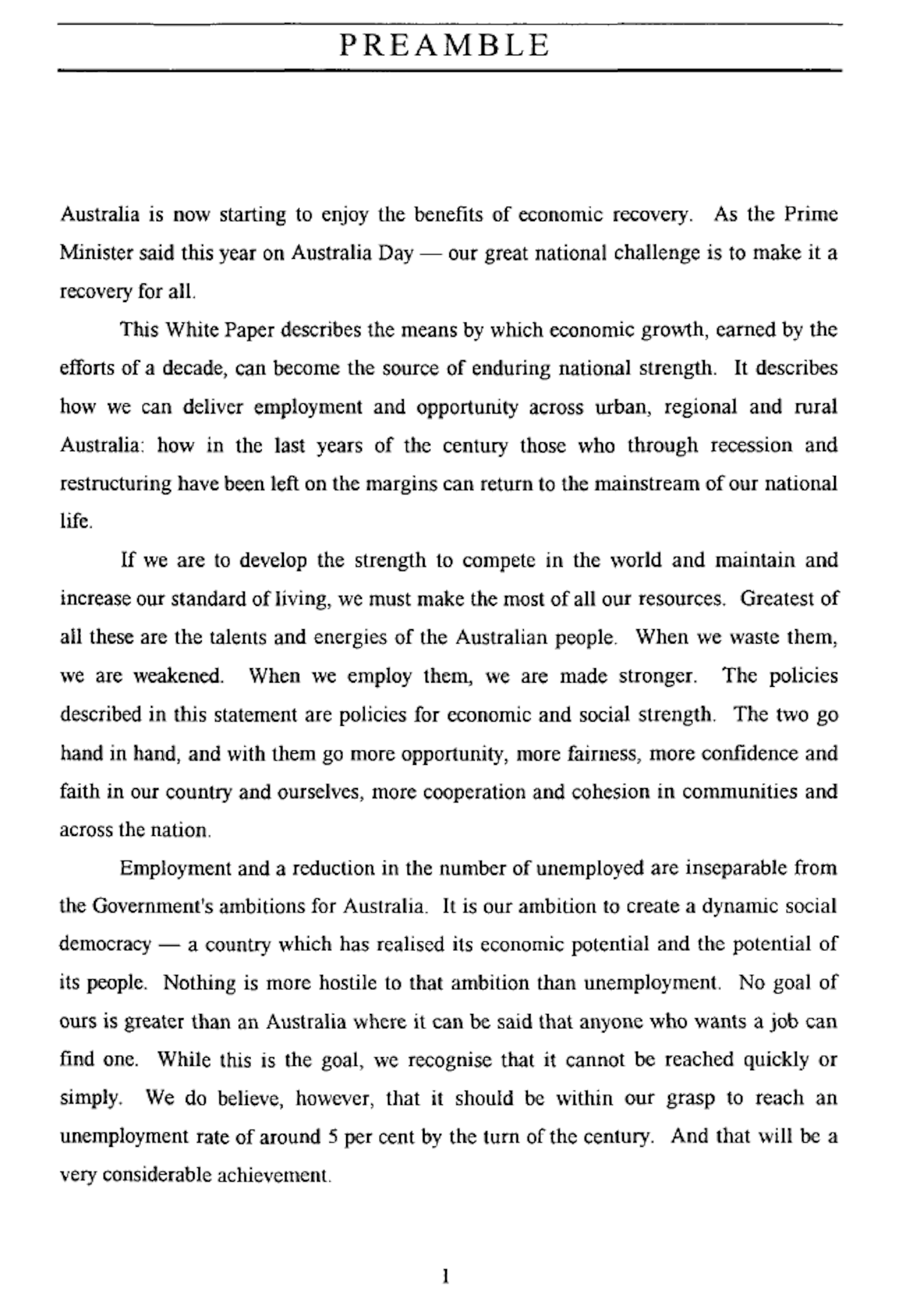
The Keating Labor government’s Working Nation statement did that in 1994. Released at a time when unemployment was almost 10%, it specified a target unemployment rate of 5% – an ambition that served as a beacon for decades.

That target certainly needs to be updated. Unemployment is now well below 5%, meaning “full employment” is now much less than 5%. Yet the Albanese government has passed up a historic opportunity to say how much less, which it could have done by setting its own target.

Setting our sights below 5%

The white paper released on Monday defines full employment as a state in which “everyone who wants a job should be able to find one without searching for too long”. That means our unemployment target ought to be somewhere between zero and 5%.

Of course, the unemployment rate can never be zero.

There will always be people out of work while they are moving between jobs, what the white paper calls “frictional” unemployment. That will also be true when Australia’s mix of employers changes – what the paper calls “structural” unemployment, as new industries requiring one sort of training replace old industries that required another.

The white paper says what matters in addition to unemployment (539,700 Australians) is “underemployment” in which people work fewer hours than they want (1 million) and “potential workers” who would like work but aren’t actively looking and so aren’t counted as unemployed (1.3 million).

I get that these things matter. I get that we need, in the words of the white paper, “a higher level of ambition than is implied by statistical measures”.

What gets measured gets done

But that higher level of ambition ought not replace targets.

If a target isn’t specific, it isn’t a target at all (or at best it’s a fuzzy target). That means it’s less likely to be aimed at and less likely to be hit.

That’s how it’s been with full employment itself. In 1996 Treasurer Peter Costello and the man he appointed Reserve Bank governor, Ian Macfarlane, signed what became the first Statement on the Conduct of Monetary Policy, an agreement that’s been updated six times.

As with all of the agreements since, that first statement set out an inflation target (“between 2% and 3%, on average, over the cycle”) but not an employment target – even though both are meant to be objectives under the Reserve Bank Act.

As a result, Governor Macfarlane was able to step down ten years later, secure in the knowledge that on average he had hit the middle of the target band: 2.5% inflation. His successor Glenn Stevens stepped down ten years further on, quietly boasting the same thing.

But neither could make any boast about hitting the employment target – because there wasn’t one.

How failing to set a target costs jobs

The governor who has just retired, Philip Lowe, looks like he’ll hit an inflation average of 2.8%, which is pretty low given how high inflation has been lately.

But an estimate by former Reserve Bank staffer Isaac Gross, prepared using the Reserve Bank’s own economic model, suggests that in doing so he kept unemployment a good deal higher than it needed to be between 2016 and 2019 – the equivalent of 270,000 people being out of work for one year.

Lowe wasn’t held to account for the extra unemployed in the same way as he is being held to account for his performance on inflation. Why? Because he was never actually given an unemployment target.

I am quite prepared to acknowledge that other measures of employment matter, underemployment among them. But here’s the thing: they move in line with unemployment.

When Australia’s unemployment rate falls, Australia’s underemployment rate falls, almost in tandem.


It’s easy to see why. As employers find it hard to hire new workers, they get existing workers to put in more hours. And retirees and others who haven’t been looking for work begin putting themselves out there.

Australia’s participation rate measures the proportion of the population making itself available for work. As unemployment has fallen, it has climbed to an all-time high.

Our unemployment rate is a proxy for what matters

This makes the unemployment rate just about the perfect proxy for everything else about the labour market that matters, and just about the perfect number to target.

The Albanese government could have recognised that this week – setting a stretch target of 3% (or even 4%) as an aspiration. Even that would have been less “ambitious” than Keating choosing 5%, when the rate was twice as high.

Treasurer Chalmers says the government didn’t set a target because apparently the unemployment rate doesn’t capture “the full extent of spare capacity in our economy or the full potential of our workforce”.

The saving grace is this government has a second chance at this. Chalmers is about to update the Reserve Bank’s statement of expectations, the one that until now hasn’t included a target for unemployment.

It would be open to him to put a specific target in there – making the RBA as accountable as it is now on inflation.

At the moment, it looks more likely Chalmers will adopt a recommendation of the independent review of the bank, which reported in March.

That review recommended the bank be required to produce its own “best assessment of full employment at any point time”, including its estimate of the lowest rate of unemployment that can be sustained without accelerating inflation.

It would be a small step forward. That full employment estimate would become a number to watch, in the same way as the bank’s performance on inflation is at the moment.

But it still won’t be an official government target. The Albanese government had an opportunity to live up to its ambitious rhetoric – and it passed.The Conversation

This article is republished from The Conversation under a Creative Commons license. Read the original article.

Read more >>

Tuesday, September 12, 2023

How Qantas might have done all Australians a favour by making refunds so hard to get

I’m not sure whether I’ve got any unclaimed Qantas flight credits.

I haven’t looked, either because I’m too busy or can’t be bothered. Which is exactly what Qantas wants. And not only Qantas. Separating out those people who are desperate or determined to get their money from those who give up is a standard business practice.

It’s called price discrimination, although Qantas appears to have added a twist.

Washing machine, fridge and computer manufacturers all do it. They sell their products for a standard price, and then offer a $200 or $400 “cash back” to buyers who fill in and send off a form when they get home.

The manufacturers know time-poor, lazy or well-off customers won’t bother, so they won’t need to send them cash. But the customers who do bother will really need the cash, and probably wouldn’t buy the products without it.

That way they can sell to people who otherwise wouldn’t have bought, while at the same time charging a high price to people prepared to pay it. They’ve arranged things so the two groups sort themselves out.

A tax on the time-poor

Qantas (and Virgin) could have easily refunded money to people who bought flights during the first years of COVID and had to cancel because of lockdowns. In most cases, Qantas had their credit card numbers. It still has them. It could refund the best part of A$500 million right now.

Instead, it makes it really difficult to get money back. It requires phone calls, waiting on the line and fishing out old emails and customer codes.

For a while, until it backed down days ahead of its chief executive bringing forward his retirement, Qantas said those credits would expire unless they were reclaimed, knowing full well many would not be.

But it’s not only Qantas imposing a tax on the time-poor.

A tax on those who won’t pick up the phone

News Corporation will allow you to subscribe to its papers with a click and a card. But when you hit “unsubscribe”, you get given a phone number.

When (and if) you get around to ringing it, you are subjected to an ordeal in which the operator gives you reason after reason not to unsubscribe, instead of acting on your request. You can insist, of course, but it takes time and effort.

The (NewsCorp-owned) Wall Street Journal also makes it impossible to unsubscribe without a phone call… unless you live in California. There, and only there – not in Australia, not in the rest of the United States – you are allowed to unsubscribe online because of a law forcing providers to offer the option.

Australia’s banks are experts at separating lazy customers from diligent shoppers, as are electricity companies.

They routinely offer customers who switch (or say they are about to switch) better rates than customers who stay, turning a time-poor tax into a loyalty tax.

A tax on loyal customers

You might think a tax on those who don’t chase the best deals is effectively a tax on the better-off, as they are the least likely to need savings.

Yet an array of evidence across a wide range of industries assembled by David Byrne and Leslie Martin finds loyalty taxes hit the poorest the hardest.

In an intriguing and expensive experiment in 2017, Byrne and Martin attempted to find out why this was.

They staffed a call centre at The University of Melbourne, in which actors phoned electricity companies, provided or let slip a few details, and said they were thinking of switching.

Among those details was eligibility for Victoria’s low-income energy subsidy.

Byrne and Martin found no discrimination against low-income callers because they said they had low incomes. But they did find that where the callers sounded as if they lacked information, they were presented with worse offers.

A premium price dispute

Disturbing evidence tendered in the Federal Court suggests some Australian insurance companies may be systematising discrimination against Australians who lack access to information.

The Australian Securities and Investments Commission has alleged some insurers set premiums not only on the basis of risk, but also on the basis of what a computer model tells them about the likelihood of each customer tolerating a price hike.

ASIC says the alleged practice is known internally as “renewal optimisation”.

Those claims are disputed, with insurer IAG telling The Australian Financial Review: “We don’t agree with how ASIC has characterised the process by which we calculate renewal premiums, and the impact on our customers.”

Enough for a government inquiry

Where immorality starts and standard business practice stops will be a question for a newly-established taskforce on competition. It will be headed by the Grattan Institute’s Danielle Wood (who will also head the Productivity Commission) and the former head of the Competition and Consumer Commission, Rod Sims.

One thing they might be able to agree on immediately is that something else Qantas has been accused of doing with flight credits is beyond the pale.

Evidence supplied to the ABC in 2022 suggests that not only has Qantas been hanging on to customers’ money by directing them to use credits for flights rather than refunds, it has been jacking up the price of flights when they do – by 50% to 300%, imposing what amounts to an extra (enforced) loyalty tax.

If Qantas and others have taken standard business practices just that little bit further in recent years, there’s a small chance they’ve done us a favour. They’ve given the taskforce something to sink its teeth into.The Conversation

This article is republished from The Conversation under a Creative Commons license. Read the original article.

Read more >>